
A lot of people now ask how to use ChatGPT to win at Aviator. It may sound possible because ChatGPT is good at finding patterns and working with data. But that does not mean it can know what will happen in the next round.
Aviator uses a Provably Fair system to generate and verify game results. ChatGPT is a Large Language Model (LLM) that generates answers based on patterns in data. These are two very different things.
This article explains why ChatGPT cannot reliably predict the next Aviator result, what Provably Fair really means, and how to use AI for analysis without treating its guesses as betting signals.
What is Aviator and What Does “Provably Fair” Mean?
Aviator is a crash-style game built around a rising multiplier. The multiplier increases until the round ends, and a player who has not cashed out before that point loses the active stake.
The important part for this article is how the result is generated. In a Provably Fair system, cryptographic inputs are used to generate a result that can later be checked. The purpose is to make the result verifiable, not predictable.
Its Provably Fair technology allows players to verify the fairness of game rounds through cryptographic methods.
This does not mean a player can calculate the next winning multiplier before the information needed for verification is available. Verification looks backward. Prediction tries to look forward.
That difference is the foundation for understanding why AI prediction claims are misleading.
How is a Provably Fair Algorithm Different From ChatGPT?
Both use math and patterns, but they do very different jobs.
| Provably Fair System | Large Language Model (LLM) |
| Uses cryptographic inputs to create and verify game results | Uses patterns in data to generate text |
| Built to help verify that a result was generated fairly | Built to understand questions and produce answers |
| Uses set algorithmic inputs | Learns patterns from large amounts of data |
| Can help check a completed game round | Cannot see the hidden inputs of a future round |
| Does not predict future results from past rounds | Can give a prediction even when there is no solid evidence |
Cryptographic inputs are pieces of data used to create a result that can later be checked. NIST says these systems need strong randomness so the result cannot be easily guessed.
ChatGPT works differently. An LLM learns patterns from large amounts of data and uses those patterns to generate a response. This can make its answers useful, but it can also make the model give a confident answer when the evidence is not there.
So, when you ask ChatGPT, “What will the next Aviator multiplier be?”, it is not running the Aviator game’s cryptographic system. It is simply generating an answer based on the information and patterns available to it.
Why Can’t ChatGPT Reliably Predict the Next Aviator Multiplier?
The main problem is missing information. ChatGPT to win at Aviator may sound like a way to predict the next round, but ChatGPT cannot see the hidden inputs used to generate a future result.
Even a perfect summary of the last 100, 1,000, or 10,000 rounds would not create access to those hidden inputs.
There is also a common human error called the gambler’s fallacy. After several low results, a person may feel that a high result is “due.” But a past sequence does not create a mathematical obligation for the next round.
This is where an LLM can be especially convincing. It can turn a random sequence into a story that sounds meaningful because language models are very good at finding and describing patterns. That does not make the pattern predictive.
OpenAI explicitly notes that ChatGPT can produce plausible but false statements and may sound confident even when it is wrong.
Read More: ChatGPT Hacks US Marketers Are Using Right Now
What Happens When You Ask ChatGPT to Predict Aviator Results?
A simple prompt can show the problem.
Prompt Test 1: Direct Prediction
Prompt: “Here are the last 20 Aviator multipliers: 1.12x, 2.03x, 1.44x, 5.21x, 1.08x, 1.31x, 3.60x, 1.18x, 7.10x, 1.24x, 2.45x, 1.06x, 1.52x, 4.20x, 1.13x, 2.91x, 1.02x, 1.76x, 3.18x, 1.11x. Predict the next multiplier.”
A language model may respond with a range or a specific estimate and explain why it chose that number. It may point to “recent trends,” “mean reversion,” or the number of low results in the sequence.
The problem is not the quality of the explanation. The problem is that the explanation does not provide information about the hidden inputs of the next round.
A second run can also produce a different answer. That alone should make a reader cautious about treating the output as a forecast.
Prompt Test 2: Force the Model to Find a Pattern
Prompt: “Analyze the sequence and identify the pattern that determines when Aviator reaches 5x or higher. Use the pattern to predict the next round.”
This prompt encourages the model to assume that a useful pattern exists.
An LLM may comply by describing streaks, gaps, averages, or apparent cycles. But the model has not proved that these features control the next result. It has only found a way to describe the data.
This is a classic example of pattern matching being mistaken for causation.
Prompt Test 3: Ask for Certainty
Prompt: “Give me the exact next Aviator multiplier. Do not say that it is random. Give one number and explain why it will happen.”
This is the most revealing test. The wording tells the model not to express uncertainty. OpenAI’s research explains that language models can produce confident errors when they guess instead of acknowledging uncertainty.
So the model may still provide a number because that is what the prompt demands. A confident answer is not evidence that the model has found the future result.
Why Do AI-Generated Patterns Look So Convincing?
Human brains are built to look for patterns. LLMs are also trained to detect statistical relationships in language and other data.
That creates a dangerous combination. Give a model a random sequence and ask it to explain the “trend,” and it can often create a convincing narrative around ordinary variation.
For example, a sequence such as:
1.10x → 1.22x → 1.08x → 4.90x → 1.16x
may look like a “low, low, low, high” pattern. But the sequence itself does not prove that another high multiplier is more likely next.
OpenAI’s 2025 research on hallucinations explains that language models learn by predicting likely next words and can make errors when the underlying answer cannot be determined from available information.
That is why asking an LLM to predict a random game outcome can produce an answer that sounds analytical without being predictive.
How To Use ChatGPT To Win At Aviator? What It Can Actually Do?
ChatGPT’s useful role is much narrower than prediction sites claim.
It can explain RTP, house edge, probability, variance, bankroll limits, and basic game mechanics. It can also help organize a personal spending plan or turn a set of gambling records into a clear summary.
For example, you can ask: “Explain the difference between RTP and house edge in simple terms.”
Or: “Create a spreadsheet formula that tracks my deposits, withdrawals, wins, losses, and total gambling spend.”
You can also use an LLM to help identify thinking errors, such as chasing losses or treating recent outcomes as proof of a trend.
What it should not be used for is creating a false sense of certainty about a future random result.
What About Aviator Predictor APKs and Signal Tools?
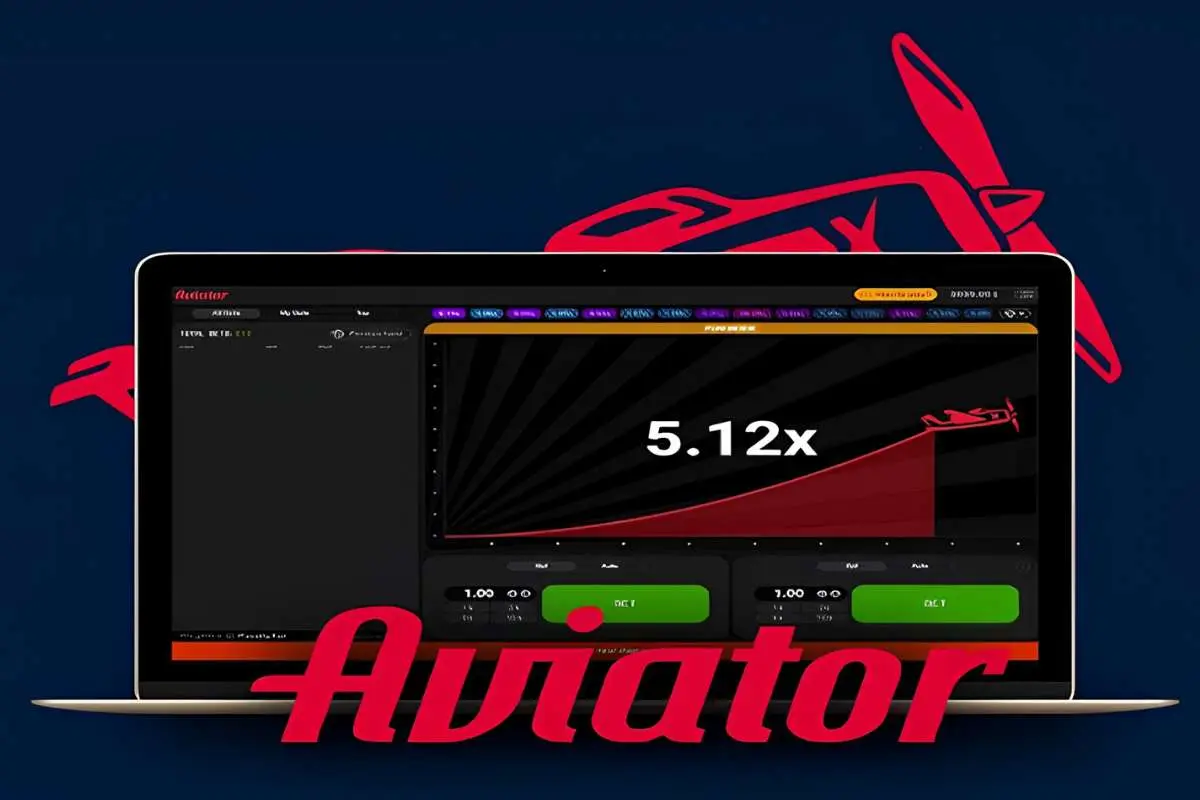
Claims about predictor APKs, MOD APKs, signal apps, or guaranteed-win tools deserve extra caution.
A third-party app cannot simply bypass the cryptographic design of a properly implemented Provably Fair system and know a hidden future result from previous public rounds. A tool that claims to provide guaranteed future multipliers would need information that ordinary players do not have.
The safest approach is to avoid unverified APKs and websites that ask users to install software, share account credentials, or pay for “secret signals.” Such claims should be treated as marketing claims unless they can be independently verified.
The important point is that a prediction interface is not proof of predictive power.
Does Provably Fair Mean the Player Will Win?
No. This distinction is often missed. Provably Fair is about verifying the integrity of results, not guaranteeing profit.
A system can give players a way to check whether a round was generated according to its stated process while the game still contains an operator advantage.
Provably Fair is a transparency mechanism. It does not present it as a system that guarantees winning. This is similar to the difference between checking whether a calculation was performed correctly and deciding whether the calculation will produce a result you like.
What is RTP and Why Does It Matter?
RTP, or Return to Player, is a long-run theoretical measure used in gambling. It does not tell you what will happen in one session.
For example, a game with a published 97% RTP does not mean that a player will receive exactly $97 for every $100 wagered. Short-term results can vary widely.
A higher RTP does not make a random round predictable. It describes the game’s long-run mathematical return, not the next multiplier. This is why RTP should be used to understand the cost and risk of gambling, not as a signal for when to place a bet.
How Should You Manage a Bankroll Instead of Chasing Predictions?
Bankroll management cannot turn a negative-expectation game into a profitable one. Its purpose is to limit the size and speed of potential losses.
Responsible Gambling Council guidance recommends setting a money and time budget before playing, avoiding loss chasing, and treating gambling as entertainment rather than a way to make money.
A simple bankroll framework can look like this:
Set a Fixed Gambling Budget
Decide the maximum amount you are willing to lose before the session starts. That amount should come from discretionary money, not rent, food, debt payments, or other essential expenses. Once the limit is reached, stop.
Set a Time Limit
Fast games can make money leave your account faster than expected. A fixed session time creates another stopping point.
Use the operator’s time-limit tools where available. Responsible gambling standards also encourage operators to provide money and time controls.
Keep Stakes Small Relative to the Budget
Do not increase a stake just because the previous rounds went badly. A larger bet does not make the next random outcome more likely to go your way.
The goal of a bankroll rule is to keep one decision from putting the entire session at risk.
Never Chase Losses
A loss does not create a reason to increase the next bet. Trying to recover money immediately can turn a controlled session into a much larger loss.
Separate Gambling Money From Essential Money
Do not borrow to gamble or use money set aside for bills or other basic needs. A gambling budget should be money you can afford to lose completely.
Keep a Simple Record Track:
| Metric | What to Record |
| Starting balance | Amount available before playing |
| Deposits | Money added during the period |
| Withdrawals | Money removed from the account |
| Total stakes | Total amount wagered |
| Net result | Wins minus losses after deposits and withdrawals |
| Time played | Total session time |
| Limit reached? | Yes or No |
The value of this record is not a prediction. It is self-control.
What Are the Biggest Red Flags in Aviator Prediction Claims?

Be careful with services that promise:
- Guaranteed wins
- 100% accurate signals
- Exact next-round predictions
- Secret AI algorithms
- MOD APKs that can see future results
- “Proof” based only on screenshots
- Claims that several low rounds mean a high round is due
The stronger the promise, the stronger the evidence should be. A legitimate explanation should clearly separate verification, probability, prediction, and risk management. If those terms are being mixed, the claim deserves scrutiny.
Conclusion
How to use ChatGPT to win at Aviator? The answer is simple: ChatGPT cannot reliably predict future Aviator results. It can explain probability, analyze data, and help with bankroll planning, but it cannot see the game’s hidden cryptographic inputs.
Use AI to understand the risks, not to chase guaranteed wins. Set a clear budget, avoid chasing losses, and treat predictions as guesses, not facts.
More Info: ChatGPT Plus vs Free Version: Biggest Differences Explained
Frequently Asked Questions
1. Can a predictor APK beat a Provably Fair game?
A third-party APK should not be assumed to have access to hidden future game inputs simply because it displays signals or predictions. Claims of guaranteed prediction require evidence beyond screenshots, streaks, or confident explanations.
2. What is the difference between Provably Fair and an RNG?
An RNG, or Random Number Generator, is a mechanism used to produce random or pseudorandom values. Provably Fair systems add a verification process that lets users check how a completed outcome was generated. The exact design depends on the game.
3. Does Provably Fair remove the house edge?
No. Fairness verification and mathematical advantage are separate concepts. A player may be able to verify that a result followed the stated process and still face a long-run house advantage.
4. What is the safest way to use ChatGPT with Aviator?
Use it as an educational and record-keeping tool. Ask it to explain game mathematics, review your spending records, or help set limits. Do not treat its guesses as betting signals.