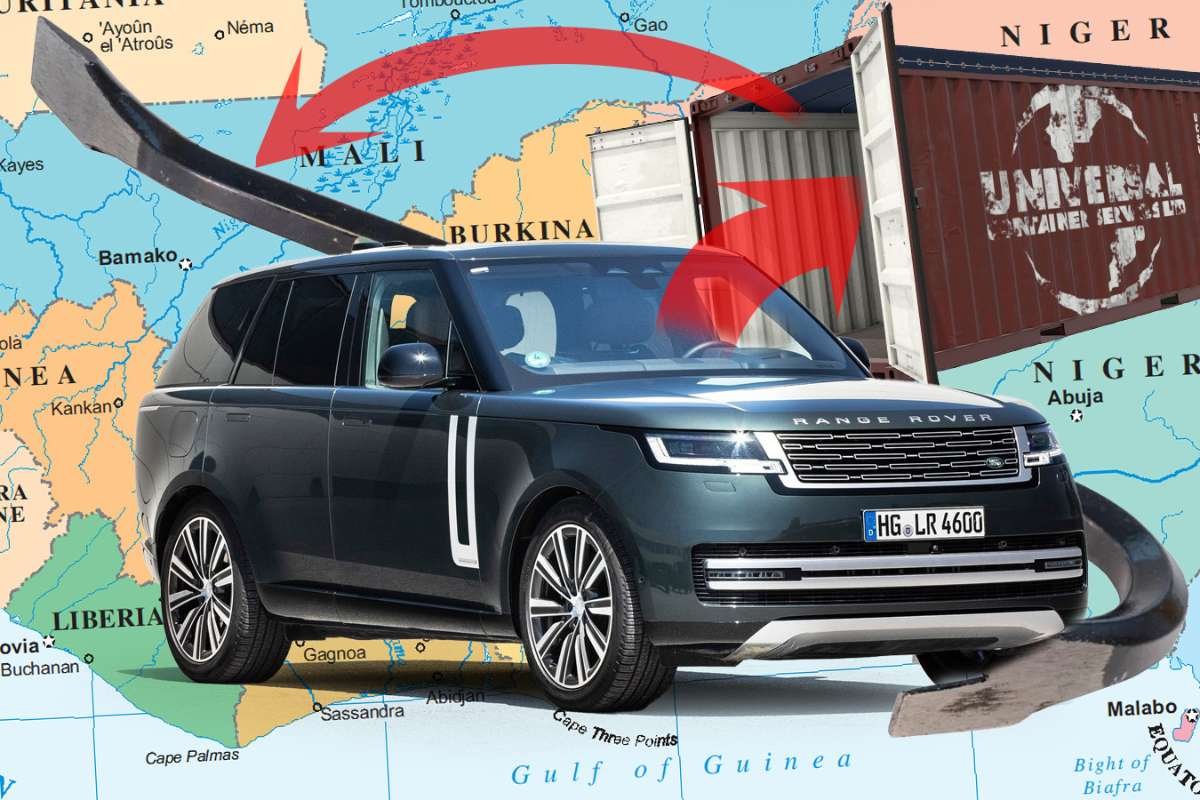
A 2023 Range Rover Sport disappeared from a residential driveway in North York, Toronto, on a Tuesday night in late January 2025. The owner filed a police report the next morning, and Toronto Police logged the vehicle identification number into the Canadian Police Information Centre database within 48 hours. By Friday of that same week, the vehicle was already inside a 40ft shipping container at a freight yard near the Port of Montreal, declared as household goods on the bill of lading. The container cleared the port and was loaded onto a vessel bound for Lagos.
Three weeks after the theft, a vehicle matching the VIN and description appeared on a car sales listing in the Lekki area of Lagos, priced at roughly double what the owner had paid in Canada. The CPIC record had not yet been shared with Interpol’s SMV database at the time of export, and the CBSA did not flag the container. That gap between a theft report entering a national system and actually reaching an international Interpol’s Stolen Motor Vehicle database is where the entire export fraud pipeline operates, and it’s a gap that organized groups have mapped down to the day.
Interpol’s SMV database held records on more than 12 million vehicles as of early 2025, and in 2024 alone, around 270000 vehicles globally were flagged as stolen through the system. Canada didn’t even begin feeding its CPIC stolen vehicle data into Interpol’s SMV database until February 2024, and since that integration, the RCMP says over 9000 vehicles stolen in Canada have been detected internationally, with about 200 showing up each week at ports of entry around the world. Canada now ranks in the top ten countries for hits received through Interpol’s SMV database, which tells you something about the volume of vehicles leaving the country and also about how many were leaving completely undetected before the integration happened.
The Canada Border Services Agency intercepted 2277 stolen vehicles at railyards and ports in 2024, a 25% jump from the previous year, and another 666 by the end of May 2025. Those are the ones that got caught. Bryan Gast at Équité Association, the insurance industry’s anti-fraud body in Canada, has said publicly that the Port of Montreal is conveniently located for criminal groups because of its rail and road links to the Greater Toronto Area, where the majority of these thefts originate. Between mid December 2023 and the end of March 2024, police inspected about 400 shipping containers at Montreal and found nearly 600 stolen vehicles inside, most from the GTA.
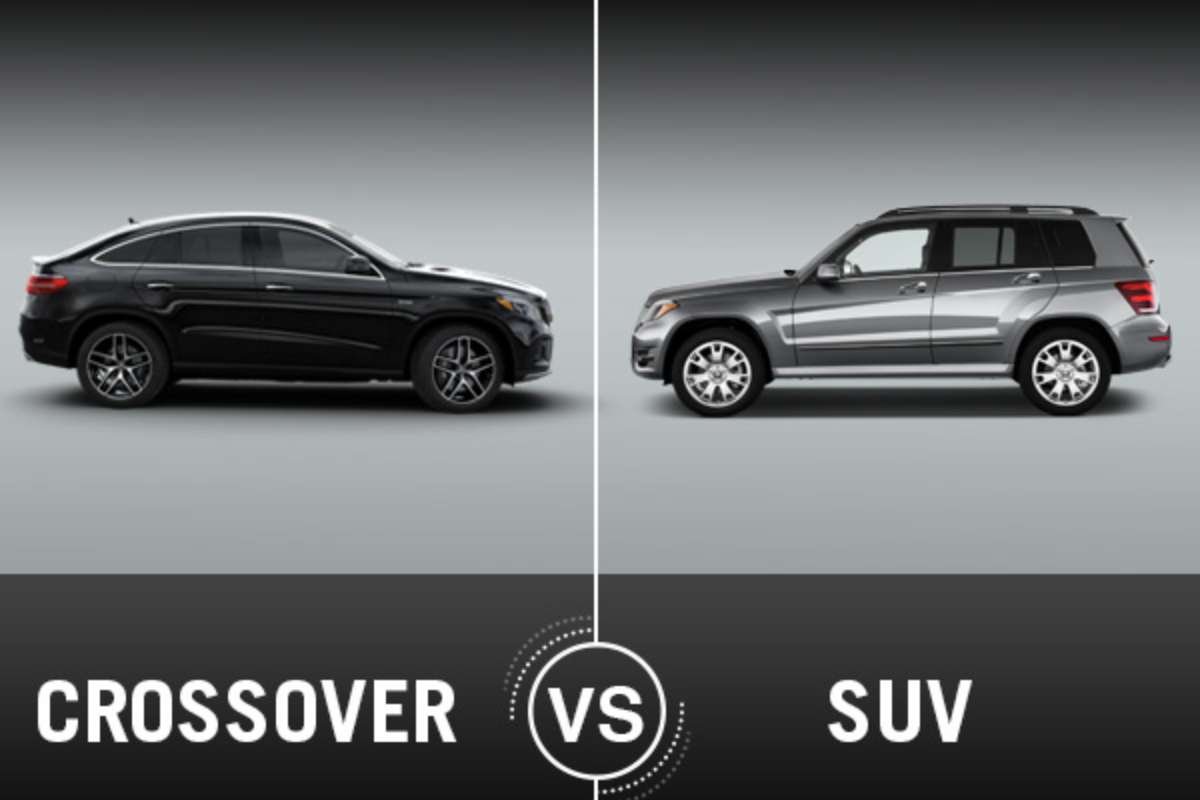
The vehicles are overwhelmingly SUVs and crossovers. Range Rovers, Lexus RX models, Toyota Highlanders, BMW X5s, and X7s. In Ontario, for every 14 Range Rovers registered in the province, one gets stolen, according to data compiled by the CBC from insurance bureau figures. That ratio is staggering when you think about it, and it explains why Range Rover insurance premiums in the GTA have become almost impossible to quote. The thieves aren’t joyriders or opportunists. They use relay devices to amplify key fob signals from inside a house, and in cases where that fails, they’ve moved to reprogramming onboard diagnostics or outright home invasions to grab keys off the counter.
Équité Association calls these thefts “technology-based” almost without exception now. An OPP investigation called Project Chickadee, which ran from August 2023, recovered 306 stolen vehicles that were destined for the UAE, Syria, Iraq, Turkey, Egypt, Lebanon, and several West African countries. Twenty people from the GTA were arrested, and officers seized guns, OBD readers, dozens of key fobs, shipping documentation, forklifts, and tractor-trailer cabs. The infrastructure required to run an export pipeline like this isn’t trivial. You need warehouse space, container access, freight forwarding companies willing to file fraudulent documentation, and drivers who can move vehicles from suburban driveways to rail yards in the middle of the night.
Interpol ran Operation Safe Wheels in March 2025 across 12 West African countries, and the results confirmed what everyone in the trade already assumed. Law enforcement in Benin, Burkina Faso, Cabo Verde, Côte d’Ivoire, Gambia, Ghana, Guinea Bissau, Mali, Mauritania, Niger, Nigeria, and Togo set up an average of 46 checkpoints per day over two weeks, inspected 12600 vehicles, and detected approximately 150 that had been stolen, mostly from Canada but also from France, Germany and the Netherlands.
In Nigeria specifically, officers from the Customs Service found six stolen Toyota and Lexus models hidden in freight containers at the port in Lagos, and Interpol’s SMV database confirmed all six had been stolen in Canada in 2024. A vehicle data analyst at carVertical noted that the speed at which these vehicles move from theft to overseas listing is often faster than the administrative chain can follow, with some VINs not appearing in cross border Interpol’s SMV database until well after the vehicle has already been registered or sold in the destination country, though that estimate comes from a limited sample of reports the company has reviewed and probably doesn’t capture the full timeline variation.
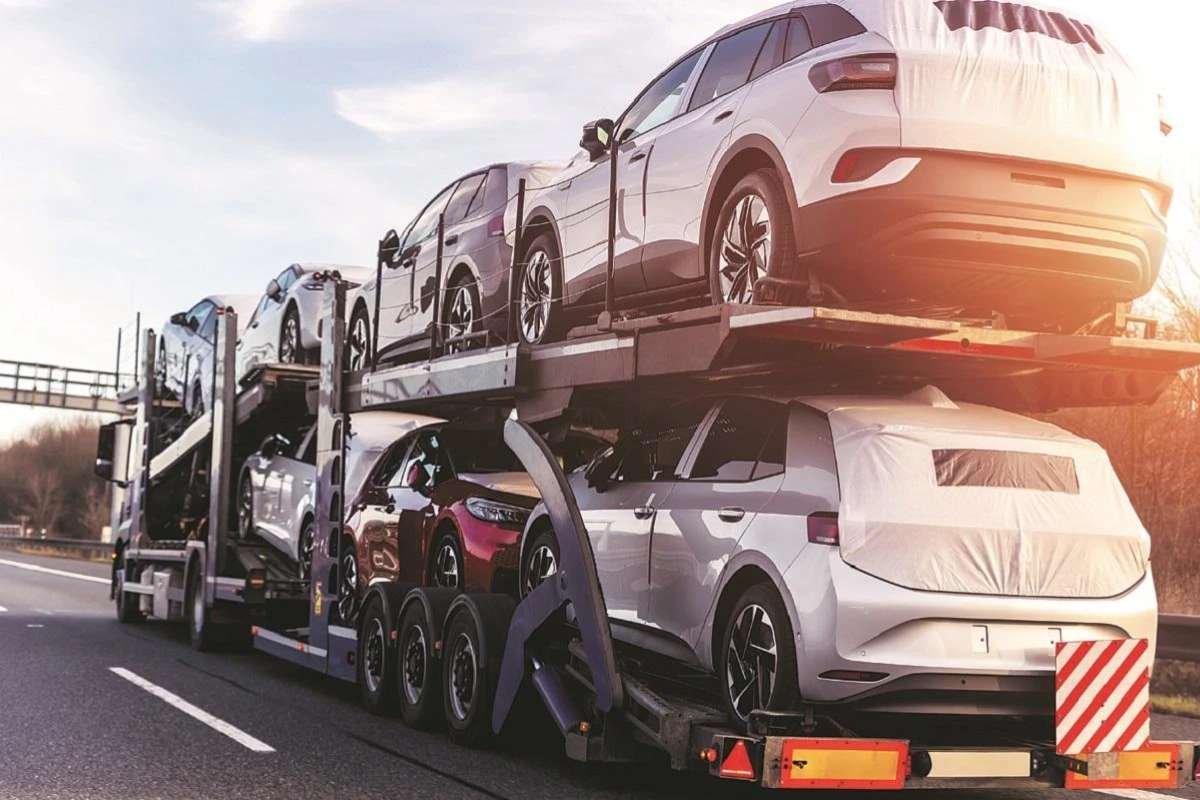
The demand side is straightforward. In many West African markets, buying a new vehicle through a legitimate dealership is either prohibitively expensive or not possible because the dealer network doesn’t extend far enough. A Range Rover that costs 80000 Canadian dollars in Toronto can sell for 150000 or more in Lagos, and the buyer gets a recent model year vehicle with low mileage. The fact that the vehicle was stolen is either unknown to the buyer or irrelevant, because VIN checks against the international Interpol’s SMV database are not routine at the point of sale.
The Nigeria Customs Service at Apapa port in Lagos intercepted two stolen Canadian Lexus models in May 2025 that had been declared as food items on their container manifest. Comptroller Babatunde Olomu disclosed the seizure publicly, identifying a 2024 Lexus RX 450 and a 2023 Lexus RX 350. The EFCC had previously handled a case where over 350 vehicles stolen from Canada were shipped to Nigeria and ended up on online sales platforms and car stands across the Lekki area, with a court ordering the final forfeiture of 20 of them.
The pipeline runs through the US on the same logic. In April 2025, the NYPD raided a parking garage at 870 Jennings Street in the Bronx and found 72 stolen vehicles worth 6.6 million dollars, including a 2025 Rolls-Royce Cullinan valued at 475000. Cars stolen from New Jersey, Connecticut, and New York were driven to the Bronx garage, where buyers inspected them, paid cash, and arranged shipping to Gambia and Ghana. Most of the recovered vehicles were sitting in shipping containers at the port in Elizabeth, New Jersey.
Eight men were charged, five of whom also faced racketeering charges in New Jersey. The groups running these operations pay street-level thieves somewhere between 4000 and 8000 dollars per vehicle, which gets marked up through a chain of fences and shippers before reaching the export container.
What makes all of this persistent is the timing mismatch. A vehicle can be stolen, containerized, shipped, and cleared at a destination port before the theft report has propagated through the right databases. The CBSA now handles 100% of referrals from police and has a 24/7 contact point, and the RCMP received 3931 notifications about Canadian vehicles through Interpol by May 2025. Auto theft insurance claims in Canada dropped 29% in 2024 compared to the year before, and the government has pointed to the National Action Plan as the reason.
The numbers probably are improving, but 666 vehicles intercepted at Canadian ports in the first five months of 2025 still suggest a pipeline running at volume. Interpol identified two criminal organizations during Safe Wheels alone, and the RCMP hosted a training workshop at the Port of Montreal in September 2024, which tells you where the focus is, but also where the problems have been concentrated the longest.