
Your project plan is looking solid.
But then, a client changes the requirements. A competitor launches a new feature. Your team faces a sudden delay.
In moments like these, sticking rigidly to the original plan can slow you down. What you need is the ability to adapt quickly without losing focus on the goal.
An Agile mindset helps you see change as useful feedback. If a strategy falls short, you review, adjust, and move forward with better insight. This mindset encourages continuous learning, collaboration, and small, steady improvements that help you stay competitive in environments with high intensity.
What is an Agile Mindset?
The mindset is a way of thinking that values flexibility, learning, and steady progress. It helps teams adapt fast when needs change. People with this mindset focus on value, not rigid plans. They test ideas early and improve them often.
The mindset comes from the values in the Agile Manifesto. This manifesto was created in 2001 by a group of software leaders. It shaped how modern teams build products and solve problems. Its ideas now guide many industries beyond tech.
What are the 4 Core Principles of Agile Mindset?
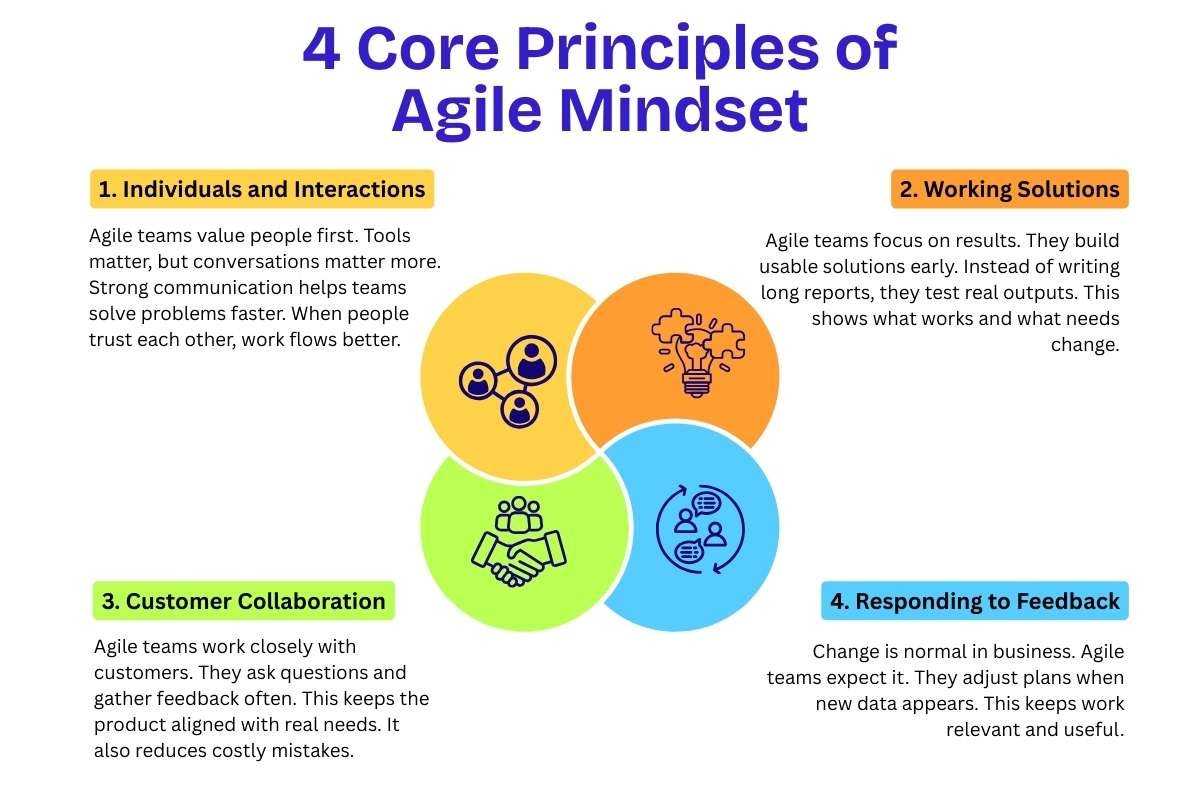
1. Individuals and Interactions
Agile teams value people first. Tools matter, but conversations matter more. Strong communication helps teams solve problems faster. When people trust each other, work flows better.
Leaders support open dialogue. Teams share feedback often. This builds clarity and reduces confusion. As a result, decisions improve.
2. Working Solutions
Agile teams focus on results. They build usable solutions early. Instead of writing long reports, they test real outputs. This shows what works and what needs change.
Documentation still exists. But it stays clear and simple. The goal is progress, not paperwork. Teams improve through action.
3. Customer Collaboration
Agile teams work closely with customers. They ask questions and gather feedback often. This keeps the product aligned with real needs. It also reduces costly mistakes.
Customers become partners in the process. Their input guides each step. This creates trust and shared ownership. Everyone moves toward the same goal.
4. Responding to Feedback
Change is normal in business. Agile teams expect it. They adjust plans when new data appears. This keeps work relevant and useful.
Rigid plans can block growth. Agile thinking allows quick shifts. Teams review progress in short cycles. Then they refine the next step.
Agile Mindset vs Traditional Mindset
An Agile mindset and a traditional mindset influence how organizations think and act. One supports flexibility and fast learning. The other values are structure and predictability. The comparison below explains the differences clearly.
| Agile mindset | Basis of Comparison | Traditional Mindset |
| Uses short plans and updates them often. | Planning Approach | Creates long plans and follows them strictly. |
| Welcomes change and adapts quickly. | View of Change | Resists change and prefers stability. |
| Makes quick decisions and improves after action. | Decision Making | Waits for full data and approvals before acting. |
| Tests small ideas to manage risk. | Risk Handling | Avoids risk and sticks to proven methods. |
| Focuses on value and real results. | Performance Measurement | Focuses on task completion and rules. |
| Leaders guide and empower teams. | Leadership Style | Leaders control and direct tasks closely. |
| Employees take ownership and show initiative. | Employee Role | Employees follow instructions and fixed roles. |
| Encourages creative and flexible thinking. | Problem-Solving Approach | Relies on fixed processes and past methods. |
What are the Key Characteristics of an Agile Mindset?
This way of thinking focuses on how people think and grow in changing environments. It builds mental strength and steady progress. It helps individuals and teams stay sharp. These traits go beyond the four core principles.
1. Learning Agility: People with an Agile mindset learn fast. They pick up new skills when needed. They explore new tools and ideas without fear. This keeps them future-ready. They reflect on each project. Then they adjust their approach. Learning becomes continuous, not occasional.
2. Resilience: Change brings pressure. Agile thinkers handle it with calm focus. When setbacks occur, they recover quickly. They move forward instead of dwelling on failure. They treat problems as lessons. Each challenge builds stronger judgment. Over time, resilience strengthens performance.
3. Experimentation: Agile individuals test ideas in small steps. They do not wait for perfect conditions. They run short trials and review results. This reduces risk. They accept that some ideas will fail. Failure becomes useful data. This mindset supports smarter decisions.
4. Transparency: An Agile mindset values openness. People share progress and challenges clearly. They keep expectations realistic. This builds trust across teams. Clear visibility prevents confusion. It also speeds up decisions. Everyone understands where things stand.
5. Decisiveness: Agile thinkers make informed decisions quickly. They gather enough data, then act. They avoid endless analysis. Speed matters. They review outcomes after acting. If needed, they correct the direction. Decisiveness keeps work moving.
6. Systems Thinking: People with this mindset tend to see the bigger picture. They understand how tasks connect. They think beyond their own role. This improves overall results. They consider long-term impact. They align daily actions with larger goals. This keeps efforts meaningful.
7. Discipline and Focus: Agile does not mean chaos. It requires strong discipline. People manage priorities clearly. They avoid distractions. They break goals into small tasks. Then they complete them step by step. Focus ensures steady progress.
How to Develop an Agile Mindset?

Building such a mindset takes intention and daily effort. It does not happen through training alone. Leaders must shape the workspace. Employees must shift how they think and act.
Below are practical ways to develop it in the workplace:
People share ideas when they feel safe. Leaders should encourage open discussion. Employees must feel free to ask questions. This builds trust. Allow room for mistakes. Treat errors as learning moments. When fear drops, creativity rises. Teams start thinking boldly.
Encourage employees to learn new skills. Offer short workshops and peer sessions. Support self learning through online courses. Learning keeps teams flexible. Set time for reflection. After each project, review what worked. Discuss what can be improved. Small lessons drive long-term growth.
Start with small changes. Test new ideas in short cycles. Measure results quickly. Then refine the approach. This method reduces risk. It also builds confidence. Employees see progress in real time, and momentum increases.
Give teams authority to make decisions. Avoid slow approval chains. Trust employees to act within clear goals. Ownership strengthens commitment. Define clear outcomes. Let teams choose the path. When people control their work, motivation improves. Productivity rises.
Use short and focused meetings. Share updates openly. Keep goals visible to everyone. Clarity reduces confusion. Encourage direct conversations. Solve issues early. Strong communication supports faster progress. It also strengthens teamwork.
Set clear and simple objectives. Connect each task to business value. Help employees understand the impact of their work. Purpose drives effort. Review priorities often. Remove tasks that do not add value. This keeps energy focused. Teams move with direction.
Leaders must model Agile behavior. They should adapt quickly and seek feedback. They must stay open to new ideas. Actions influence culture. When leaders show flexibility, employees follow. Culture shifts through behavior. Consistency builds lasting change.
What are the Benefits of an Agile Mindset?
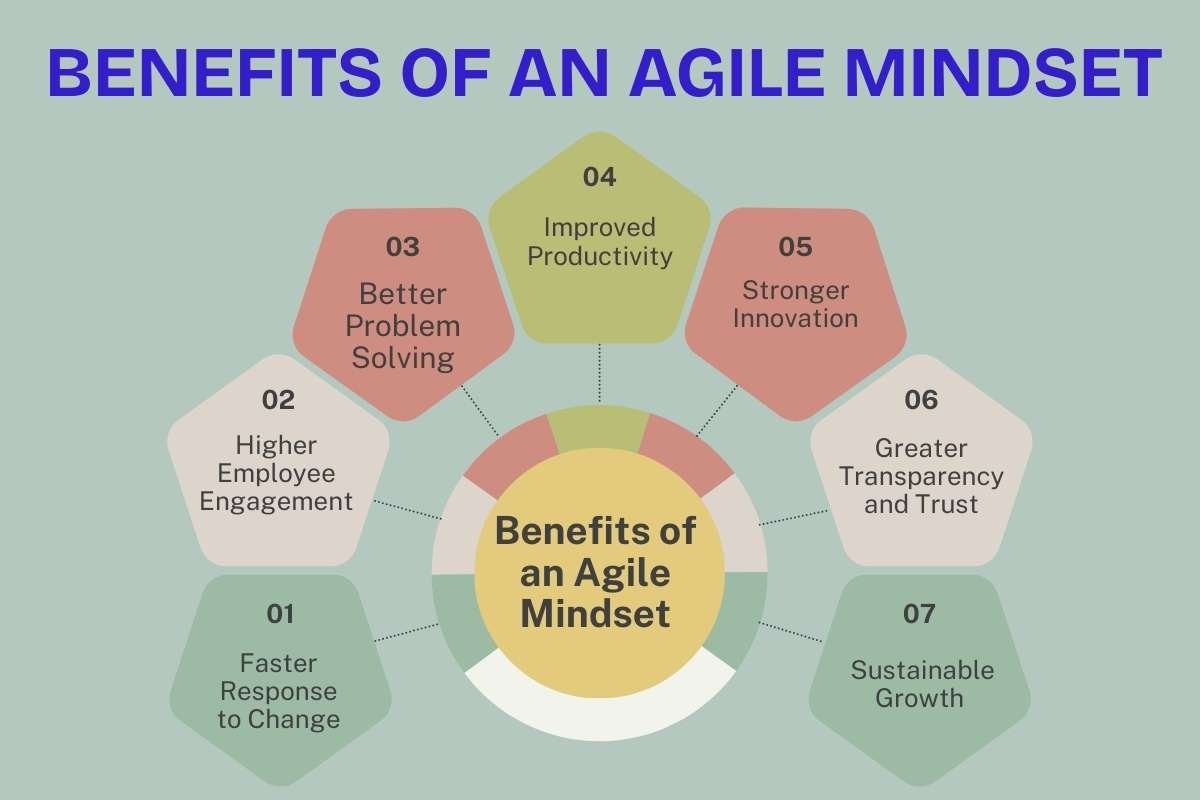
When employees build the above characteristics, it helps organizations move with speed and clarity. It improves how teams think and act. It strengthens both people and processes. Over time, it creates stronger business results.
Below are the key benefits of adopting and practicing this mindset:
1. Faster Response to Change
Markets shift quickly. Customer needs evolve. Teams with an Agile mindset adjust without panic. They review plans and act fast. This reduces delays. It also prevents major losses. Quick response keeps the business competitive.
2. Higher Employee Engagement
Employees feel valued when they have ownership. They take part in decisions. Their ideas matter. This builds motivation. Engaged employees show more commitment. They focus better on goals. Morale improves across teams.
3. Better Problem Solving
Agile teams break problems into smaller parts. They test solutions step by step. This makes complex issues manageable. Progress becomes visible. They learn from each attempt. Solutions improve over time. This approach leads to smarter outcomes.
4. Improved Productivity
Clear priorities reduce wasted effort. Teams focus on tasks that add value. They avoid unnecessary steps. Work becomes more efficient. Short work cycles keep energy high. Teams see results quickly. This maintains momentum.
5. Stronger Innovation
An Agile mindset supports new ideas. People feel safe to experiment. They test concepts without fear. This drives creativity. Small experiments lead to big improvements. Innovation becomes consistent, not rare. The organization stays ahead.
6. Greater Transparency and Trust
Open communication builds clarity. Teams share progress and challenges. Everyone understands priorities. This reduces confusion. Trust grows when information flows freely. Teams cooperate better. Strong trust improves performance.
7. Sustainable Growth
Agile organizations improve step by step. They learn from each cycle. They refine systems regularly. This creates steady progress. Growth becomes manageable. The company adapts without losing focus. Long-term stability improves.
What are the Challenges in Implementing an Agile Mindset?
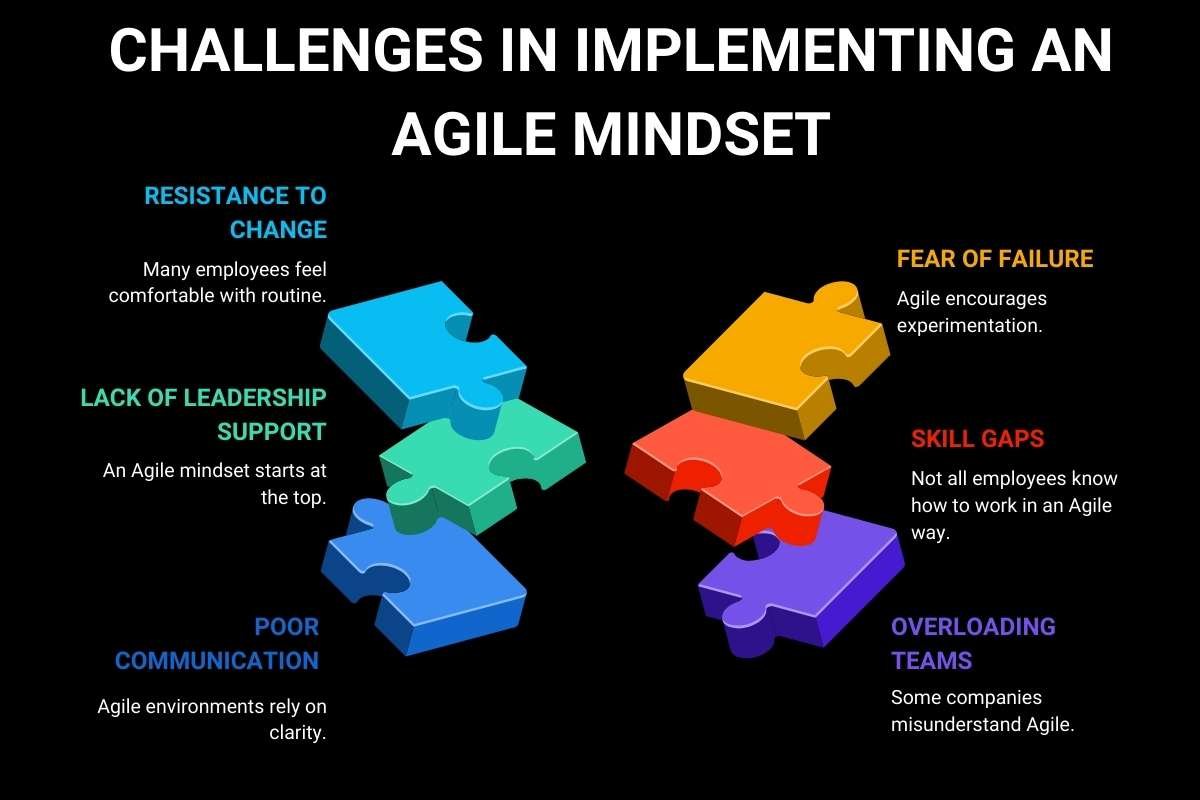
Adopting such a useful mindset sounds simple, but change is rarely easy. Organizations must shift habits, systems, and behavior. Leaders and employees both face resistance. These challenges can slow progress if not handled well.
1. Resistance to Change
Many employees feel comfortable with routine. They trust fixed plans and clear rules. When leaders introduce Agile practices, some people feel uncertain. Fear of the unknown creates pushback.
Leaders must explain the purpose clearly. They should involve teams early in the shift. Open dialogue reduces anxiety. Gradual change builds acceptance.
2. Lack of Leadership Support
An Agile mindset starts at the top. If leaders stick to control-based management, change will fail. Employees watch actions more than words. Mixed signals create confusion.
Leaders must model adaptive behavior. They should invite feedback and act on it. Clear support builds trust. Culture shifts faster when leaders stay consistent.
3. Poor Communication
Agile environments rely on clarity. If goals remain unclear, teams lose direction. Misunderstandings increase delays. Frustration grows.
Organizations must simplify communication. Short updates and clear targets help teams stay aligned. Transparency keeps everyone informed. This reduces conflict.
4. Fear of Failure
Agile encourages experimentation. Yet many workplaces punish mistakes. Employees then avoid risk. Innovation slows down.
Leaders should treat failure as learning. They must reward effort and insight. When people feel safe, they try new ideas. Growth follows.
5. Skill Gaps
Not all employees know how to work in an Agile way. Some lack decision-making or time management skills. Without training, confusion increases. Productivity may drop at first.
Organizations must invest in learning. Coaching and peer support help employees adjust. Practice builds confidence. Skills improve over time.
5. Overloading Teams
Some companies misunderstand Agile. They think it means moving faster at all costs. They push teams without a clear focus. Burnout becomes common.
Agile requires balance and discipline. Teams need clear priorities and realistic goals. Sustainable pace protects performance. Healthy teams deliver better results.
Conclusion
An Agile mindset changes how you respond to uncertainty. Instead of resisting change, you look for feedback. You test small improvements and adjust your approach with clarity. When a project shifts direction or results fall short, you focus on learning and refining.
Over time, this way of thinking builds resilience and stronger teamwork. You move faster, solve problems earlier, and stay aligned with real needs instead of outdated plans. In dynamic environments, this mindset helps you stay prepared, responsive, and focused on continuous progress.
FAQs
1. What is an Agile mindset?
This is a way of thinking that values adaptability, collaboration, continuous learning, and responding quickly to change.
2. Is the mindset only for software teams?
No. While it began in software development, it now applies to marketing, education, healthcare, startups, and many other fields.
3. Why is such a mindset important today?
Rapid technological change and evolving market demands require quick decisions and continuous improvement, making adaptability essential for success.