
Training employees is one of those ongoing challenges that every organization faces, regardless of size or industry. The question isn’t just what to teach – it’s how to teach it in a way that actually sticks.
Over the past decade, microlearning has emerged as a popular alternative to traditional training formats, and the discussion around microlearning vs traditional training has become a common topic in learning and development circles.
Both methods have their strengths, and the right choice depends heavily on your team’s needs, the type of content being taught, and the practical constraints your organization works within.
Understanding the Key Differences: Microlearning vs Traditional Training:
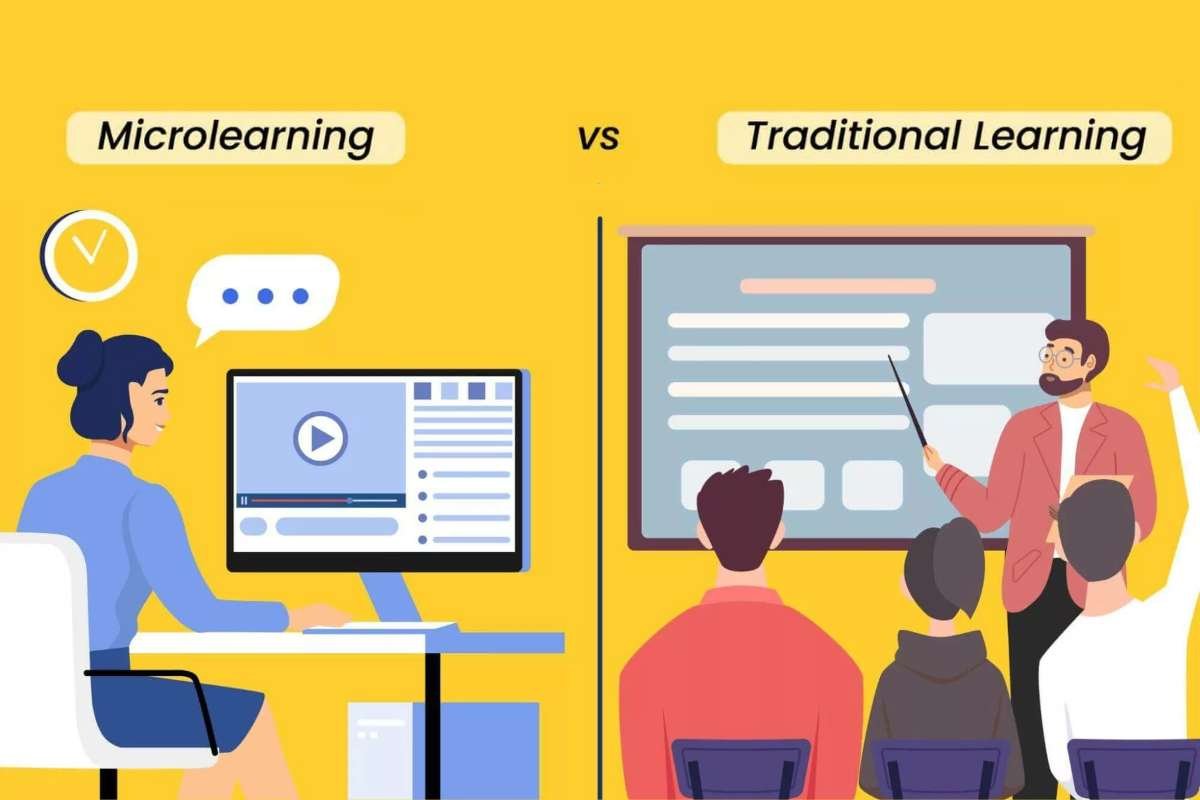
Before comparing the two, it helps to be clear about what each one involves. Traditional training typically refers to structured learning programs – think multi-day workshops, instructor-led sessions, or comprehensive onboarding courses that cover a topic in depth over a sustained period.
Microlearning, on the other hand, breaks content into short, focused units – usually five to ten minutes long – that address a single concept or skill at a time.
Because these modules are short and focused, some teams have even started using compact cameras or smartphone cameras to create their own microlearning content – short clips of a process being done correctly, quick walkthroughs of equipment setup, or peer-recorded tips.
This kind of learner-generated content reinforces the microlearning model by keeping things brief, practical, and grounded in real work. Each format has a different purpose, and neither is inherently superior.
Where Traditional Training Still Excels?

Traditional training remains the stronger choice for complex, nuanced subject matter that requires context and depth. Compliance training, technical certifications, and onboarding programs that need to cover a broad scope of knowledge are all areas where a more structured, longer-form approach tends to produce better outcomes.
It also works well when group dynamics matter. Instructor-led sessions give learners the chance to ask questions, discuss scenarios, and build shared understanding with colleagues – something that short digital modules simply can’t replicate in the same way.
The Real Advantages of Microlearning
Microlearning addresses a practical reality that many training departments have been slow to acknowledge: most employees don’t have large, uninterrupted blocks of time to dedicate to learning.
A ten-minute module that can be completed during a break is far more likely to actually happen than a three-hour workshop that keeps getting rescheduled.
The format also lends itself well to reinforcement. Concepts covered in a longer training session are often forgotten within days. Microlearning modules can serve as timely refreshers, delivered at the moment when an employee actually needs that information on the job.
Matching the Format to the Content
The most common mistake organizations make is applying one approach to everything. Soft skills development, like communication or leadership, often benefits from the discussion and practice that traditional training allows.
Procedural knowledge – how to use a specific software feature, how to follow a safety protocol – is often better suited to short, targeted modules.
Think about how your team actually works. If they’re frequently on the move or working across shifts with limited overlap, microlearning delivered via mobile devices may simply be more accessible.
If your team is largely desk-based and the subject matter is complex, a blended approach might give you the best of both.
The Case for Blended Learning
Many organizations are finding that the most effective strategy isn’t choosing one format over the other – it’s combining them. A traditional training program can provide the foundational knowledge and context, while microlearning modules serve as ongoing support and reinforcement in the weeks that follow.
This approach treats learning as a process rather than an event. Employees build understanding through the initial training, then consolidate it through repeated, brief exposure to the same concepts in different formats over time.
Practical Factors that Influence the Decision
Budget, time, and internal capacity all play a role. Creating high-quality microlearning content requires thoughtful instructional design and often some level of video or interactive production. Traditional training, while resource-intensive to deliver, can sometimes be developed and updated more straightforwardly.
Consider also the tech literacy of your workforce. Microlearning works best when employees are comfortable accessing content via an LMS or mobile platform. If your team includes a significant number of employees who aren’t confident with digital tools, the format itself can become a barrier.

Making the Right Call for Your Organization
There’s no universal answer here, and anyone who tells you otherwise is probably trying to sell you something. The best training approach is the one that fits your content, your people, and your operational reality.
Start by identifying a specific skill gap or training need, then ask honestly which format gives that content the best chance of being learned and retained. Be willing to test, gather feedback, and adjust. Training programs that improve over time are almost always more effective than ones that are set up perfectly but never revisited.
Building a Learning Culture that Lasts
Ultimately, the microlearning vs traditional training debate matters less than the broader question of whether your organization genuinely values continuous learning. Both formats can work well in the right context, and both can fail if employees don’t feel supported in taking time to develop their skills.
Invest in the culture, not just the content delivery method, and you’ll find that the format question becomes much easier to answer.