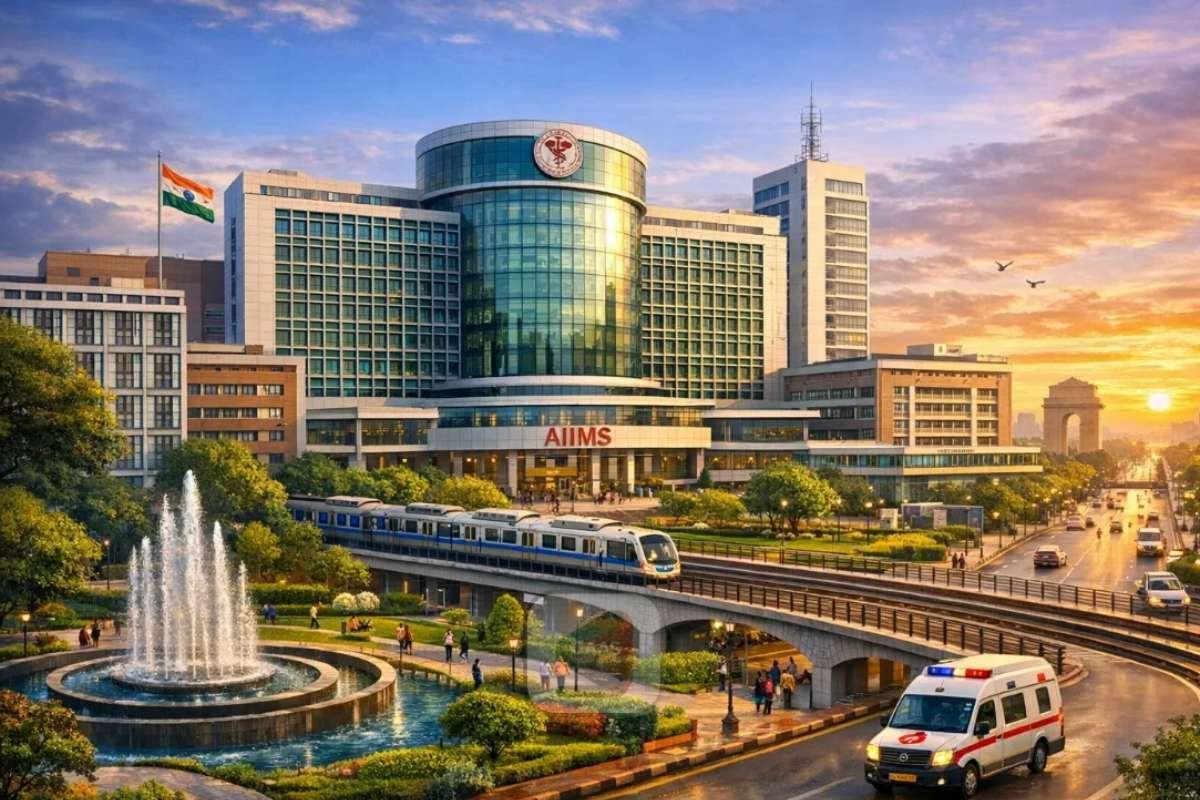
Something significant is happening in global healthcare, and it doesn’t involve a breakthrough drug or a revolutionary piece of technology. It’s geographic. Patients from Nigeria, the UK, the Middle East, Central Asia, and beyond are booking flights to Chennai, Delhi, Mumbai, and Bengaluru. This isn’t for vacation, it’s for surgery, cancer treatment, organ transplants, and fertility care. India’s medical tourism Market is booming, and the numbers behind it are genuinely worth understanding.
If you’re considering India for medical treatment, or even just traveling there, sorting out your documentation before you go is non-negotiable. India’s e-medical visa now extends to citizens of over 171 countries, and using a service that handles the India e-Visa like HandleVisa can save you real time and frustration before you even land.
The Global Problem Sending Patients Abroad
To understand why people are traveling thousands of miles for healthcare, you have to start with what’s happening in their home countries. In the United States, per capita healthcare spending now exceeds $12,000 annually. This is nearly five times the global average. In many OECD countries, waiting periods for complex surgeries like joint replacements, cardiac procedures, and cancer treatments stretch anywhere from six months to over two years. The World Health Organization projects global healthcare workforce shortages will hit 11 million professionals by 2030.
Put those three things together and patients start looking at other options. The global medical tourism market is expected to surpass $100 billion by 2030, and India has positioned itself at the front of that conversation.
Why India Is Winning This?
India’s case to international patients rests on three advantages that are difficult to argue with: cost, quality, and sheer capacity.
On cost, the gap is striking. According to Chief Sanjay Jain, a Lagos-based Indian businessman who has observed Nigeria’s medical travel patterns closely, healthcare services in India are “typically 60-70 percent cheaper than in Western nations.” Research backs that up, too. Complex surgeries run between 10 and 20 percent of what they cost in developed countries, while cancer therapies and organ transplants come in at roughly one-third the price, at comparable and sometimes better quality.
On quality and capacity, India has over 700 internationally accredited hospitals and produces more than 90,000 doctors and 150,000 nurses every year, making it the largest English-speaking medical workforce in the world. That last detail matters enormously to international patients who need to communicate clearly about their treatment and recovery.
India’s medical tourism market, valued at an estimated $18 billion in 2025, is projected by KPMG to reach $58 billion by 2035. That trajectory puts it firmly in the category of major economic sector, not niche industries.
Who Is Actually Making the Trip?

Foreign arrivals for medical purposes in India climbed from under 200,000 in 2020 to over 640,000 in 2024. Around 75 percent of that traffic currently comes from Bangladesh, but the patient base spans 75 countries and is genuinely diverse.
Nigeria is one of the clearest illustrations of demand building across Africa. Jain noted that “patients from Lagos, Abuja, Port Harcourt, Ibadan, Kano, and many other places from Nigeria are increasingly seeking treatment in India.” Nearly half of Nigerian travelers to India are there for cardiac disease, cancer, orthopedic problems, and eye conditions. These are not elective procedures, but serious, complex treatments that aren’t reliably available at home.
“Many Nigerians are drawn to India because of the relatively affordable cost of high-quality medical care,” Jain said. “World-class hospital infrastructure, advanced cutting-edge technologies, and consistently high success rates have strengthened patients’ confidence in seeking specialized medical treatment in India.”
Although the case for India is strong, Jain was clear-eyed about the complications. Some patients undergoing complex procedures abroad have experienced difficulties after returning home, particularly when post-procedure follow-up care isn’t properly planned. He also flagged a reported dip in India’s Medical Tourism Market spending in early 2025, which may reflect gradual improvements in domestic healthcare in countries like Nigeria.
Medical travel involves real health stakes. Cost savings matter, but they need to be weighed carefully against the full picture of care before, during, and after treatment.
What Patients Are Being Treated For?
India has developed deep expertise in the procedures international patients need most. Most of the strengthening of India’s medical tourism market. Heart surgeries, kidney transplants, neurosurgery, bone marrow procedures, oncology treatment, and orthopedic care are among the top draws. High procedure volumes across these specialties translate into better outcomes. Hospitals that perform hundreds of a given surgery annually simply develop a level of competency that lower-volume facilities can’t replicate.
Wellness travel is a separate but growing lane entirely. Kerala has built a reputation for combining surgical care with Ayurvedic and holistic treatment, appealing to patients who want their recovery built into the trip itself. Tamil Nadu remains the top destination overall, attracting 25 percent of all medical tourists.
Getting In: The Practical Details

India has reduced much of the friction involved in entry for medical travelers. The e-medical visa and e-medical attendant visa are available to citizens of over 171 countries. The simplified e-Visa process announced in India’s Union Budget 2025-26 is projected to push sector growth by an additional 15 percent.
Most major Indian hospitals also operate dedicated international patient departments with English-speaking staff who handle appointment scheduling, accommodation, and coordination, often before the patient has even boarded their flight.
India has long been known as the pharmacy of the world. The stated ambition now is to become the hospital of the world. driven by the rapid growth of India’s medical tourism market. With $58 billion in projected sector value by 2035, and an estimated 80 to 100 jobs created for every 1,000 inbound medical tourists, the economic argument is as strong as the medical one.
For international patients doing their research, India is no longer an alternative option. For a growing number of them, it’s the primary one.