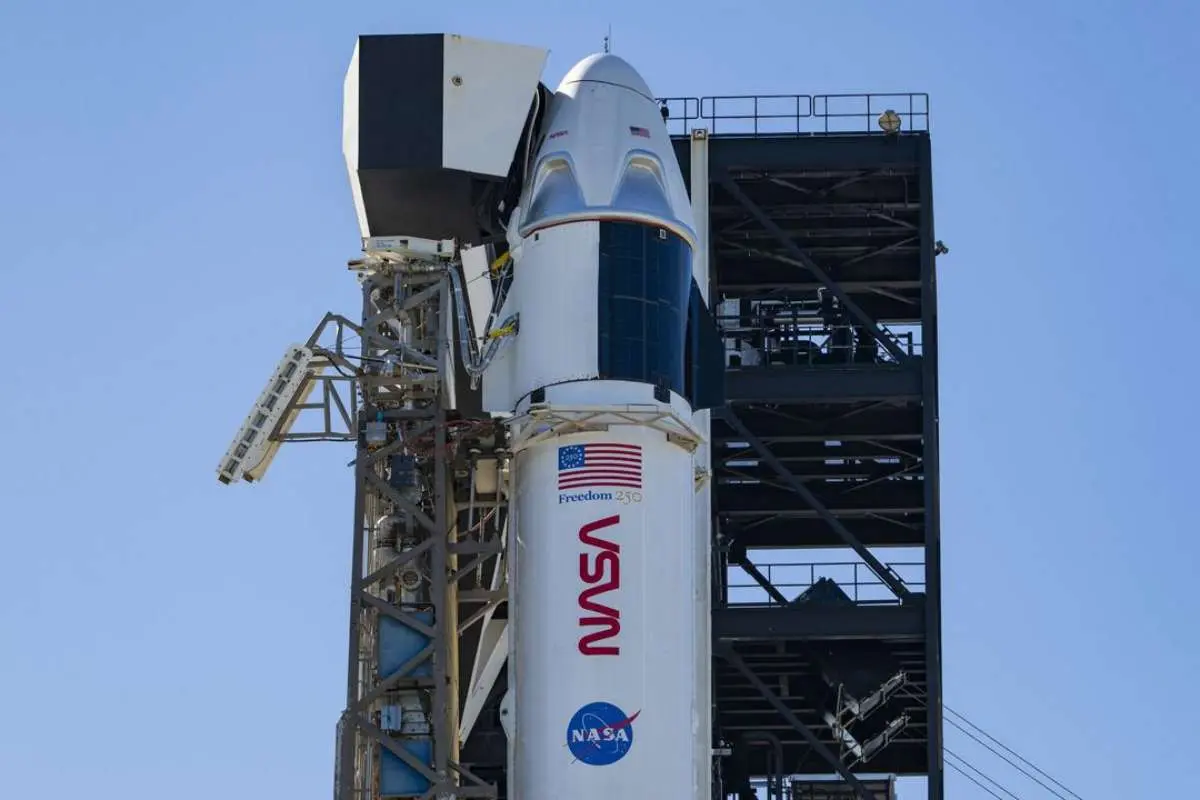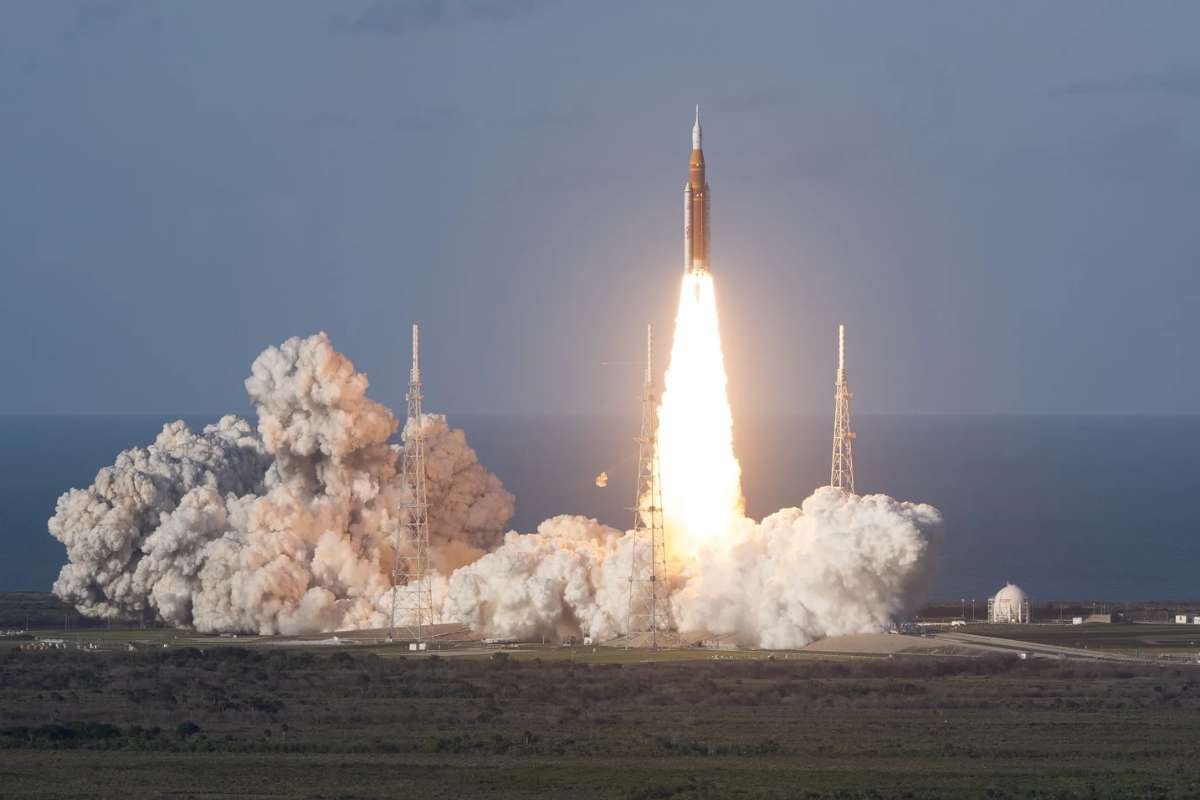
NASA has successfully launched its NASA’s Artemis II Mission, sending astronauts on a groundbreaking journey around the Moon, marking the first crewed lunar mission in more than 50 years. The spacecraft lifted off from the Kennedy Space Center in Florida aboard the Space Launch System (SLS), the most powerful rocket ever built to carry humans into deep space. The launch represents a defining milestone in space exploration, reviving human lunar travel for the first time since the Apollo missions ended in the early 1970s.
The liftoff drew global attention, with thousands gathering near the launch site and millions watching the event live. The roar of the SLS rocket marked not just a technological achievement but also a symbolic return to deep-space exploration for humanity. NASA’s Artemis II Mission is part of NASA’s broader Artemis program, which aims to establish a long-term human presence on the Moon and eventually pave the way for missions to Mars.
On board the Orion spacecraft are four astronauts: Reid Wiseman, Victor Glover, and Christina Koch, along with Jeremy Hansen. This diverse international crew is the first to travel beyond low Earth orbit in decades, highlighting growing global cooperation in space exploration. Unlike a landing mission, NASA’s Artemis II Mission is focused on a lunar flyby, where the crew will orbit the Moon and return safely to Earth, testing critical systems for future missions.
Testing Deep Space Systems and Human Capability Beyond Earth Orbit
NASA’s Artemis II Mission serves as a crucial test flight for NASA’s next-generation deep space exploration systems. Over the course of approximately 10 days, the crew will travel farther from Earth than any humans have before, reaching distances of more than 240,000 miles. Their trajectory will take them around the Moon in a carefully planned path before bringing them back toward Earth.
NASA has described Artemis II as a “full dress rehearsal” for future lunar landing missions. It builds directly on the success of the uncrewed Artemis I mission, which tested the spacecraft’s ability to travel to the Moon and return safely. Now, with astronauts onboard, NASA’s Artemis II Mission focuses on real-time human interaction with spacecraft systems under deep-space conditions.
The Space Launch System rocket plays a critical role in enabling this mission. Its unmatched thrust capability is necessary to propel the Orion spacecraft beyond Earth’s orbit. Once the spacecraft separates from the rocket, Orion operates independently, relying entirely on onboard systems to sustain the crew and maintain precise navigation across vast distances.
Scientific Research, International Collaboration, and the Future of Space Exploration
Beyond its engineering milestones, NASA’s Artemis II Mission also holds major scientific importance. The mission allows researchers to study the effects of deep-space travel on the human body, including exposure to cosmic radiation and the physiological impacts of extended microgravity. These insights are crucial for preparing astronauts for future long-duration missions, including potential journeys to Mars.
Onboard experiments are expected to provide valuable biomedical and behavioral data, helping scientists understand how humans adapt to deep space environments over extended periods. The findings will contribute to improvements in spacecraft design, safety systems, and astronaut health protocols for upcoming missions.
The mission also highlights the importance of international collaboration in modern space exploration. With astronauts from both the United States and Canada participating, Artemis II reflects a shared global commitment to expanding human presence beyond Earth. This cooperation strengthens partnerships that are expected to play a vital role in future lunar and interplanetary missions.
NASA has stated that Artemis II is a foundational step toward building a sustainable lunar exploration program. Future Artemis missions aim not only to land astronauts on the Moon but also to establish long-term infrastructure that could support continuous exploration and scientific research on the lunar surface.
As Artemis II continues its journey, it stands as more than just a mission; it represents a turning point in human spaceflight. By bridging the gap between the Apollo era and future Mars exploration, it signals a renewed ambition to push the boundaries of human capability and extend humanity’s reach deeper into the solar system than ever before.