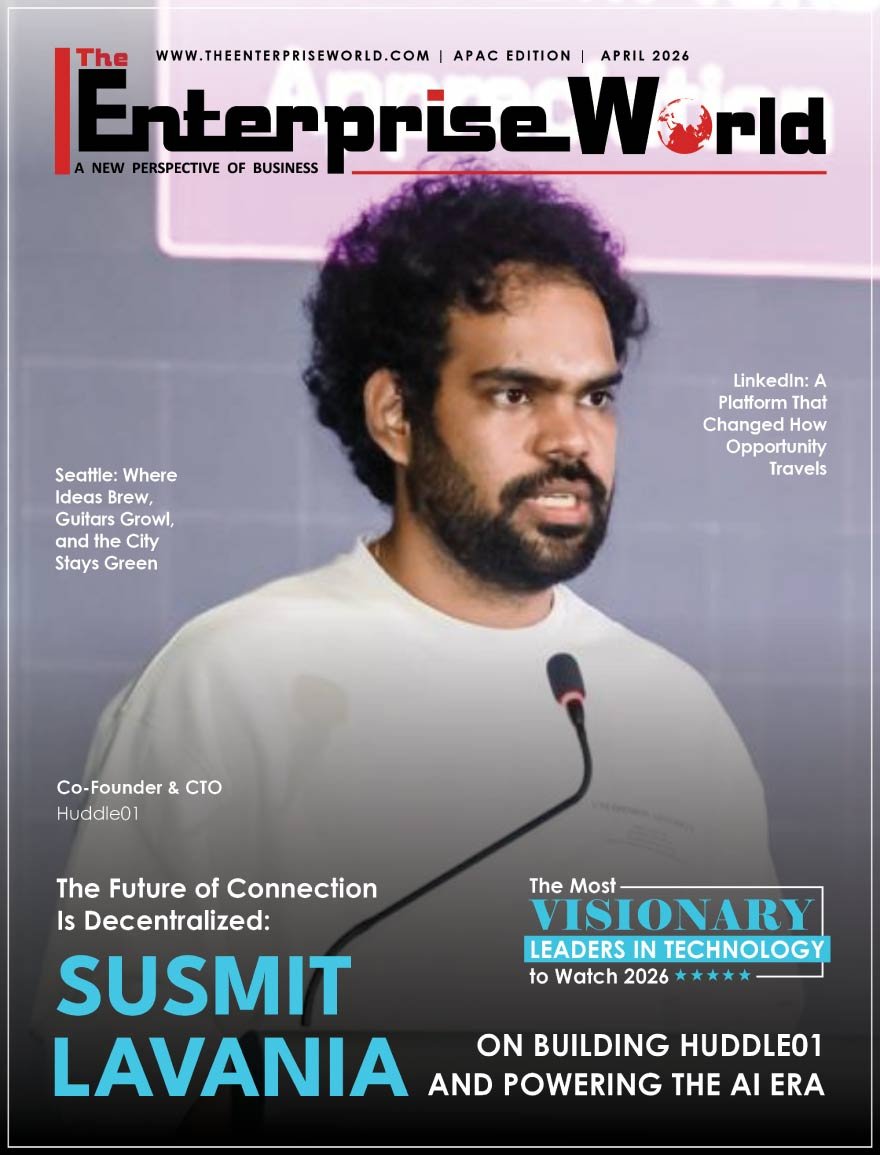
Every revolution needs a catalyst, and for the decentralization of real-time communication, that catalyst is a founder who started with a hackathon question and never stopped building. Susmit Lavania, Co-Founder & CTO of Huddle01, has spent the past five years building not just another video conferencing platform, but a decentralized infrastructure layer capable of powering global communication without relying on centralized servers. What started as a late-night hackathon idea during the 2020 pandemic has now evolved into a full-stack decentralized communication protocol with over 500,000 community members, millions of minutes of communication powered, and a global node network that delivers sub-100 millisecond latency across continents.
Recognized on the Forbes 30 Under 30 list and backed by industry leaders like Protocol Labs and Hivemind Capital, Susmit Lavania brings a rare combination of deep technical expertise in distributed systems and WebRTC with a founder’s instinct for building sustainable, community-driven ecosystems. His journey from hackathon winner to architect of a decentralized real-time communication network (dRTC) reflects a career defined by curiosity, resilience, and a steadfast belief that the internet’s next chapter must be open, accessible, and owned by the communities it serves.
A Hackathon Question That Sparked Decentralized Communication
Susmit Lavania traces Huddle01’s origin to the 2020 pandemic, when he observed that global communication infrastructure remained centralized, expensive, and fragile. Drawing from his blockchain background, he and co-founder Ayush Ranjan questioned whether communication could be powered by a distributed set of participants. That led to an ETHGlobal hackathon, where they built a decentralized real-time communication layer on WebRTC, winning multiple prizes. Selected for ConsenSys Tachyon Accelerator, they adopted a demand-first approach: build usage first, then decentralize.
As adoption grew, they tackled sub-100 millisecond latency challenges by assembling a distributed systems team and rebuilding their infrastructure. With that foundation, they built a network where anyone can run nodes, incentivized through crypto-economic mechanisms. Today, Huddle01 is a full-stack decentralized communication protocol with 500,000+ community members and millions of minutes powered, realizing Susmit Lavania’s vision of decentralizing one of the internet’s most critical layers.
The Proprietary Architecture Powering Huddle01’s dRTC Network
What sets Huddle01 apart is its decentralized infrastructure layer called the dRTC network—a fundamental shift from centralized architectures with their high costs, vendor lock-in, and limited transparency. The network routes audio and video through a distributed network of nodes operated by participants worldwide, contributing bandwidth, compute, and routing capacity, and the hardest challenge was enabling sub-100 millisecond latency across continents, solved through WebRTC with a distributed routing layer performing dynamic route discovery across geographically optimized relay nodes, alongside cascading scaling that distributes workloads hierarchically for horizontal scaling.
To sustain this decentralized model, security is ensured through end-to-end encryption via DTLS-SRTP, secure key exchange, and identity verification, guaranteeing nodes function as encrypted packet routers, while a crypto-economic layer incentivizes node operators based on uptime, latency, and reliability, creating a self-regulating, participatory network that lets developers build without expensive centralized APIs.
Lessons in Leadership During Huddle01’s Evolution
A pivotal moment in Susmit Lavania’s leadership came during Huddle01’s transition from an early-stage builder phase to a full-scale network and community-driven ecosystem. He shifted from being deeply hands-on on the technical side to learning how to manage and lead a much larger team across product, infrastructure, research, community, and operations, communicating vision clearly and empowering others. This growth was tested while tackling the hardest engineering problems in real-time communication infrastructure, requiring patience, experimentation, and rebuilding components to achieve global scale.
The most pivotal moment came with node sales, bringing pressure around network growth, token economics, and long-term sustainability, a phase that taught him transparent communication and managing expectations. As the ecosystem grew to 500,000+ community members, Susmit Lavania learned that technology alone is never enough; people need to feel part of the journey. The key lesson: building foundational infrastructure requires patience, resilience, and staying focused when the path forward is uncertain.
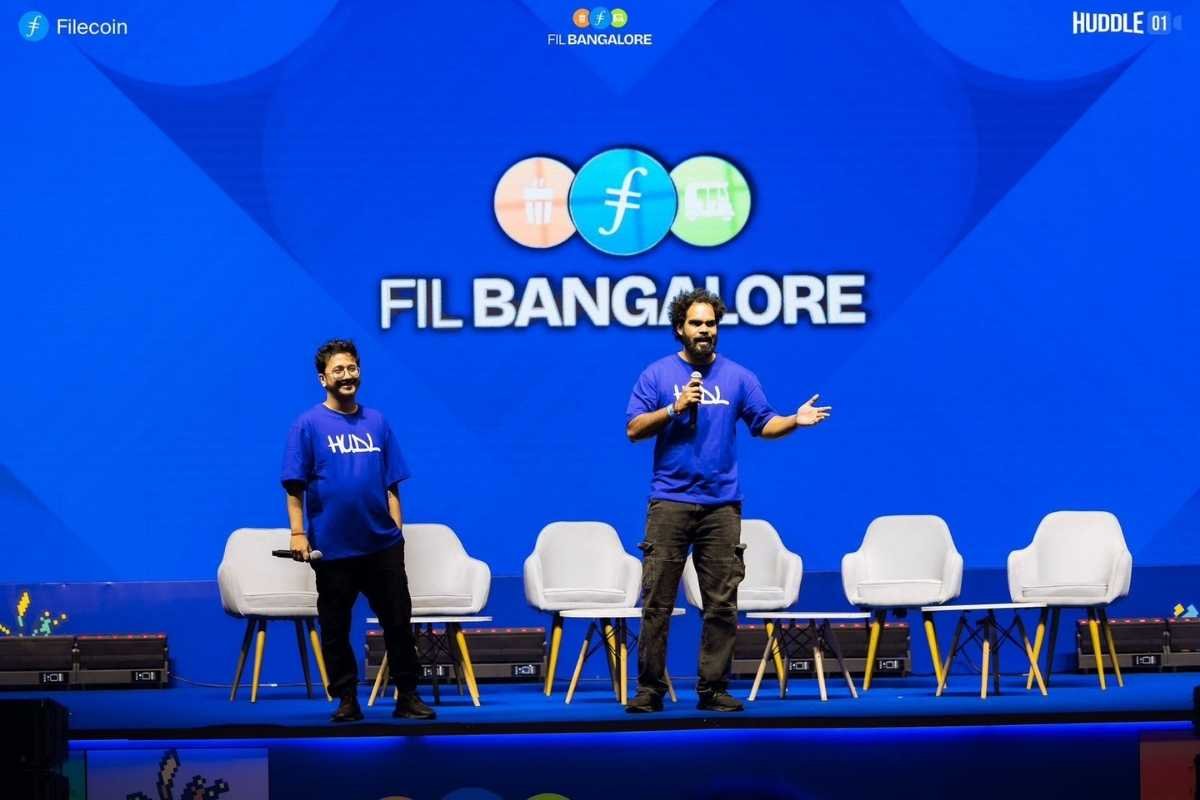
Huddle01’s Growth Across Users, Community, and Infrastructure
From a hackathon prototype to a decentralized real-time communication network, Huddle01 has tracked growth across product usage, community expansion, developer adoption, and network participation with metrics that tell the story of its evolution.
1. Product Usage & Platform Adoption
- The Huddle01 communication platform has crossed 209,000+ total users
- Over 1.7 million meetings have been hosted, generating more than 1.2 billion participant minutes of communication
- Monthly meeting counts peaked at over 190,000 meetings in a single month
- Monthly participant minutes reached over 150 million minutes during peak usage periods
- These metrics indicate sustained engagement rather than just user signups
2. Decentralized Ecosystem Growth (Huddleverse / Nexus Testnet Program)
- Over 160,000+ Nexus users onboarded into the ecosystem
- The network has distributed more than 318.7 million Huddle Points (HPs), rewarding participation through interacting with the platform, onboarding new users, community engagement, and network quests
- Onboarding activities saw over 150,000 users, while invite campaigns had more than 130,000 participants
3. Referral & Community-Led Distribution
- The network’s referral system has enabled highly active users to onboard hundreds of new participants each
- Some community members generated over 250 successful referrals individually, reflecting genuine community-driven adoption
4. Partnership Integrations
- Partner onboarding campaigns contributed over 1,600 users from Intract, more than 1,000 from SUPR campaigns, and additional users from Galxe and other Web3 partner ecosystems
5. Global Community Growth
- Huddle01 has grown to a global community of more than 500,000+ members, including developers building on the SDKs, node operators participating in decentralized infrastructure, and users engaging with the communication platform
6. Key Product Milestones
- Launch of the Huddle01 decentralized real-time communication architecture (dRTC)
- Release of developer SDKs for building Web3 communication applications
- Deployment of global media infrastructure supporting cross-continent communication under 100 ms latency
- Launch of the Huddleverse ecosystem and Nexus testnet program
- Introduction of node infrastructure enabling participants to power the network
The Recognitions That Shaped Huddle01’s Journey
Huddle01 has earned recognition across Web3, startup, and developer ecosystems through accelerator programs, venture backing, and media coverage milestones that Susmit Lavania notes helped validate their vision of building decentralized infrastructure for real-time communication.
1. Accelerator Recognition
- Early validation came with Huddle01’s selection into the prestigious ConsenSys Tachyon Accelerator, a leading program in the Ethereum ecosystem.
- Being part of it gave access to mentors, founders, and investors who had already built some of the most important infrastructure protocols in Web3.
- The experience helped evolve Huddle01 from a hackathon prototype into a more structured infrastructure startup.
- It also provided the opportunity to refine technical architecture and long-term roadmap while interacting closely with the broader Web3 ecosystem.
2. Venture Backing & Funding
- Following the accelerator, investor interest grew, with early funding including $1.7 million led by Protocol Labs, the organization behind IPFS and Filecoin.
- For Susmit Lavania, this was particularly meaningful because Protocol Labs has been at the forefront of building decentralized internet infrastructure.
- Their support reinforced that decentralized communication networks could become a critical part of the future internet stack.
- Later, an additional $2.8 million seed round led by Hivemind Capital was raised, bringing total funding to approximately $4.5 million.
- The round included respected investors and builders: Balaji Srinivasan (former CTO of Coinbase), Stani Kulechov (founder of Aave), Juan Benet (founder of Filecoin), and Dan Romero (former Coinbase executive).
- Having such experienced people backing the project gave a lot of confidence that they were working on an important problem.
3. Media Coverage
- YourStory featured Huddle01 as a Web3-powered alternative to traditional centralized video conferencing platforms like Zoom or Google Meet.
- The article highlighted how they were attempting to build a decentralized communication infrastructure by combining peer-to-peer networking with blockchain-based coordination.
- Inc42 covered the funding and technology vision, describing Huddle01 as a company building a Decentralized Real-Time Communication Network (dRTC) capable of powering communication applications across Web3 ecosystems.
4. Personal Recognitions
- Beyond company-level recognition, Susmit Lavania has received personal recognition reflecting the broader journey with Huddle01.
- Included in the Forbes 30 Under 30 list, recognizing young entrepreneurs and innovators building impactful companies across industries.
- For him, that recognition was less about individual achievement and more about the work the team has been doing to push decentralized communication infrastructure forward.
- Named among the Top 10 Best CTOs by Tradefloc Magazine, recognizing technology leaders driving innovation in emerging areas such as blockchain infrastructure, decentralized networks, and next-generation internet technologies.

Strategic Partnerships Driving Huddle01’s Growth
Partnerships have always been a core part of scaling Huddle01, driven by a philosophy of embedding into real-world use cases rather than building in isolation. Across verticals, they’ve partnered with Xai Foundation for decentralized, low-latency communication in gaming, EtherMail for Web3-native messaging, and Cal.com with Meet with Wallet to bridge scheduling, identity, and on-chain access.
On the infrastructure side, NodeOps and Aethir help scale compute and node participation, while Arbitrum, Offchain Labs, 0G, and Protocol Labs align with their long-term vision of decentralized internet infrastructure. For community and distribution, they engage with Farcaster, ETHGlobal, Orange DAO, and Superscript to stay close to builders and drive adoption. Leading Web3 investors like Fenbushi Capital and Hashed Emergent also help expand their reach across global markets.
Overcoming growth barriers to deliver real-world results
Scaling Huddle01 hasn’t been straightforward. Operating at the intersection of real-time communication and decentralized infrastructure, both complex domains on their own, has presented unique challenges.
1. Talent & Team Building
- One of the earliest and most significant challenges was finding the right talent with deep expertise in RTC, especially in technologies like WebRTC
- Building a team capable of not just using these systems but rethinking them from first principles took time and deliberate effort
2. Technology & Infrastructure
- One of the hardest problems was building and scaling their own SFU (Selective Forwarding Unit)
- Optimizing its internal algorithms to handle real-world conditions, varying bandwidths, device capabilities, and constantly changing network states was incredibly challenging
- Had to design cascading scaling architectures that could dynamically adapt based on user distribution and load, while maintaining low latency and high quality
- Ensuring consistent performance across browsers and devices added another layer of complexity, as real-time communication systems are extremely sensitive to edge cases
3. Decentralization & Incentive Design
- Beyond the core RTC stack, decentralizing the network introduced a completely different set of challenges
- They weren’t just building infrastructure; they were designing a system of incentives
- This meant working deeply across cryptoeconomics, game theory, and mechanism design to ensure node operators are aligned with the network’s performance and reliability goals
- Integrating this with Layer 2 and Layer 3 technologies, while keeping the system efficient and scalable, required rethinking how traditional RTC infrastructure is deployed and monetized
4. Operational & Stakeholder Management
- From an operational perspective, managing expectations while introducing a fundamentally new model has been a learning curve
- Whether node operators, developers, or users, everyone interacts with the network differently, and aligning these stakeholders while scaling has been an ongoing process
5. Client Success Stories & Impact
- One of the strongest examples is Farcaster, where Farhouse, an application built using Huddle01, became one of the most widely used apps in the ecosystem
- Farhouse brought live, real-time audio/video interactions into Farcaster, enabling communities to host conversations, events, and spontaneous discussions natively within a decentralized social graph
- Seeing it emerge as a highly used application validated both the demand and the reliability of their infrastructure in production environments
- Strong adoption across other Web3 social ecosystems like Lens and projects like Orbs, where developers are leveraging Huddle01 to power real-time interactions, community coordination, and social experiences
- Their SDKs have enabled over 200+ projects to build on top of Huddle01
- Many of these projects are open-sourced and published on GitHub, reflecting genuine developer traction rather than just top-down integrations
The Huddle01 Approach to Culture and Experimentation
At Huddle01, innovation, experimentation, and learning aren’t just encouraged; they’re expected. Transparency and openness give everyone visibility into decisions and direction, creating a shared context that drives better ideas and stronger ownership. Continuous learning flows through internal demos, async updates, and deep-dive discussions, while rejecting rigid silos, anyone can explore other parts of the stack, and some of the best ideas come from people stepping outside core roles.
Accessibility is key; Susmit Lavania remains directly available, so ideas aren’t blocked by hierarchy, enabling quick experimentation and ownership. Their processes focus on shipping and iteration, building fast, testing in real environments, and refining based on feedback. Internal “build weeks” and lightweight hackathons let teams explore ideas outside the roadmap, while open Slack channels encourage serendipitous conversations and cross-pollination. Strong personal connections through outings and off-sites build trust and camaraderie, making collaboration smoother. His formula: curiosity rewarded, information open, execution fast, transparency, ownership, and rapid iteration drive innovation.
Enabling the infrastructure behind intelligent, real-time systems
Susmit Lavania is excited by the shift from “AI tools” to “AI systems that act,” where agentic AI executes tasks, orchestrates workflows, and makes decisions, moving beyond experimentation into full workflow orchestration and multi-agent collaboration, forming an “AI operating layer” for businesses and users. Alongside this, he notes the rise of multimodal models, efficient inference, hardware acceleration, and Embodied AI in robotics and physical environments, a convergence he calls the internet’s next frontier.
The future is about giving AI the infrastructure to act, which is why Huddle01 sits at this intersection with Huddle Cloud, a decentralized compute layer letting developers run AI agents at a fraction of traditional cloud costs, leveraging years of work on real-time communication through their dRTC stack. His vision: as AI moves from copilots to operators in 2026, Huddle01 will power the infrastructure layer they run on in real time, at scale, and decentralized.
Privacy and ethics are built into every layer
Trust isn’t a feature but the foundation Huddle01 builds on, which is why Co-Founder & CTO Susmit Lavania embeds privacy and ethical practices as core design principles across their stack. Through end-to-end encryption (E2EE) via WebRTC Insertable Streams, media frames are encrypted on the sender’s device and only decrypted by the receiver, so even intermediate nodes never access raw content. Decentralization reinforces this by routing communication through a distributed network, reducing single points of failure and centralized data capture risks.
Running entirely in the browser, Huddle01 keeps control with the user through browser-level permissions, privacy-by-design data handling, and Meet with Wallet for on-chain identity, reducing centralized vulnerabilities. As they expand into AI-driven communication, consent, transparency, and user control remain paramount, ensuring users always know when AI is involved. Operationally, strong internal security, continuous monitoring, and regular testing make security a shared responsibility across the organization.
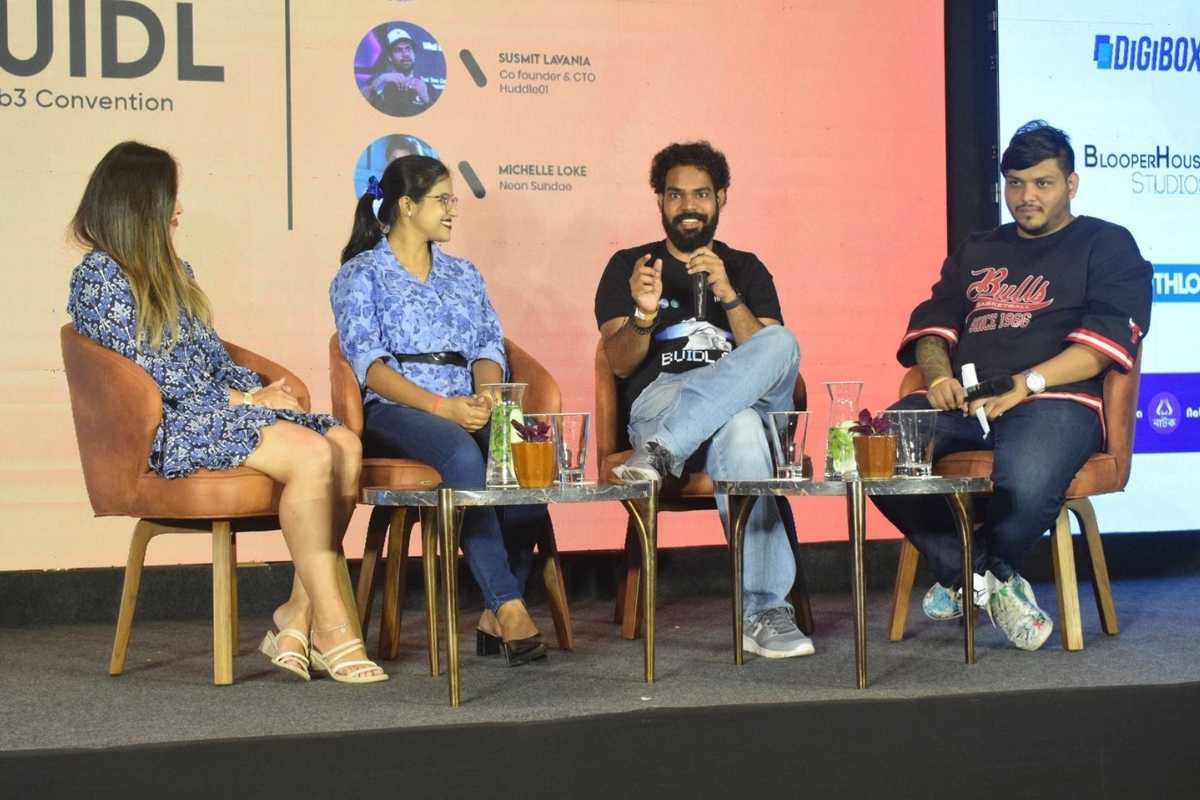
Huddle01’s Vision for the Next 3–5 Years
What started as a late-night hackathon idea now powers millions of conversations worldwide. For Co-Founder & CTO Susmit Lavania, the next 3–5 years are about building Huddle01 into a foundational infrastructure layer for real-time communication and coordination on the internet, making it the default choice for video, voice, and AI-native applications by obsessing over reliability, scalability, and developer-friendliness through enhanced SDKs, improved performance, and a simplified developer experience. Sustainability is equally vital, with usage-based pricing, enterprise-grade offerings, and compute services via Huddle Cloud.
As it matures, Huddle01 will expand into a real-time coordination layer for AI agents, embracing the shift from human-to-human to human-to-agent and agent-to-agent communication. Long-term, Susmit Lavania envisions a full-stack platform combining communication, compute, identity, and coordination where value flows sustainably between users, developers, and node operators.
1. The Path of Action: A Sanskrit Classic
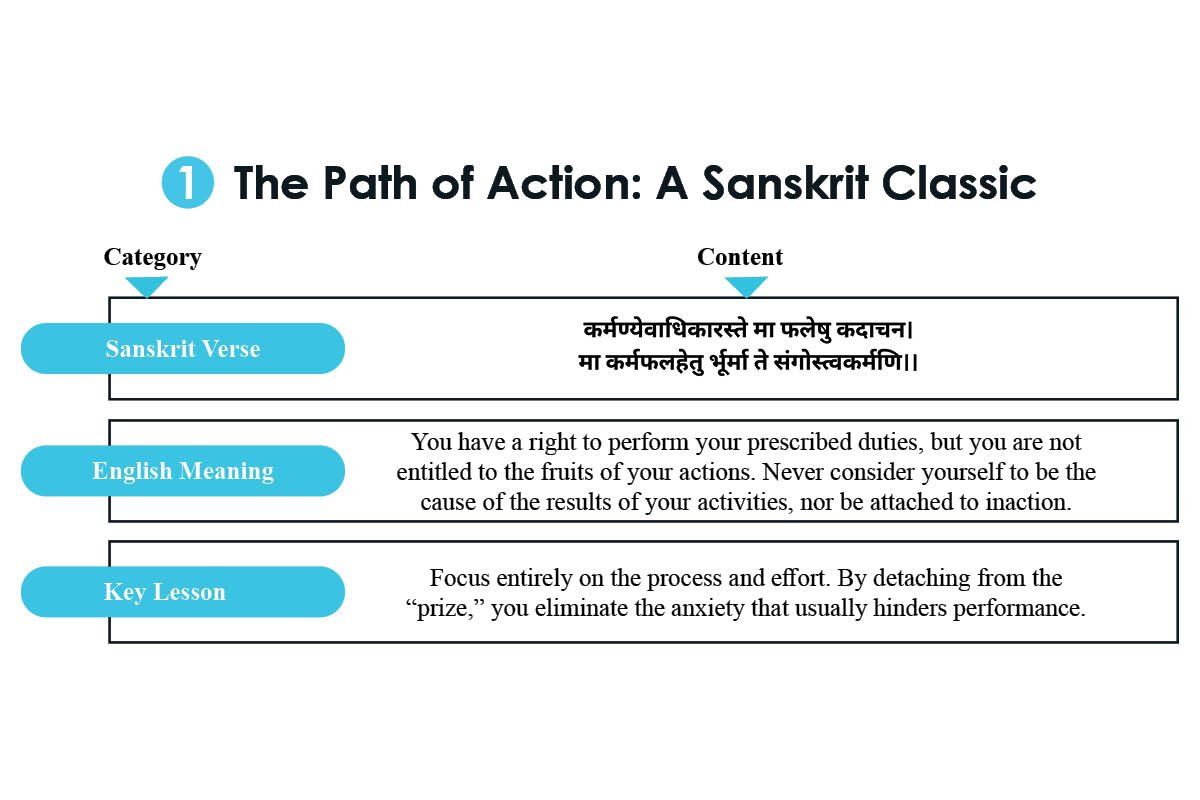
| Category | Content |
| Sanskrit Verse | कर्मण्येवाधिकारस्ते मा फलेषु कदाचन। मा कर्मफलहेतु र्भूर्मा ते संगोस्त्वकर्मणि।। |
English Meaning | You have a right to perform your prescribed duties, but you are not entitled to the fruits of your actions. Never consider yourself to be the cause of the results of your activities, nor be attached to inaction. |
| Key Lesson | Focus entirely on the process and effort. By detaching from the “prize,” you eliminate the anxiety that usually hinders performance. |
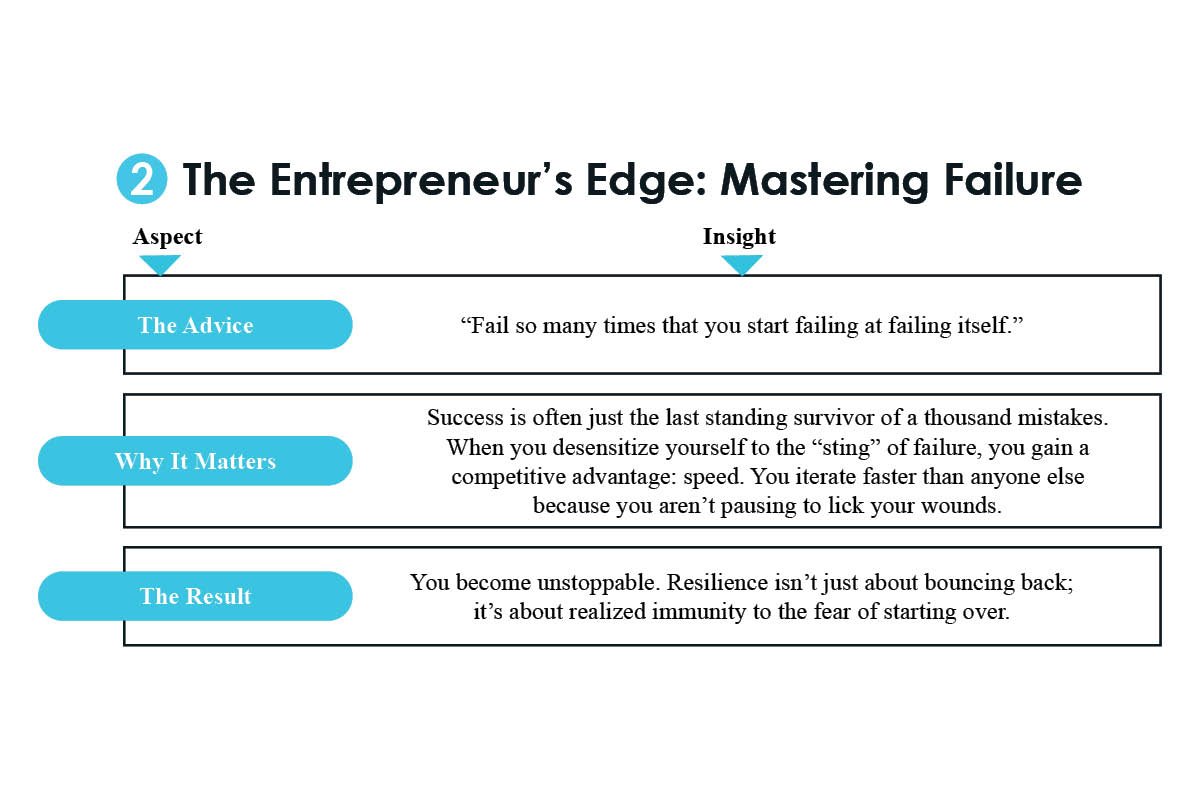
2. The Entrepreneur’s Edge: Mastering Failure
| Aspect | Insight |
| The Advice | “Fail so many times that you start failing at failing itself.” |
| Why It Matters | Success is often just the last standing survivor of a thousand mistakes. When you desensitize yourself to the “sting” of failure, you gain a competitive advantage: speed. You iterate faster than anyone else because you aren’t pausing to lick your wounds. |
| The Result | You become unstoppable. Resilience isn’t just about bouncing back; it’s about realized immunity to the fear of starting over. |
Open Letter: Advice for the Next Generation of Tech Leaders
To everyone entering the tech space today,
Never stop tinkering or being curious; the world evolves fast, and the ones who win are constantly learning.
This journey isn’t about technology itself but the problems you solve and the value you create, and though there will be phases where immense effort yields no results, consistency compounds over time.
The only constant is change, so adapt quickly because adaptability is a survival strategy, and you need to genuinely love what you’re building, as that conviction and passion sustain you through uncertainty, pressure, and setbacks.
Don’t underestimate networking and distribution, since great products don’t succeed in isolation, and learn to manage praise, criticism, and expectations from your team, users, and yourself, because how you handle the highs and lows defines your journey more than the outcomes.
This path demands sacrifices, but if you stay consistent, stay curious, and stay grounded, it will be worth it.
Susmit Lavania,
Co-Founder & CTO, Huddle01
Key Takeaways:
- Never stop tinkering or being curious, constant learners, not know-it-alls, win.
- Technology is just a tool; focus on solving real problems and creating value.
- Consistency compounds keep showing up, especially when results don’t come fast.
- Adaptability is survival, embracing change instead of resisting it.
- Love what you build, deep conviction and passion carry you through hard times.
- How you handle highs and lows matters more than the outcomes themselves.