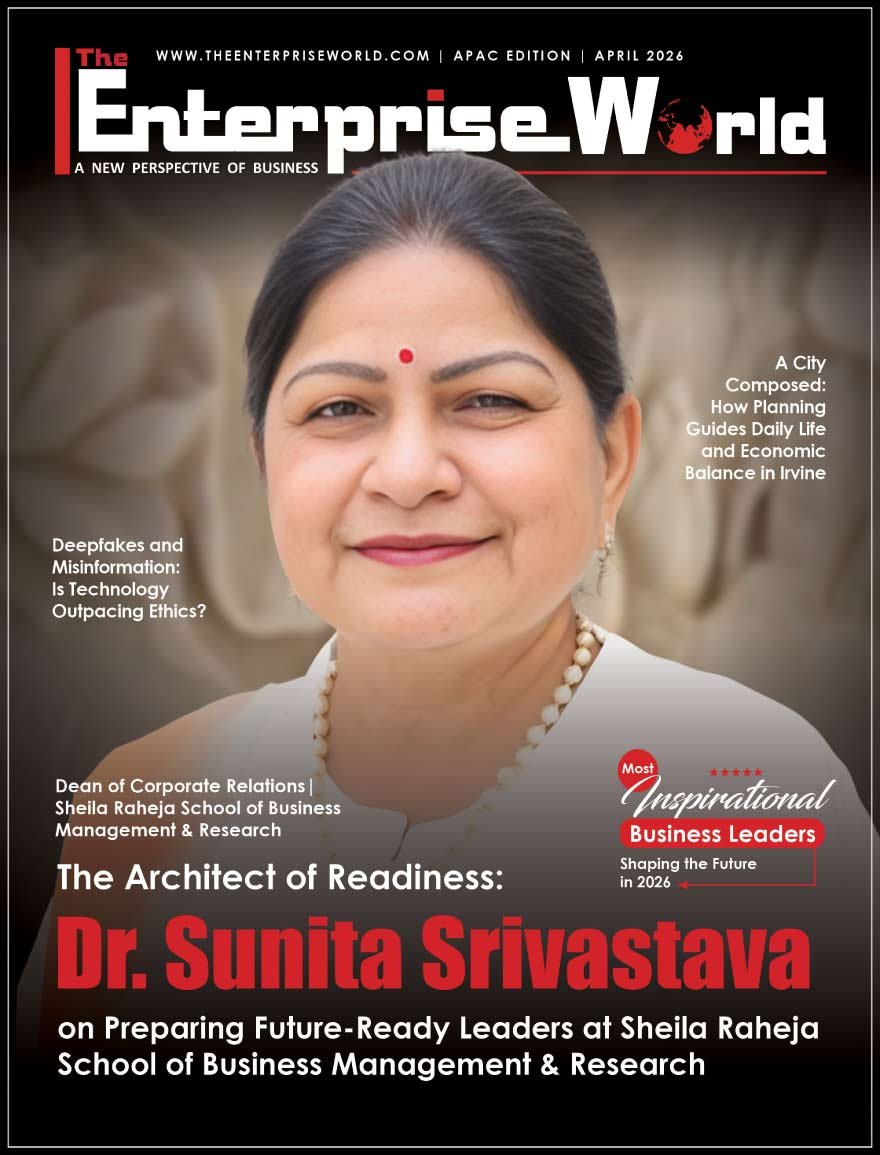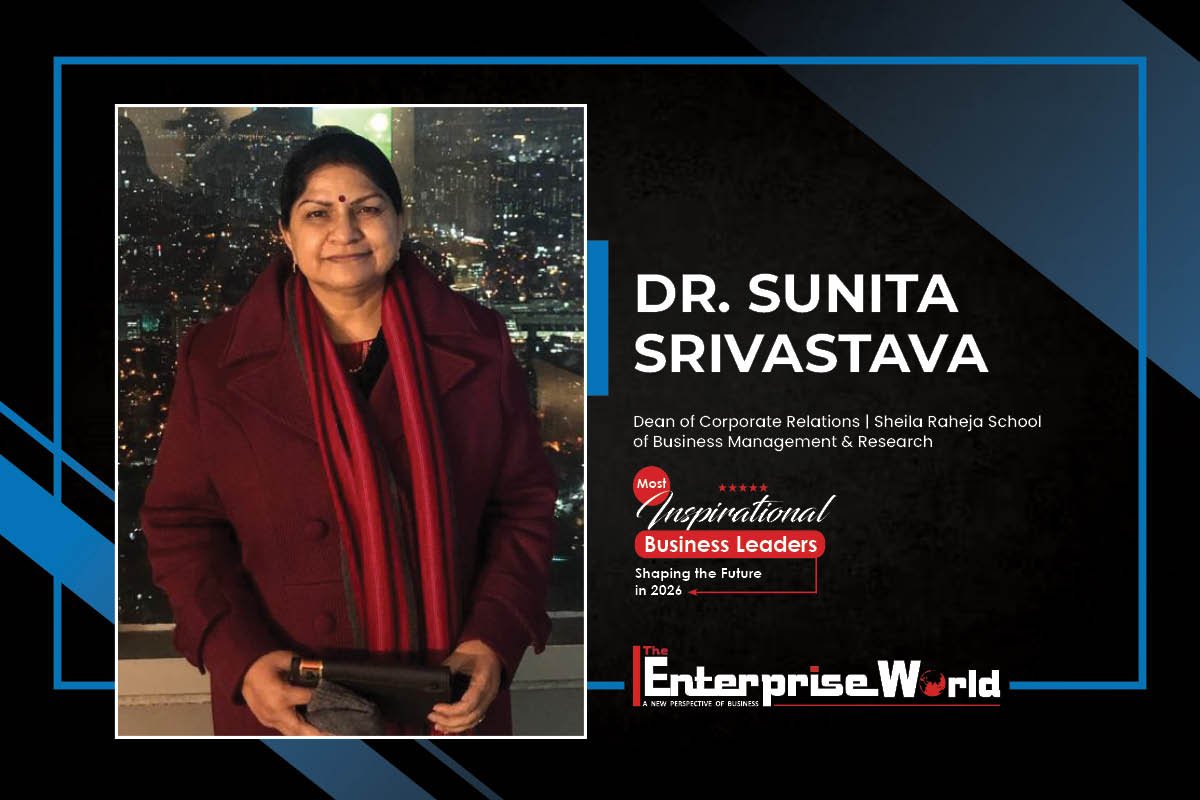
The world of business is no longer what it was a decade ago, as digital disruption, shifting workplace cultures, and the relentless demand for data-driven decision-making have rewritten the rules of corporate success yet management education has often struggled to keep pace, leaving a widening gap between classroom learning and industry readiness. It is precisely here that Dr. Sunita Srivastava, Dean of Corporate Relations at Sheila Raheja School of Business Management & Research, has chosen to make her stand by venturing where traditional academicians rarely tread: into the spaces where education meets execution, building bridges between students and employers, between curriculum and corporate need.
With a career steeped in mentorship and a quiet determination to transform uncertain graduates into confident professionals, she is doing something fundamentally different ensuring that management education produces not just degree holders, but future-ready leaders equipped with both competence and conscience, a credibility etched not in claims but in the career grooming programs, industry partnerships, and skill-based frameworks she has pioneered over the years.

From Recognizing a Critical Gap to Shaping Responsible Leaders
Dr. Srivastava’s professional journey is a testament to the belief that education is a transformative force, with her path being deeply rooted in mentorship and driven by the conviction that management education can shape not just careers but also responsible leaders for society. While she had a natural inclination toward teaching and facilitating growth, it was an early, powerful realization that defined her trajectory: education is not merely about delivering knowledge; it is about transforming potential into capability, an insight that inspired her commitment to academia, specifically in management education where theory meets practice.
The defining moment of her career came when she recognized a significant gap between academic learning and industry expectations, observing that while students were academically competent, they often lacked exposure to real-world problem-solving, professional communication, and career planning a realization that became her life’s mission and motivated her to actively work on bridging the industry-academia gap by architecting training programs, career grooming initiatives, and placement support activities.
Over the years, this focus evolved her role from the classroom into leadership positions where she could influence student development, industry partnerships, and institutional growth, and today, as part of the leadership team at the institution, her focus remains on ensuring students graduate with the mindset, skills, and adaptability required to succeed. However, what continues to inspire her most is witnessing her students transition from uncertain young graduates into confident professionals.
Lessons in Adaptability and Collaboration
Few tests challenge a leader like standing at the intersection of tradition and transformation, a test Dr. Srivastava faced when the foundations of management education began to shift. She points to recent years of navigating rapidly changing expectations, as the business environment became extremely dynamic, driven by digital transformation, data analytics, globalization, and evolving workplace cultures. This seismic shift demanded that institutions completely rethink traditional teaching and swiftly incorporate experiential learning, industry exposure, and skill-based education.
Adapting to change while maintaining consistency proved both challenging and rewarding for Dr. Srivastava. Her biggest lesson was the supreme importance of continuous learning and adaptability, understanding that leadership demands listening, evolving, and implementing change without losing sight of the larger vision. She also learned that transformation requires collaboration, demanding collective effort from faculty, industry partners, administrators, and students. This phase reinforced her core belief: strong leaders must stay open to new ideas, resilient in uncertainty, and focused on long-term impact over short-term gains.
Crafting Responsible Leaders at the Intersection of Knowledge and Insight
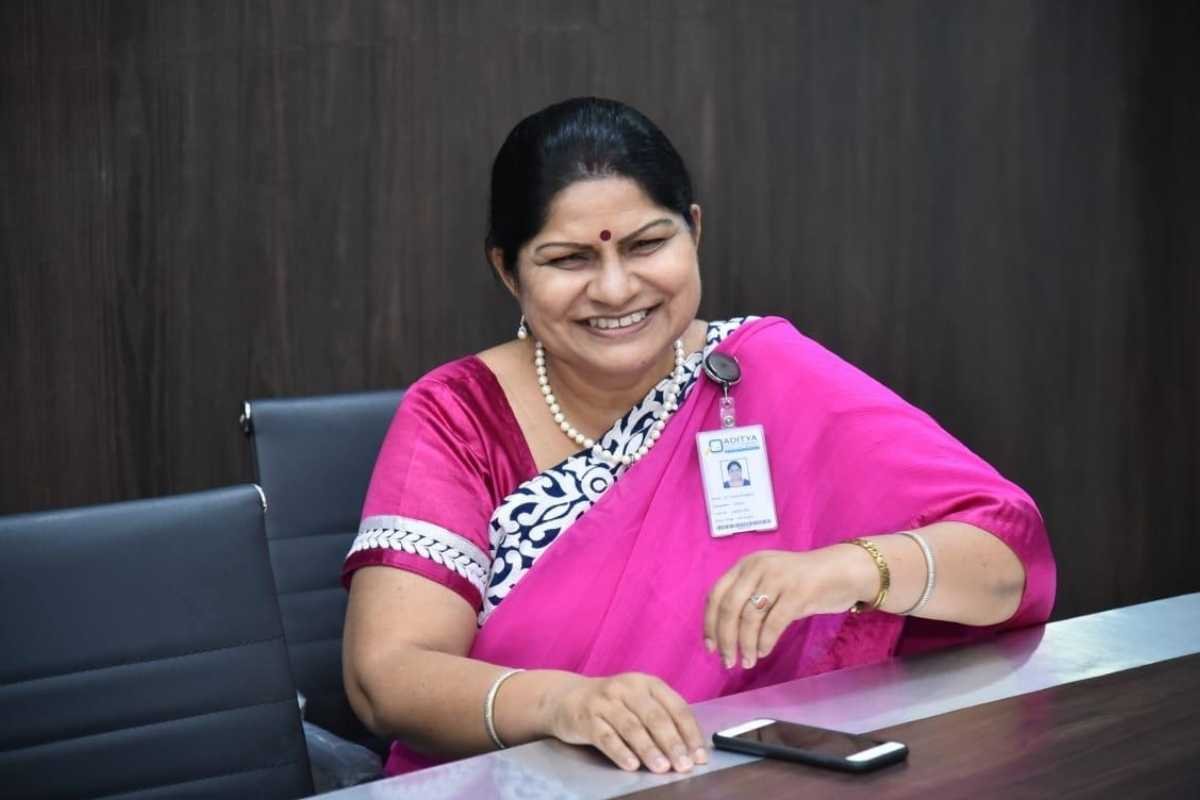
At the heart of Sheila Raheja School lies a purpose beyond textbooks, a purpose Dr. Srivastava articulates with quiet conviction. She emphasizes that the institution exists to nurture future-ready professionals who combine analytical capability, ethical values, and leadership potential, ensuring every student emerges complete. The institution believes in creating an ecosystem where academic knowledge, industry insights, and personal development intersect, shaping students through immersive exposure to the world they are about to enter.
The approach focuses on developing young minds who can think critically, solve complex business problems, and adapt to emerging global trends, recognizing that agility and depth are the twin pillars of modern success. Dr. Srivastava affirms that the ultimate aim is to build not just managers, but responsible leaders who understand the broader economic and social implications of business decisions, ensuring that every graduate leaves with a conscience as sharp as their competence and a heart as informed as their mind.
Five Pillars That Set the Institution Apart
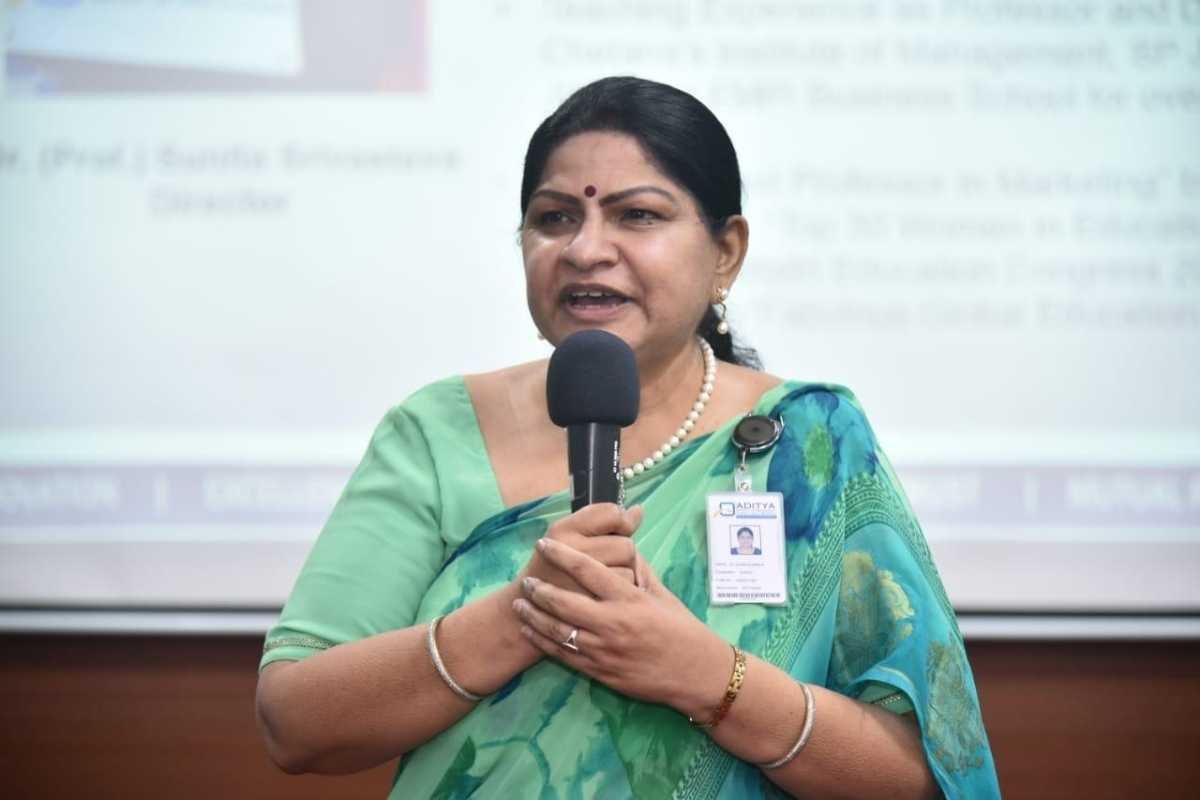
Every great institution has a fingerprint something unique that leaves its mark on every student who passes through and for the institution, Dr. Srivastava believes that fingerprint is found in five carefully cultivated differentiators.
She elaborates on the distinct aspects that set the institution apart:
- Industry-Oriented Curriculum: By integrating practical case studies, corporate interactions, and live projects, programs remain aligned with industry requirements bridging the gap between classroom learning and corporate practice.
- Strong Corporate Engagement: Industry sessions, mentorship, and internships give students real-world exposure, learning directly from leaders who tackle business challenges.
- Holistic Student Development: The focus extends far beyond academic grades to include career planning, professional grooming, leadership training, and communication skills, recognizing that technical knowledge alone does not build a successful professional.
- Focus on Employability: Through mock interviews, group discussions, and career counselling, students step into recruitment prepared and confident, not anxious.
- Experiential Learning Environment: A rich calendar of workshops, seminars, guest lectures, and industry visits enriches the learning journey, helping students connect theory with practice in ways that classrooms alone cannot achieve.
Initiatives That Turn Classrooms into Launchpads
Dr. Srivastava treats the industry-academia bridge as a personal mission, crafting initiatives that touch every stage of a student’s journey.
She shares the key frameworks she has implemented to strengthen this connection and enhance employability:
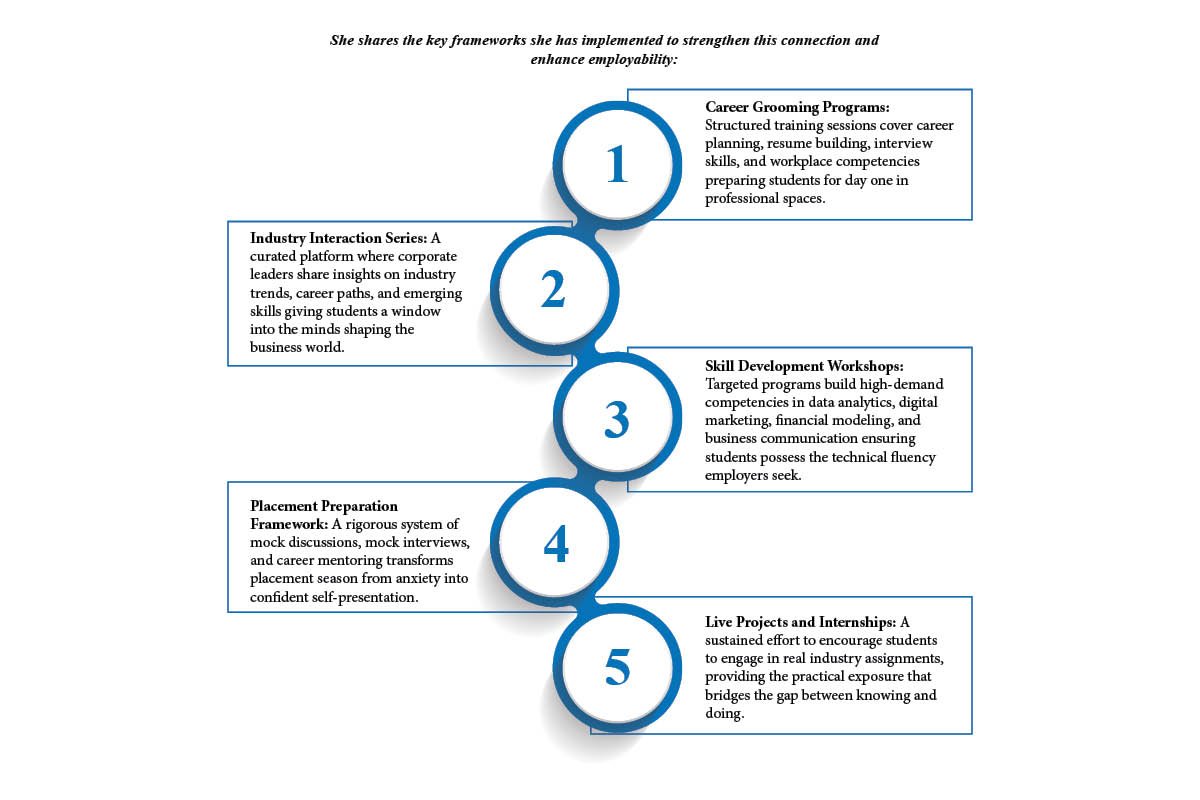
- Career Grooming Programs: Structured training sessions cover career planning, resume building, interview skills, and workplace competencies preparing students for day one in professional spaces.
- Industry Interaction Series: A curated platform where corporate leaders share insights on industry trends, career paths, and emerging skills giving students a window into the minds shaping the business world.
- Skill Development Workshops: Targeted programs build high-demand competencies in data analytics, digital marketing, financial modeling, and business communication ensuring students possess the technical fluency employers seek.
- Placement Preparation Framework: A rigorous system of mock discussions, mock interviews, and career mentoring transforms placement season from anxiety into confident self-presentation.
- Live Projects and Internships: A sustained effort to encourage students to engage in real industry assignments, providing the practical exposure that bridges the gap between knowing and doing.
Dr. Srivastava emphasizes that these initiatives collectively ensure that students graduate not merely with academic knowledge, but with the industry-relevant skills that make them ready for the professional world.
Building Credibility Through Connections That Count
Credibility in education is forged through relationships, and Dr. Srivastava takes pride in how her institution has strengthened its place in the ecosystem through meaningful collaborations. She shares that the institution continues to enhance its credibility through sustained collaborations with industry professionals, academic experts, and corporate partners. Regular corporate engagements, knowledge sessions, and academic initiatives have helped build strong industry relationships that go beyond formal partnerships to become genuine bridges of learning.
Dr. Srivastava emphasizes that these collaborations actively enhance the overall learning ecosystem by ensuring students remain constantly connected to current business practices and evolving professional expectations. For her, every expert who shares insights becomes a thread in a fabric that prepares students not for yesterday’s challenges, but for tomorrow’s.
Five Waves of Change Reshaping Management Education
The classroom of today cannot look like the classroom of yesterday and Dr. Srivastava watches this truth unfold as she observes the key trends transforming management education.
She identifies the emerging forces reshaping the landscape:
- Data-Driven Decision Making: As organizations increasingly rely on analytics, making data literacy essential for future managers, the institution ensures students can interpret and act on data with confidence.
- Digital Transformation: As businesses integrate digital technologies, requiring students to understand digital business models, curricula continuously evolve to reflect this digital-first reality.
- Interdisciplinary Learning: With management intersecting technology, psychology, economics, and sustainability, the institution trains students to connect ideas across boundaries.
- Emphasis on Soft Skills: Leadership, communication, collaboration, and emotional intelligence are now as vital as technical expertise, and the institution cultivates these deliberately.
- Experiential Learning: Practical exposure through internships, simulations, and live projects is prioritized, knowing some lessons are only learned by doing.
Dr. Srivastava affirms that her institution continuously adapts its programs to align with these evolving trends, ensuring students step into the business world ready to shape it.
Metrics That Tell a Story of Commitment
Dr. Srivastava views numbers as evidence of impact and windows into the institution’s soul, sharing key indicators that reflect the school’s dedication to student development and industry engagement.
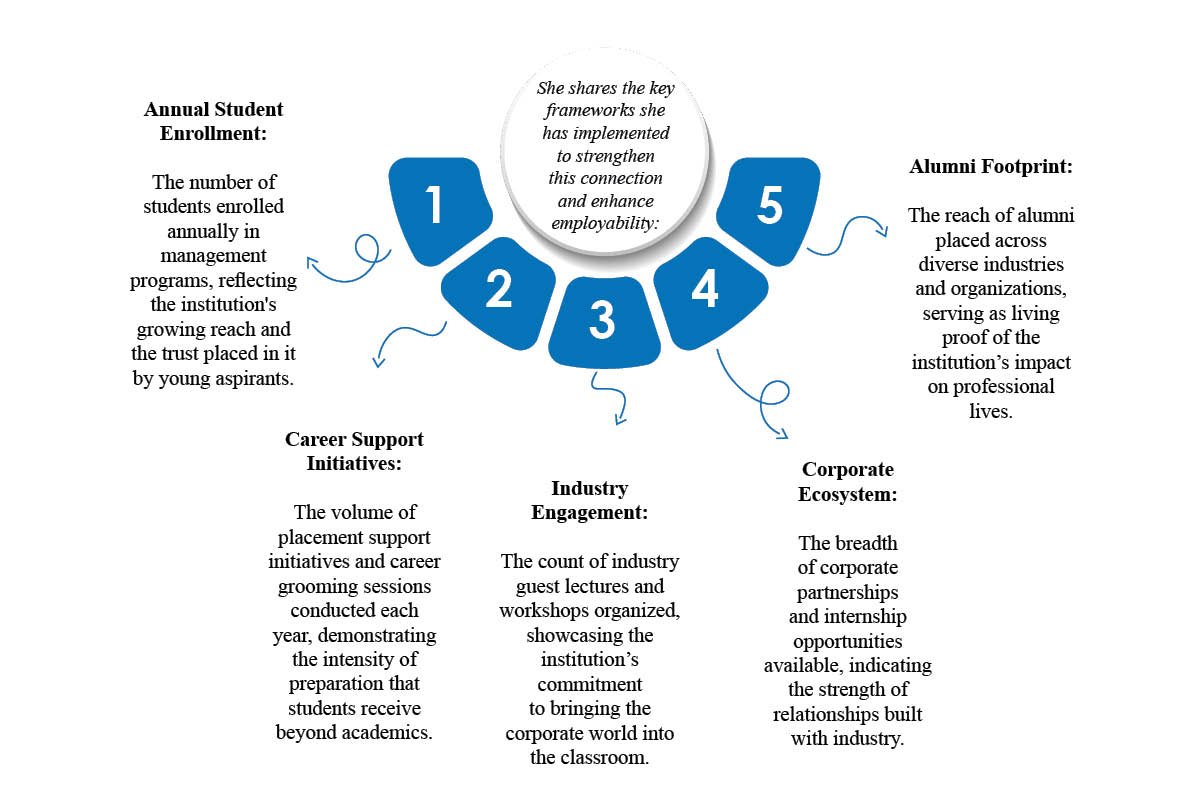
- Annual Student Enrollment: The number of students enrolled annually in management programs, reflecting the institution’s growing reach and the trust placed in it by young aspirants.
- Career Support Initiatives: The volume of placement support initiatives and career grooming sessions conducted each year, demonstrating the intensity of preparation that students receive beyond academics.
- Industry Engagement: The count of industry guest lectures and workshops organized, showcasing the institution’s commitment to bringing the corporate world into the classroom.
- Corporate Ecosystem: The breadth of corporate partnerships and internship opportunities available, indicating the strength of relationships built with industry.
- Alumni Footprint: The reach of alumni placed across diverse industries and organizations, serving as living proof of the institution’s impact on professional lives.
She emphasizes that these indicators collectively reflect the institution’s unwavering commitment to student development and industry engagement, turning abstract vision into measurable reality.
A Culture Built on Listening, Evolving, and Staying True
Transparency, for Dr. Srivastava, is the very air of the institution present in every corridor and conversation with ethical practices and openness woven into daily work through multiple intentional layers of engagement.
The foundation rests on:
- Regular feedback mechanisms from students and alumni, ensuring that those who experience the institution firsthand have a voice in shaping its future
- Industry advisory inputs that bring external perspectives into internal decision-making
- Academic review processes that keep programs rigorous and relevant
- Open communication between faculty, administration, and students, creating an environment where concerns are heard and addressed without barriers
These channels, Dr. Srivastava emphasizes, actively drives continuous improvement, every feedback is evaluated, every process reviewed, all to enhance the learning experience. She believes an institution that stops listening stops growing, a philosophy that keeps Sheila Raheja School not just responsive, but responsible.
Building Tomorrow’s Leaders, Today
The future belongs to those who prepare for it while others wait, and at the institution, Dr. Srivastava shares that this preparation is already underway as the institution looks ahead to strengthen its impact through strategic initiatives:
- Expanding industry partnerships to deepen bridges between classrooms and corporate corridors
- Introducing new skill-based certification programs that respond to emerging demands
- Increasing global exposure through academic collaborations for perspectives that transcend borders
- Integrating advanced analytics and digital tools to ensure technological fluency
- Enhancing career support services so students step into the world confident
With these initiatives, Dr. Srivastava’s goal is clear: keep students competitive in a technology-driven world by anticipating change. Every partnership and program prepares them for tomorrow’s challenges because relevance, readiness, and commitment to student success define the road ahead.

An Open Letter to Aspiring Business Leaders
To the Aspiring Leaders Stepping into the World of Business,
I have watched countless students walk through our corridors with dreams in their eyes and uncertainty in their steps, and I have seen them transform into professionals of substance. My wish for you is this: may your journey be shaped by the person you become along the way.
The world you enter is reshaped by digital transformation, data, globalization, and shifting workplace cultures. Technical knowledge will open doors, but experience has taught me that your attitude, adaptability, and ethical values will determine how far you go.
So, here is my hard-earned advice: never stop learning, for curiosity is the engine of growth. Developing skills machines cannot replicate communication, critical thinking, and emotional intelligence. Embrace change and learn to dance on moving terrain. Never underestimate integrity; in a world that celebrates shortcuts, choose the longer road.
Most importantly, remember: leadership is not defined by titles, but by the positive impact you create. You do not need a corner office, only a willing heart, a curious mind, and the courage to do what is right.
Go forth, build boldly, and lead with purpose.
With faith in your future,
Dr. Sunita Srivastava
Dean, Corporate Relations
Sheila Raheja School of Business Management & Research
Key Takeaways:
- Education transforms potential into capability, not just delivers knowledge.
- Continuous learning and adaptability are leadership’s greatest lessons.
- True transformation demands collaboration across faculty, industry, and students.
- An institution that stops listening, stops growing.
- Leadership is defined by impact, not titles.
- Attitude, adaptability, and ethics matter more than technical knowledge alone.