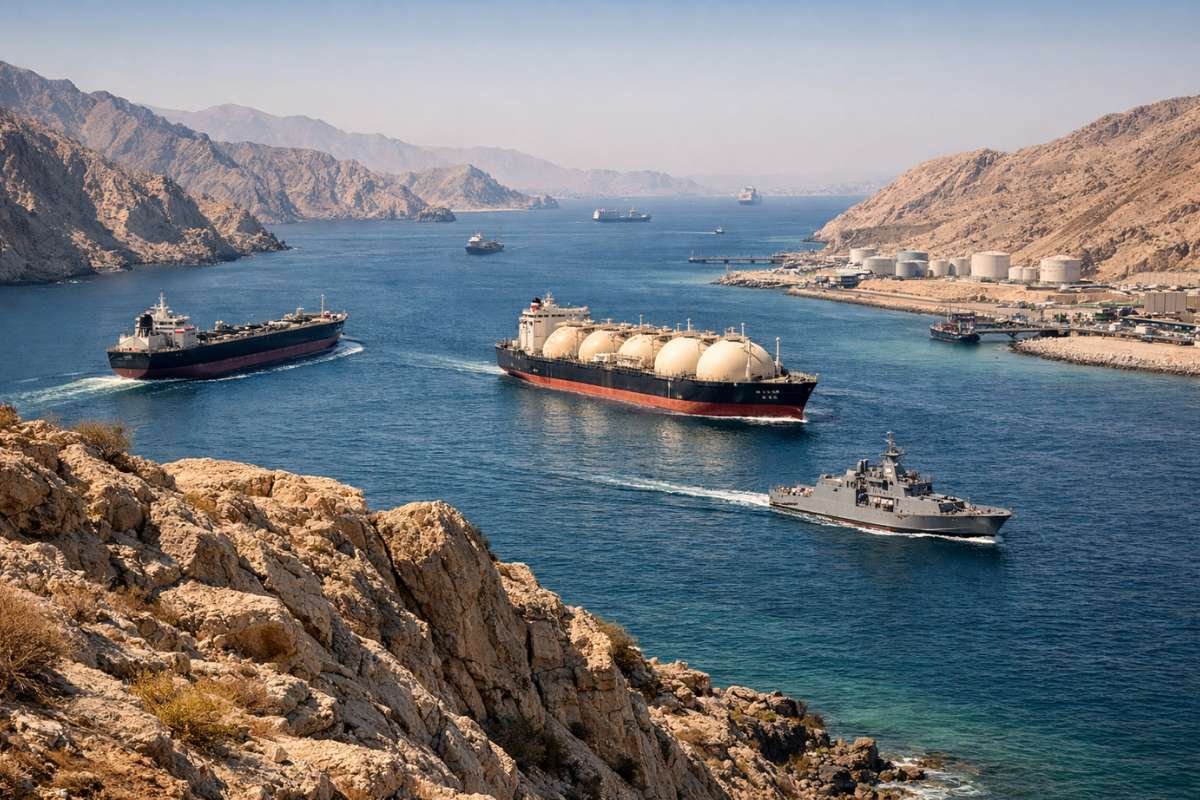
Oil tanker activity in the Strait of Hormuz has slowed noticeably, with several vessels rerouting or exiting the region amid growing uncertainty surrounding a fragile ceasefire between the United States and Iran. The narrow waterway, a critical artery for global energy supplies, is once again at the center of geopolitical tensions, prompting shipping companies to act with caution.
Marine tracking data indicate that some fully loaded supertankers have reversed course before entering the strait, while others have accelerated their departure from the Gulf. This shift reflects heightened concerns over safety and stability, as operators weigh the risks of navigating through a region where tensions could escalate rapidly.
The Strait of Hormuz is responsible for transporting nearly 20% of the world’s oil and a significant portion of liquefied natural gas. Any disruption, whether real or perceived, has immediate implications for global trade and energy security. Even without direct conflict, uncertainty alone has proven enough to alter shipping patterns, disrupt schedules, and increase insurance costs.
Industry experts note that such precautionary measures are not unusual in volatile regions, but the scale of current adjustments highlights the seriousness of the situation. For global markets, tanker movements often serve as an early indicator of bigger geopolitical risks.
Ceasefire Under Pressure as Diplomatic Efforts Stall
The disruption in tanker traffic comes amid a delicate ceasefire that followed weeks of escalating tensions between Washington and Tehran. While the temporary truce initially provided relief to global markets, its stability is now being tested by stalled negotiations and rising mistrust on both sides.
Recent diplomatic talks aimed at de-escalation have failed to produce meaningful progress, leaving several critical issues unresolved. Disagreements over regional security, maritime control, and broader strategic concerns continue to divide the two sides, weakening confidence in the ceasefire’s durability.
The United States has indicated plans to increase maritime monitoring in the region, a move intended to safeguard shipping routes but one that has also raised concerns among industry stakeholders. While officials have emphasized that commercial traffic will not be targeted, the presence of heightened military oversight has added to the sense of unease.
Iran, meanwhile, has responded with strong warnings against any expansion of foreign military activity near its territorial waters. Officials have suggested that increased naval presence could be interpreted as a provocation, raising the risk of unintended escalation. This exchange of signals has further complicated efforts to maintain calm, leaving the ceasefire in a precarious state.
The lack of clear communication and mutual trust has made the situation increasingly unpredictable. Analysts warn that even minor incidents could quickly spiral into larger confrontations if diplomatic channels remain ineffective.
Global Oil Markets React to Heightened Volatility Amid Strait of Hormuz Tensions
The uncertainty surrounding the Strait of Hormuz has already begun to ripple through global oil markets, with prices climbing as traders factor in the risk of potential supply disruptions. The strategic importance of the route means that even limited disturbances can trigger significant price movements.
Energy analysts suggest that the current volatility is driven not only by immediate risks but also by longer-term concerns about supply stability. If tanker traffic continues to decline or face delays, it could tighten global supply chains and place additional pressure on already sensitive markets.
For oil-importing countries, the impact could be substantial. Rising prices may contribute to inflationary pressures, increase transportation costs, and strain national economies. Businesses dependent on stable energy supplies are also likely to face higher operational expenses, adding to broader economic uncertainty.
Despite the ceasefire technically remaining in place, market sentiment reflects skepticism about its longevity. Traders and investors are closely monitoring developments, particularly any signs of renewed conflict or further disruptions to shipping routes.
For now, the cautious retreat of oil tankers underscores the fragile balance between diplomacy and conflict in one of the world’s most critical regions. With negotiations stalled and tensions simmering, the Strait of Hormuz remains a focal point of global concern, its stability crucial not only to regional security but to the health of the global economy.