Key Takeaways:
- OPEC loses its third-largest producer and 15% of its total oil capacity.
- The Iran war and Hormuz closure require faster, more independent production responses.
- Deepening rifts with Saudi Arabia highlight a massive shift in regional geopolitics.
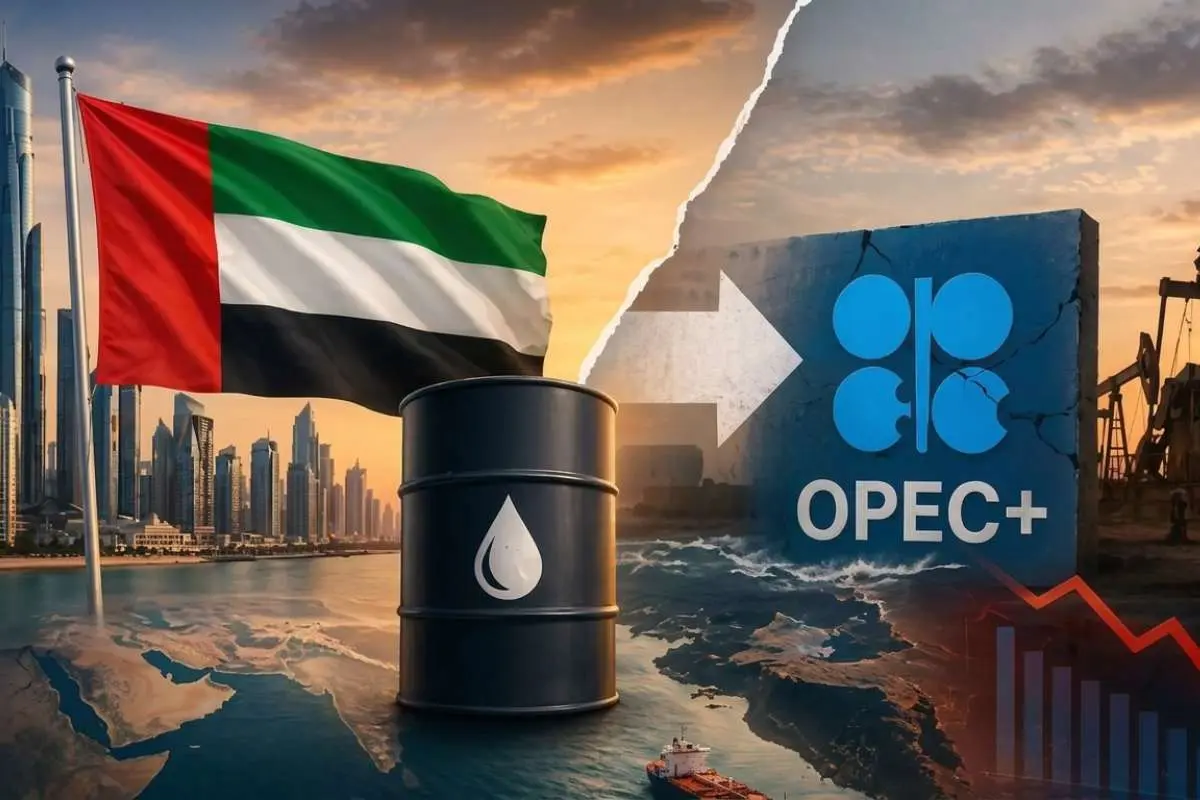
The UAE Exits OPEC and OPEC+ from May 1, citing strategic energy shifts, as the Iran war disrupts global markets and deepens regional policy differences.
UAE Cites Strategic Shift In Energy Policy
The UAE announces it will leave OPEC and OPEC+ effective May 1, marking a significant shift in global oil dynamics. The decision comes during heightened volatility triggered by the ongoing Iran war, reinforcing the broader context behind the UAE Exits OPEC move.
In a statement carried by state-run WAM news agency, officials say the move aligns with the country’s long-term economic strategy. The UAE describes its energy profile as “evolving,” with increased focus on domestic production capacity.
“This decision reflects the UAE’s long-term strategic and economic vision,” the statement says. It adds that the country remains committed to playing a “responsible and reliable” role in global energy markets.
Exit Comes Amid Market Shock And Regional Tensions
The announcement follows a period of sharp instability in oil markets as the Iran conflict disrupts supply chains and raises geopolitical risks. Analysts say the timing could amplify uncertainty around coordinated production policies.
The UAE has historically been one of OPEC’s key producers, and its exit signals a potential weakening of unified output controls. The broader OPEC+ alliance, which includes major non-OPEC producers, has coordinated supply cuts and increases to stabilize prices, making the UAE Exits OPEC decision particularly significant.
Energy analyst Sara Al-Mazrouei says the move reflects “a recalibration of national priorities over collective action.” She adds that the UAE may seek greater flexibility in adjusting output based on market demand.
The development also comes amid growing differences between the UAE and Saudi Arabia on economic and geopolitical issues. These include diverging approaches to regional conflicts, including the Yemen situation involving Iran-backed groups.
UAE Pledges Stable Supply Despite Departure
Despite its exit, the UAE says it will continue to support market stability by increasing production in a controlled manner. Officials emphasize that output decisions will remain aligned with global demand conditions.
“Following its exit, the UAE will continue to act responsibly,” the statement says, noting that additional supply will be introduced gradually and based on market needs.
Industry experts say this approach may reassure buyers concerned about sudden supply shocks. However, they caution that the absence of coordinated frameworks like OPEC+ could lead to more fragmented market responses following the UAE Exits OPEC development.
James Carter, a global commodities strategist, says the UAE’s move “introduces a new layer of unpredictability” but does not necessarily signal immediate disruption. “Much depends on how other producers respond,” he says.
The UAE’s departure marks one of the most significant changes in oil alliances in recent years. Markets are expected to closely watch how production strategies evolve in the coming months.