The decisions that separate companies that scale from those that stall are rarely the obvious ones. Product, hiring, and market timing get most of the credit. But behind a lot of the companies that have grown well over the past five years, there’s a quieter decision that compounded in their favour: they got their workspace strategy right early, and they kept adjusting it as the business changed.
Workspace is an operational variable. Most business leaders do not treat it that way. They treat it as a fixed cost to be minimised or a status symbol to be projected, and both framings cause problems. The companies navigating growth well tend to think about workspace strategy the same way they think about any other strategic resource: what does the business actually need right now, what will it need in twelve months, and what is the cost of being wrong?
The Flexibility Dividend
The core advantage of a premium shared workspace over a traditional lease is not the price per square foot. It is the ability to change your decision. A growing business that commits to 5,000 square feet in a ten-year lease is betting on a version of the future that may not arrive on schedule. Headcount projections miss. Market conditions shift. A new city becomes strategically important, or a team you thought would expand contracts instead. The lease does not care.
Premium coworking operators have built their entire model around absorbing that uncertainty on your behalf. You negotiate a membership, not a decade. You add space as you hire and reduce it if circumstances require. For companies in growth mode, that optionality has a real financial value: it keeps capital available for the parts of the business where investment actually produces return, rather than locking it into a physical commitment that serves a projection rather than a reality.
The numbers that frame the broader shift are instructive. More than half of global corporations now include flexible workspace in their real estate portfolio. The US coworking market, valued at $2.1 billion in 2023, is projected to reach $7.1 billion by 2030. That growth is not coming from freelancers. It is coming from mid-market companies and enterprise teams that have run the analysis and concluded that flex workspace is the smarter structural choice for how they actually work.
What Premium Workspace Costs You in the Wrong Direction?

There is a version of the coworking conversation that focuses entirely on savings, and it misses half the picture. The more interesting question for a growing business is not what you save by avoiding a traditional lease, but what you lose by choosing the wrong type of shared workspace.
Not all coworking is equal. A commodity shared office, however cheap, produces a specific kind of environment: crowded, transient, designed for throughput rather than focus or culture. Teams that spend extended periods in those environments tend to notice it in morale, in the quality of work produced, and in how candidates respond during the hiring process. The physical environment is a signal, to your team and to everyone who walks through the door for a meeting.
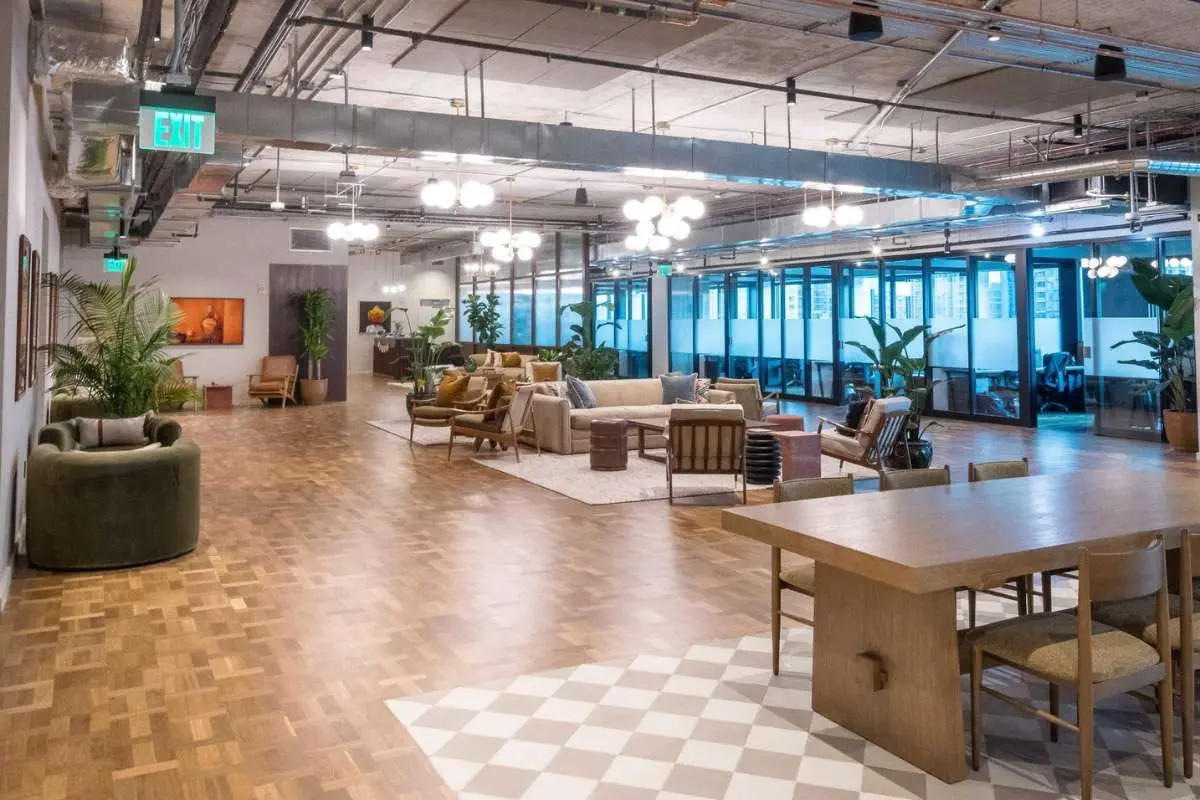
The operators competing at the premium end have invested seriously in getting the environment right. Design that supports both deep focus and genuine collaboration. Service that removes friction rather than creating it. Locations chosen for their professional ecosystem rather than their convenience to a motorway junction. Mindspace, which runs workspaces across Miami, New York, and Washington DC and more, represents this tier. The company’s Wynwood location in Miami places teams in one of the most commercially dynamic creative districts in the country, with the kind of neighbourhood energy and professional community that a generic serviced office in an office park simply cannot replicate. For companies establishing or expanding a Miami presence, that context matters beyond the square footage.
The distinction between premium and commodity coworking is a leadership decision. The managing director who selects workspace based on the lowest monthly line item is making a different bet from the one who factors in what the environment will do to hiring, to culture, and to how the company is perceived by clients and partners. Both bets are legible. Only one tends to compound well.
Workspace as a Talent Statement
The connection between physical environment and talent acquisition is underappreciated in most workspace strategy discussions, which tend to focus on cost and flexibility. But for growing businesses competing for skilled professionals, the daily work environment is a material factor in whether offers get accepted.
Candidates read the office. They walk in for an interview and form an impression of the company’s ambition, culture, and self-regard within minutes. A well-designed shared office in the right part of the city, surrounded by other serious companies, tells one story. A cost-minimised floor in a tired building tells another. Neither story is about the work itself, but candidates are making inferences about the work, and about what working there would feel like day to day.
This matters most at the stage where a company’s brand is not yet strong enough to carry the recruitment conversation on its own. An established business with a recognised name can sometimes overcome a mediocre physical environment. A company at 30 or 80 people, not yet widely known, is relying on everything it can put in front of a candidate to make the case. The office is one of the few variables entirely within leadership’s control.
Multi-City Strategy Without Multi-City Risk

One of the structural advantages of premium coworking networks that gets less attention than it deserves is what they make possible geographically. A business that wants to establish a presence in a new city traditionally faces a significant threshold: negotiate a lease, fit out a space, absorb the cost and distraction before you know whether the market will work. Most companies either make that bet and live with the consequences or delay the expansion entirely.
Flex workspace changes the calculus. An operator with a mature network across multiple cities lets you open a functional, high-quality office in a new market within days, with membership terms that do not require conviction about the next ten years. You test the market with a real presence rather than a remote one. If it works, you scale. If it does not, you exit cleanly.
For leadership teams managing multi-city growth, this is meaningful. It removes the geographic rigidity that has historically slowed expansion decisions and replaces it with something closer to the agility businesses expect in every other part of their operations.
Making the Strategic Call
The question business leaders face is not really “coworking or office.” It is “what does our workspace strategy need to do for the business right now, and what structure gives us the most room to change our answer as the company evolves?”
For most businesses below around 50 people in a location, the answer points toward a premium flexible workspace. The combination of cost efficiency, operational simplicity, recruiting advantage, and geographic flexibility adds up to a structural edge that a traditional lease cannot match at that size. As companies grow larger and their culture and infrastructure requirements become more specific, the calculus shifts, and a dedicated space starts to earn its premium. Good leaders make that transition deliberately, when the business is ready, rather than before or long after.
The companies that get workspace strategy right are not the ones that find the cheapest desk. They are the ones that treat the question with the same rigour they bring to any other operational decision: what do we need, what are the trade-offs, and what gives us the most room to be right about where the business is going next.