Key Takeaways:
- Nearly 45,000 Samsung workers plan an 18-day strike from May 21 over profit-sharing bonus caps.
- The historic walkout risks cutting global memory output, threatening HBM4 chip supplies for Nvidia and Apple.
- South Korean courts and the government have intervened to protect production from energy and wafer losses.
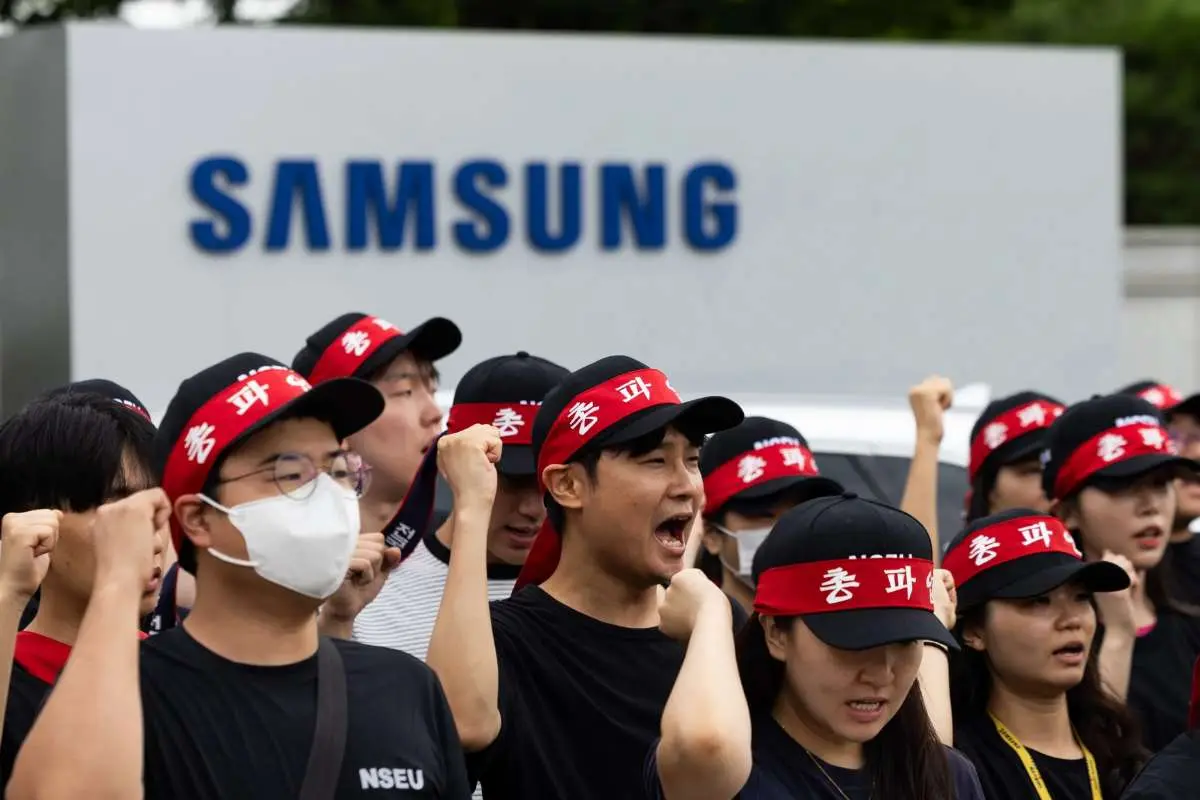
A planned 18-day strike by nearly 45,000 unionized workers at Samsung Electronics could disrupt global supplies of memory chips critical to artificial intelligence systems, escalating pressure on an industry already facing tight capacity and rising demand.
The Samsung workers’ strike scheduled to begin May 21 at Samsung’s South Korean memory chip plants would mark the largest work stoppage in semiconductor industry history if it proceeds. Samsung produces about one-third of the world’s DRAM memory chips and, alongside rival SK Hynix, controls most of the global market for high-bandwidth memory, or HBM, used in AI servers and advanced graphics processors.
Workers demand higher bonuses and wage increases
The labor dispute centers on compensation as Samsung’s semiconductor business rebounds from a prolonged downturn. The union is demanding that 15% of operating profit be allocated to a bonus pool, removal of bonus caps tied to base salary and a 7% wage increase.
Samsung management has reportedly countered with a one-time payment equivalent to roughly 13% of operating profit for 2026 but has not agreed to permanent structural changes.
Union chairman Choi Seung-ho said about 200 Samsung employees have left for SK Hynix in the past four months amid growing competition for semiconductor talent.
The Samsung workers’ strike dispute follows a deal reached last year between SK Hynix and its union that allocated 10% of annual operating profit to employee bonuses over the next decade while removing payout caps. Based on 2026 forecasts, average payouts at SK Hynix are expected to range between $460,000 and $477,000 per worker this year, according to reports.
The Samsung workers’ strike started after the workforce did not receive performance bonuses in 2024 because the company’s chip division posted operating losses during the memory market downturn. However, the semiconductor business has since recovered sharply, with first-quarter 2026 operating profit rising nearly eightfold to a record level.
A 17-hour negotiation session at South Korea’s National Labor Relations Commission on May 13 ended without an agreement. The commission reportedly proposed about 40 trillion won, or $26.7 billion, in total bonus payouts, but the union rejected the proposal. The union later said it would continue talks only if Samsung co-CEO Jun Young-hyun personally presents new proposals.
Potential production losses raise concerns across the AI sector
Industry analysts warn the Samsung workers’ strike could significantly affect semiconductor production and the broader AI supply chain.
Samsung operates 12 semiconductor fabrication lines and is investing $73 billion this year in semiconductor capital expenditures and research and development. The company employs more than 260,000 people globally.
A one-day Samsung workers’ strike in April reportedly caused foundry output to fall 58% and memory fabrication production to decline 18% during the affected shift. Samsung has since begun “warm-down” procedures at facilities because halting chip production mid-process can destroy wafers valued at about $20,000 each.
Industry estimates place potential losses from an 18-day strike between 30 trillion won and 100 trillion won. Analysts at JPMorgan Chase estimated that meeting union demands could reduce Samsung’s 2026 operating profit by 7% to 12% due to higher labor costs alone. Including production disruptions, the bank estimated the total profit impact could reach between 2.1 trillion won and 3.5 trillion won.
Samsung Chairman Shin Je-yoon said he was concerned about “losing market leadership amid fleeing customers and falling competitiveness” if the strike proceeds.
Competition with SK Hynix intensifies amid AI boom
The Samsung workers’ strike threat comes as Samsung competes with SK Hynix and Micron Technology in the rapidly expanding AI memory market.
SK Hynix overtook Samsung as the world’s largest DRAM manufacturer last year for the first time in 33 years, driven largely by dominance in HBM chips used in AI systems. In one quarter last year, SK Hynix held 62% of the HBM market while Samsung’s share fell to 17%, behind Micron’s 21%.
Samsung later regained the broader DRAM market lead after expanding legacy memory production and shipping HBM products to Nvidia. Its HBM4 chips entered mass production in February, and reports indicate the company’s 2026 HBM4 supply is already sold out.
The tightening memory market was also reflected in recent negotiations with Apple over chips for the iPhone 17. Korean outlet Dealsite reported Samsung initially sought a 100% price increase before Apple accepted terms during emergency supply discussions.
Market volatility follows proposal for AI “citizen dividend.”
The labor tensions have coincided with a broader debate in South Korea over how to distribute gains from the AI-driven semiconductor boom.
On May 12, presidential policy chief Kim Yong-beom proposed on Facebook that South Korea provide citizens with a “dividend” funded by economic gains from AI-related industries, comparing the idea to Alaska’s Permanent Fund.