Lead generation is the process of attracting potential customers and capturing their interest through actions like form submissions, sign-ups, or downloads. This article explains its importance in driving business growth, outlines different types of lead generation, and highlights modern strategies shaping 2026.
So you have finally achieved your goal of starting your business. You might be feeling confident about your ideas. You can have the best product, a clean website, and strong messaging, but none of it moves forward without one thing.
People who are actually interested.
Not just visitors who scroll and leave, but those who raise their hand, share their details, and show intent.
That is where the real shift happens. Turning attention into interest, and interest into opportunity, is what drives growth. Lead generation sits at the center of that process. It is how businesses attract the right audience, capture their interest, and start meaningful conversations that can eventually turn into customers.
What is Lead Generation?
Lead generation is the process of finding people who may want your product or service. These people show interest by taking small actions. They may fill a form, sign up for a demo, or download a guide. Each action tells you they are open to hearing more.
Not every visitor becomes a lead. A lead is someone who shares their contact details or shows clear intent. This makes it easier for your team to start a conversation. It also helps you focus on people who are more likely to buy.
Why Lead Generation is Important?
Every business needs a steady flow of new customers. Without it, growth slows down, and sales become unpredictable. Lead generation helps you build that steady flow. It keeps your pipeline active and your team focused.
It also improves how you use your time and budget. Instead of chasing random people, you connect with those who already show interest. This increases your chances of closing deals. It also reduces wasted effort across marketing and sales.
Generating leads helps you understand your audience better. You can track what they click, download, or respond to. These signals show what they care about. Over time, this data helps you refine your messaging and offers.
It also supports growth. Not every lead buys right away. Some need time, trust, and more information. When you capture leads early, you can nurture them until they are ready to act. This builds a stronger and more predictable revenue system.
What are the Types of Lead Generation?
Lead generation is not a single method. It works through different approaches depending on how users discover and interact with a business. Some methods focus on attracting users naturally, while others involve direct outreach. Understanding these types helps you choose the right mix for your goals and audience.
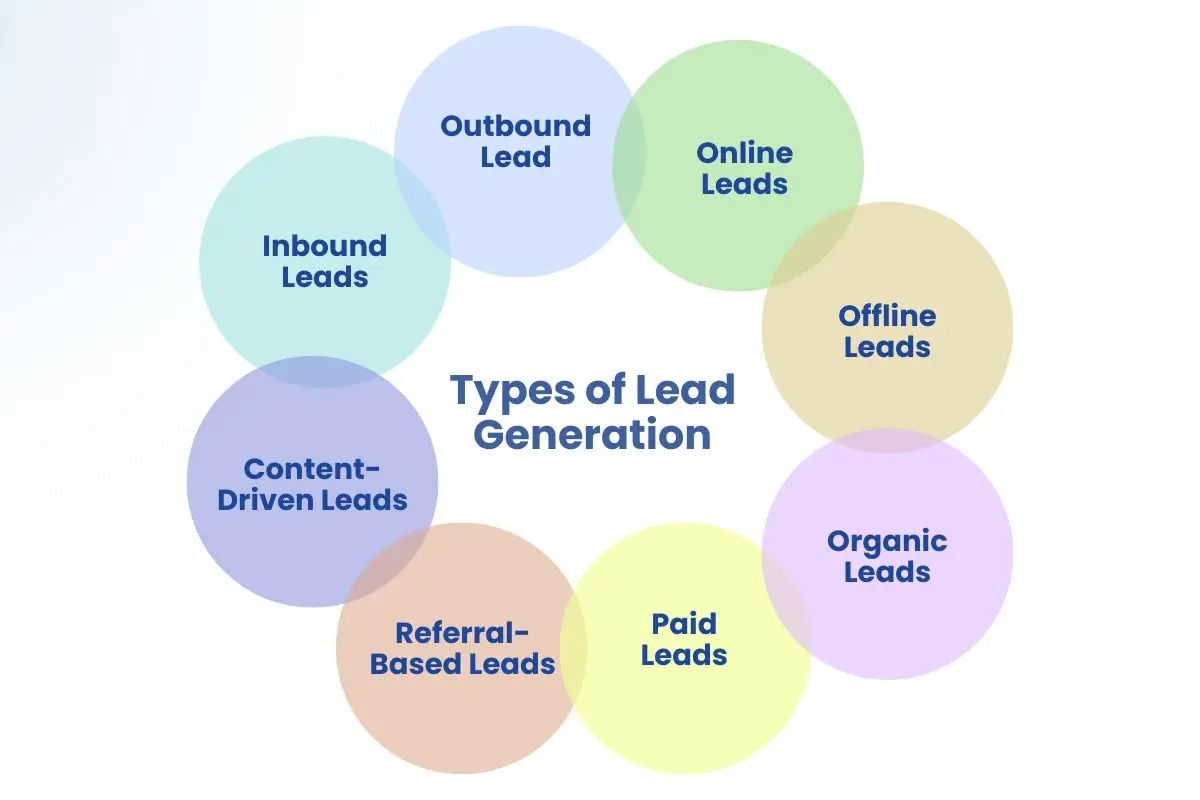
- Inbound Leads: People find your business through content, search, or social media. They visit your site and take action on their own. This builds trust and brings in users with clear intent.
- Outbound Leads: You reach out first through emails, calls, or messages. This helps you target specific people or companies. It works well when you know your ideal customer.
- Online Leads: Leads come from digital channels like websites, landing pages, ads, and social platforms. It is easy to track and scale. Most businesses depend on this method today.
- Offline Leads: This includes events, trade shows, referrals, and direct meetings. It builds stronger personal connections. These leads often trust your brand more.
- Organic Leads: You attract leads without paying for ads. SEO, blogs, and social posts drive this traffic. It takes time but delivers steady results.
- Paid Leads: You use ads to bring in leads faster. Platforms like search engines and social media help you reach more people. It works best with a clear offer.
- Referral-Based Leads: Existing customers or partners bring in new leads. These leads already trust your business. They often convert faster than others.
- Content-Driven Leads: You offer value through guides, webinars, or tools. Users share their details to access this content. It helps you educate and qualify them at the same time.
10 Lead Generation Strategies to Use in 2026?
Strong results come from clear and structured strategies. Businesses use different tactics to attract, engage, and convert potential customers. These strategies change as technology and user behavior evolve. Knowing how each approach works helps you build a more effective and flexible system.
- AI-Driven Personalization: AI tools now shape how users see content. They track behavior, intent, and past actions. This helps you show the right message at the right time. Emails, landing pages, and ads can change for each user. This improves engagement and increases conversions.
- First Party Data Collection: Privacy rules are getting stricter each year. Third party data is losing value fast. Businesses now rely on data they collect directly. This includes email signups, surveys, and user activity. Strong data gives better targeting and long term control.
- Short Form Video Content: Short videos grab attention fast. Platforms push this format more than others. You can explain a problem, show a solution, and guide users to act. These videos work well for both awareness and conversion. Clear calls to action improve results.
- Interactive Content Experiences: Users want to engage, not just read. Quizzes, calculators, and tools keep them involved. These formats also help you collect useful data. People share details when they see value in return. This makes leads more qualified.
- Community-Led Growth: Communities are becoming strong growth channels. Brands build groups on platforms or private spaces. Users join to learn, share, and connect. This builds trust over time. Engaged members often turn into high-quality leads.
- Search Intent Optimization: Search behavior is changing with AI tools and voice queries. Users ask more direct and detailed questions. Content must match real intent, not just keywords. Pages should answer clearly and guide users to the next step. This improves both traffic and conversions.
- Multi-Channel Lead Capture: Users move across many platforms before taking action. A single channel is not enough. You need presence across search, social, email, and ads. Each channel should guide users toward the same goal. This creates a smooth and consistent journey.
- High Value Lead Magnets: Basic ebooks no longer stand out. Users expect real value before they share details. Offer templates, tools, or exclusive insights. The higher the value, the better the quality of leads. Strong offers increase both volume and intent.
- Real Time Engagement Tools: Speed matters more than ever. Live chat, chatbots, and instant replies improve user experience. Users get answers without delay. This keeps them engaged and reduces drop-off. Quick response often leads to faster conversions.
- Creator and Influencer Partnerships: People trust creators more than brands. Partnering with the right creators expands your reach. Their audience already trusts their voice. This helps you attract warm leads. It also improves brand credibility in new markets.
How to Build Your Lead Generation System?
A system to generate leads does not happen by chance. It is built step by step with clear actions at each stage. From identifying your audience to tracking results, every part plays a role. A structured system helps you generate consistent and predictable leads over time.
Steps to Build A Lead Generation System
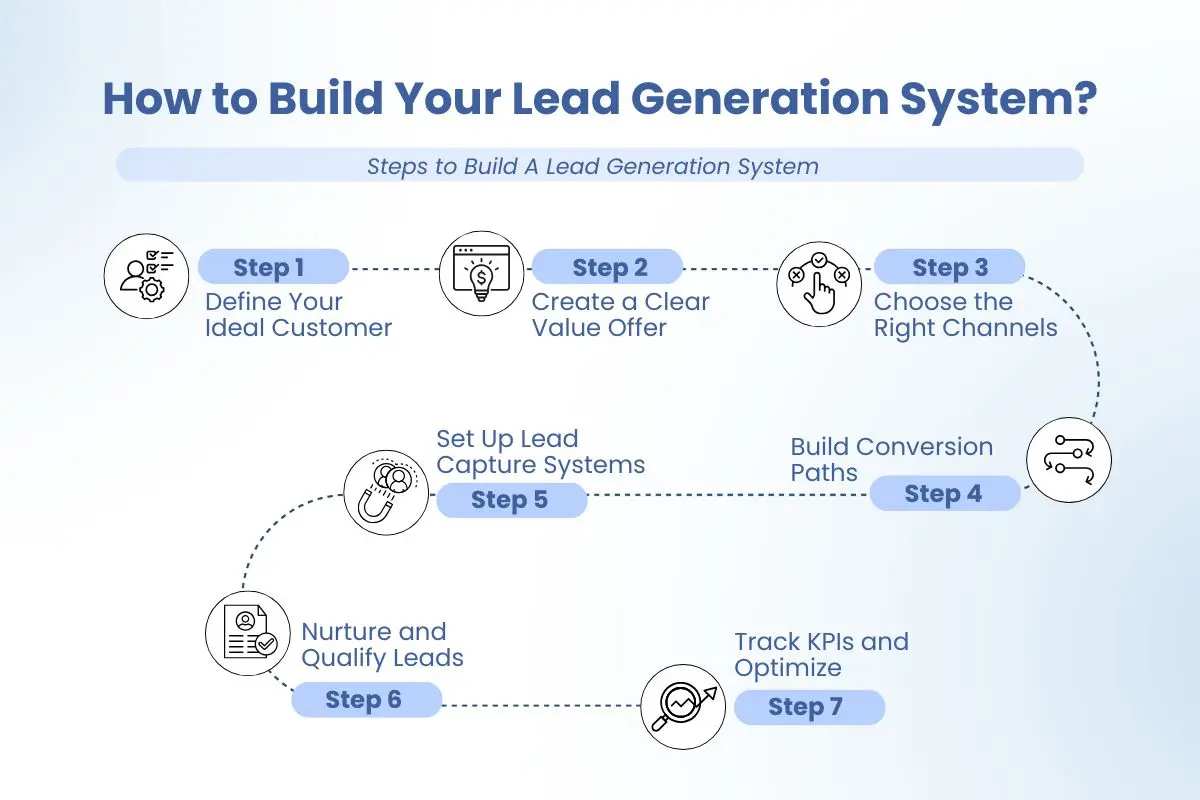
- Step 1: Define Your Ideal Customer
- Step 2: Create a Clear Value Offer
- Step 3: Choose the Right Channels
- Step 4: Build Conversion Paths
- Step 5: Set Up Lead Capture Systems
- Step 6: Nurture and Qualify Leads
- Step 7: Track KPIs and Optimize
Step 1: Define Your Ideal Customer
Start with clarity. Know who you want to attract. Identify their needs, problems, and goals. This helps you create better messaging. It also improves targeting across all channels.
Use simple data points like age, role, industry, and behavior. Go deeper into pain points and buying triggers. When you know your audience well, every step becomes easier.
Step 2: Create a Clear Value Offer
Your offer must solve a real problem. It should be easy to understand and quick to act on. Users should see value within seconds. If they feel confused, they will leave.
Focus on one strong benefit. Avoid adding too many ideas in one place. A clear and direct offer improves conversion rates. It also attracts the right type of leads.
Step 3: Choose the Right Channels
Do not try every platform at once. Pick channels where your audience already spends time. This may include search, social media, email, or paid ads.
Each channel should have a clear role. Some bring awareness, while others drive conversions. A focused approach saves time and improves results.
Step 4: Build Conversion Paths
Guide users step by step. Do not leave them guessing what to do next. Use landing pages, forms, and clear calls to action. Each step should lead to the next.
Keep the process simple. Fewer steps lead to higher conversions. Remove anything that creates friction. Make it easy for users to say yes.
Step 5: Set Up Lead Capture Systems
Use forms, chat tools, or signup pages to collect details. Ask only for essential information. Long forms reduce conversions. Keep it short and clear.
Connect your system with a CRM or email tool. This helps you store and manage leads better. It also prepares you for follow-ups.
Step 6: Nurture and Qualify Leads
Not all leads are ready to buy. Some need time and more information. Use emails, content, and follow-ups to stay connected.
Track their actions. See what they click or open. This helps you understand their intent. You can then qualify leads based on behavior.
Step 7: Track KPIs and Optimize
You need data to improve. Track key metrics at every stage. Focus on conversion rate, cost per lead, and lead quality.
Also track metrics like click-through rate, form completion rate, and response time. These show where users drop off. Use this data to test and improve each step.
A strong system is never fixed. You keep testing and refining. Small changes can lead to better results over time.
How has AI Affected Lead Generation?
The way businesses attract and convert leads is shifting fast. AI is not just a tool anymore. It shapes how users interact, search, and decide. People expect faster answers and more relevant content. If they do not get it, they move on quickly.
User behavior now drives everything. Every click, scroll, and pause tells a story. AI reads these signals and helps you act on them. You no longer rely on broad targeting. You respond to real intent as it happens. This makes your outreach feel more timely and less forced.
Personalization now feels natural, not staged. A user might see a landing page that reflects their past actions. An email may speak to a problem they explored just hours ago. These small shifts create a smoother experience. Users feel understood, and that builds trust over time.
Conversations have also changed. Many users now interact with chat tools before they speak to a person. They ask questions, explore options, and even share details. This early interaction helps filter serious prospects. By the time a human steps in, the context is already clear.
There is also a quiet shift in how teams make decisions. Instead of guessing, they look at patterns. AI highlights which users are more likely to convert. It shows where people drop off and why. This allows teams to focus their energy where it matters most.
Content creation has become faster, but that brings its own challenge. When everyone can produce more content, quality stands out even more. You need clear ideas and strong messaging. AI can support the process, but it cannot replace real insight.
At the same time, privacy is shaping how data is used. People are more aware of what they share. Businesses must earn that trust. This means being clear about value before asking for details. Strong first-party data now drives better results.
AI has changed the pace, but not the goal. You still need to build trust and guide users step by step. The difference is in how quickly you can respond and adapt. Those who learn to use AI with intent will stay ahead.
How is Lead Generation Implemented in Different Industries?
Finding leads does not look the same across all industries. Each sector has its own audience behavior, decision process, and trust factors. What works in one industry may not work in another. Understanding these differences helps you adapt your approach for better results.
- B2B Services: Focus stays on trust and expertise. Case studies, demos, and detailed content work best. Sales cycles are longer, but deal value is higher. Strong relationships drive better conversions.
- SaaS and Tech: Speed and clarity matter more. Free trials and product demos attract users. Simple onboarding helps them explore quickly. Clear value drives faster decisions.
- E-commerce: Decisions happen fast. Discounts and limited offers push action. Retargeting ads bring users back. Reviews and ratings build confidence.
- Real Estate: Trust and timing shape decisions. Listings and site visits generate interest. Local ads bring targeted leads. Follow-ups help close deals.
- Healthcare: Trust drives every action. Local search and reviews bring patients. Clear service details improve confidence. Easy booking increases conversions.
- Education: Users need time to decide. Webinars and counseling sessions guide them. Brochures and course details add clarity. Outcomes influence final choice.
- Finance and Insurance: Users look for safety and clarity. Calculators and guides explain value. Expert advice builds trust. Multiple touchpoints improve conversions.
- Hospitality and Travel: Visuals drive interest. Offers and seasonal deals attract users. Social media plays a big role. Fast response improves bookings.
- Manufacturing and Industrial: Focus stays on reliability and scale. Technical content builds trust. Trade shows and outreach generate leads. Strong relationships close deals.
- Fitness and Wellness: Motivation drives engagement. Free trials and success stories attract users. Social content builds interest. Community keeps users engaged.
- Legal Services: Urgency shapes decisions. Local search and referrals bring leads. Clear service pages build trust. Strong credibility improves conversions.
- Retail (Offline Stores): Foot traffic matters most. Local ads and events drive visits. Offers attract nearby users. In-store experience converts leads.
- Media and Publishing: Content drives growth. Newsletters and subscriptions capture leads. Gated content adds value. Consistency builds loyalty.
- Automotive: Users research before acting. Test drives and comparisons attract interest. Financing options add value. Follow-ups improve conversions.
- Recruitment and HR: Target both job seekers and employers. Job portals bring volume. Professional networks improve quality. Matching needs drives better results.
Challenges Faced in Lead Generation
61% of marketers say generating quality leads is their top challenge
Businesses often face issues like low-quality leads, rising costs, and changing user behavior. These challenges affect both performance and consistency. Knowing them helps you prepare better systems and avoid common mistakes.
1. Poor Lead Quality
Many businesses generate a high volume of leads but struggle with quality. People often sign up without real intent to buy. This creates a gap between marketing efforts and actual sales outcomes. Teams spend time filtering instead of closing deals.
2. Increasing Customer Acquisition Costs
Generating leads costs continue to rise across platforms. Ads, tools, and content demand steady investment. As competition increases, the cost per lead also grows. Businesses must optimize campaigns to maintain profitability.
3. Audience Saturation And Ad Fatigue
Consumers see too many ads every day. Repeated messages lose impact over time. Even strong campaigns start getting ignored. This makes it harder to capture and hold attention.
4. Data Privacy And Compliance Issues
Privacy rules limit how businesses collect and use data. Users are more cautious about sharing information. This reduces targeting accuracy and personalization. Campaign performance becomes harder to scale.
5. Misalignment Between Sales And Marketing
Marketing focuses on generating leads, while sales focuses on closing them. If both teams are not aligned, leads are not handled properly. This results in missed opportunities. Clear communication is essential.
6. Difficulty In Targeting The Right Audience
Finding the right audience is not always easy. Broad targeting brings low-quality leads. Narrow targeting limits reach. Businesses need constant testing to get it right.
7. Long And Complex Buyer Journeys
Buyers take more time to make decisions today. They research and compare before acting. This extends the sales cycle. Businesses must nurture leads consistently.
8. Dependence on Third-Party Platforms
Many companies rely on external platforms for leads. Algorithm changes can affect visibility. This creates uncertainty in performance. Control over lead flow becomes limited.
9. Measuring ROI Accurately
Tracking which efforts drive results is difficult. Multiple channels influence conversions. Attribution is not always clear. This affects decision-making.
10. Content Saturation
There is too much content online today. Generic content fails to stand out. Businesses must create unique and relevant content. Consistency is key to staying visible.
Case Study: MATRIX 7-Step Lead Generation Process
Trinity L. Clark Dean developed the MATRIX 7-Step Lead Generation Process. She did it through MATRIX Business Resource. The system focuses on building qualified conversations instead of chasing high lead volume. It improves targeting, follow-ups, and lead quality through a structured step-based approach. The goal is to create a more predictable and efficient pipeline.
The process follows seven clear steps. They guide users from audience identification to lead qualification. Each step filters low-intent prospects and strengthens conversion readiness. This structured flow helps businesses improve consistency and reduce wasted effort in lead handling.
Conclusion
Growth rarely comes from visibility alone. It comes from knowing who is paying attention and finding ways to turn that attention into meaningful action. When that connection is missing, even the strongest marketing efforts can feel incomplete.
That is why lead generation plays such a central role in business success. It brings structure to how you attract potential customers, understand their interests, and guide them toward becoming part of your journey. When done consistently, it turns scattered traffic into real opportunities.
People Also Ask
1. What is lead generation in simple terms?
It is the process of attracting potential customers and collecting their interest so businesses can convert them into buyers.
2. Why is it important for businesses?
It helps businesses find qualified prospects, increase sales opportunities, and grow their customer base.
3. What are common methods for generating leads?
Methods include content marketing, social media campaigns, email marketing, SEO, and paid ads.