Key Takeaways:
- The FAA classified the May 22 Starship Flight 12 launch as a mishap following a booster failure.
- The Super Heavy booster crashed into the Gulf at 1,500 km/h after its Raptor 3 engines cut short.
- SpaceX must finish a formal investigation and secure FAA approval before launching its next Starship.
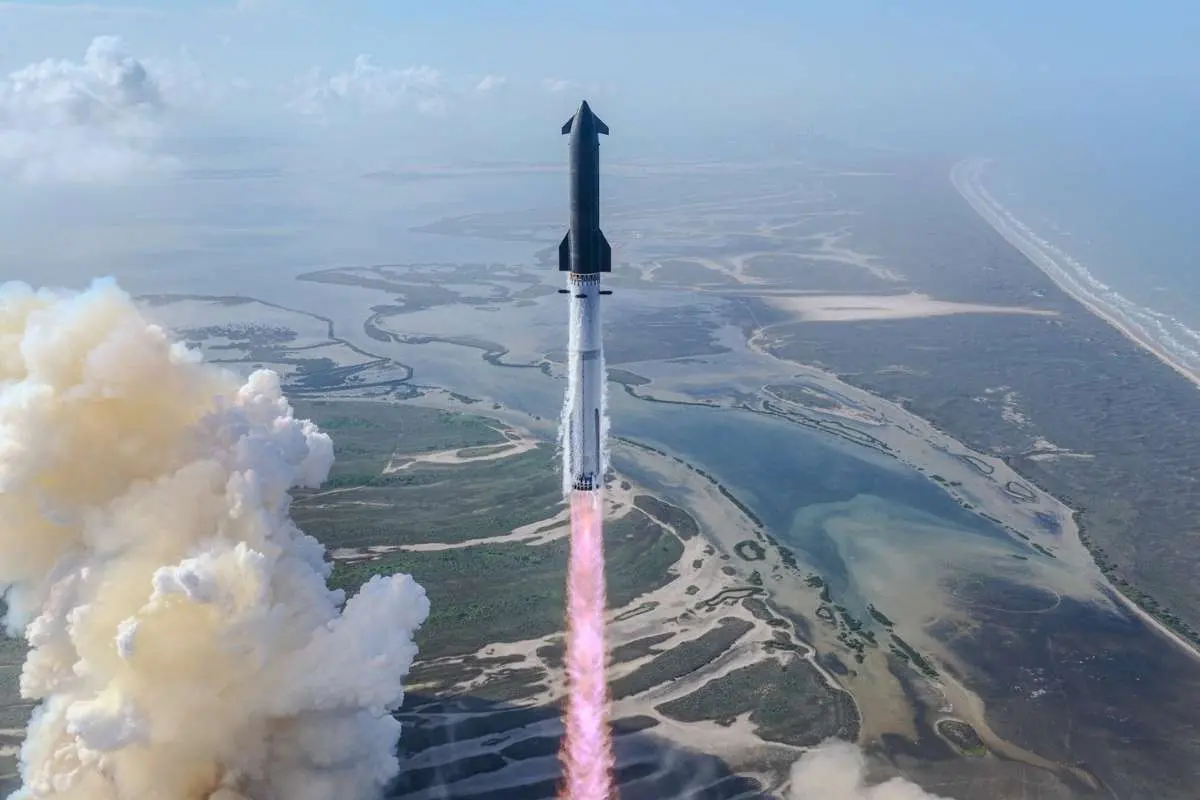
The Federal Aviation Administration says SpaceX must complete a mishap investigation into its Starship Flight 12 launch after the Super Heavy booster malfunctioned during its return to the Gulf of America on May 22.
The FAA announced May 27 that it determined the launch met the agency’s definition of a mishap because the mission failed to complete all planned launch and reentry operations as intended.
“After a thorough assessment of the operation, the FAA has determined the May 22 SpaceX Starship Flight 12 launch resulted in a mishap,” the agency said in a statement.
The incident occurred after stage separation, when SpaceX attempted a planned boostback burn on the Super Heavy booster. The company intended for the booster to perform a controlled splashdown in the Gulf instead of returning to the launch tower at Starbase, Texas.
Telemetry from the SpaceX webcast showed several Raptor 3 engines failed shortly after ignition of the maneuver. The burn, expected to last about one minute, ended in less than 20 seconds.
The booster then fell into the Gulf at nearly 1,500 kilometers per hour, according to flight data shown during the broadcast.
Booster failure causes flight delays
The FAA said the booster landed within a designated debris response area, and no property damage or injuries were reported.
However, the agency confirmed the anomaly affected air traffic operations. Several aircraft experienced departure delays or airborne holding patterns during the incident.
The FAA initially began reviewing the launch immediately after the anomaly, but had not classified the event as a mishap until completing its assessment this week.
Under FAA rules, SpaceX must now conduct a formal investigation overseen by the agency. The inquiry will examine the root cause of the booster failure and identify corrective measures before Starship can fly again.
The FAA must approve SpaceX’s final investigation report and any corrective actions before issuing clearance for another launch.
SpaceX has not publicly released details about the engine failures. The company is also expected to review additional issues from the mission, including the early shutdown of one of the 33 Raptor engines during ascent and another engine on the upper-stage spacecraft.
SpaceX continues testing upgraded Starship flight 12 system
Flight 12 marked the first test of Starship Version 3, which includes upgraded systems and the new Raptor 3 engines designed with higher thrust and simplified architecture.
Despite the booster failure, SpaceX completed several mission objectives. The upper-stage spacecraft successfully deployed Starlink mass simulators in orbit and later performed a controlled splashdown in the Indian Ocean.
The investigation is not expected to halt launches for an extended period. A similar FAA mishap investigation involving Blue Origin’s New Glenn rocket concluded within about one month.
The FAA classified Blue Origin’s April 19 New Glenn mission as a mishap after an upper-stage malfunction left its payload stranded in low orbit. The agency approved the company’s corrective actions on May 22 and cleared the vehicle to resume flights.
Blue Origin announced May 27 that its next New Glenn mission could launch as early as June 4. The mission is expected to carry 48 satellites for Amazon’s Kuiper broadband constellation.