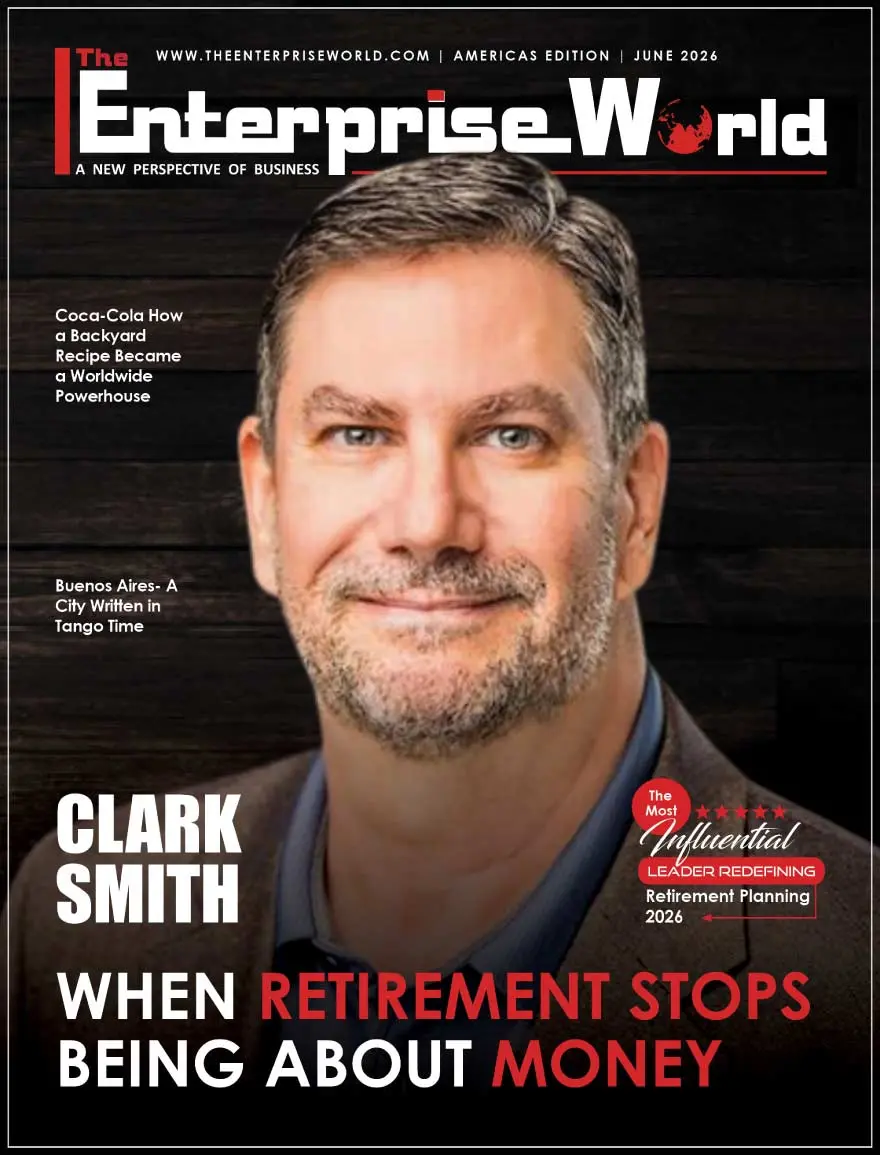
There’s a point in life when retirement stops being a concept and starts becoming real.
It usually doesn’t happen all at once. It shows up gradually—in small thoughts that begin to carry more weight. A question that lingers a little longer than it used to. A quiet sense that something is changing, even if nothing on paper looks different yet.
For many people, that question isn’t about markets or investments.
It’s simpler than that.
It’s whether what they’ve built will actually support the life they want to live.
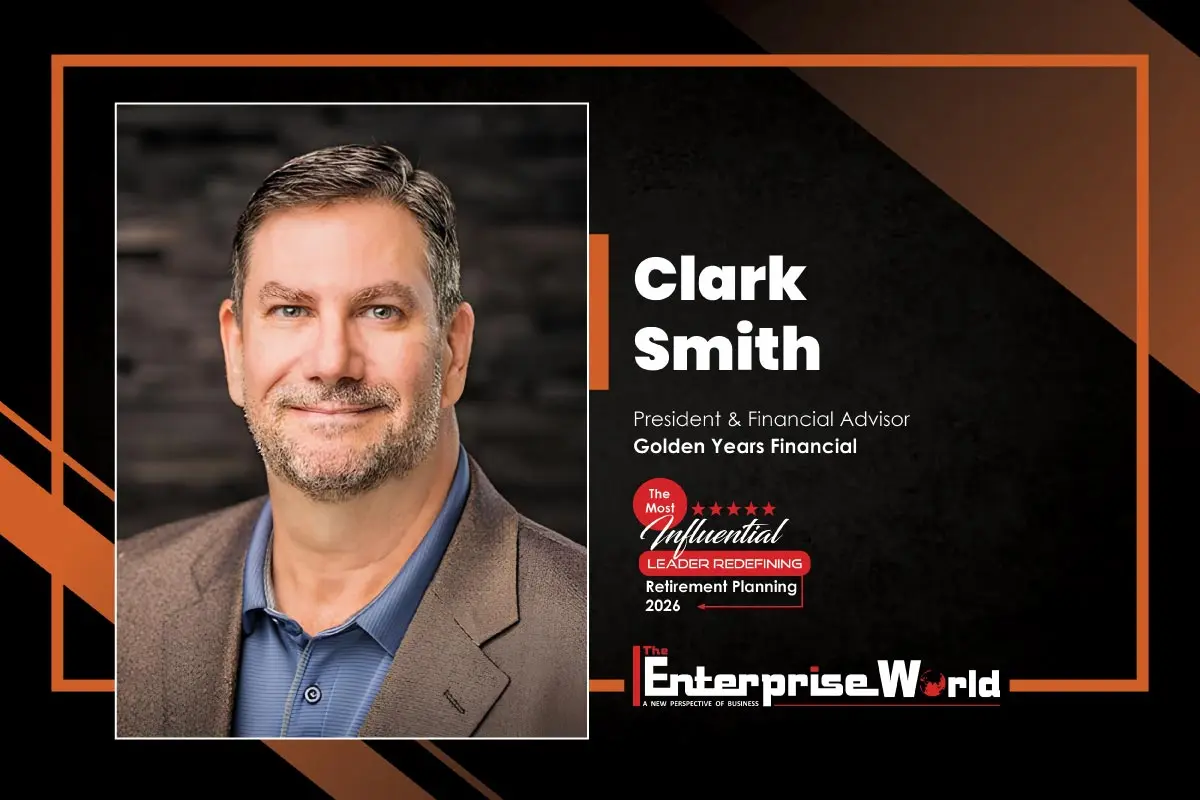
Clark Smith has spent more than thirty years working with people at that exact point. As President of Golden Years Financial, his work centers on helping individuals move from building wealth to living on it. Over time, he has come to believe that most of the difficulty people experience in retirement isn’t caused by a lack of discipline or preparation. It comes from trying to use a system that was never designed for this stage of life.

He began his career in 1990 at Dean Witter Reynolds, entering the industry with the same expectation many young advisors have—that financial advice is primarily about helping people make sound decisions. Early on, he saw both the strengths and the limitations of that model. The industry was effective at helping people accumulate assets, but far less consistent when it came to guiding them through the transition into retirement.
That realization stayed with him as his career progressed. In 1995, he moved to Prudential Securities, where he served as Vice President of Investments. During that time, the Jackson, Mississippi office where he worked received the highest client-satisfaction marks in a national company survey. It was a meaningful confirmation that when people feel understood, not just managed, they respond differently.
Still, the underlying tension never fully disappeared. As priorities shifted within larger organizations, he found himself repeatedly facing the same question: was the work truly centered on helping people, or was it drifting back toward something else?
That question followed him through UBS, through the firm he co-founded in 2006, and through later leadership roles. Each step added experience, but it also sharpened a distinction that would eventually define his approach.
There is a difference between growing money and living on it.
During a person’s working years, growth is the focus. Over time, consistency, protection, and income become more important. What looks reasonable on paper during accumulation can feel very different once the paycheck is gone. The same level of fluctuation that once felt manageable can suddenly feel personal.
According to Clark Smith, that is where many plans begin to break down—not because they were poorly built, but because they were never adjusted for a different phase of life.
That perspective led to the founding of Golden Years Financial in March 2025. The firm reflects a shift in how retirement planning is approached. Instead of beginning with products or projections, the process starts with a simple question: how does a person want their life to function once work is no longer the anchor?
From there, everything else is built around that answer.
Income, investments, taxes, and long-term decisions are structured to work together, rather than as separate pieces. One concept Clark Smith often uses to describe this is the idea of guardrails. Rather than locking someone into a fixed spending number, guardrails create a range that adapts over time. There is a level designed to remain sustainable during more difficult conditions, and a level that allows for greater flexibility when things are going well.
It is a practical structure, but it also changes how people experience their situation. Much of the stress people carry into retirement comes from not knowing where the boundaries are. When those boundaries become clearer, decision-making tends to follow.
Clark Smith has also found that many of the challenges people face in retirement are not purely financial. Behavior plays a significant role. Some individuals are hesitant to spend because they have spent a lifetime being cautious. Others take on more risk than they realize, assuming they will be able to adjust in time. Many continue to gather information long after they have what they need, because gathering information feels productive even when it delays action.
In each case, the numbers alone are not enough to guide the decision.
The way people see themselves, and the role they believe they are supposed to play in this stage of life, matters just as much as the structure of their portfolio. That is why Clark Smith’s approach incorporates not only financial planning but also an understanding of how people make decisions and what helps them feel confident moving forward.
Technology supports that process, particularly in areas such as risk analysis and income modeling. But it is not the focus. In his view, the purpose of any tool is to simplify, not complicate.

The most meaningful outcomes of this work often appear in quiet ways. A client who assumed they needed to live on less begins to see that they may have more flexibility than they thought. A couple who felt uncertain about their future gain a clearer understanding of how their income will function. Someone who has been waiting for the “right time” begins to recognize that the decision was less about timing and more about clarity.
Those moments are rarely dramatic. They don’t need to be.
Clarity, when it shows up, tends to feel steady. And when something feels steady, it becomes easier to act on.
That shift is subtle, but it is often the point where people move forward.
After more than three decades in the industry, Clark Smith believes the direction of retirement planning is changing. The focus is moving away from one-size-fits-all recommendations and toward approaches that reflect individual lives more closely. The conversation is shifting from accumulation to distribution, from abstract growth to practical use, and from products to purpose.
For him, the goal has remained consistent.
Not to predict markets or chase outcomes, but to help people understand where they stand and what their decisions mean for the life they want to live.
In the end, most people are not looking for complexity. They are looking for clarity. They want to know that what they have built is enough, and that it is structured in a way that allows them to use it with confidence.
A good plan can answer that question.
A well-built one can do something more.
It can make the next chapter feel not just possible, but ready.