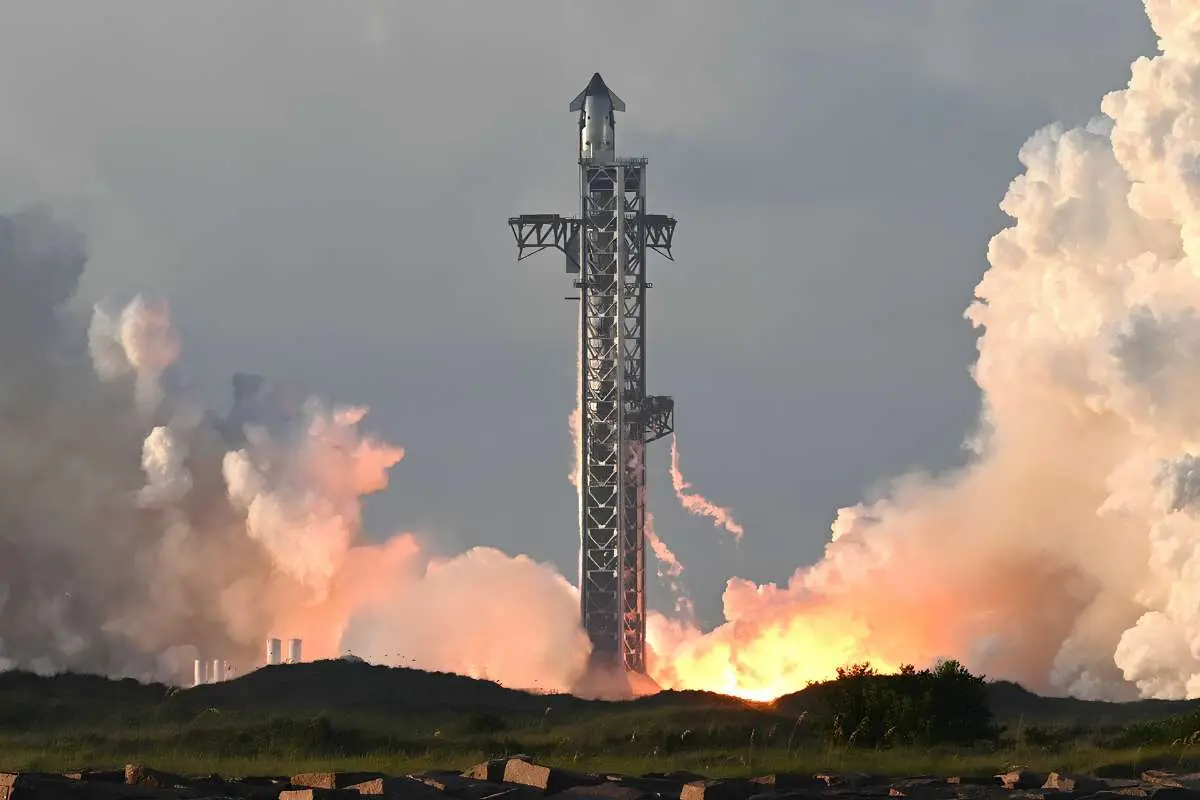
NASA has officially announced the four astronauts who will fly on the Artemis III mission, marking a significant milestone in the agency’s ambitious plan to expand human exploration beyond Earth and establish a long-term presence around the Moon. The announcement introduces a team of seasoned space travelers and emerging talent who will play a key role in shaping the future of deep-space missions.
The Artemis III crew will be led by veteran astronaut Randy Bresnik, who has spent more than 149 days in space across multiple missions. Joining him as pilot is European Space Agency astronaut Luca Parmitano, making him the first European astronaut assigned to an Artemis mission. The crew is completed by NASA astronauts Frank Rubio and Andre Douglas. Rubio is best known for setting the record for the longest single spaceflight by an American astronaut, while Douglas will make his first trip to space after years of preparation and involvement in NASA’s astronaut program.
The selection reflects NASA’s continued focus on international collaboration and diverse expertise as it prepares for increasingly complex missions. Agency officials highlighted the crew’s combined experience in space operations, engineering, scientific research, and leadership as critical factors in the mission’s success.
The announcement also underscores the growing global interest in lunar exploration. Governments and private companies around the world are investing heavily in technologies designed to support future Moon missions, with the Artemis program serving as the centerpiece of international efforts to return humans to deep space.
Artemis III mission to test key technologies for future lunar landings
Although Artemis III was once expected to be the mission that would return astronauts directly to the lunar surface, NASA has adjusted its plans to focus on testing crucial technologies that will enable future Moon landings.
Currently targeted for launch in 2027, the mission will serve as a large-scale demonstration of systems and procedures required for long-duration exploration beyond Earth orbit. The astronauts will travel aboard NASA’s Orion spacecraft and participate in a series of advanced operations involving commercial spacecraft being developed by SpaceX and Blue Origin.
One of the mission’s primary objectives will be to validate docking, rendezvous, and crew-transfer procedures between Orion and next-generation lunar landing vehicles. These demonstrations are considered essential before astronauts can safely undertake missions that involve landing on and departing from the lunar surface.
NASA officials have emphasized that the complexity of modern lunar missions requires extensive testing before astronauts travel farther from Earth. By conducting these operations in Earth orbit, engineers and mission planners can evaluate spacecraft performance, communication systems, navigation technologies, and Artemis III Crew procedures in a controlled environment.
The mission will also highlight the growing partnership between NASA and private industry. Companies such as SpaceX and Blue Origin are developing spacecraft that are expected to play a central role in future Artemis missions. Their involvement represents a major shift in how space exploration is conducted, combining government-led objectives with commercial innovation.
According to NASA, the lessons learned from Artemis III will help reduce operational risks and improve mission readiness for future lunar expeditions. The approach reflects the agency’s strategy of progressing step by step, ensuring that every critical system is thoroughly tested before astronauts attempt more challenging missions closer to the Moon.
Building momentum toward humanity’s return to the moon
The Artemis III crew announcement comes shortly after the success of Artemis II, a mission that carried astronauts around the Moon and marked humanity’s return to deep-space crewed exploration for the first time since the Apollo era.
That mission provided valuable data on spacecraft performance, crew operations, and navigation systems while demonstrating NASA’s ability to send humans beyond low-Earth orbit once again. The achievement has strengthened confidence in the broader Artemis program and laid the foundation for the next phase of lunar exploration.
While Artemis III is now focused on technology demonstrations, it remains a critical link in NASA’s long-term roadmap. The knowledge gained during the mission is expected to pave the way for Artemis IV and subsequent expeditions that could eventually return astronauts to the lunar surface for the first time since Apollo 17 in 1972.
NASA’s vision extends beyond simply revisiting the Moon. The agency sees the lunar environment as a testing ground for technologies and operational strategies that will one day support human missions to Mars. By learning how to live and work farther from Earth for extended periods, scientists and engineers hope to prepare for even more ambitious journeys across the solar system.
Despite ongoing technical challenges and evolving mission timelines, NASA remains committed to its goal of establishing a sustainable human presence beyond Earth. The announcement of the Artemis III crew represents another important step in that journey, bringing humanity closer to a future in which exploration of the Moon and beyond becomes a regular part of human activity.