Key Takeaways:
- China Retail sales fell 0.6%, marking the first decline since December 2022
- Fixed asset investment contracted 4.1%, led by a real estate decline
- Industrial output rose 4.5% while unemployment eased to 5.1%
China’s economy slowed in May as retail sales declined and investment contracted, while industrial output showed limited resilience, reflecting continued weakness in domestic demand and uneven growth conditions.
Consumption and investment indicators weaken further
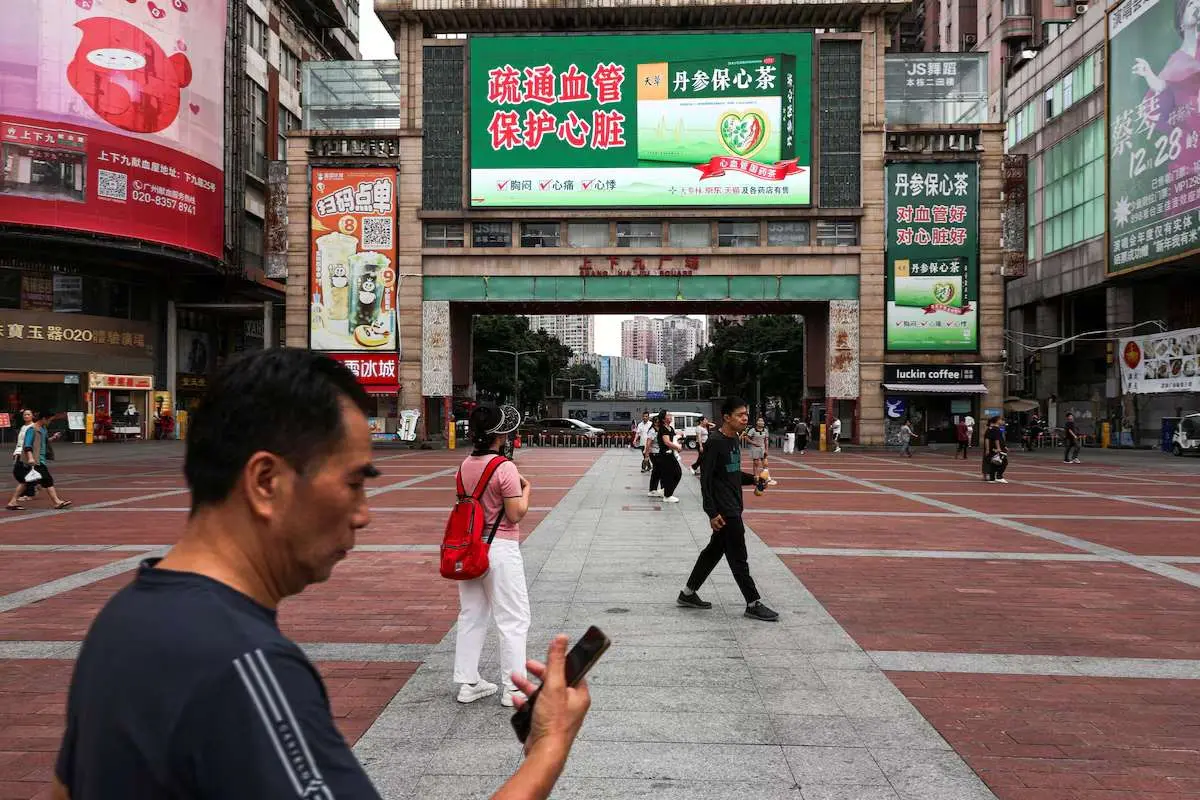
Retail sales declined 0.6% in May compared to the previous year, marking the first contraction since December 2022. The drop came despite increased travel and services activity during the early May holiday period.
The decline contrasted with expectations of flat growth and highlighted subdued consumer demand. Over the January to May period, combined china retail sales across goods and services increased 2.8%, indicating modest overall consumption growth.
Urban fixed asset investment contracted 4.1% as of end May, widening from a 1.6% decline recorded during the first four months of the year. The contraction was sharper than the estimated 2% drop.
Real estate investment remained a key drag, declining 16.2% during the January to May period. Manufacturing investment also contracted for the first time since December 2020, despite continued activity in selected high technology segments.
Infrastructure investment rose 0.6%, offering limited support to overall investment activity. Data suggests that both the property and manufacturing sectors contributed to the broader slowdown in capital expenditure.
Industrial output and external factors provide partial support
Industrial output increased 4.5% in May, exceeding estimates of 4.3% and improving from April’s 4.1%, which had marked a near three-year low. This made industrial production the only major indicator showing growth during the month.
The unemployment rate eased to 5.1% in May from 5.2% in April, indicating a marginal improvement in labor market conditions. However, consumer spending remained cautious, with per capita holiday expenditure below previous levels.
Manufacturing activity showed limited expansion, with the official index at 50, indicating neutrality between growth and contraction. This reflects slowing momentum following stronger performance earlier in the year.
Export activity remained relatively strong, supported by demand in sectors such as renewable energy and artificial intelligence. However, this strength has not fully offset weaker domestic demand.
Producer inflation rose at the fastest pace in nearly four years, while consumer inflation remained at 1.2%. This indicates that firms are absorbing higher input costs rather than passing them on to consumers.
Global energy conditions also influenced the economic environment, with fluctuations in commodity prices affecting cost structures. However, the impact on consumer prices remained limited due to weak demand conditions.
Overall, the data indicate an imbalance between supply and demand, with pressure on enterprises as consumption and investment remain subdued despite stable industrial output and weakening China Retail Sales.