Key Takeaways
- China’s Military Reach Is Expanding Beyond Its Immediate Region
- Indo-Pacific Security Partnerships Are Likely to Deepen
- The Pacific Is Emerging as a New Geopolitical Flashpoint
China has drawn international attention after carrying out a rare China Pacific missile test involving a nuclear-capable ballistic missile over the Pacific Ocean, a move that has sparked concern across the Indo-Pacific and renewed debates over regional security.
The missile, launched from a nuclear-powered submarine on July 6, reportedly carried a dummy warhead and was described by Beijing as part of a routine military exercise. Chinese authorities said relevant countries had been notified in advance and maintained that the launch complied with international law and was not aimed at any particular nation.
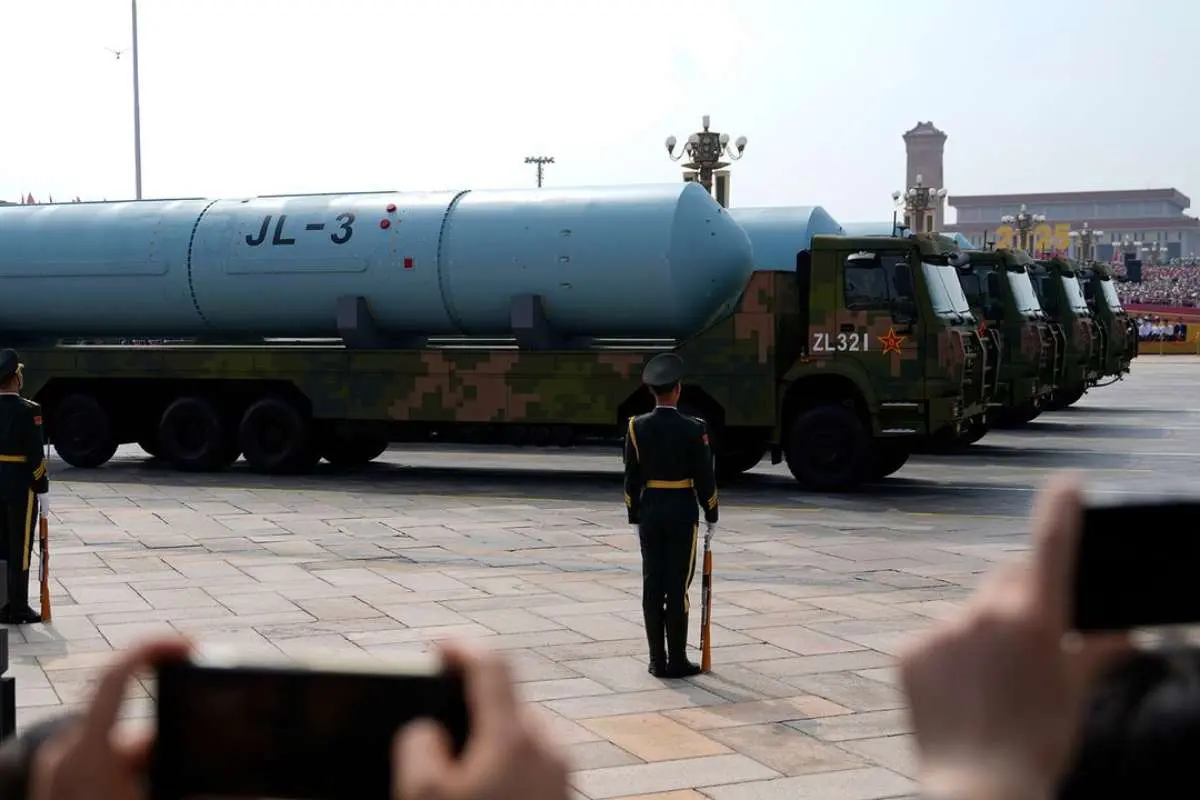
The missile is widely believed to be the JL-3, China’s most advanced submarine-launched ballistic missile, which is capable of striking targets thousands of kilometers away. Reports indicate that the missile flew over parts of the Pacific before landing near waters surrounding Tuvalu, placing several Pacific Island nations along its flight path.
The test marks one of China’s most significant strategic missile launches in recent years and highlights the country’s rapidly expanding military capabilities. Analysts say the launch demonstrates Beijing’s growing confidence in its strategic deterrence capabilities and its increasing ability to project military power far beyond its shores.
The timing of the exercise has also attracted attention. The China Pacific missile test came just days after Australia and Fiji signed a new defense agreement designed to strengthen security cooperation in the Pacific and reinforce the region’s commitment to maintaining peace and stability.
Pacific nations and allies voice strong concerns
The missile launch prompted swift reactions from governments across the region, with several countries describing the test as a source of instability and concern.
Australia labeled the launch “destabilising,” arguing that military activities involving nuclear-capable weapons increase uncertainty and heighten regional tensions. New Zealand also expressed concern, saying the test underscored the need for greater transparency and communication among major powers operating in the Indo-Pacific.
Officials from several countries questioned the limited notice given before the launch and stressed the importance of open communication to avoid misunderstandings and reduce the risk of escalation.
Pacific Island nations responded particularly strongly to the incident. Leaders across the region expressed concern that the Pacific Ocean, long regarded as a zone of peace and cooperation, was increasingly becoming an arena for strategic competition between global powers.
Tuvalu and other Pacific nations reaffirmed their commitment to preserving the South Pacific as a nuclear-free zone and urged major powers to respect the region’s long-standing desire to remain free from military confrontation. Several leaders said the launch ran counter to the Pacific’s “Ocean of Peace” vision, which seeks to prevent geopolitical rivalries from disrupting regional stability.
Taiwan also criticized the China Pacific missile test, describing it as another indication of China’s increasingly assertive military posture and warning that such actions could further heighten tensions across the Indo-Pacific.
Launch could accelerate security cooperation in the region
Beyond the immediate diplomatic backlash, analysts believe the missile test could have far-reaching implications for regional security arrangements.
The launch is expected to strengthen defense cooperation between NATO and its Indo-Pacific partners, particularly Australia, Japan, New Zealand, and South Korea. Security experts say the incident could inject new momentum into discussions on missile defense systems, intelligence sharing, and defense-industrial collaboration.
The test has also renewed international attention on China’s rapidly growing nuclear arsenal and the limited transparency surrounding its strategic weapons programs. Western governments have repeatedly voiced concerns about Beijing’s military modernization efforts and have called for greater engagement on arms-control measures and strategic stability discussions.
China, however, has dismissed the criticism, insisting that the missile launch was a normal and lawful military exercise. Chinese officials have argued that other nuclear powers routinely conduct strategic missile tests and accused Western countries of applying double standards when assessing Beijing’s military activities.
Despite these assurances, the latest China Pacific missile test has heightened anxieties across the Pacific and added another layer of complexity to the increasingly intense strategic competition unfolding in the Indo-Pacific. For many regional leaders, the incident serves as a reminder of the delicate balance between national security interests and the Pacific’s aspiration to remain a region defined by peace and cooperation. As geopolitical rivalries continue to deepen, China’s latest missile launch is likely to shape future debates on regional security and could accelerate efforts by like-minded nations to strengthen partnerships aimed at preserving stability in the Indo-Pacific.