“True transformation is not about systems alone. It is about helping people and organizations stay aligned while everything around them changes.”
As organizations expand across different countries, teams, and technologies, even small gaps in communication, operations, or system integration can create serious challenges that slow down growth and reduce efficiency. Employees often struggle with disconnected systems, changing workflows, and unclear direction, while leaders face constant pressure to keep teams aligned and large transformation projects moving forward. Without the right guidance and operational support, businesses can experience delays, poor collaboration, wasted resources, and frustrated teams that struggle to adapt to change.
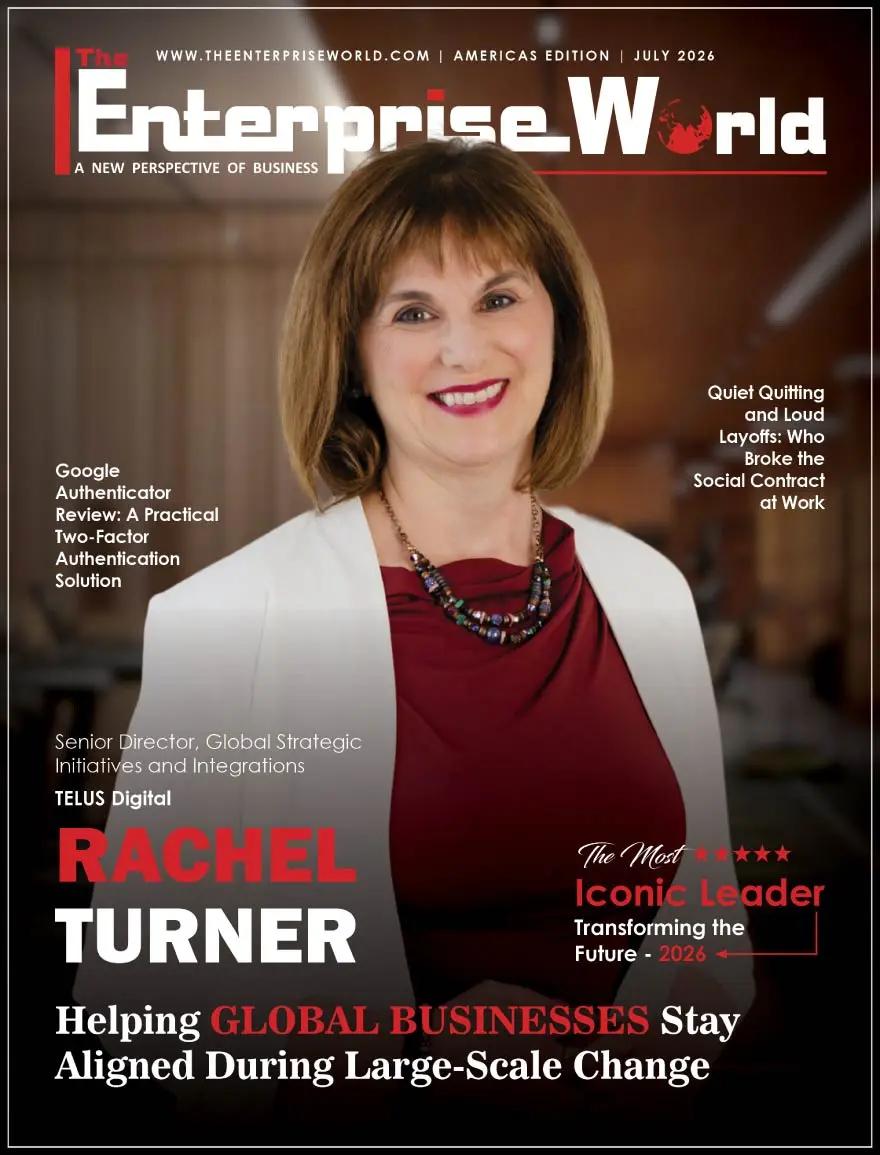
Rachel Turner, Senior Director, Global Strategic Initiatives and Integrations at TELUS Digital, helps organizations navigate these complex challenges by leading global transformation, integration, and operational strategy initiatives across multiple countries and business functions.
Her work focuses on simplifying complex systems, improving collaboration, aligning teams, and turning large-scale business strategies into practical execution that delivers measurable results. She also helps organizations adopt digital systems, AI, and automation while keeping people, productivity, and long-term growth at the center of the transformation process.
Her experience leading high-impact transformation projects reflects the scale and complexity of the work she manages.
Throughout her career, she has:
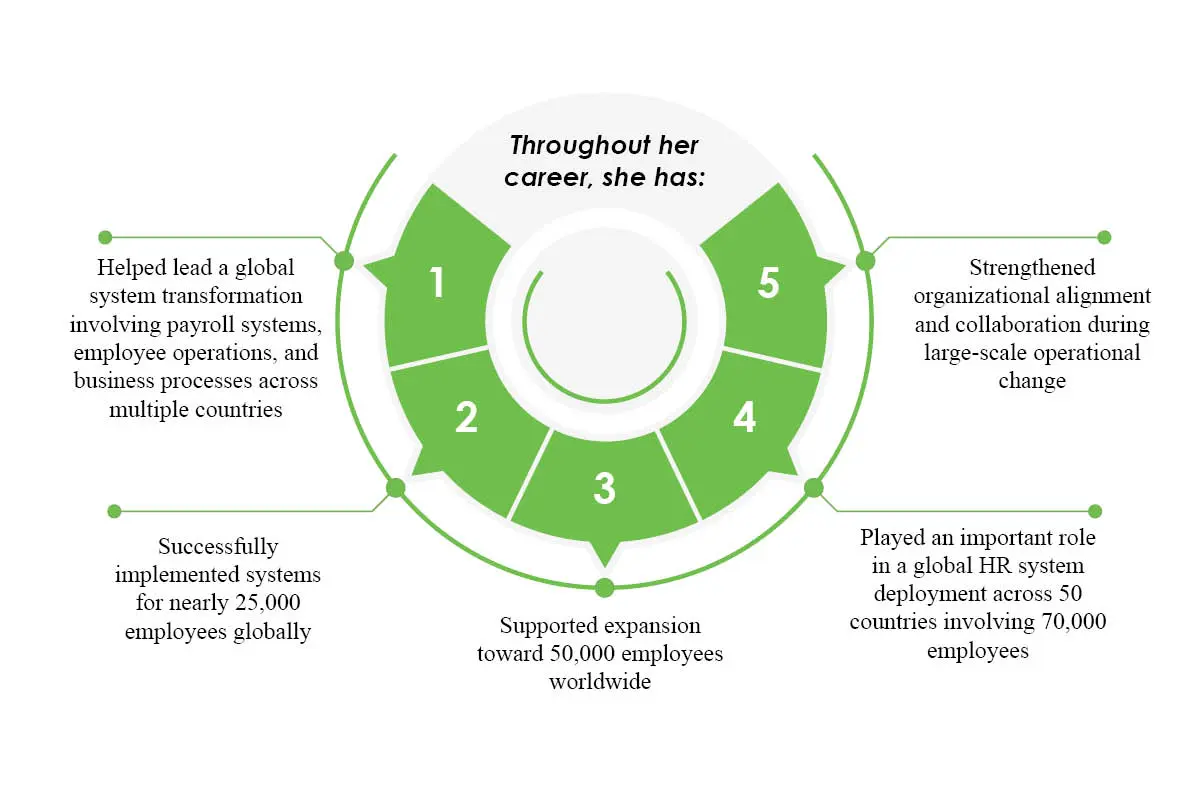
- Helped lead a global system transformation involving payroll systems, employee operations, and business processes across multiple countries
- Successfully implemented systems for nearly 25,000 employees globally
- Supported expansion toward 50,000 employees worldwide
- Played an important role in a global HR system deployment across 50 countries involving 70,000 employees
- Strengthened organizational alignment and collaboration during large-scale operational change
From psychology to global transformation
Rachel Turner began her professional journey in psychology, a field that gave her a deep understanding of how people think, behave, and work together. Alongside her interest in human behavior, she also developed a strong passion for business, which eventually led her into marketing, where she found a natural connection between people, communication, and business strategy.
As her career progressed, she discovered a strong interest in solving large and complex business challenges. She became deeply involved in understanding how organizations operate and how systems, processes, and collaboration could be improved on a larger scale. Over time, her work evolved into transformation, integration, and operational strategy roles, with a growing focus on helping global organizations scale effectively across different countries, cultures, systems, and business functions.
For more than a decade, her work has centered on helping organizations turn strategy into practical execution while navigating change and keeping teams aligned, engaged, and connected throughout the transformation process.

Stabilizing complex projects and regaining momentum
Through years of leading global transformation initiatives, Rachel Turner learned that strong leadership is not about simply directing people. Instead, it is about creating clarity, building trust, and keeping teams aligned during periods of change. Much of her work involves stepping into high-pressure situations where organizations are facing operational challenges or struggling to turn strategy into execution. Her team is often brought in to stabilize complex projects, solve urgent problems, and help organizations regain momentum.
One of the largest projects she helped lead involved a global system transformation that affected employee check-ins, payroll systems, and operational processes across multiple countries. The initiative was highly complex because each region operated with different regulations, benefit structures, and business requirements.
Over the last two years, the system has been implemented for nearly 25,000 employees and is expected to expand to almost 50,000 employees globally. Experiences like these reinforced the importance of communication, collaboration, adaptability, and people-focused leadership in successfully managing large-scale transformation projects.
Misalignment can slow down transformation and business growth
Rachel Turner believes that one of the biggest challenges organizations face during transformation is maintaining alignment across teams, leadership, priorities, timelines, and technology decisions. Many businesses underestimate how difficult it can be to keep everyone moving toward the same goals, especially during large-scale transformation projects.
Some of the most common challenges include:

- Misalignment between leadership and operational teams
- Changing priorities during long-term projects
- Delays in execution and decision-making
- Weak collaboration across departments
- Difficulty keeping teams connected to the same vision
She also emphasizes that alignment is not something organizations achieve once and keep forever. In long-term transformation initiatives that may span several years, priorities and business needs often change over time. A project may begin with strong alignment, but as conditions evolve, teams can gradually lose focus or move in different directions. This is why she stresses the importance of continuously revisiting the vision, re-engaging teams, and ensuring everyone stays connected to the same mission throughout the transformation journey.
Successful transformation depends on understanding people’s concerns
Collaboration is one of the strongest foundations of Rachel Turner’s leadership approach. In many transformation and integration projects, her team does not directly oversee the departments involved. Instead, the focus is on bringing teams together, improving alignment, and helping people work more effectively across the organization. She believes successful transformation starts by understanding whether solutions will truly work for the people using them every day. By listening closely to employees, understanding their concerns, and creating an environment where people feel heard and supported, she helps organizations build stronger collaboration and achieve more sustainable long-term results.
Rachel Turner also approaches global transformation by simplifying complexity. Large-scale projects can often feel overwhelming, making it difficult for teams to stay aligned and move forward effectively. Her approach focuses on breaking complex challenges into smaller, manageable workstreams so teams can better understand each part before connecting everything into one unified strategy. She compares the process to building a puzzle, where every piece must first be organized and understood before contributing to the bigger picture. For Rachel, real transformation happens when people understand how to turn strategy into practical action within their everyday work.
Her leadership perspective has evolved significantly over the years. Earlier in her career, she viewed leadership mainly as making decisions and guiding teams toward those decisions. Today, after years of leading global transformation initiatives, she sees leadership as bringing together the collective strengths, experiences, and ideas of a team. In today’s fast-changing business environment, she believes the best outcomes come from creating a culture where people feel trusted, valued, and empowered to contribute while working toward a shared vision together.
Advice for future leaders
One of the strongest qualities future leaders can develop, according to Rachel Turner, is the ability to truly listen to people. She feels many leaders become so focused on deadlines, targets, and execution that they overlook the insights and perspectives of the teams around them, even though the best solutions often already exist within those teams.
She also sees great leadership as something far bigger than having every answer alone. In her view, successful leaders are the ones who bring people together, encourage collaboration, and create environments where individuals can contribute their strengths while working toward shared success.
The future of digital transformation
Rachel sees the future of business being shaped by how effectively organizations combine technology with human capability. She values the approach followed at TELUS Digital, where transformation is not viewed as a choice between people and technology, but as a balance between both. In her view, technology and automation should support employees, improve the way people work, and help organizations operate more effectively rather than replace human contribution completely.
She believes organizations that succeed in the long run will be the ones that build strong partnerships between people and technology while ensuring employees continue to feel valued, supported, and connected to their work.
Technology alone cannot create long-term success
In Rachel’s view, AI and automation are helping organizations reduce operational challenges, improve efficiency, and allow teams to complete tasks faster while making better use of time and resources. At the same time, she emphasizes that businesses must continue to remain people-centered because technology alone cannot create long-term success.
She believes people still play an essential role in creativity, decision-making, collaboration, and leadership. Rather than viewing technology and people as competing forces, she sees the future as a strong partnership where both work together to help organizations grow, innovate, and operate more effectively.
Human skills that will define the next generation of leaders
Rachel Turner believes successful leaders of the future will stand out through:

- The ability to use technology effectively
- Staying focused in fast-moving environments
- Listening carefully and asking thoughtful questions
- Building trust and encouraging collaboration
- Keeping teams aligned toward shared goals
She believes leaders who build trust, encourage collaboration, and pay close attention to their teams will create stronger workplaces, better strategies, and more meaningful long-term results.
Rachel Turner’s 5 impactful business mantras
- Simplify complexity before driving transformation.
- Strong alignment is the foundation of successful execution.
- Real transformation succeeds when people feel heard and supported.
- Great leadership is built on trust, collaboration, and shared strengths.
- Technology creates a greater impact when combined with human capability.