The essence of meaningful scientific progress lies in a simple yet powerful belief: choose problems that matter, pursue them with honesty, and commit fully to the journey. In a research landscape driven by real-world impact and sustainability, this philosophy has guided work that bridges fundamental chemistry with pressing global challenges such as clean energy, carbon utilization, and affordable chemical synthesis.
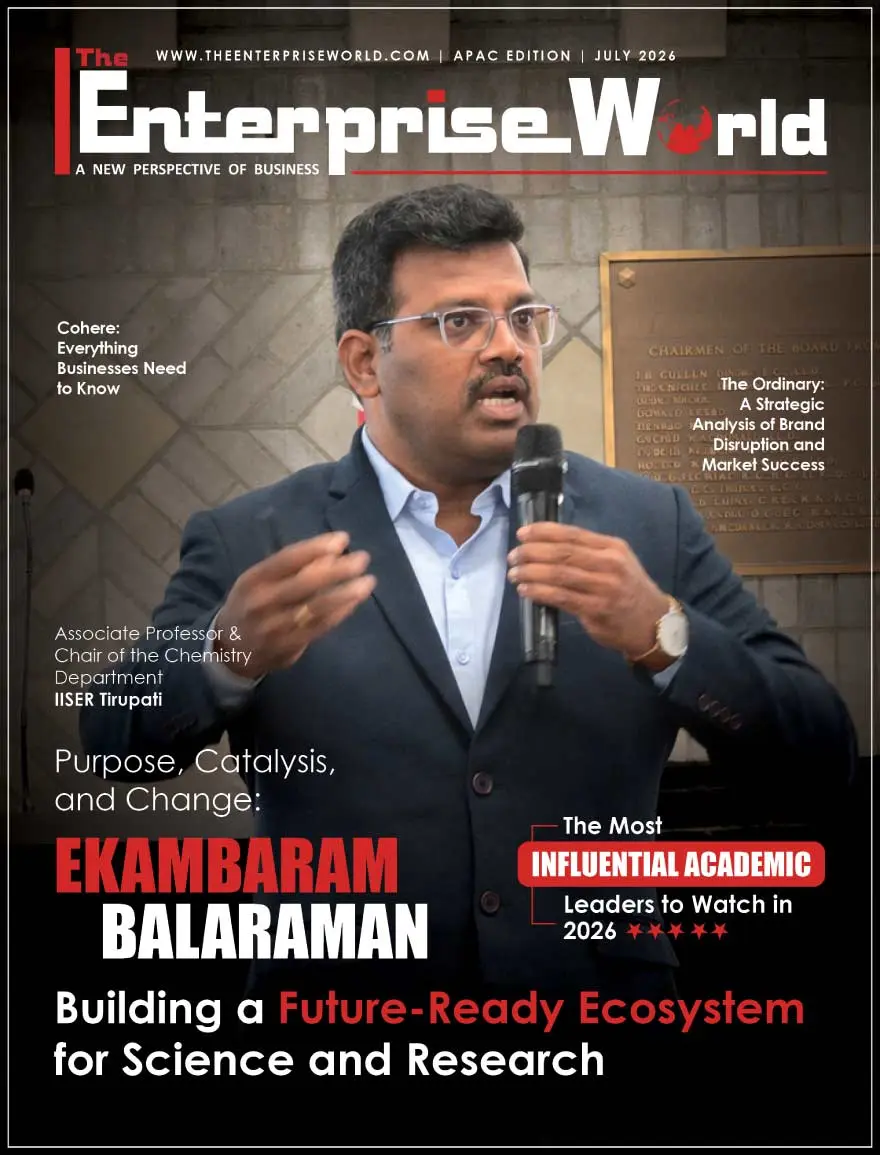
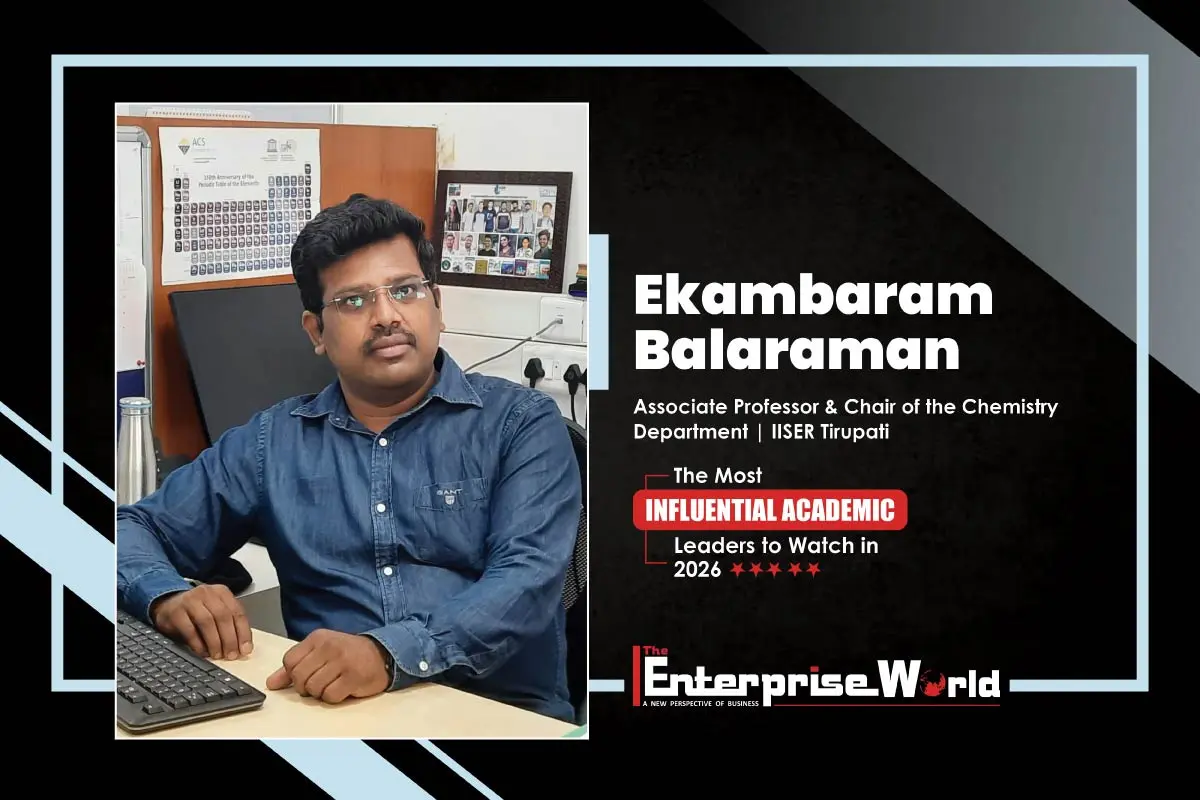
Shaped by a journey that spans rigorous academic training, international research exposure, and foundational and translational research work at the CSIR-National Chemical Laboratory (CSIR-NCL), Pune, it is further strengthened by resilient leadership during critical institutional transitions, including navigating growth amid a global pandemic. Defined by a collaborative mindset, commitment to mentorship, and a vision for application-driven research, Prof. (Dr) Ekambaram Balaraman, Associate Professor & Chair of the Chemistry Department at the Indian Institute of Science Education and Research (IISER) Tirupati, continues to influence not only the direction of sustainable catalysis but also the way scientific research and education evolve in India.
The Spark that Became Science

Balaraman’s journey into the world of chemistry began during his formative years in school. What started as an academic inclination soon evolved into a lifelong passion, driven by both curiosity and inspiration.
As a student, he found himself fascinated by the transformative nature of chemistry; its ability to explain fundamental phenomena while offering solutions to real-world challenges. However, beyond the subject itself, it was the influence of a dedicated and approachable teacher that truly shaped his path.
This early mentorship played a defining role. His science teachers not only simplified complex concepts but also inspired confidence and curiosity, qualities that would later become central to Balaraman’s own teaching philosophy. Choosing chemistry as a career during his higher secondary education, he went on to excel academically, eventually pursuing a PhD from the University of Hyderabad.
His academic journey further expanded internationally during his postdoctoral research at the Weizmann Institute of Science, Israel, where he spent four years refining his expertise. This global exposure provided him with a broader perspective on research excellence, collaboration, and innovation.
Turning Challenges into Catalytic Opportunities
Upon returning to India, Balaraman began his independent research career at the CSIR-National Chemical Laboratory (CSIR-NCL), Pune, as a Senior Scientist in the Catalysis/Organic Chemistry Divisions. Over the course of more than six years, he established a strong foundation in research, focusing on sustainable catalytic systems with significant industrial and environmental relevance.
At the Indian Institute of Science and Education (IISER) Tirupati, he has further expanded this work by leading a dedicated research group focused on ‘Catalytic Strategies for Sustainable Chemistry’, a field that sits at the intersection of chemistry, energy, and environmental science.
His research primarily addresses some of the most pressing challenges of modern times:
- Development of innovative catalytic systems for hydrogen generation
- Developing sustainable and eco-benign chemical and pharmaceutical manufacturing processes using abundant and renewable feedstocks
- Conversion of carbon dioxide into value-added chemicals
These areas are not only scientifically complex but also critically important for global sustainability. By focusing on scalable and practical solutions, Balaraman ensures that his research extends beyond academic publications to real-world applications.
Leadership Beyond the Laboratory

While his contributions as a scientist are significant, Balaraman’s role as the Chair of the Department of Chemistry at IISER Tirupati highlights his capabilities as a strategic leader.
In this position, he is actively involved in:
- Infrastructure development within the department
- Academic and research policy formulation
- Faculty coordination and student mentorship
- Long-term planning for departmental growth
Leading a department with over 200 students and multiple faculty members requires not only administrative efficiency but also emotional intelligence and vision. Balaraman approaches this responsibility with a clear understanding of the balance required between academic excellence and research innovation.
His leadership style is rooted in collaboration, adaptability, and a commitment to creating an enabling environment for both students and faculty/administrative staffs.
Between Campuses and Crisis
IISER Tirupati, as a relatively young institution, has undergone rapid development over the past decade. Balaraman has been closely involved in navigating several critical phases of this growth.
One of the most challenging periods came during the transition from a temporary campus to a permanent one, a process that required meticulous planning and execution. The relocation involved the safe transfer and reinstallation of advanced scientific equipment, ensuring minimal disruption to ongoing research. Coordinating this phase transition while maintaining research continuity was a significant challenge that required decisive leadership and effective coordination
Balaraman demonstrated resilience and problem-solving capabilities. His ability to manage logistics, people, and uncertainty simultaneously reinforced the importance of adaptability in academic leadership.

Mentorship That Extends Beyond Academia
At the heart of Balaraman’s work lies a strong commitment to mentorship. Over the years, he has guided numerous students, helping them build successful careers across academia, industry, and entrepreneurship.
His academic contributions include:
- 12 PhD scholars successfully graduated
- Over 40 master’s students mentored through research projects
- Several students carried out research internship under his mentership
The impact of his mentorship is evident in the achievements of his students:
- One former PhD student now leads a catalyst division at a major public sector enterprise and another student in academia
- Two of his PhD students have successfully launched their own startups
- Several graduates are pursuing postdoctoral research at various institutions, while a few have taken up positions in industry
These outcomes reflect not just academic training but also the development of critical thinking, innovation, and leadership skills.
Balaraman believes that mentorship should go beyond textbooks and laboratories. It should prepare students to navigate diverse career paths while contributing meaningfully to society.

Strengthening Industry-Academia Collaboration
A key aspect of Balaraman’s work is his strong emphasis on industry collaboration. Recognizing the importance of translating research into practical applications, he has actively built partnerships with leading organizations.
His collaborations include projects with:

- GAIL (India) Limited – focusing on converting carbon dioxide into value-added functional polymers
- Tata Steel Limited– working on transforming carbon dioxide into carbonaceous materials
- Reliance Industries Limited – developing catalytic materials for polymer production, including polyethylene and polypropylene
These partnerships have resulted in multiple patents, including both process and product innovations. By working closely with industry, Balaraman ensures that his research remains relevant, impactful, and aligned with real-world needs.
Research Excellence with Global Impact
Prof. (Dr.) Ekambaram Balaraman’s research has significantly advanced sustainable catalysis, with a focus on catalyst design for sustainable chemical synthesis, hydrogen generation from renewable feedstocks, and green chemical transformations using earth-abundant catalytic systems. By bridging fundamental science with industrial applications, he has contributed to sustainable energy, eco-friendly manufacturing, and cost-effective chemical production.
His work includes more than 120 research publications, nearly 10,000 citations, an h-index of 54, and several patents, including 10 U.S. patents. He has also led over 15 externally funded research projects supported by government agencies and industry.
Beyond research, Balaraman has contributed to curriculum development, taught undergraduate and postgraduate chemistry courses, and actively promoted science through outreach programs, popular lectures, and interactions with students in rural schools.
His work has earned national and international recognition. He is an elected Fellow of the Royal Society of Chemistry (FRSC), UK, and a member of the American Chemical Society (ACS), the Royal Society of Chemistry (RSC), and the German Chemical Society (GDCh). His honors include the DST-SERB Swarnajayanti Fellowship (2020), CRSI Bronze Medal (2020), MRSI Medal (2021), Asian and Oceanian Photochemistry Association Young Scientist Award (2019), and the A. V. Rama Rao Young Scientist Award (2018).
To learn more about Prof. (Dr.) Ekambaram Balaraman’s research and recent scientific breakthroughs, readers may refer to the following resources:
- Advancements in sustainable energy: IISER Tirupati’s breakthrough in hydrogen generation – The Hindu BusinessLine
- https://dst.gov.in/new-catalytic-process-producing-hydrogen-offers-sustainable-method-manufacturing-green-fuel
- New approach for producing hydrogen gas developed – The Hindu BusinessLine
- https://www.iiserkol.ac.in/media/filer_public/e3/99/e3993d7e-1acb-442f-bcd6-807e42de9968/75under50_ctb_web_3rd_mar_2022.pdf

The Blueprint of a Future-Ready Academic Ecosystem
At IISER Tirupati, Balaraman plays an active role in creating a culture that encourages innovation and critical thinking. His approach to education integrates both fundamental knowledge and application-driven research.
The Department of Chemistry supports this vision through:
- Research-oriented teaching methodologies
- Student-led initiatives and clubs such as Electron and Synergy
- Regular industry-academia interactions
- Workshops on intellectual property and skill development
Balaraman spearheaded the organization of a residential Chemistry Camp for secondary grade students from state schools as part of the Royal Society of Chemistry (RSC)-Yusuf Hamied Inspirational Science Programme at IISER Tirupati. He coordinated the RSC-Professional Teachers Program, an initiative aimed at empowering science teachers by improving their instructional skills. He also facilitated a career development program for Andhra Pradesh State Polytechnic Teachers at IISER Tirupati. Balaraman initiated skill development courses on analytical techniques to provide hands-on training and practical experience to students at various academic levels.
These efforts ensure that students are not only academically strong but also equipped with the skills needed to thrive in a rapidly changing world.

The Evolving Research Landscape
Ekambaram Balaraman highlights that funding remains a critical driver of cutting-edge research, particularly in the Indian academic landscape. Research funding primarily comes from two sources: government agencies and industry collaborations. While institutions benefit from support from bodies such as DST, ANRF, CSIR, DBT, and ICMR, there is limited availability of donor or philanthropic funding, making academia heavily reliant on government grants.
At the same time, securing industrial funding is often challenging for academic institutions, as aligning exploratory research with industry expectations requires strategic collaboration.
Balaraman notes a clear shift in research priorities from fundamental science to application-oriented and impact-driven research. Moreover, researchers are expected to develop innovative solutions that address real-world challenges, particularly in areas such as sustainability, energy, and industrial processes.
He also emphasizes the growing importance of collaborative research, moving away from individual-centric approaches toward multi-institutional and interdisciplinary projects. Supported by national initiatives, such collaborations are becoming essential for tackling complex problems.
Contribution to the Nation: DST’s Nodal (Tirupati-Chennai-Bengaluru Cluster) Center
India is heavily dependent on China and other Western countries to meet over 75% of India’s APIs (Active Pharmaceutical Ingredients) requirements and also more than 50% of India’s top 10 pharma industries’ needs. Balaraman is serving as a nodal coordinator for the DST’s Nodal Center at IISER-Tirupati (Tirupati-Chennai-Bengaluru Cluster) for the development and production of key starting materials, drug intermediates, and other raw materials that are required by the Health Care Sector.
According to Balaraman, the sector is currently in a phase of transition, where adaptability and relevance will define the future of research and higher education.

A Philosophy Rooted in Simplicity and Commitment
Despite his achievements, Balaraman maintains a grounded and straightforward approach to leadership and success. His advice to aspiring researchers and academic leaders is simple yet profound:
Choose a meaningful problem, pursue it with honesty, and give it your best effort.
This philosophy reflects his belief that sustained effort, integrity, and clarity of purpose are the true drivers of success.
Balancing Leadership with Personal Well-being
In a demanding academic environment, maintaining balance is often challenging. Balaraman acknowledges the importance of family support in sustaining professional growth.
He emphasizes that both personal and professional aspects of life are equally important, and achieving balance requires conscious effort and occasional compromise. With the right support system, he believes individuals can navigate these challenges effectively and build fulfilling careers.
The Purpose of Science Through Leadership and Sustainability
Ekambaram Balaraman’s journey is a testament to the power of passion, perseverance, and purpose-driven leadership. From a curious student inspired by a teacher to a leader shaping the future of scientific research, his story reflects the evolving role of academia in addressing global challenges.
At IISER Tirupati, he continues to drive progress not just through research but through mentorship, collaboration, and institutional development. His work in sustainable catalysis and his commitment to nurturing the next generation of scientists position him as a key contributor to India’s scientific and educational ecosystem.
In an era where innovation must align with sustainability, leaders like Balaraman are not just advancing science; they are redefining its purpose.

Sustainable Science Through Purposeful Research and Transformational Leadership

- Purpose-Driven Research Creates Real Impact
- Sustainable Catalysis is Central to Future Innovation
- Leadership in Academia Requires Vision and Adaptability
- Mentorship Shapes Future Leaders Beyond Academia
- Collaboration is the Future of Research Excellence