Professional sports have changed dramatically over the past generation. Once viewed primarily through the lens of competition, today’s sports industry sits at the intersection of media, technology, entertainment, finance, and global commerce. The business surrounding the games has become every bit as sophisticated as the action taking place on the field.
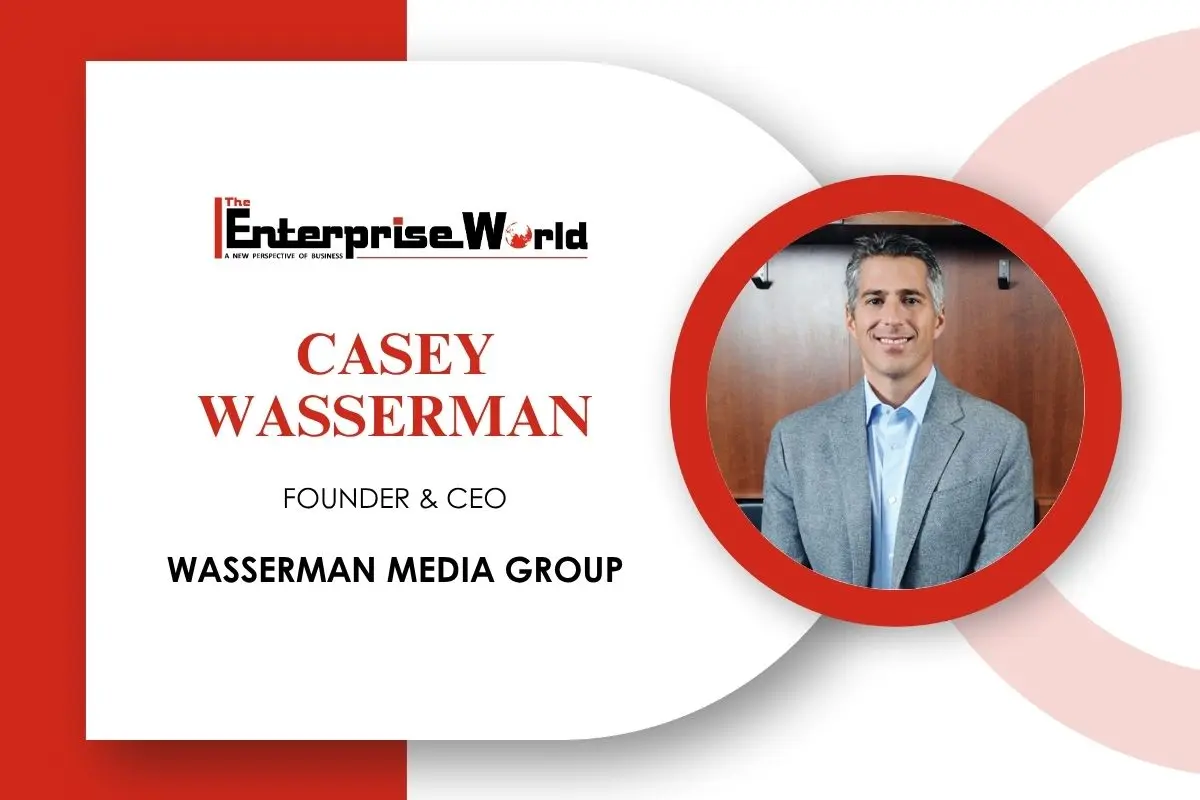
Few executives have built careers that reflect that transformation as closely as Casey Wasserman.
Known today as Chairperson of the Los Angeles 2028 Olympic and Paralympic Games, Wasserman has spent more than two decades working across athlete representation, sports marketing, sponsorship strategy, and event management. His career has unfolded alongside the rapid globalization of sports, offering a useful case study in how executive leadership has evolved as the industry itself has expanded.
The industry has grown beyond competition
There was a time when the commercial side of sports revolved around ticket sales, television contracts, and sponsorship signage.
Those elements remain important, but the business has become considerably more complex.
Athletes now develop personal brands with global reach. Media companies compete across broadcast, streaming, and digital platforms. Corporate partnerships often include original content, social media campaigns, live experiences, and year-round audience engagement. International events attract not only fans but also investors, tourism officials, technology companies, and multinational corporations.
The result is an ecosystem where collaboration across industries has become essential.
Casey Wasserman’s professional path mirrors that broader evolution.
A career built during a time of change

When Wasserman founded his company in 2002, digital media was beginning to reshape how audiences consumed sports.
Over the following two decades, smartphones, streaming platforms, social networks, and direct-to-consumer media fundamentally changed the relationship between athletes and fans. Organizations serving the industry adapted by broadening their capabilities beyond traditional representation.
That shift influenced everything from sponsorship negotiations to brand strategy.
Rather than viewing sports marketing as a collection of isolated campaigns, companies increasingly focused on long-term audience relationships that extended across multiple platforms and experiences.
In interviews, Casey Wasserman has often emphasized persistence as an important ingredient in building both careers and organizations. He has spoken about success as something developed gradually through continuous effort and the willingness to create new opportunities over time.
It is a philosophy that aligns with an industry where meaningful growth rarely occurs overnight.
Leadership in an interconnected world
Modern executives rarely operate within a single discipline.
A major sporting event may involve media companies, government agencies, technology providers, venue operators, corporate sponsors, hospitality organizations, and international governing bodies. Coordinating those relationships requires leaders capable of navigating both strategic planning and operational execution.
That complexity has become a defining feature of contemporary sports business.
Leadership today increasingly depends on communication, adaptability, and the ability to bring together professionals with diverse areas of expertise. Rather than acting as individual decision-makers, executives often function as facilitators, aligning organizations around shared objectives.
Wasserman’s career has largely unfolded within that environment.
The value of reputation
In business, reputation is often accumulated gradually and tested continually.
Relationships with clients, partners, and stakeholders frequently determine future opportunities as much as technical expertise or financial performance.
Casey Wasserman has addressed this idea directly when discussing his own career. In interviews, he has explained that he wanted to establish a professional reputation based on his own accomplishments rather than assumptions connected to his family background.
That perspective reflects a broader principle applicable across industries.
Organizations may be built through strategy and execution, but long-term credibility depends on consistency.
For executives leading complex businesses, trust remains one of the most valuable assets they possess.
Innovation without losing focus

Technology continues to reshape sports at a remarkable pace.
Artificial intelligence is influencing analytics and fan engagement. Streaming services continue to redefine media consumption. Athletes increasingly communicate directly with audiences through their own platforms, while sponsors expect measurable performance from every partnership.
The pace of change can encourage organizations to pursue every emerging trend.
Yet many successful executives emphasize discipline alongside innovation.
In discussing career development, Casey Wasserman has repeatedly encouraged people to identify work they are genuinely passionate about and commit themselves fully to it. While offered as career advice, the idea also reflects a strategic approach to business: lasting success often comes from maintaining a clear sense of purpose even as markets evolve.
Looking beyond individual events
Major sporting events naturally command public attention, but they represent only one part of a much larger industry.
The broader sports economy encompasses marketing agencies, technology firms, media organizations, apparel companies, venue operators, data providers, hospitality groups, and countless other businesses that contribute to the fan experience.
Executives working across those sectors increasingly face similar challenges.
They must adapt to changing technology, understand evolving consumer behavior, manage global partnerships, and build organizations capable of responding to constant change.
Those demands are unlikely to diminish.
A reflection of a changing industry
Viewed in its entirety, Wasserman’s career illustrates more than personal achievement.
It reflects the maturation of sports into one of the world’s most dynamic commercial sectors.
The boundaries separating sports, entertainment, media, and technology continue to narrow, creating new opportunities alongside new complexities. Leadership within that environment requires strategic thinking, collaboration, and a willingness to evolve without losing sight of long-term objectives.
As the industry continues to change, executives will undoubtedly face new challenges that are difficult to predict today.
What is less likely to change are the qualities that have consistently underpinned successful organizations: patience, adaptability, strong relationships, and a commitment to building for the future rather than simply responding to the present.
Those themes have remained central to Wasserman’s public comments throughout his career, and they continue to resonate in an industry defined by constant evolution.