Key Takeaways
- Perry Warjiyo Resigns creates uncertainty for Indonesia’s monetary policy.
- The next governor’s appointment will be a key test of central bank independence.
- Leadership stability will be crucial for sustaining investor confidence.
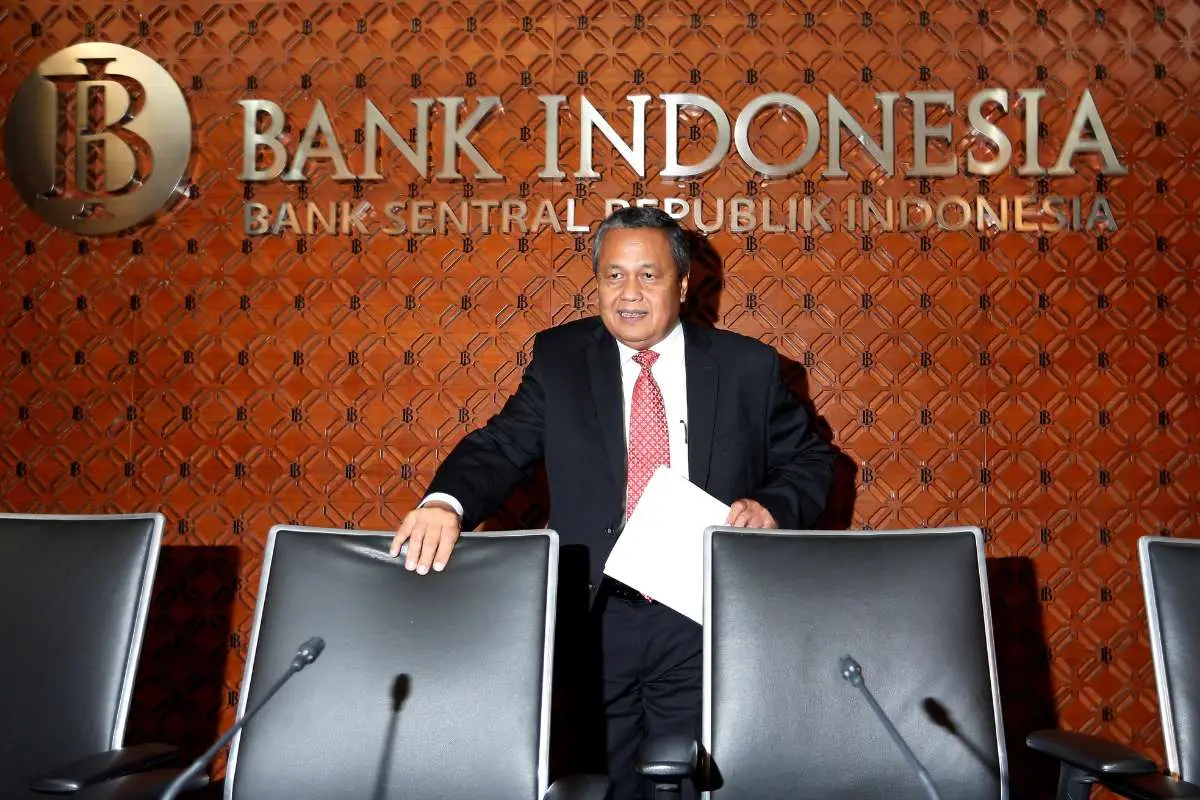
Indonesia entered a period of financial uncertainty on Monday after Bank Indonesia Governor Perry Warjiyo unexpectedly resigned, bringing to a close an eight-year tenure that helped steer Southeast Asia’s largest economy through some of the most challenging global economic conditions in recent history. President Prabowo Subianto accepted the resignation and appointed Senior Deputy Governor Destry Damayanti as acting governor until a permanent replacement is named.
While the government stated that Warjiyo stepped down for personal reasons, no additional details were provided, leaving investors and market observers surprised by the timing of the announcement. The Perry Warjiyo Resigns comes just days after Bank Indonesia opted to keep its benchmark interest rate unchanged, a decision that had already drawn close attention from markets amid ongoing concerns over inflation, capital flows, and currency stability.
Warjiyo, who joined the central bank more than three decades ago, became governor in 2018 before securing a second five-year term in 2023. During his leadership, Bank Indonesia earned a reputation for disciplined monetary policymaking, helping the country navigate the COVID-19 pandemic, supply chain disruptions, rising global inflation, and aggressive interest-rate hikes by major central banks. His steady approach to maintaining price stability and supporting the rupiah strengthened investor confidence and reinforced the institution’s credibility both domestically and internationally.
Investors watch for signals on central bank independence
The governor’s departure immediately shifted market attention toward a broader issue—the future independence of Bank Indonesia. While leadership transitions are not uncommon, analysts believe the timing of Perry Warjiyo Resigns has amplified concerns about the central bank’s policy direction during a period of heightened global uncertainty.
Over the past year, Indonesia’s government has pursued an ambitious economic agenda focused on accelerating growth, boosting infrastructure investment, and expanding industrial development. These priorities have increased attention on the relationship between fiscal and monetary authorities, with investors closely monitoring whether the central bank will continue to make policy decisions independently.
Financial markets reacted cautiously following the announcement, with investors reassessing expectations for future monetary policy and the outlook for the Indonesian rupiah. Economists noted that the central bank’s credibility has long been one of the country’s strongest economic assets, particularly during periods of external shocks. Maintaining that credibility will be essential as Indonesia continues to face volatile capital flows, evolving global trade dynamics, and uncertain interest-rate conditions.
The appointment of Destry Damayanti as interim governor has provided a measure of continuity. Having served as Senior Deputy Governor, she is familiar with the institution’s policy framework and ongoing initiatives. However, market participants remain focused on who will ultimately be chosen to lead the central bank on a permanent basis.
Analysts suggest that appointing a permanent Democrat with a strong background in monetary policy would reassure investors and reinforce confidence in Indonesia’s macroeconomic management. Conversely, any appointment perceived as prioritizing political considerations over institutional expertise could lead to renewed market volatility and raise concerns about the long-term independence of the central bank.
Leadership transition comes at a critical economic juncture
The leadership change arrives at a delicate moment for Indonesia’s economy. Policymakers have spent much of the past year balancing the need to support economic growth while safeguarding financial stability amid persistent global risks. Currency pressures, fluctuating commodity prices, geopolitical uncertainty, and shifting expectations around global interest rates continue to present challenges for emerging markets.
Bank Indonesia has recently implemented a combination of interest-rate decisions, liquidity measures, and foreign exchange interventions aimed at maintaining rupiah stability while ensuring inflation remains within its target range. These policies have helped preserve investor confidence despite increasingly volatile international financial conditions.
Although the central bank has emphasized that its policy framework remains unchanged during the transition period, economists believe the coming weeks will be closely scrutinized by both domestic and international investors. The government’s choice of a permanent governor is expected to provide an important indication of Indonesia’s commitment to maintaining institutional credibility and policy consistency.
For Southeast Asia’s largest economy, Perry Warjiyo Resigns represents more than a change in leadership. It marks a pivotal moment for one of the region’s most respected monetary institutions. As Indonesia seeks to sustain economic growth, attract foreign investment, and strengthen its position in the global economy, the transition at Bank Indonesia is likely to remain under close watch.
The immediate challenge will be ensuring a smooth transfer of leadership while preserving the central bank’s reputation for independence and disciplined policymaking. How the government manages this transition could shape investor confidence and influence Indonesia’s economic outlook well beyond the appointment of its next central bank governor.