Franchising Rarely Fails Because the Model Is Broken. It Fails Because Execution Is Inconsistent.
A franchisor can build a strong brand, a proven operating system, and an excellent training program. They can provide playbooks, brand standards, field support, dashboards, peer groups, and weekly calls.
And still, across the same network with the same tools, outcomes range from thriving locations to struggling units. That variability has a name.
The Franchise Gap
The Franchise Gap = the difference between what franchisees are taught and what they can execute consistently under real-world pressure.
When pressure hits, gaps show up in:
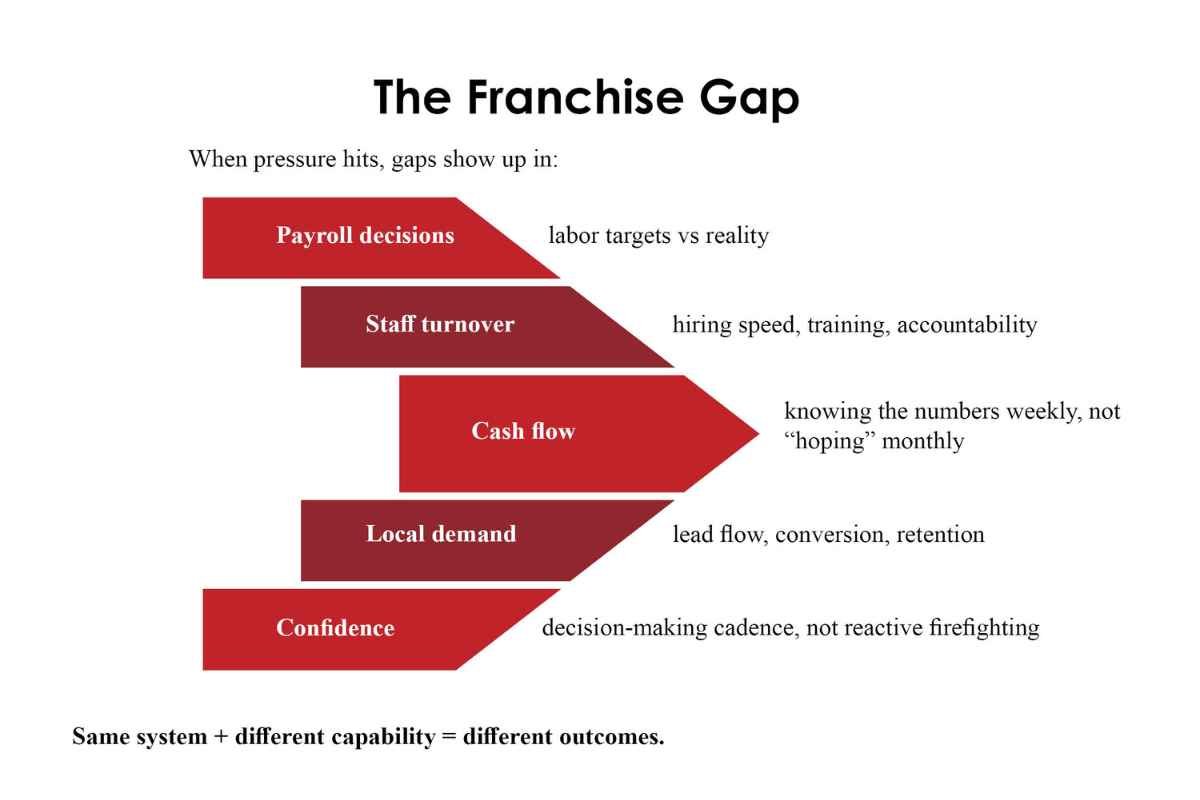
- Payroll decisions: labor targets vs reality
- Staff turnover: hiring speed, training, accountability
- Cash flow: knowing the numbers weekly, not “hoping” monthly
- Local demand: lead flow, conversion, retention
- Confidence: decision-making cadence, not reactive firefighting
Same system + different capability = different outcomes.
April Porter, Founder and CEO of Secretsos™, calls it the Franchise Gap: the distance between what franchisees are taught and what they can execute consistently when the real pressure hits: payroll, staff turnover, customer demand, cash flow, and confidence. Porter is not speaking from theory. She lived it.
A former Assistant Prosecuting Attorney and Municipal Judge, she entered franchise ownership and scaled to four locations in under three years. Over a seven-year operating period, she built the leadership team and operating cadence to run an absentee-owner structure and later exited profitably in 2020. Her company was recognized as one of St. Louis’ Top 50 Fastest Growing Companies three consecutive times, and her units consistently performed in the top tier of her brand.
As she scaled, she saw the pattern franchisors recognize immediately: the same model, training, and resources producing dramatically different results. In many cases, franchisees were not failing due to lack of effort. They were failing due to capability gaps that directly impact unit economics: sales execution, leadership behaviors, financial literacy, recruiting and retention systems, and consistent operational cadence.
The Origin Story: Law, Justice, and What People Actually Do Under Pressure
April Porter’s professional background shaped how she sees franchising. After earning her Juris Doctor from Washington University School of Law, she spent more than a decade as a trial attorney, building cases through evidence, patterns, and decision-making under stress. That training taught her to spot what most people miss: the difference between what someone says, what they intend, and what they actually do when the stakes are high.
In business, those same patterns show up as avoidance, inconsistency, emotional spending, poor hiring, weak follow-through, and overwork. When struggling franchisees began calling her from around the country, she saw something deeper than tactics. Many were trying to win a new game using an old identity – that of an employee.

From Employee Identity to CEO Capability
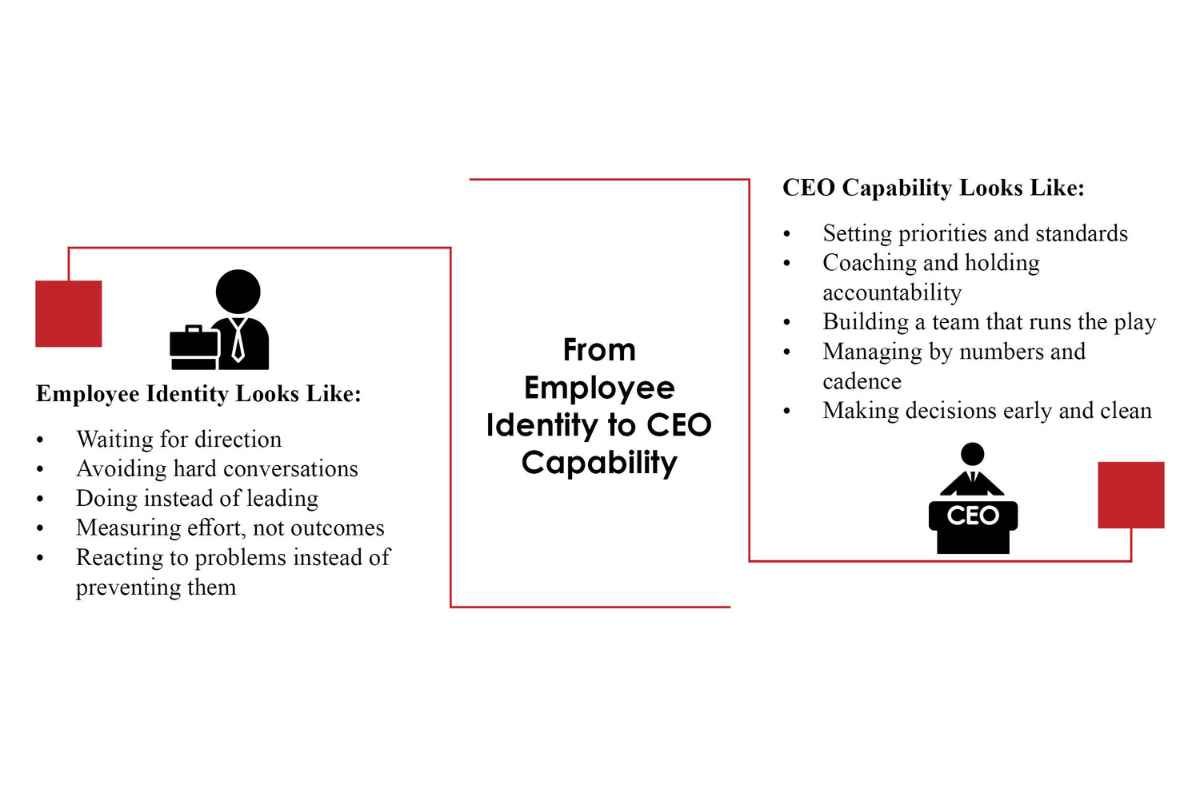
Employee Identity Looks Like:
- Waiting for direction
- Avoiding hard conversations
- Doing instead of leading
- Measuring effort, not outcomes
- Reacting to problems instead of preventing them
CEO Capability Looks Like:
- Setting priorities and standards
- Coaching and holding accountability
- Building a team that runs the play
- Managing by numbers and cadence
- Making decisions early and clean
Franchisees do not rise to the franchise model. They rise to their capability
A franchisee who spent their career being managed does not automatically become a CEO simply because they signed a franchise agreement. They must be developed into one.
Porter realized this early. She did not wait, hoping that somehow, she would magically feel more capable. She built capability in herself, then built a company to help others do the same.
A Mission With a Measurable Target
April Porter founded Secretsos™ to close the Franchise Gap and raise the standard of franchising to Never Leave a Franchisee Behind.
Secretsos™ was built for the real constraint inside franchise systems: performance variability. It helps franchisees strengthen the capabilities that drive consistent execution and predictable unit economics, while giving franchisors a scalable way to support owners beyond operational training.
To expand access to education and reduce preventable small business failure, Secretsos™ also includes a quarterly small business grant program designed to support under-resourced entrepreneurs.

SWAG: Sanity, Wealth, And Gratitude®
The transformation franchise ownership is supposed to produce.
SWAG is what happens when a franchisee upgrades from employee identity to CEO execution.
1: SANITY
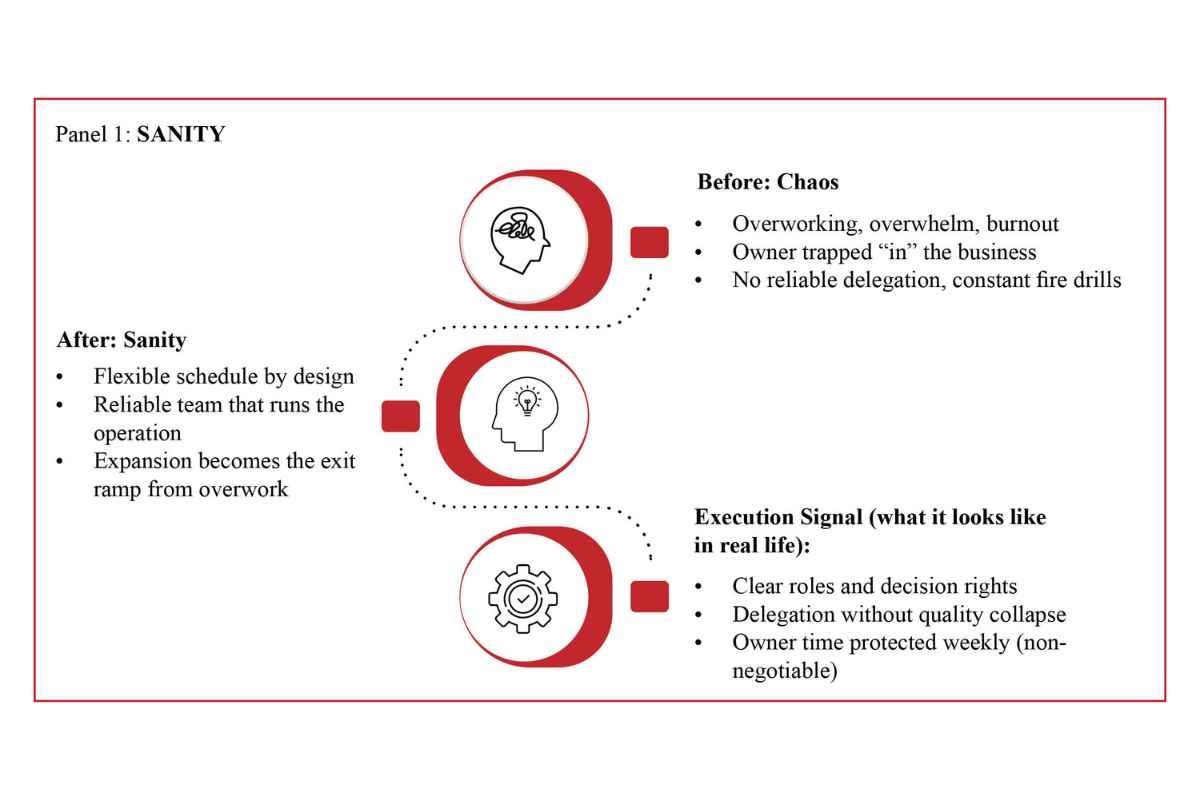
Before: Chaos
- Overworking, overwhelm, burnout
- Owner trapped “in” the business
- No reliable delegation, constant fire drills
After: Sanity
- Flexible schedule by design
- Reliable team that runs the operation
- Expansion becomes the exit ramp from overwork
Execution Signal (what it looks like in real life):
- Clear roles and decision rights
- Delegation without quality collapse
- Owner time protected weekly (non-negotiable)
2: WEALTH
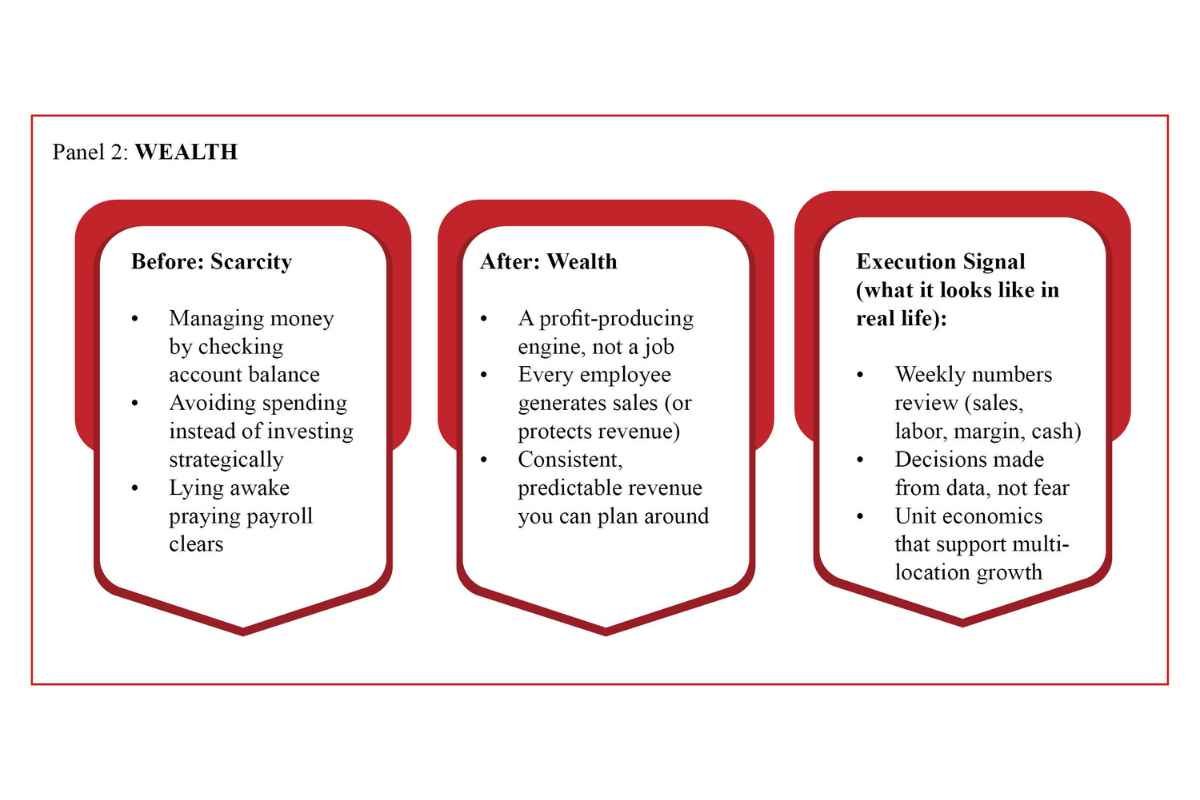
Before: Scarcity
- Managing money by checking account balance
- Avoiding spending instead of investing strategically
- Lying awake praying payroll clears
After: Wealth
- A profit-producing engine, not a job
- Every employee generates sales (or protects revenue)
- Consistent, predictable revenue you can plan around
Execution Signal (what it looks like in real life):
- Weekly numbers review (sales, labor, margin, cash)
- Decisions made from data, not fear
- Unit economics that support multi-location growth
3: GRATITUDE
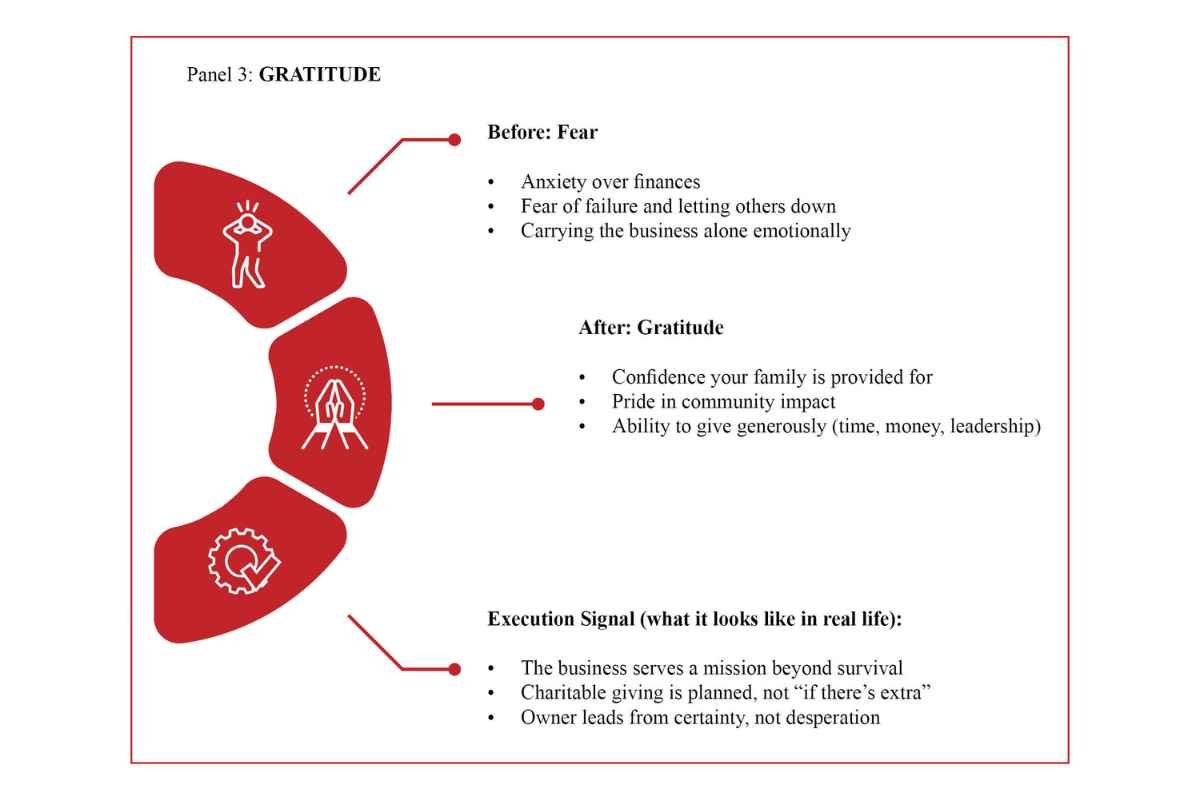
Before: Fear
- Anxiety over finances
- Fear of failure and letting others down
- Carrying the business alone emotionally
After: Gratitude
- Confidence your family is provided for
- Pride in community impact
- Ability to give generously (time, money, leadership)
Execution Signal (what it looks like in real life):
- The business serves a mission beyond survival
- Charitable giving is planned, not “if there’s extra”
- Owner leads from certainty, not desperation
SWAG is not a mindset. It is an operating standard.
CEO execution turns chaos into capacity, scarcity into profit, and fear into contribution.

The SECRETSOS™ Method and SWAG
At the center of Porter’s work is the SECRETSOS™ Method, paired with her signature framework: SWAG: Sanity, Wealth, And Gratitude®.
SWAG is not a slogan. It is a clarity and capability process that helps owners define what business ownership is supposed to produce, then align leadership habits, team execution, and financial decisions to that outcome.
Franchisees rarely fail from lack of information. They fail when day-to-day behavior conflicts with the unit economics required to win. SWAG makes the target visible, then makes execution non-negotiable.
Results That Show Up in Unit Economics
Capability is not “soft.” It is measurable, and it shows up in the numbers. Senior services franchisee K.C. was already a high performer, but growth had stalled. As the #2 producer in her franchise system for three straight years, she consistently generated about $7,000 per month in gross revenue. The constraint was not the market or the brand. It was the owner’s role inside the business.
Secretsos™ focused on leadership capability: moving from being the engine to the driver, running the business like a CEO. That included tightening priorities, installing a decision cadence, and hiring aligned support so growth did not depend on personal bandwidth.
Outcome: In 90 days, K.C. grew from approximately $7,000 to $50,000 per month in gross revenue.
Becca, a child enrichment franchisee, had operated for two years without breaking even. The cost was not just financial. It was the emotional load of running without clarity and control.
The core issue was a financial capability gap: learning to read the business, make decisions from numbers, and stop reacting emotionally to short-term swings. Secretsos™ installed a simple operating rhythm: track the right metrics weekly, cut unnecessary cash bleed, and execute a plan aligned to profit, not just activity.
Outcome: Over six months, Becca moved from a $27,000 loss to $30,000 profit per quarter.
Across industries, the pattern is consistent: results improve when execution improves, and execution improves when capability is installed. Secretsos™ builds non-negotiable owner capability across the disciplines that drive performance: leadership and team management, strategic execution, financial command, marketing and sales execution, technology adoption, legal understanding, executive decision-making, and growth priorities, and in so doing, protects franchisors from joint employer and other unwanted liabilities.
That is how franchisees stop feeling stuck and start scaling predictably.
Why Franchisees Trust April Porter
Because she is not a theorist. She is an operator with receipts.
Former Prosecuting Attorney and Municipal Judge turned multi-unit franchisee, April scaled to four locations in under three years, built an absentee-owner structure, and exited profitably.
Credibility and Authority
- Creator, Infinite Franchisee® Conference: built to deliver CEO-level education for franchise owners.
- Podcast Host: Top 10% most shared on Spotify; ranked #10 globally in Business Strategy (2025).
- AAFD Chairman’s Award: Distinguished Service to Franchising.
- Top Ten Women in Franchising: industry-recognized leadership and impact.
- Top 30 Global Influencer in Franchising: recognized for thought leadership and outcomes.
- Global Franchise AI Think Tank: appointed member shaping the future of franchise systems.
What Clients Credit Her For
More profit, more control, and a business that stops consuming their life.
Clients report stronger leadership teams, stabilized operations, and the ability to live with Sanity, Wealth, And Gratitude®.
Why Franchisors Care
For franchisors, franchisee success is not a “nice to have.” It is the foundation of what scales: brand reputation, franchise development, renewal rates, validation calls, and long-term royalty stability.
Performance Variability Creates Systemwide Drag
When franchisees underperform, the system pays for it through:
- Brand reputation: inconsistent customer experience across markets
- Marketing ROI disputes: “leads don’t work” becomes the narrative
- Support overload: field teams get buried in adoption problems
- Franchise development slowdown: validation calls become unpredictable
- Renewal risk: dissatisfaction increases non-renewals and transfers
- Royalty instability: revenue becomes volatile instead of bankable
Reducing variance is a growth strategy, not a feel-good initiative. April Porter’s work sits in the layer most systems overlook: the capability layer that reduces variance and elevates the network.

The Future of Franchising Is Capability-Driven
Top franchise brands have already learned that operational training alone is no longer enough. The networks that win are the networks that reduce performance variance and turn unit economics into predictable outcomes.
That starts with a clear acknowledgment of the Franchise Gap, and a shared standard:
- Franchisors provide the operating system, brand standards, and support.
- Franchisees bring, or invest to develop within themselves, the leadership and decision-making capability required to execute that system at a high level.
Secretsos™ exists to make that second piece structured, measurable, and scalable.
Today, forward-thinking franchisors are integrating Secretsos™ as a scaling-phase capability partner, giving franchisees access to CEO-level development without adding strain to internal corporate teams. Franchise ownership should not cost someone their sanity, their savings, or their relationships.
It should be the blueprint: a capable owner applying themselves to a proven brand and building the life the model promised.
Key Takeaways
- Franchising rarely fails because the model is broken. It fails because execution is inconsistent across the network.
- The Franchise Gap is a capability gap, not an effort gap.
- CEO-level performance is built through cadence and standards, not longer hours and more hustle.
- Capability shows up in unit economics. Leadership, financial command, and sales execution are measurable.
- Franchisors scale faster when variance drops. Brand reputation, renewals, development, and royalty stability all improve.
- Franchise ownership should produce SWAG: Sanity, Wealth, And Gratitude®.