
Keeping good people on board usually comes down to the person they report to every day. Supervisors who ignore daily operational frustration quietly push their best workers out the door long before HR notices a drop in morale.
Frontline management sets the entire tone for how a team operates on a morning-to-morning basis. Studying how leaders impact employee engagement helps business owners see the clear link between supportive management habits and overall team effort. Supervisors who listen to feedback and clear real roadblocks out of the way naturally build a workforce that sticks around.
In this article, we will see how teaching managers to offer direct, practical support turns daily oversight into a reliable way to keep top talent happy and productive.
How leaders impact employee engagement
Good leadership shows up in everyday work. Employees notice how leaders give direction, share information, respond to concerns, and keep their word. These actions shape trust and can affect how connected employees feel to their work.
1. Setting clear expectations and direction
Employees need to know what their leaders expect. Leaders should set clear goals and explain each person’s priorities. They should also tell employees why the work matters. Clear direction helps people focus their time and make better decisions.
2. Modeling transparency and open communication
Employees should not have to guess what is happening. Leaders can share updates, explain key decisions, and answer questions in a direct way. They should also talk about problems instead of hiding them. This gives employees a clearer view of the work and builds trust.
3. Making employees feel heard and valued
Employees want to know that their ideas and concerns matter. Leaders can ask for their views during meetings or one-on-one talks. They can also recognize good work and show how employee feedback shaped a decision. These actions show employees that their input has value.
4. Following through on commitments
Trust grows when leaders do what they say they will do. Leaders should complete agreed tasks and meet their commitments. If plans change, they should explain what happened and share the next steps. This helps employees see their leaders as reliable and accountable.
These actions may seem simple, but they can influence the employee experience every day. Clear direction reduces confusion. Open communication builds trust. In fact, 86% of employees blame company failures on poor communication. Listening and follow-through show employees that their work and opinions matter. That is how leadership can strengthen employee engagement through everyday behavior.
5. Supporting employee growth
Employees are more likely to stay engaged when they can see a path to grow. Leaders can discuss career goals and suggest learning opportunities through employee development programs. Regular feedback can also help employees understand what they do well and where they can improve.
6. Recognizing effort and contributions
Recognition programs can show employees that their work matters. Leaders can thank employees for strong work and point out specific contributions. Recognition does not always need to involve a reward. A clear and timely thank you can also make employees feel valued.
Senior leadership vs. frontline managers: where the impact differs
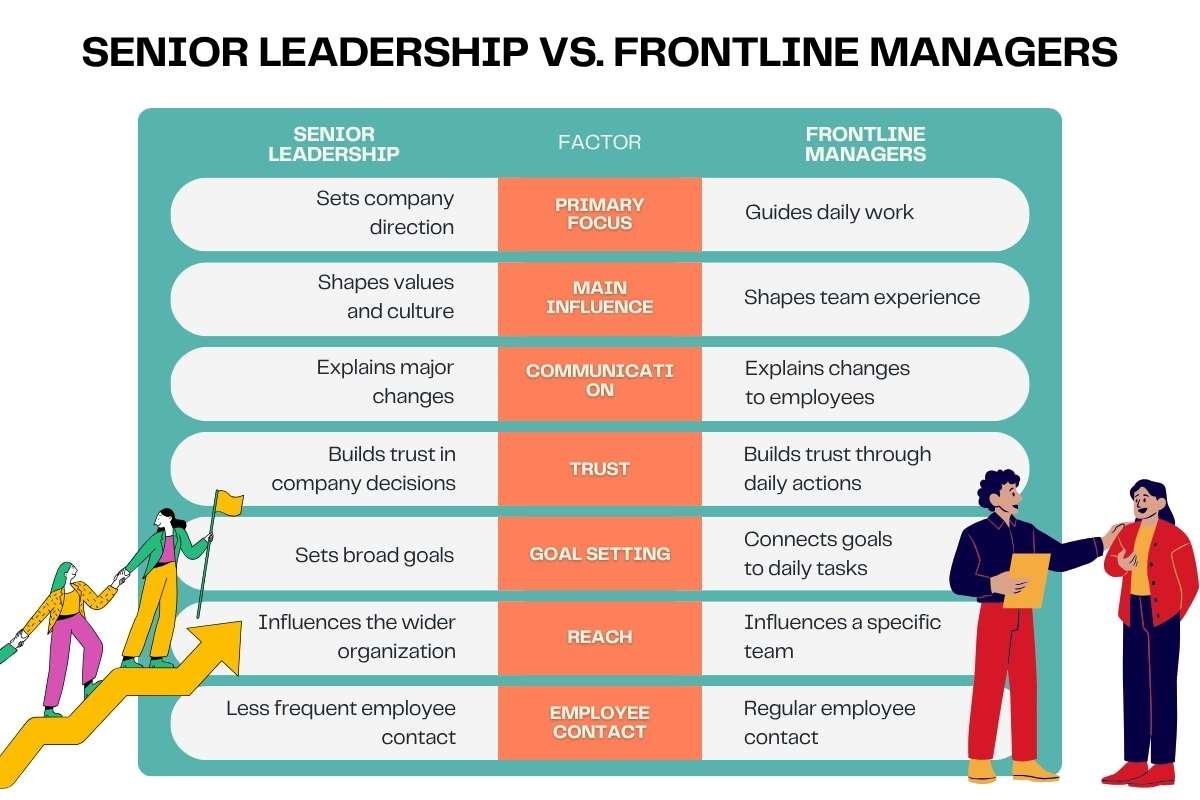
Senior leaders and frontline managers affect employee engagement in different ways. Senior leaders shape the wider work environment, while frontline managers influence the daily employee experience.
Senior leadership’s impact
Senior leaders set company goals, shape values, and guide major changes. Their communication helps employees understand where the company is going and why key decisions matter. Their influence is broad, even if employees do not interact with them often.
Frontline managers’ impact
Frontline managers work with employees every day. They give feedback, set priorities, recognize good work, and respond to concerns. These actions can quickly affect trust, morale, and how connected employees feel to their work.
Why both levels matter
Neither level should work alone. Senior leaders set the direction, while frontline managers help employees apply it in their daily work. Engagement is stronger when both levels share clear goals and support employees in consistent ways.
| Factor | Senior Leadership | Frontline Managers |
|---|---|---|
| Primary focus | Sets company direction | Guides daily work |
| Main influence | Shapes values and culture | Shapes team experience |
| Communication | Explains major changes | Explains changes to employees |
| Trust | Builds trust in company decisions | Builds trust through daily actions |
| Goal setting | Sets broad goals | Connects goals to daily tasks |
| Reach | Influences the wider organization | Influences a specific team |
| Employee contact | Less frequent employee contact | Regular employee contact |
What happens when leadership fails to drive engagement?
Leadership has a direct effect on how employees view their work and workplace. Poor leadership can weaken trust, lower morale, and make good employees question whether they want to stay.
1. Higher employee turnover
Strong employees often have more choices in the job market. Poor management can push them to look elsewhere. Losing these employees also leaves teams with skill gaps and higher hiring costs.
2. Trust becomes harder to rebuild
Trust can take years to build but only a few poor decisions to damage. Broken promises, poor communication, or unfair treatment can make employees doubt their leaders. Rebuilding that trust takes steady action over time.
3. Disengagement can spread
Employee disengagement can affect more than one person. Team members notice low effort, poor communication, and weak leadership. These behaviors can spread across teams and make it harder to maintain a strong level of engagement.
Leadership failures rarely stay isolated. They can affect employee retention strategies, trust, and team morale at the same time.
How can leaders strengthen their impact on engagement?

How leaders impact employee engagement also depends on their own actions, not just team results. They can strengthen their approach through leadership engagement strategies and how employees view their work and their leaders.
1. Seek feedback on leadership
Leaders should ask employees how they experience their leadership style. This can reveal habits that support engagement and areas that need change. Regular feedback also shows that leaders are willing to listen and improve.
2. Invest in relationships
Strong leadership needs more than good results. Leaders should make time for real conversations, understand employee concerns, and learn about their goals. These simple efforts can help employees feel supported and respected.
3. Match words with actions
Employees notice when leaders say one thing and do another. Leaders should keep promises, apply rules fairly, and follow the standards they set for others. Consistent actions build trust, while a gap between words and actions can weaken engagement quickly.
Leaders do not need to change everything at once. Small, steady actions can strengthen trust and improve employee engagement over time.
Conclusion
68% of employees believe their senior leaders make a genuine effort to listen to staff.
Building a strong company culture comes down to the small, consistent interactions happening on the work floor every afternoon. Supervisors who treat their team like true partners see higher daily output, stronger project ownership, and lasting staff loyalty.
Business owners who take time to analyze how leaders impact employee engagement quickly realize that training managers is one of the safest investments a company can make. Shifting management focus away from constant monitoring and toward active support protects profit margins while keeping the entire workforce steady.
FAQs
1. What primary mistake ruins team morale fastest?
Brushing off daily workplace frustrations. Ignoring broken tools or bad processes leaves employees feeling unsupported and unmotivated.
2. Can a good manager keep staff from leaving for higher pay elsewhere?
Yes, strong supervisor support creates lasting loyalty. Many employees gladly trade a small pay bump at a high-stress company for a respectful, well-managed workplace.
3. How can an organization coach struggling supervisors?
Train them to focus on clearing daily roadblocks for their team. Asking employees what is getting in their way builds trust much faster than demanding status updates.
4. What signs indicate a department manager is struggling?
Spikes in turnover, missed project deadlines, and silent team meetings are the most common warning signs.
5. How does distance change how leaders impact employee engagement for remote teams?
Remote supervisors must maintain clear check-ins while respecting off-hours boundaries to prevent burnout.