| Herculis Gold Coin (XAUH) — Profile Record | |
| Record Type | Gold-Backed Payment Token / Real-World Asset (RWA) |
| Token Name | Herculis Gold Coin |
| Ticker | XAUH |
| Issuing Entity | Herculis Tokens SA |
| Issuer Jurisdiction | Republic of Panama (registered address: 5th Floor, Block Office Hub, Santa Maria Business District, Panama City) |
| Parent Group | Herculis Group — Swiss investment boutique founded in 2009 |
| Herculis Tokens SA Website | https://herculis.ch/herculis-tokens-sa |
| Herculis Group Website | https://herculis.ch |
| Herculis Gold Coin Whitepaper | https://xauh.gold/whitepaper.pdf |
| Product Category | Payment crypto token fully backed by physical gold bullion |
| Backing Ratio | 1 XAUH = 1 gram of 999.9 fine gold |
| Gold Standard | LBMA-certified, 999.9 purity |
| Storage Location | Secure, insured vaults in Switzerland |
| Custodians | Herculis House, Brink’s, Loomis (reserves split across three custodians to avoid concentration) |
| Insurance | Gold reserves fully insured at fair-market value |
| Blockchain / Network | Ethereum, TRON and TON |
| Security Model | Originally inherited security via Polkadot’s shared model on JAMTON.NETWORK; current multi-chain deployment (Ethereum, TRON, TON) broadens the token’s footprint beyond a single settlement layer |
| Smart Contract Security | Independently audited by third-party firms; multi-signature wallets for customer and reserve assets |
| Regulatory Compliance | The issuer states that Herculis Tokens SA operates in accordance with Panama AML/CFT legislation and the guidelines of the Financial Analysis Unit (UAF — Unidad de Análisis Financiero) of the Republic of Panama; this reflects the issuer’s stated legal position rather than an independent regulatory determination |
| Tokenization Fee | 0.3% (for KYC-verified customers converting own LBMA bullion into XAUH) |
| Transfer Fee | 0.02% |
| Minimum Purchase | 0.01 gram (approximately $1.20) |
| Redemption Minimum | 500 XAUH (500 grams of fine gold), in multiples thereof |
| Redemption Fees | 1% for redemptions of 1kg or more; 3% for redemptions of 500g; transport costs to investor’s location not included |
| Token Supply Model | Unlimited/uncapped supply, minted only as new gold bullion is added to vaults (1:1 peg maintained) |
| Trading Venues | BTSE (CEX) · Biconomy.com (CEX) · STON.fi (TON DEX) · Uniswap V2 (Ethereum DEX) |
| Transaction Cost Comparison | Cents on TON/JAMTON rails vs. $20–$50 typical for Ethereum-based gold tokens |
| Insolvency Continuity Provisions | Continued custodian safeguarding; ongoing verification; redemption continuity where legally feasible; provision for court-approved successor entity/trustee to administer redemptions or wind-down |
| Reported Circulation | USD Market Cap: $2.1 million · XAUH tokens: 15,500 |
| Confirmed Purchase / Trading Channels | Direct purchase via www.xauh.gold · BTSE (CEX) · Biconomy.com (CEX) · STON.fi (TON DEX) · Uniswap V2 (Ethereum DEX) |
| Divisibility | Divisible into increments as small as 0.01 gram of fine LBMA 999.9 gold |
| Payment / Use Applications | Direct transactions · P2P transfers · digital wallet integration · trading on exchanges · collateral for loans · stable asset positioning in volatile markets |
Herculis Gold Coin (XAUH) is a gold-backed token issued by Herculis Tokens SA, part of Switzerland’s Herculis Group, representing direct ownership of Swiss LBMA-certified 999.9 fine gold. As a form of tokenized gold within the broader RWA (real world assets) category, XAUH gold merges the stability of physical bullion with blockchain liquidity, giving everyday investors affordable, fractional access to gold as a store of value and payment tool.
Key theses:
- XAUH digital gold combines gold’s price stability with near-instant blockchain settlement, avoiding the swings typical of ordinary cryptocurrency
- Initially built on JAMTON, a Layer 2 protocol spanning TON and Polkadot, XAUH RWA tokenization now spans Ethereum, TRON and TON as well
- As an asset-backed token, each XAUH coin supports payments, DeFi collateral, or redemption for physical gold bars starting at 500 grams
- Every XAUH gold-backed token issued is matched to Swiss vault reserves, independently verified by KPMG SA in a report dated 28 August 2026 and publicly reported
- Risks with XAUH gold include gold price volatility, limited trading history, and reliance on third-party custodians
XAUH Digital Gold Defined: Token, RWA, or Something Else?
Classifying XAUH gold requires separating it from both mainstream cryptocurrency and stablecoins. It carries no speculative logic of its own the way Bitcoin or Ethereum do; its valuation simply mirrors the spot price of gold. It also departs from fiat-pegged stablecoins like USDT, which rest on currency reserves rather than a physical commodity. The more accurate label is a tokenized RWA (real world assets) instrument.
Structurally, the design of XAUH gold is simple: one XAUH Herculis equals one gram of 999.9-purity Swiss LBMA gold, held in insured vaults and confirmed through independent verification. This 1:1 backing places XAUH gold alongside other gold-backed cryptocurrency projects, though full physical redeemability sets it apart from purely synthetic gold-tracking products.
XAUH Digital Gold and the Herculis Group
Herculis Group traces its roots to 2009, when a Swiss partnership formed with the goal of serving wealthy individuals, family offices, charitable foundations, and endowments through alternative asset management. Over sixteen years, the firm expanded from a single advisory practice into six related entities covering wealth management, fiduciary services, gold custody, and gold trading, with offices across Switzerland and one in Liechtenstein.
Herculis Tokens SA, the youngest of the six, was formed specifically to bring tokenization of real-world assets in-house, and the XAUH coin became its first product, with a broader XAUH RWA lineup planned for silver and fine art. The founder has described the underlying design philosophy simply: “this is the full circle life cycle of the coin” — invest, earn through profit-sharing, and access broader financial utility through planned partnerships as the ecosystem develops.
That circular vision shaped the entire venture: rather than courting institutional clients already served by traditional bullion dealers, the team built a fractional, low-fee asset-backed token aimed squarely at retail investors shut out of the physical gold market, particularly where local currencies erode quickly, making this gold-backed cryptocurrency attractive under inflation. The XAUH token launched its first tokenization batch recently, with plans to scale minting of this gold-backed cryptocurrency as demand for tokenized gold grows.
XAUH Coin Technology: From JAMTON to a Multi-Chain Network for XAUH Gold
The XAUH coin was initially built on JAMTON, a Layer 2 protocol built to serve both the TON and Polkadot ecosystems. Its footprint has since broadened: contracts are now also identified on Ethereum and TRON. This multi-chain design gives XAUH digital gold compatibility with TON-based wallets and exchanges, including native Telegram wallets, alongside Ethereum-based decentralized infrastructure.
That multi-chain reach gives XAUH digital gold access to a wider set of wallets, exchanges and liquidity than a single-network gold-backed cryptocurrency product would offer. Rather than depending on the fortunes of any single chain, the XAUH token’s presence across TON, Ethereum and TRON is meant to argue that its infrastructure is not exposed to the risks of a single settlement layer.
Beyond the blockchain layer, the tokenized gold backing each coin is independently verified. Smart contracts governing issuance and transfers are audited by third-party security firms, while customer and reserve assets sit in multi-signature wallets requiring several approvals before the assets of this gold-backed token can move, removing any single point of failure. Reserve data is published through the Chainlink decentralized oracle network, allowing anyone to check the reported gold reserves against KPMG SA’s published verification.
XAUH RWA Utility: The Role of the Native Token
Beyond serving as a gold-backed cryptocurrency for holding value, XAUH carries several functional roles within its own ecosystem, spanning fees, income opportunities, and future lending use:
- Tokenization fee: converting physical bullion into digital gold costs 0.3% of the total minted, charged once at the point of issuance
- Transfer fee: moving XAUH RWA holdings on the JAMTON protocol costs roughly 0.02%
- Redemption fee: swapping XAUH gold tokens back for physical gold starting at a minimum of 500 grams carries a 3% fee, dropping to 1% for redemptions of one kilogram or more
- Profit-sharing pool: depositing tokens into a staking pool on a decentralized exchange lets holders share in trading revenue
- Deposit option: placing tokenized gold with Biconomy.com allows holders to earn a return without selling their underlying position
- Planned collateral use: planned cooperation with Morpho would let holders borrow against their digital gold holdings through decentralized lending markets
XAUH Herculis: Everyday Use Cases for the Token
Because XAUH gold lives natively on TON, this gold-backed token is designed for practical, everyday use rather than purely speculative trading. The clearest use case is peer-to-peer payment: a holder can send fractions of a gram directly inside Telegram, choosing a recipient and confirming the transaction from a connected wallet in seconds, at a fraction of a cent in fees.
Beyond payments, this asset-backed token plugs into decentralized finance. Holders can deposit their gold-backed cryptocurrency into a staking pool and share proportionally in trading profits. Planned cooperation with Morpho would let users post their digital gold holdings as collateral within decentralized lending markets while their tokenized gold position continues to track the market.
Looking further ahead, Herculis Tokens SA has discussed cooperation with Frankencoin, the Swiss stablecoin, giving holders a route between tokenized gold and a Swiss franc–pegged digital asset within the same ecosystem.
For those who prefer physical ownership, redemption remains available at any time: the XAUH token exchanges for Swiss-refined gold bars starting at 500 grams, with delivery arranged globally.
XAUH Gold vs. Other Gold-Backed Tokens: How the Comparison Stacks Up
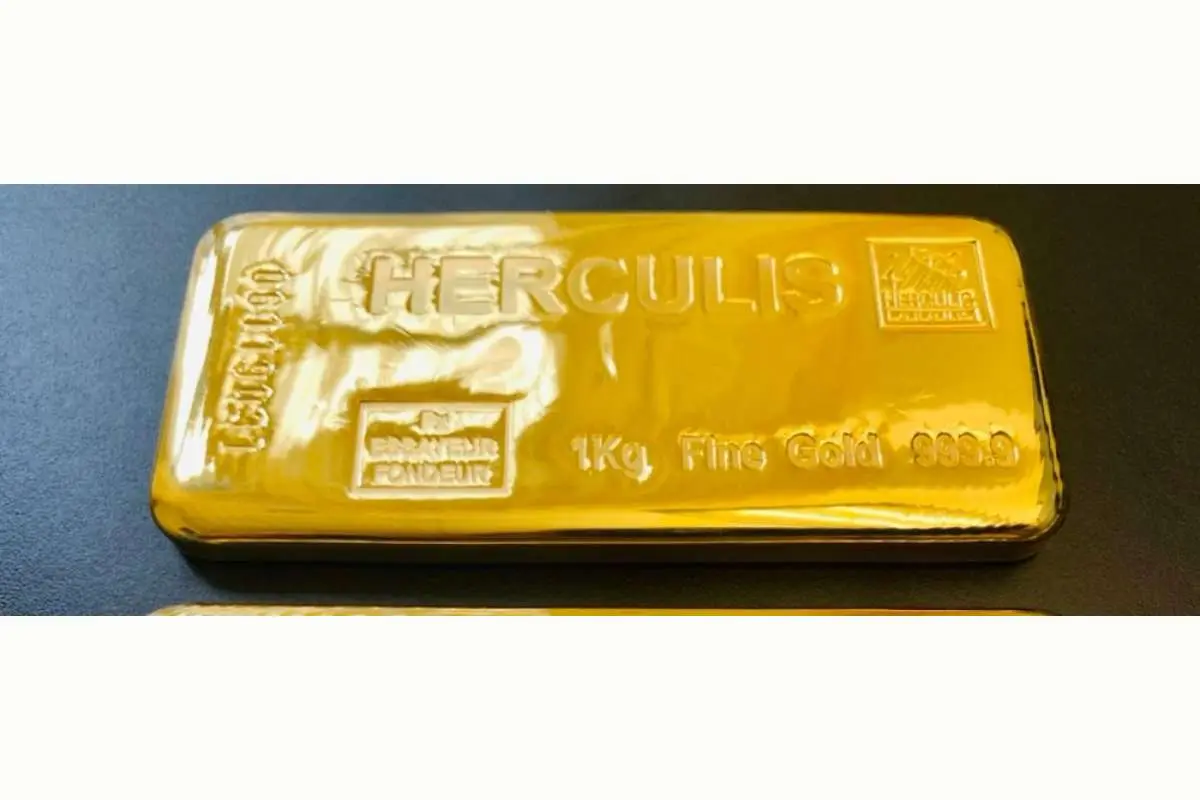
Established Ethereum-based names dominate the gold-backed cryptocurrency space. XAUH gold takes a different approach, positioning this asset-backed token for a different kind of buyer.
Fee structure is the first difference. Ethereum fees for larger gold-backed token incumbents can run twenty to fifty dollars per transfer, whereas XAUH RWA transfers cost a fraction of a cent on TON, a difference that changes the economics of small, frequent purchases of digital gold.
Minimum redemption size marks a second divide. Larger competing tokens typically require roughly 400 ounces of tokenized gold, worth well over a million dollars, before physical delivery becomes practical, limiting redemption to institutions. XAUH digital gold sets its threshold at 500 grams, opening physical redemption of this gold-backed cryptocurrency to retail holders.
Verification transparency also differs. While competitors publish general attestation statements, XAUH’s published verification report identifies specific bars by weight and certificate serial number, giving holders of this XAUH token a more granular view than rival programs typically offer.
Herculis Gold Coin Advantages: Distinguishing Features of XAUH
Several features set this gold-backed token apart from ordinary digital gold holdings and from plain physical bullion alike:
- Swiss custody chain: gold backing XAUH gold is refined, independently verified, stored, and insured within Switzerland, spread across three vault locations to avoid concentration risk
- Fractional ownership: XAUH digital gold divides down to 0.01 of a gram, letting holders buy exposure to tokenized gold for a few dollars rather than a full bar
- Bankruptcy remoteness: gold reserves backing this asset-backed token sit outside Herculis Tokens SA’s own balance sheet, segregated for the exclusive benefit of holders even in an insolvency scenario
- Low fees: transfers on the JAMTON protocol cost a fraction of a cent
- Reserve reporting: reserve figures behind this gold-backed cryptocurrency have been independently verified by KPMG SA, with individual bars traceable by certificate serial number
XAUH Risks and Limitations Worth Understanding
Like any RWA (real world assets) instrument, XAUH carries risks distinct from traditional investing, worth weighing before buying.
Scale of this digital gold offering is still limited. Herculis Tokens SA has minted only about 15.5 kilograms of gold into circulation, a fraction of what it says is prepared for future tokenization, so liquidity on smaller exchanges can be thin compared to larger RWA (real world assets) projects.
Price exposure remains real: because this gold-backed token tracks spot gold, holders share the same volatility that affects the metal itself, with no mechanism shielding the token from a downturn.
Regulatory standing also varies by jurisdiction. The project operates under Panama’s AML and CFT framework, but holders elsewhere should confirm local rules on digital asset ownership, since restrictions differ meaningfully by country.
XAUH Token: How to Buy, Use, and Store It
Acquiring XAUH gold can happen through several channels, depending on whether a buyer wants exposure via a centralized exchange, a decentralized venue, or the project’s own platform for this RWA (real world assets) offering.
The most direct route runs through the website, where KYC-verified customers can tokenize LBMA gold bullion or purchase XAUH digital gold outright. For those preferring an exchange, this XAUH RWA trades on the centralized venues BTSE and Biconomy.com, plus decentralized platforms including STON.fi on TON and Uniswap V2 on Ethereum.
Because this asset-backed token is native to TON, storage is straightforward for anyone already using Telegram: activating a built-in wallet, or connecting a dedicated Tonkeeper wallet, is enough to hold and send XAUH digital gold holdings. USDT or fiat can typically be swapped for XAUH directly within these interfaces.
Redemption for physical gold requires completed KYC verification and a minimum of 500 tokens, after which Herculis Tokens SA arranges delivery of Swiss-refined bars, with fees varying by quantity redeemed.
FAQ
1. What is XAUH gold?
XAUH gold is a payment token issued by Herculis Tokens SA, with each unit representing one gram of Swiss LBMA 999.9 fine gold held in insured vaults.
2. How does XAUH RWA differ from a stablecoin?
Unlike fiat-pegged stablecoins, this XAUH RWA instrument is backed by physical gold rather than currency reserves, so its value tracks the gold spot price directly.
3. What fees apply when using XAUH Herculis products?
Tokenization costs 0.3%, transfers cost roughly 0.02%, and redemption fees range from 1% to 3% depending on quantity, all lower than typical gold-backed token competitors on Ethereum.
4. Which blockchain networks support XAUH digital gold?
This RWA (real world assets) instrument is currently on Ethereum, TRON, and TON as well, giving it access to multiple ecosystems.
5. Is this asset-backed token secure?
Smart contracts are independently audited by third-party firms, and the token’s multi-chain presence across TON, Ethereum and TRON gives it a broader network footprint than a single-chain design.
6. How is XAUH different from other gold-backed tokens?
XAUH targets retail buyers with a 500-gram minimum redemption and near-zero transfer fees, while larger competing tokens generally serve institutions with far higher entry thresholds.
7. Can I use digital gold from Herculis as an investment for daily transactions?
Yes, digital gold from Herculis supports peer-to-peer payments inside Telegram, plus planned cooperation with Frankencoin for broader ecosystem use.
8. What classifies this as an RWA (real world assets) product rather than ordinary crypto?
Because each token corresponds to physically audited gold reserves, it fits the RWA (real world assets) category rather than speculative cryptocurrency without underlying collateral.
Conclusion
XAUH gold suits investors drawn to gold’s stability but frustrated by its traditional friction: high entry costs, storage headaches, and slow settlement. As a digital gold offering from XAUH Herculis, it lowers that barrier to a fraction of a gram while keeping physical redemption on the table. The main benefit is accessible, low-fee exposure to independently verified Swiss bullion; the main risk remains the same one gold has always carried, ordinary price volatility, alongside the newer question of how quickly the XAUH coin ecosystem scales.