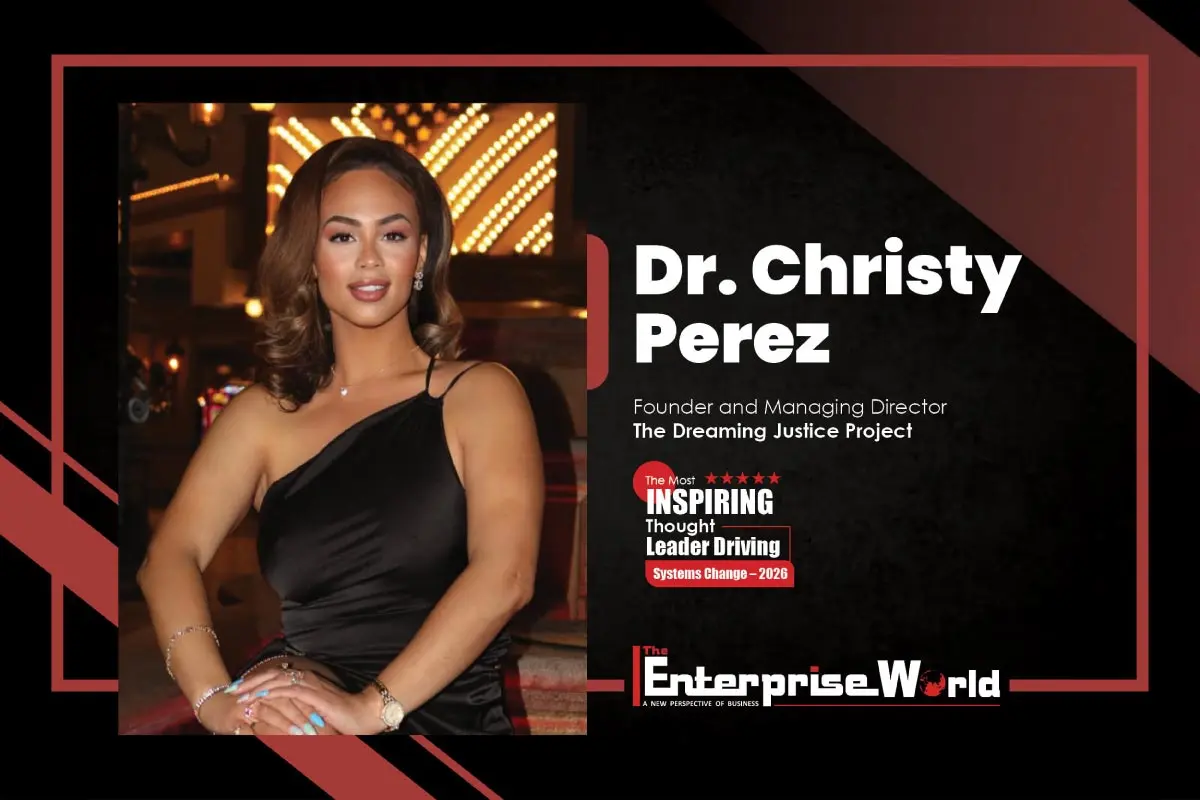
The most inspiring leaders are often shaped by experiences that demand more than ambition. They emerge from moments where personal conviction meets a larger responsibility, turning difficult chapters into a purpose that reaches beyond themselves. Their influence is measured not only by the systems they challenge, but by the people they empower to imagine something different. True leadership begins when individuals choose to question what has always existed and create pathways for those who have been overlooked.
Dr. Christy Perez represents this form of transformative leadership. A theologian, writer, strategist, and abolitionist journalist, she has built her work around challenging systems that create inequality and developing new approaches rooted in community power. As the Founder and Managing Director of The Dreaming Justice Project, she brings together political education, storytelling, advocacy, and movement building to create spaces where lived experiences shape solutions. Her journey from incarceration to becoming a nationally recognized thought leader reflects a commitment to turning personal struggle into collective possibility.
A Foundation Built
Dr. Perez’s journey into systems change did not begin with a title or an organization. Its foundation was built over years of studying, questioning, and confronting institutions from within. During her incarceration, she discovered that systems could be examined, understood, and challenged. Filing her first pro se litigation in 2014 became a defining moment that changed how she viewed power and accountability.
“You can study them, learn their language, identify their contradictions, and challenge them.” Dr. Perez says.
That experience became the beginning of a broader path. Litigation taught her how institutions operate. Organizing showed her the strength of collective action. Journalism helped her understand how stories influence whose experiences are believed. Theology and history gave her tools to examine questions of morality, punishment, dignity, and power. These disciplines eventually came together in her work as a leader who does not see social challenges as isolated problems but as connected experiences shaped by larger structures.
After thirteen years of incarceration, Dr. Perez returned home carrying years of research, advocacy, and reflection. She was not starting over. She was bringing forward a foundation built through persistence and a deeper understanding of how systems affect human lives.
Dreaming Justice
The Dreaming Justice Project was created from a clear observation: people’s lives cannot be separated into individual categories simply because institutions organize them that way. Reentry, healthcare, LGBTQ rights, reproductive justice, poverty, faith, and incarceration often intersect in the everyday experiences of communities.
As Dr. Christy Perez explains, “movements often divide people into issues even though people do not experience life that way.” Founded in 2025, the organization focuses on abolitionist education, power building, leadership development, and liberation-focused work. Its purpose is not only to respond to existing challenges but to examine the conditions that continue producing those challenges.
For Dr. Perez, systems change means moving beyond repeatedly addressing harm after it occurs. “We have to move upstream,” she says, pointing to the need to understand the structures, policies, narratives, and practices that allow inequality to continue. Her approach asks communities and institutions to examine who carries the consequences of decisions and whether those most affected have meaningful influence in shaping solutions.
Power Through Proximity
A defining principle in Dr. Perez’s work is the belief that lived experience should hold influence in decision-making spaces. She refers to this approach as proximity with power, where people closest to an issue are not simply consulted but are involved in defining problems, designing responses, and evaluating outcomes.
“Lived experience should not be invited into the room after professionals have already defined the problem and designed the solution,” adds Dr. Perez.
This philosophy shapes the work of The Dreaming Justice Project. The organization approaches justice through multiple lenses, recognizing that individuals often experience overlapping challenges rather than separate issues. A person returning from incarceration may also face barriers related to healthcare, identity, housing, employment, and social acceptance.
Dr. Christy Perez’s work challenges organizations to look beyond traditional boundaries and create solutions that reflect the full reality of people’s lives. For her, meaningful change requires listening, sharing decision-making power, and allowing communities to influence the direction of the work.
Leadership Lessons
Building an organization focused on changing systems comes with its own challenges. One of Dr. Perez’s greatest leadership lessons has been understanding that growth does not always equal impact. While emerging organizations often feel pressure to expand quickly, pursue every opportunity, and demonstrate scale, she believes leaders must remain connected to their original purpose.
“Growth and impact are not synonymous,” she says.
Her leadership journey has required a shift from survival to stewardship. Experiences that once required resilience in order to endure became lessons in delegation, trust, shared responsibility, and institution building.
“Leadership sometimes means declining an impressive opportunity because it pulls us from our purpose, sharing ownership of a good idea, or choosing sustainability over visibility,” she says with a slight grin.
For Dr. Christy Perez, leadership is not about holding every decision personally. It is about creating conditions where others can contribute, develop, and participate in meaningful change. This understanding continues to influence how she builds teams and partnerships.
Community Impact
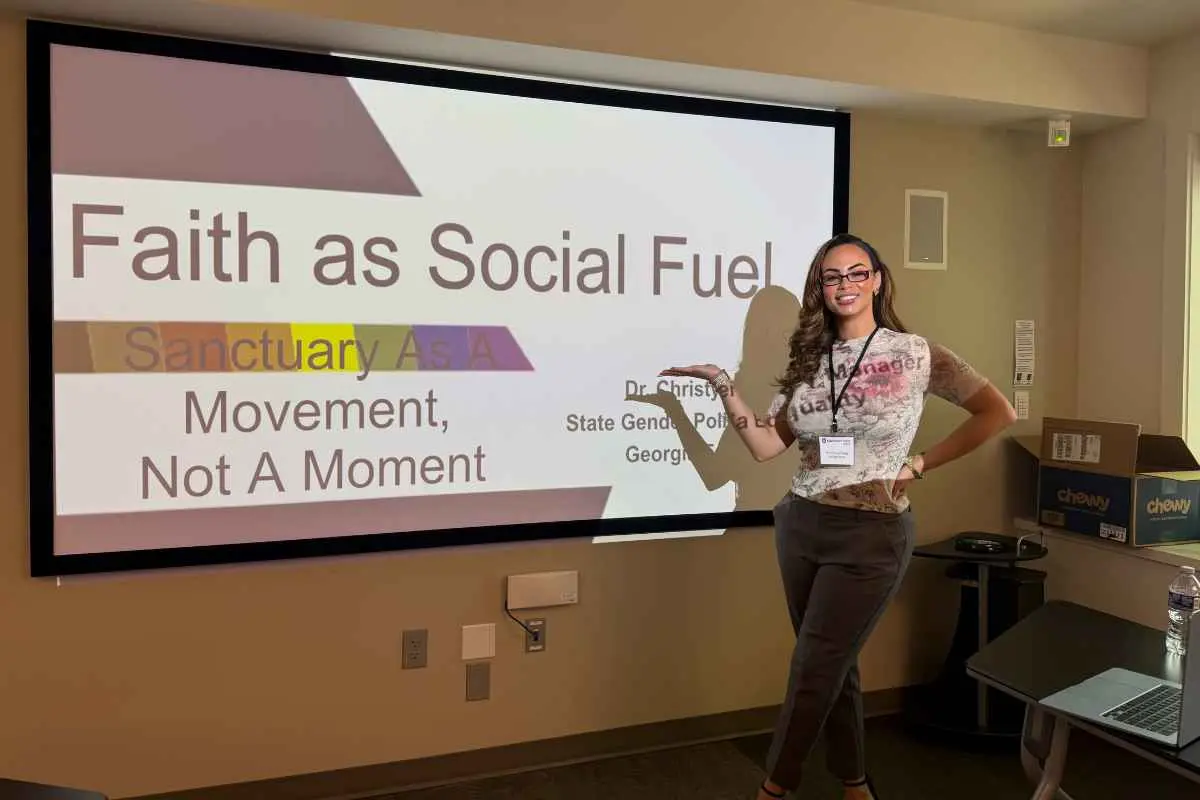
The DreamingUp Community Sexual Health Fair reflects the organization’s approach to addressing social challenges through dignity and trust. Rather than viewing sexual health only as a medical concern, the initiative considered the broader factors affecting access, including stigma, safety, and community relationships.
Dr. Christy Perez explains that “we treated sexual health not simply as a clinical issue, but as a question of access, trust, stigma, bodily autonomy, and community belonging.”
The initiative created a community-centered environment where people could access information and resources while reducing barriers between institutions and the communities they serve.
This work reflects a larger belief that effective programs must begin with understanding people’s realities. Access alone is not enough. As Dr. Perez puts it, “health interventions work differently when dignity and trust are treated as infrastructure rather than extras.”
Stories And Systems
Beyond organizational leadership, Dr. Christy Perez’s influence extends through journalism, public scholarship, policy work, and education. Her writing examines how narratives shape public understanding and how stories can either reinforce exclusion or create opportunities for deeper awareness.
Her background in theology and historical studies adds another dimension to her work. She explores how beliefs, cultural assumptions, and political ideas influence systems and public policies. Her research examines the relationship between faith, power, and society, especially how ideas can shape decisions affecting communities.
At the center of this work is a broader observation: “systems survive not only because they possess power, but because societies develop stories that make that power appear moral, inevitable, or righteous.”
Through her journalism, including contributions to publications such as HuffPost, Filter Mag, Business Insider, The Appeal, Modern Farmer, Salon, and Nursing Clio, she continues to explore the relationship between public narratives and social change.
Building Movements

Collaboration is central to Dr. Christy Perez’s approach. The Dreaming Justice Project has developed relationships across areas including voting rights, reproductive justice, incarceration, overdose prevention, faith, HIV advocacy, and LGBTQ movements.
Her earlier work with Georgia Prisoners Speak demonstrated the importance of connecting directly affected communities with research, advocacy, and policy conversations. These experiences shaped her understanding that lasting change requires movement between communities and decision-making spaces.
For Dr. Perez, “collaboration is part of our theory of change, not an accessory to it.” The goal is not simply to create institutional connections, but to create pathways through which knowledge, resources, and power can move between affected communities and decision-makers.
She believes organizations must build trust before moments of crisis arrive. Strong movements are created through relationships, education, and consistent engagement rather than only through urgent responses.
Looking Ahead
Dr. Christy Perez sees a growing need for leaders and organizations to build stronger connections across movements. Issues involving racial justice, reproductive justice, trans rights, economic inequality, healthcare access, immigration, and incarceration often overlap, requiring approaches that recognize these connections.
Her focus remains on developing leadership pipelines, strengthening political education, and creating spaces where communities can influence the decisions that shape their futures.
“We cannot organize only when legislation becomes an emergency,” she says. “The movements that endure will be those that built trust before the crisis arrived.”
Since launching in 2025, The Dreaming Justice Project has expanded its work through community programming, partnerships, policy engagement, and initiatives such as the Practicing Freedom handbook. The organization raised approximately $117,000 in its first year while operating with three stipended volunteer staff, reflecting early momentum built through community trust and collaboration.
A Life Transformed
Dr. Christy Perez’s personal journey represents a transition from surviving systems to helping redesign them. Before stepping into leadership, her life was shaped by incarceration, scarcity, education, and finding her voice. Today, her work centers on stewardship, coalition building, policy influence, accountability, and creating opportunities for others.
She describes that transition simply: “I learned how to survive scarcity; leadership has required me to learn how to trust, delegate, share power, and avoid reproducing the hierarchies our work critiques.”
Her daily work reflects this responsibility. From reviewing policy developments and organizational priorities in the morning to research, partner conversations, writing, community engagement, and evening events, her schedule moves between advocacy, journalism, and leadership responsibilities.
Each responsibility connects back to the same purpose: creating systems where people have greater agency over their own lives.
Future Leaders
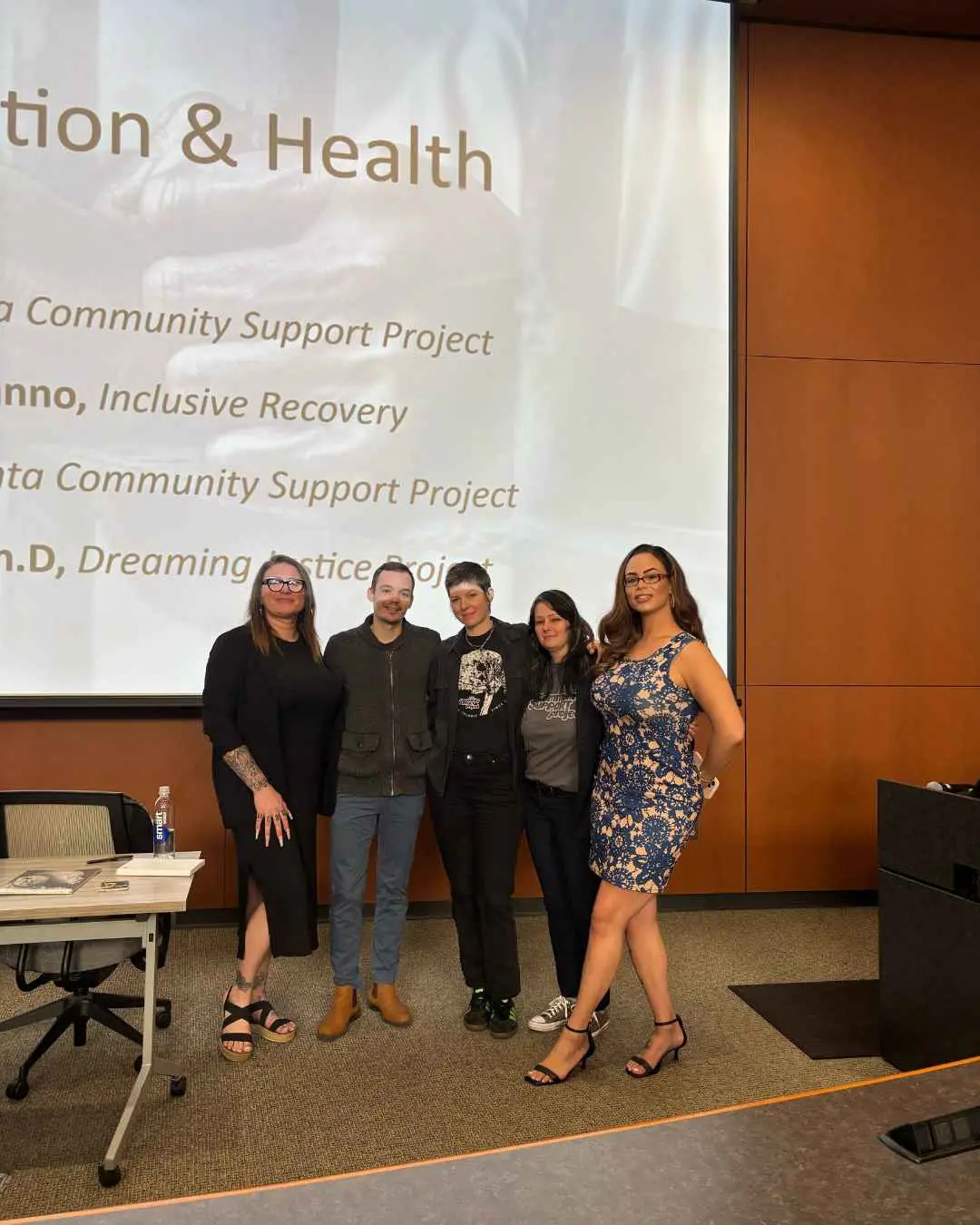
Dr. Christy Perez’s message to emerging leaders is rooted in understanding power and responsibility. She encourages them to recognize the difference between being present in influential spaces and actually changing how those spaces operate.
“Do not confuse proximity to power with possessing it, and do not confuse being invited into a room with changing what happens inside it.”
She believes meaningful transformation often happens through work that receives little attention: conversations, relationships, planning, and consistent effort over time. Her own journey taught her that hope is not passive.
“Hope is not a feeling. Hope is work. Hope is the heavy lifting we choose to do after the world has finished telling us who we are.”
For Dr. Christy Perez, systems change begins with a simple belief: people closest to challenges must have the opportunity to shape the future. Through The Dreaming Justice Project, her writing, and her advocacy, she continues to create pathways where knowledge, leadership, and lived experience come together to imagine a more equitable society.
Open Letter
Dear Upcoming Leaders,
“Do not confuse proximity to power with possessing it, and do not confuse being invited into a room with changing what happens inside it.
Learn systems deeply. Understand where they succeed, where they fail, and who experiences the consequences. Listen to people whose knowledge comes from lived experience. Build relationships before you need them, share credit, and continue telling the truth even when it becomes difficult.
Transformation is built through consistent work. Hope is not passive optimism. Hope is the work we choose to do after the world has tried to define our limits.”
Dr. Christy Perez
Founder and Managing Director
The Dreaming Justice Project
Quick Takes
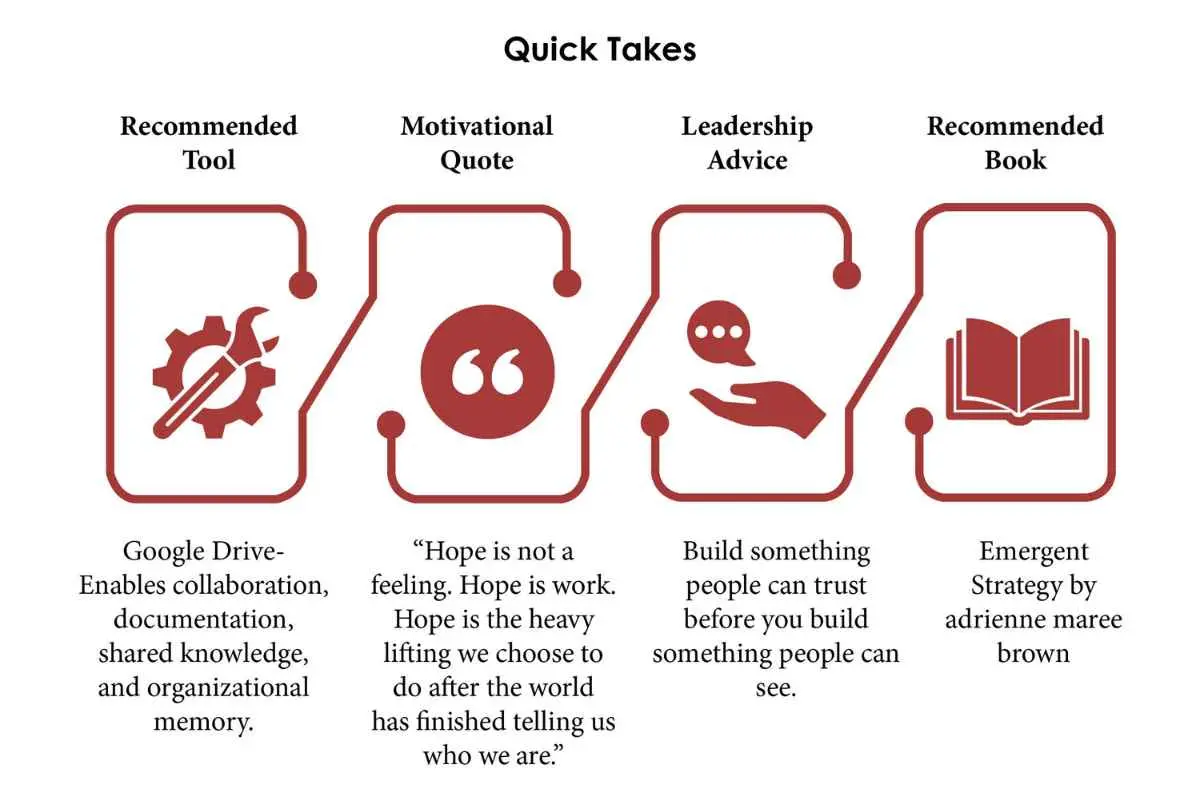
| Category | Insight |
| Recommended Tool | Google Drive- Enables collaboration, documentation, shared knowledge, and organizational memory. |
| Motivational Quote | “Hope is not a feeling. Hope is work. Hope is the heavy lifting we choose to do after the world has finished telling us who we are.” |
| Leadership Advice | Build something people can trust before you build something people can see. |
| Recommended Book | Emergent Strategy by adrienne maree brown |
A Day in Dr. Christy Perez’s Life
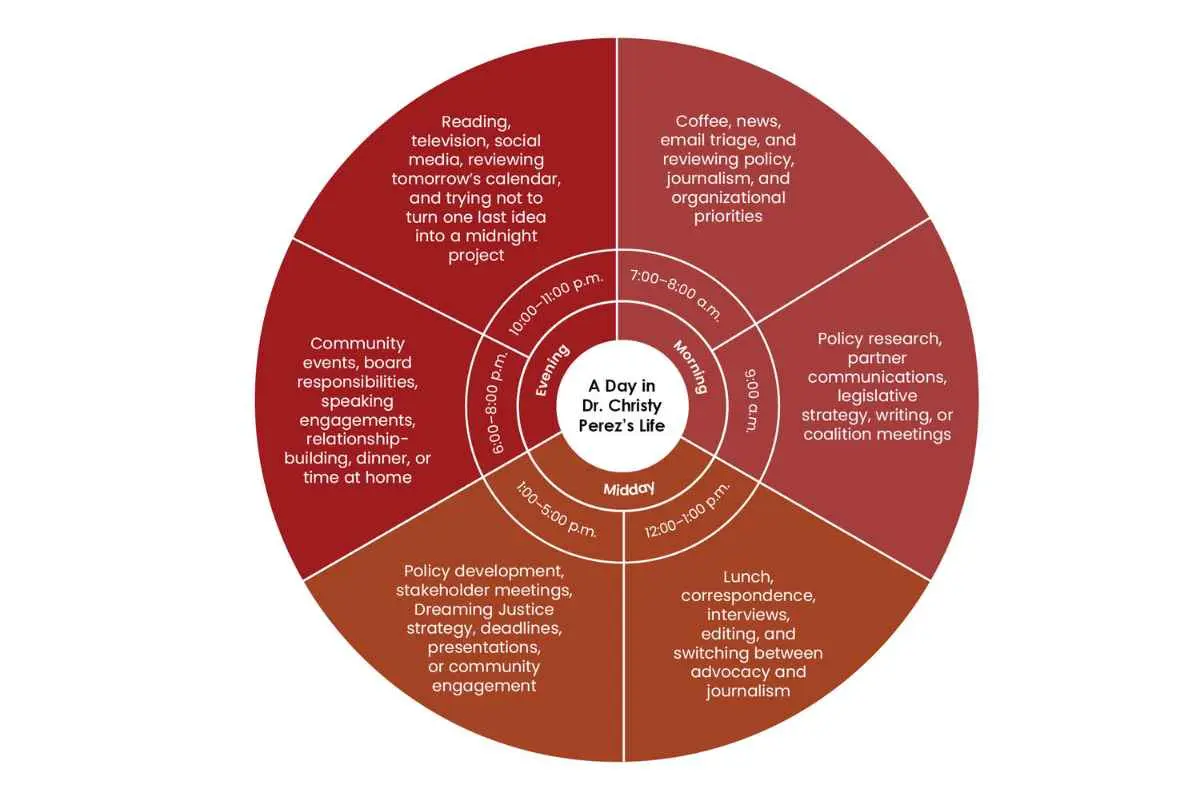
7:00–8:00 a.m. | Early Morning: Coffee, news, email triage, and reviewing policy, journalism, and organizational priorities.
9:00 a.m. | Start of Workday: Policy research, partner communications, legislative strategy, writing, or coalition meetings.
12:00–1:00 p.m. | Midday: Lunch, correspondence, interviews, editing, and switching between advocacy and journalism.
1:00–5:00 p.m. | Key Work Priorities: Policy development, stakeholder meetings, Dreaming Justice strategy, deadlines, presentations, or community engagement.
6:00–8:00 p.m. | Evening: Community events, board responsibilities, speaking engagements, relationship-building, dinner, or time at home.
10:00–11:00 p.m. | Night / Wind-down: Reading, television, social media, reviewing tomorrow’s calendar, and trying not to turn one last idea into a midnight project.
5 Key Takeaways from the Cover Story
| No. | Key Takeaway |
| 01 | Systems change begins by understanding the structures behind recurring challenges. |
| 02 | Communities most affected by challenges should have influence in shaping solutions. |
| 03 | Leadership grows through trust, accountability, and shared responsibility. |
| 04 | Storytelling can influence how society understands justice and social change. |
| 05 | Meaningful transformation is built through consistent collective effort. |