Outdoor advertising begun its journey with a simple proposition: put the message where people will see it. The tougher questions came later. Who saw it? When? How often? And what did the brand get for its efforts?
That is the question Anuj Bhandari, Founder & Principal Strategist at DGTOOHL Technologies, has spent years exploring. Having spent nearly two decades in OOH, he has seen the industry from the inside and now, through DGTOOHL, is helping bring greater intelligence, accountability, and precision to the physical world.
His story, however, is not simply about building another technology platform. It began with a question the industry had lived with for years.
For Anuj, that raised a different question: what happens when a medium built around visibility is expected to prove what that visibility has delivered?
Seeing What the Industry Couldn’t Yet Measure
Anuj did not enter outdoor advertising with a technology company in mind. He spent nearly two decades learning the business from the ground-up, media ownership, asset creation, sales, trading, agency operations, and eventually enterprise leadership. More than 16 years with one organisation took him through entrepreneurial operating roles, business leadership, and eventually the Group CEO role.
By then, Anuj had seen OOH from almost every imaginable angle. He had also noticed an uncomfortable gap. Digital advertising was getting better at telling advertisers who they were reaching and what was happening with their spend. Outdoor still had plenty of answers but not always to those questions.
The COVID-19 pandemic made the gap impossible to ignore. Advertisers were asking tougher questions: Was the campaign reaching its intended audience? Could delivery be verified? Could investment be measured with greater clarity?
Anuj Bhandari began looking beyond the traditional OOH playbook, studying global advances in measurement, verification, and programmatic digital out-of-home advertising. The opportunity was to bring some of digital media’s discipline into the physical world without stripping OOH of what made it powerful in the first place.
That idea became DGTOOHL Technologies, an AdTech platform built around audience intelligence, programmatic execution, and transparent reporting. The ambition was straightforward: make OOH easier to measure, easier to understand, and easier to hold accountable.
DGTOOHL was not a departure from Anuj’s OOH career. It was the question that career had eventually led him to ask: what happens when a medium built on visibility begins to operate with the precision of digital?
What Changed When the Role Got Bigger
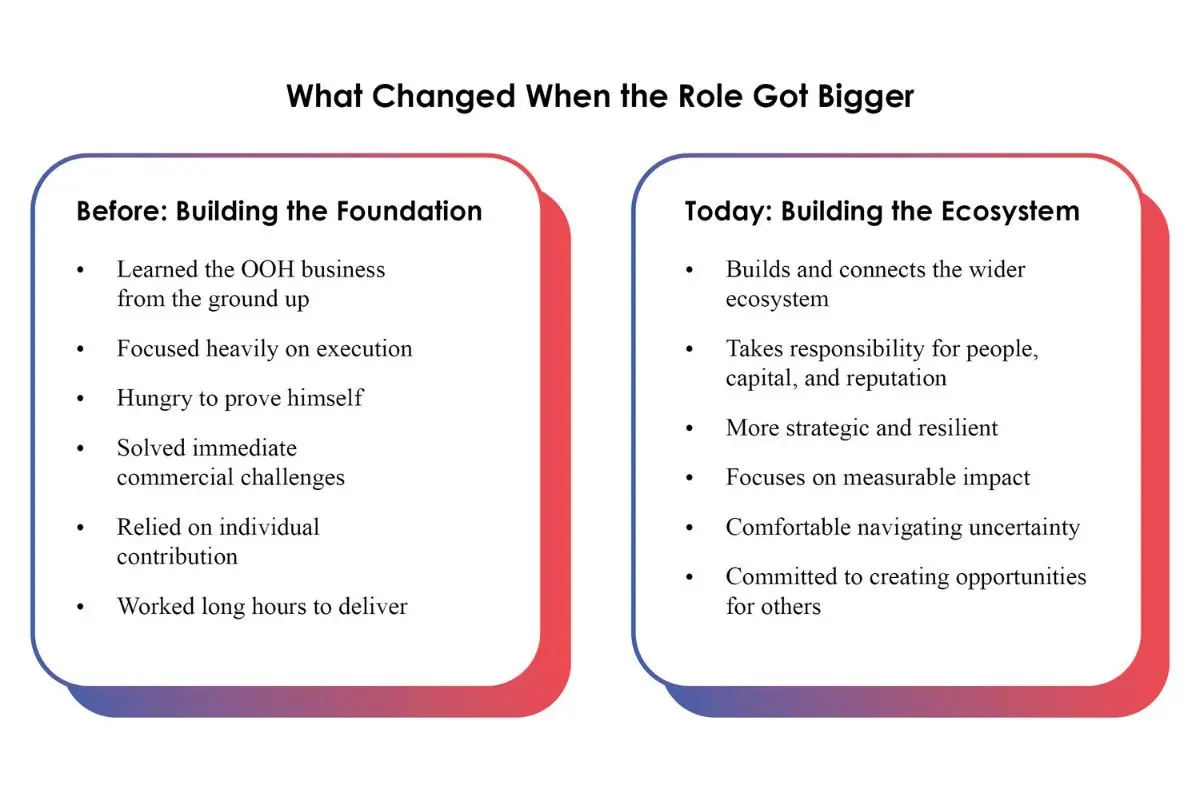
| Before: Building the Foundation | Today: Building the Ecosystem |
| Learned the OOH business from the ground up | Builds and connects the wider ecosystem |
| Focused heavily on execution | Takes responsibility for people, capital, and reputation |
| Hungry to prove himself | More strategic and resilient |
| Solved immediate commercial challenges | Focuses on measurable impact |
| Relied on individual contribution | Comfortable navigating uncertainty |
| Worked long hours to deliver | Committed to creating opportunities for others |
Building Beyond the Founder
The idea was the easy part. Making it work was another matter. As DGTOOHL grew in leaps and bounds, Anuj’s role expanded and evolved from identifying the opportunity and shaping the proposition to building the ecosystem that could make it work. His responsibilities now span strategy, publisher onboarding, technology partnerships, agency relationships, sales, and the commercial model.
Growth forced another change: Anuj could no longer be the person solving everything himself. In the early stages, solving problems personally was often necessary. At scale, it became a limitation. Anuj had to shift from being the person with every answer to building capable teams, defining ownership, and creating systems that could carry the business forward.
Integrating with DV360 was an important milestone. It validated the direction DGTOOHL was taking, but it also brought a higher standard of execution.
Then came the airport campaign. Its existing CMS could not integrate with another SSP, and the campaign was disrupted. There was commercial loss, but the bigger damage was harder to measure: client confidence had taken a hit.
To Anuj Bhandari, the setback changed the way he looked at responsibility. A strong proposition could not compensate for a weak link somewhere in the delivery chain. The experience pushed DGTOOHL to place greater emphasis on integration readiness, partner alignment, rigorous testing, and accountability before campaigns go live.
Anuj came away with a less comfortable conclusion: it wasn’t enough for DGTOOHL to get its own piece right. If one connection failed, the client experienced the whole system as a failure. Leadership, Anuj learned, is not only about convincing people of where the business can go; it is also about making sure the infrastructure exists to get there reliably.
Turning Data into Decisions
More data isn’t necessarily better data. The harder part, Anuj Bhandari has found, is knowing what to do with it.
Businesses may have location data, traffic estimates, audience profiles, campaign schedules, and cost information spread across different systems. The challenge is connecting those pieces to determine which sites, time bands, and audience movements matter. A campaign can have plenty of numbers and still leave a marketer guessing.
DGTOOHL starts somewhere else: with the business objective and the audience, then working backwards to identify relevant road stretches, locations, audience cohorts, movement patterns, and time windows.
One practical example involved helping advertisers move beyond choosing screens simply because they appeared premium. Instead, sites were compared using target-audience penetration, estimated impressions, and time-of-day movement. The result was a media plan that could explain why each screen was selected, how it contributed to reach, and how delivery would be verified.
The point is not to produce more numbers. It is to give brands, agencies, and media owners a clearer reason for the decisions they make.
The Streets to Screens Method
Anuj’s OOH planning begins with the audience, not the available inventory. DGTOOHL follows a Streets to Screens approach built around four connected stages: audience, movement, moment, and measurement.
First comes the audience. Then the streets they move through. Then the moments that matter. Measurement comes last, but it is built into the process from the start, identifying which streets or locations offer meaningful penetration. The third identifies the right moments: dayparts, seasons, contextual triggers, or campaign conditions. The final stage measures delivery through dashboards, monitoring, spot-play records, and campaign analytics.
The four-stage process can then extend online through retargeting audiences already exposed to OOH, creating a link between physical and digital media.
This differs from conventional OOH planning, which often begins with available sites and negotiation. DGTOOHL starts with the audience and treats inventory as the means, not the starting point.
The method draws on something Anuj Bhandari had before the technology: years of understanding how media owners, agencies, and advertisers actually work.
Making Programmatic OOH Work in the Real World
The real test came when DGTOOHL had to make pDOOH work beyond the presentation deck for recognised brands within the Google DV360 ecosystem. The job was anything but theoretical: connect an online buying platform to physical screens without losing control of inventory, scheduling, creative delivery, or reporting.
DGTOOHL worked with SSP and media-owner partners to map available inventory, align campaign parameters, and build a reporting trail that agencies could easily follow. Transparency had to be built into the product, not added after the campaign was over.
Campaign delivery could then be reviewed through platform reports and verified spot plays instead of relying solely on manual proof. The early campaigns helped establish a repeatable execution model, supporting work for brands including JLR, Vivo, and KFC.
Anuj Bhandari has deliberately avoided publishing conversion or sales figures that belong to the respective clients and have not been independently verified. The measurable operational outcome was the successful connection of digital buying workflows with DOOH delivery, backed by platform-based reporting and payment against served inventory.
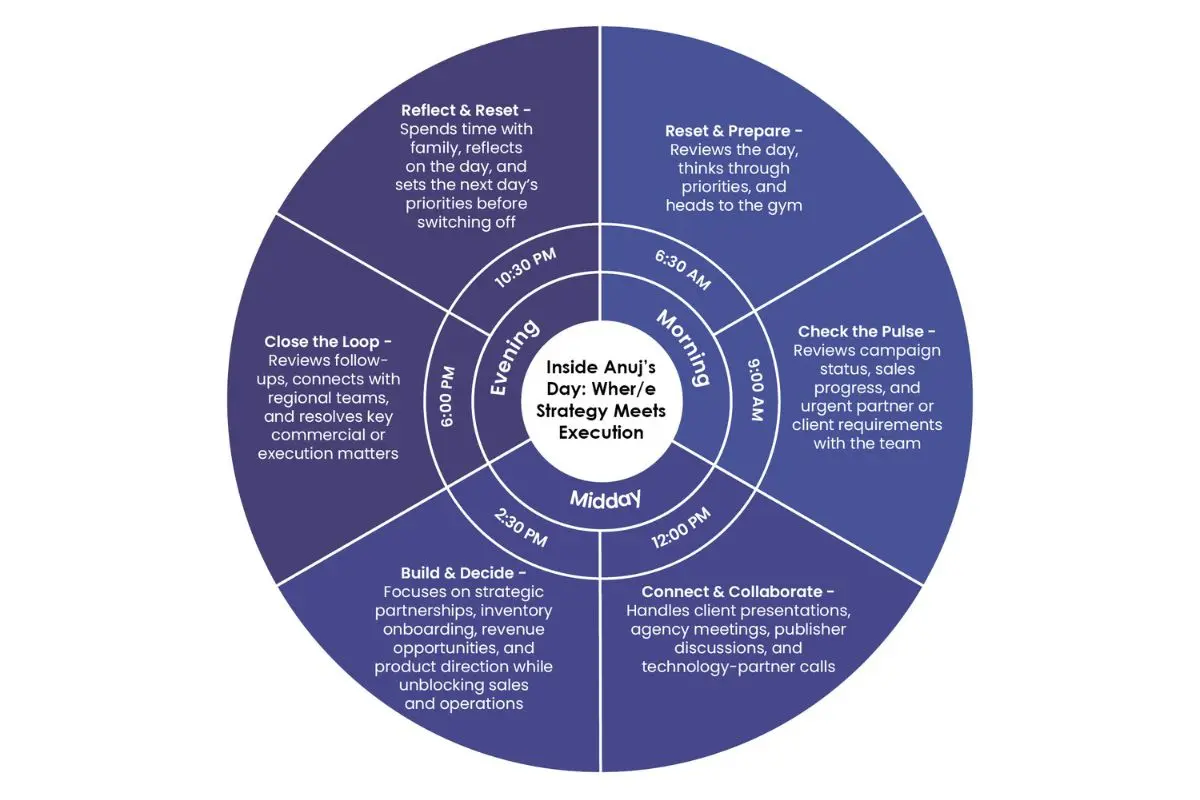
Inside Anuj’s Day: Where Strategy Meets Execution
| Time | Focus |
| 6:30 AM | Reset & Prepare – Reviews the day, thinks through priorities, and heads to the gym. |
| 9:00 AM | Check the Pulse – Reviews campaign status, sales progress, and urgent partner or client requirements with the team. |
| 12:00 PM | Connect & Collaborate – Handles client presentations, agency meetings, publisher discussions, and technology-partner calls. |
| 2:30 PM | Build & Decide – Focuses on strategic partnerships, inventory onboarding, revenue opportunities, and product direction while unblocking sales and operations. |
| 6:00 PM | Close the Loop – Reviews follow-ups, connects with regional teams, and resolves key commercial or execution matters. |
| 10:30 PM | Reflect & Reset – Spends time with family, reflects on the day, and sets the next day’s priorities before switching off. |
Where Technology Actually Changes Advertising
Not every new piece of AdTech deserves to change the way advertising works. Anuj sees the strongest shifts happening around automated buying, interoperable platforms, audience-led planning, dynamic creative delivery, and independent reporting.
AI has a practical role when it helps teams analyse movement patterns, spot anomalies, improve forecasts, or adjust creative and timing to context. Anuj Bhandari also cautions that AI is sometimes adopted as a label before the underlying data is ready. An algorithm cannot fix poor inventory mapping, inconsistent screen data, or an unclear campaign objective.
The same applies to programmatic. Simply buying a digital screen through a platform does not capture its real potential. Its value is in what it lets a buyer control: targeting, scheduling, triggers, verification, and optimisation.
Anuj Bhandari believes businesses should therefore ask a simple question before adopting new technology: does it improve a decision, or does it merely add another layer of cost and complexity?
For Anuj Bhandari, the next phase is less about adding another dashboard and more about making the systems underneath it work.
When Feedback Changes the System
The most useful feedback Anuj received was not about adding more technology, but removing unnecessary complexity. Clients and partners wanted clearer decisions and simpler proof rather than another complicated interface. In response, DGTOOHL began connecting audience insights directly to recommended sites, costs, and expected delivery.
The airport integration challenge reinforced another lesson: commercial enthusiasm cannot replace technical readiness. DGTOOHL strengthened pre-campaign checks, clarified responsibilities across the DSP, SSP, CMS, and media-owner chain, and placed greater emphasis on back-to-back testing.
The experience also changed Anuj’s leadership approach. He learned to invite criticism earlier, recognising that a difficult truth is far less expensive during planning than after a campaign has begun. That mindset has helped create a more collaborative and less defensive culture.
Yet one piece of feedback extended beyond DGTOOHL itself. The wider pDOOH ecosystem was offering irrelevant inventory across platforms, a problem Anuj took personally. It became a pursuit to improve what was available programmatically.
“The most impactful feedback, not about us but for the entire pDOOH ecosystem, has been irrelevant inventory across platforms available. I took this feedback personally and since then have been on a pursuit to get the best DOOH inventory available programmatically.”
Quick Takes
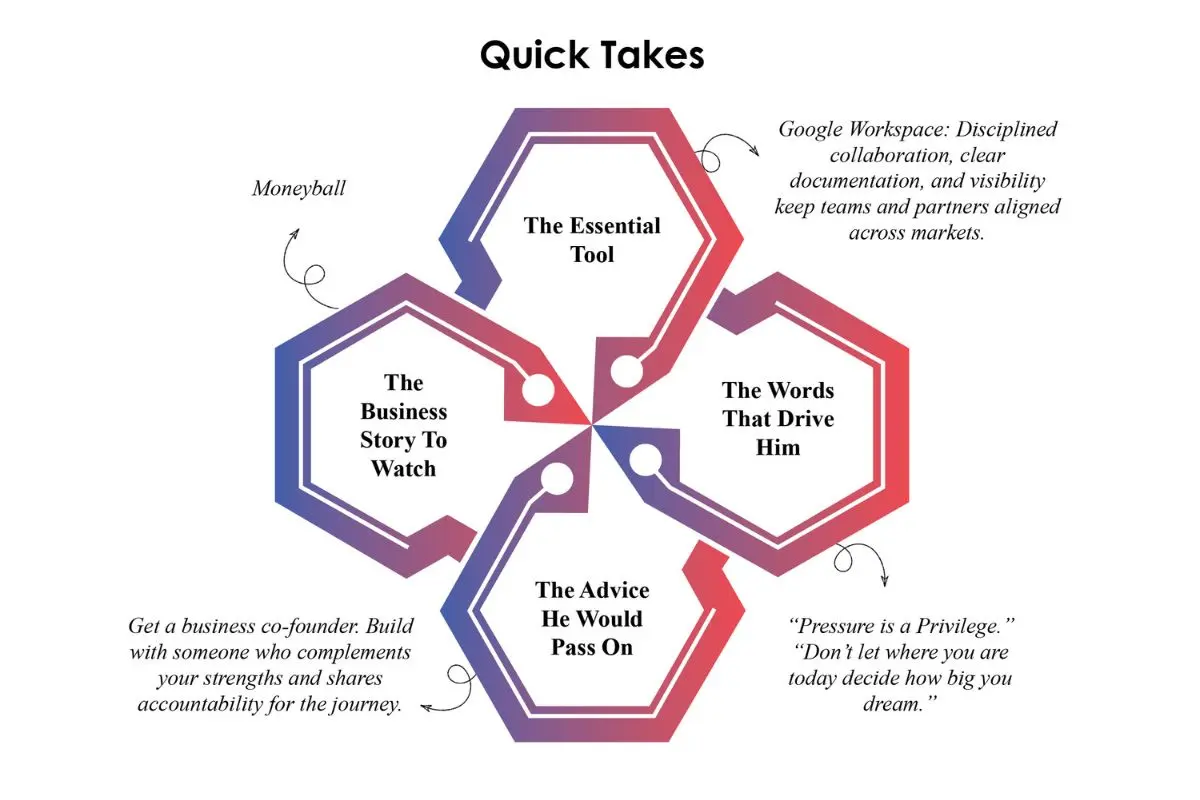
01 – The Essential Tool
Google Workspace: Disciplined collaboration, clear documentation, and visibility keep teams and partners aligned across markets.
02 – The Words That Drive Him
“Pressure is a Privilege.”
“Don’t let where you are today decide how big you dream.”
03 – The Advice He Would Pass On
Get a business co-founder. Build with someone who complements your strengths and shares accountability for the journey.
04 – The Business Story To Watch
Moneyball

When the Market Starts Opening Doors
Recognition can put a name on a list. Trust opens doors. Anuj Bhandari sees the latter as the more meaningful measure of DGTOOHL’s progress.
The company’s integration with Google DV360 and The Trade Desk for pDOOH execution in India has strengthened its ability to work across planning, supply integration, campaign delivery, and reporting. Its work has also extended to publicly referenceable brands including JLR, Vivo, Oppo, and KFC, supported by relationships with agencies, publishers, and media owners.
The scale of inventory onboarded for pDOOH campaigns has been another significant milestone, while DGTOOHL has expanded its capabilities beyond India into the GCC market.
Anuj’s own recognition through a Forty Under Forty platform has added a personal marker to the journey. Yet the signals he values most happen away from award stages: partners opening their inventory to DGTOOHL’s technology, agencies placing trust in its reporting, repeat conversations, and clients returning with more complex problems to solve.
Those moments carry a different kind of weight. They suggest that DGTOOHL is not simply participating in the transformation of OOH; its growing network of partners and clients is placing trust in the systems being built to make the medium more measurable and transparent.
The Conversation Beyond the Platform
Anuj’s work in the AdTech space extends beyond building DGTOOHL. He regularly shares practical knowledge with agencies, publishers, advertisers, and young professionals, particularly around pDOOH, audience measurement, and the commercial realities of connecting AdTech with physical media. Industry conversations, client workshops, partner meetings, and mentoring teams entering the OOH and programmatic ecosystem have become part of that contribution.
Yet the industry conversation he believes needs greater attention is less glamorous: standardisation.
Innovation often dominates the discussion, while common definitions around impressions, spot delivery, screen availability, fees, and verification receive less attention. Without shared standards, each integration risks becoming a custom project, making it harder for advertisers to compare outcomes.
Anuj Bhandari also sees the need for a more inclusive ecosystem where media owners, agencies, and technology companies can grow alongside one another.
The larger opportunity, in his view, lies not in one player gaining an advantage over another, but in building an ecosystem where progress is shared. Sustainable transformation, he believes, will come through collaboration rather than one-upmanship.
| Open Letter Dear business leaders, marketers, technology professionals, and aspiring AdTech entrepreneurs, Data-driven advertising should not begin with technology. It should begin with a clear business question: whom are we trying to reach, what decision are we trying to improve, and how will we know whether the work delivered value? Technology is powerful only when it makes those answers clearer. As advertising becomes more automated, we must resist the temptation to confuse speed with intelligence and complexity with innovation. Build systems that people can understand. Ask where the data came from, what it represents, what it cannot prove and who is accountable when something fails. Protect consumer privacy, disclose the economics of the supply chain, and make verification a fundamental part of campaign design. For those building companies in this space, resilience matters as much as innovation. Traditional industries do not transform overnight. Progress comes through patient education, reliable execution, and partnerships that create value across the ecosystem. Choose co-founders and colleagues who complement your strengths, listen closely to criticism, and never allow short-term revenue to weaken long-term trust. The opportunity ahead is enormous. When creativity, credible data, and responsible technology work together, advertising becomes more relevant for audiences, more accountable for brands, and more sustainable for the entire industry. Let us build that future with ambition, but also with humility and fairness. From, Anuj Bhandari, Founder & Principal Strategist |
Key Takeaways
- Build capable teams, not individual dependence.
- Own the weakest link in the delivery chain.
- Turn feedback into better systems.
- Let data drive decisions, not complexity.
- Create opportunities for others.