When information about a place or business is spread across different sources, it can be difficult to understand the complete picture. A map may show the location, pictures may show the place, and documents may provide details, but they do not always show how everything connects. This can waste time, slow decisions, and make important information harder to manage and protect.
Hervé Heully, Founder, President, and CEO of NEW3S®, helps solve this challenge by turning real-world places, assets, products, and environments into connected digital spaces that are easier to explore, understand, and manage.
Through 3V.World®, NEW3S connects geolocation, documented knowledge, 360° immersion, 3D space, and change over time within a governed digital environment. Its purpose is not only to make reality visible and understandable, but also to preserve control over what is exposed, accessed, and interpreted. La Baule 360 provides operational proof of this approach, recording 2.05 million consultations between January 2024 and August 2026, excluding interactions within immersive sessions.
This achievement reflects Heully’s approach to using technology not simply to recreate reality, but to make it more useful, understandable, and trusted.
The journey behind NEW3S
Heully’s professional journey began with a curiosity about how hidden things can be understood through what is visible. His interest in signals, light, shadows, transitions, and invisible structures led him to study geophysics and algorithmic modelling. During his doctoral research in applied geophysics, he demonstrated how 3D subsurface structures could be reconstructed from incomplete and indirect signals.
Thousands of hours spent sailing and windsurfing in the Bay of La Baule further shaped his understanding of space and cartography. On the water, Hervé Heully was himself a moving point in a changing three-dimensional environment. As he descended into the trough of a wave, a landmark visible only seconds earlier could disappear. The landmark still existed; what changed was his position, his line of sight and the information available to him. Wind, swell, current, tide and light made space a lived relationship between an observer, an environment and time—not merely a set of coordinates.
These scientific and maritime experiences shaped the broader vision behind NEW3S®, which Hervé Heully founded in 2003: making complex realities navigable, intelligible, useful and governable. Years later, La Baule 360 became its operational territorial expression, revealing the coastline, islands, businesses, heritage, landscapes and relationships of a territory he knew intimately from the water.
The project progressively developed into a real-world laboratory combining semantic information, geolocation, 360° immersion, 3D modelling and temporal evolution. Today, 3V.World® extends this approach into a replicable architecture connecting physical reality, documented knowledge, immersive experience, AI readiness and digital sovereignty.
Turning fragmented information into governed knowledge
One of the biggest challenges organizations face is understanding what a digital twin should actually do. A 3D model, virtual tour, or visual copy alone cannot show the complete picture. A useful digital twin should connect places, people, evidence, activities, meaning, time, and governance in one system.
This is where geo-semantics becomes important. It connects a real-world place or object with its meaning, conditions, relationships, and possible actions. A location becomes more than a coordinate, while 360° images and 3D objects become part of a documented environment that helps people understand places and gives AI reliable information.
Hervé Heully draws on sailing and windsurfing to explain this idea. A navigational beacon may have a fixed location, but its meaning can change with conditions, position, and route. The same applies to hospitals, campuses, infrastructure, products, and territories.
NEW3S® combines semantic information, geolocation, 360° immersion, 3D structure, 4D time, traceability, controlled visibility, and intellectual-property protection to create trusted digital environments that people and AI can understand and use.
Building digital worlds that people and AI can understand
NEW3S brings together geophysics, spatial modelling, immersive media, geo-semantics, information architecture, digital sovereignty, intellectual-property protection, and cybersecurity. Its 3V® approach helps people understand reality by allowing them to see, explore, interact with, and place it in context.
Through 3V.World®, the company creates connected digital environments by combining:
- 2D semantic information and geolocation
- 360° immersive experiences and 3D space
- 4D information showing change over time
- AI-ready, organized knowledge
- Controlled access and information governance
Hervé Heully’s expertise extends to bringing three-dimensional data into the global web economy. Through a web browser, users can navigate between web-hosted 3D assets and environments alongside conventional web pages. From product assemblies to entire spaces, these assets can be explored, understood, manipulated, and commercialized—individually or together—and used for learning, maintenance, or distribution. Security by Design is built into this architecture from the outset, not added afterwards.
The approach goes beyond a simple 3D model by connecting location, meaning, relationships, evidence, time, and context. Security is also central, supported by NEW3S’s U.S. and French patents and its Stealth Data approach.
This architecture also provides the foundation for COGNOS, NEW3S’s research and strategic-development direction for governed geo-semantic cognition. COGNOS explores how permission-aware digital twins could support AI-enabled physical agents while governing which sensitive information is made available to them.
One architecture, purpose-built worlds
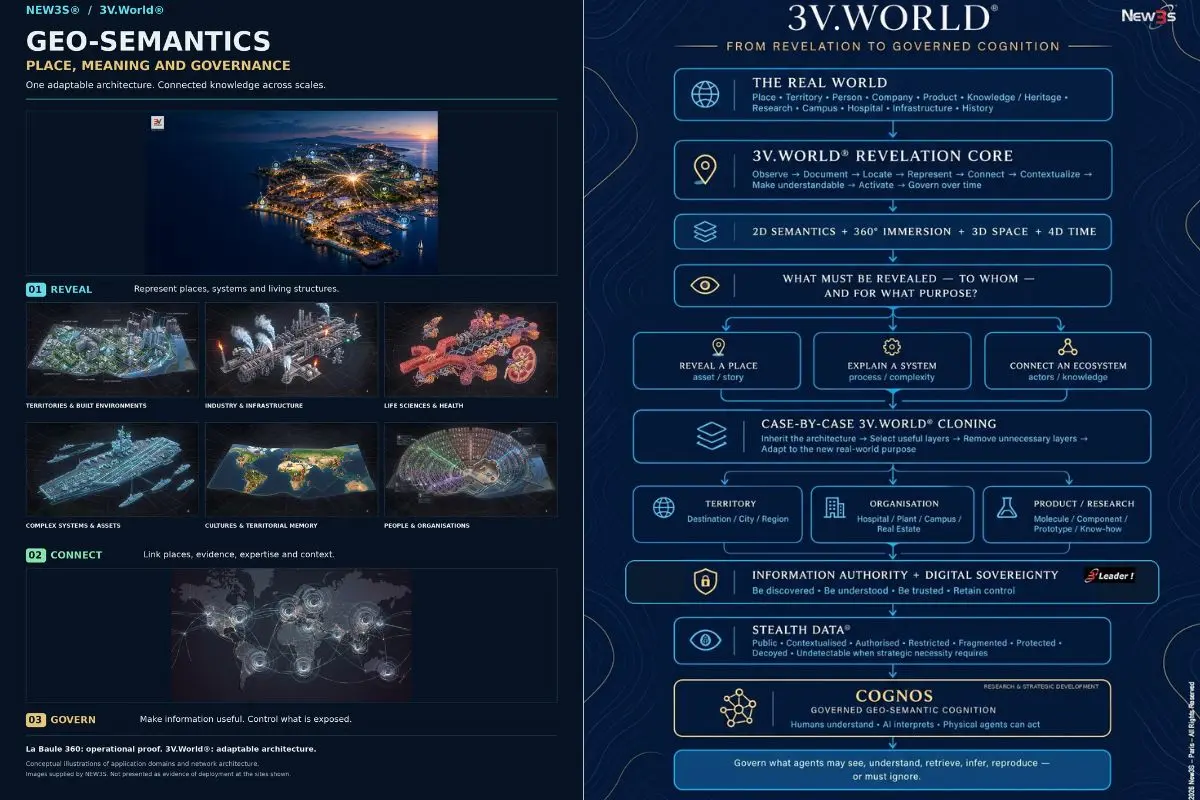
For Hervé Heully, 3V.World® is not about creating the same digital model for every place or organization. It provides a flexible structure that can be adapted to the needs of each real-world environment.
NEW3S begins by documenting a place, asset, organization, product, or ecosystem and connecting its location, information, images, 3D space, relationships, and changes over time.
Each deployment then uses only the information and features needed for its purpose:
- Territories: Maps, businesses, heritage, tourism, geography, and local services
- Organizations: Campuses, hospitals, industrial sites, and real estate
- Products: Product information, components, prototypes, and related knowledge
- Research: Scientific information, projects, findings, and supporting evidence
- AI and robotics: Contextual information that helps authorized systems understand their surroundings
3V.World® does not merely scale. It stretches and specialises. Independently of the volume of data managed, La Baule 360 is its most fully developed operational software reference—not a template to be reproduced in full, nor a version that is inherently more powerful than every specialised deployment. Each new 3V.World® inherits the architecture, selects the relevant layers, removes those that are unnecessary, and adds the capabilities required by its own purpose. Its strength lies in its fit with the reality it represents.
Information control is also central. Data can be public, contextualized, authorized, restricted, or protected based on who needs access and why. This supports digital sovereignty while helping organizations stay discoverable, understandable, and in control of their information.
La Baule 360: putting the architecture to the test
La Baule 360 is one of the most important projects for Hervé Heully and NEW3S®, allowing the team to test its approach in a real and constantly changing environment. The project digitally represents La Baule-Escoublac, bringing together its businesses, services, heritage, geography, tourism, events, and other economic and cultural assets.
What began with a municipality covering about 22 square kilometers now extends across roughly 800 square kilometers of the wider Guérande Peninsula ecosystem.
The challenge went beyond creating a digital map or a collection of images. NEW3S connected panoramas, businesses, services, heritage, public information, geography, tourism, and changing stories about the territory. The team treated the area as a living system, continually adding verified places, projects, historical references, visual evidence, and contextual links so people could explore and understand the territory more easily.
Connecting places with history
For Hervé Heully, a territory is not defined only by its present-day businesses, landscapes and services. It also carries a memory: events, journeys, public statements, people and relationships whose significance may extend far beyond its physical boundaries.
La Baule offers a striking example. François Mitterrand’s speech at the France–Africa summit on 20 June 1990 connected the town with a wider discussion about development, democracy and international relations. The La Baule–Dakar ocean race, documented in 1980 and 1983, offers another connection—this time maritime—between a French coastal territory and Senegal. These are distinct historical strands, but both show how a place can belong to a much larger network of meaning.
The purpose of a geo-semantic environment is to make such relationships discoverable without flattening their complexity. A location can be connected to a dated event, an archival source, a person, a route, or a contemporary activity. History then becomes more than background decoration: it becomes a documented layer through which people can understand how a territory acquired its identity and how its connections continue to matter.
The scale of the project is reflected in its results:
- 1.5+ million: Lines of code powering La Baule 360
- 2.05 million: Consultations recorded between January 2024 and August 2026, excluding interactions within immersive sessions
- 1,970+: Businesses documented
- 310+: Business categories covered
- 230+: Immersive experiences, panoramas, and journeys
- 135: Countries represented among visitors observed between 1 and 17 August 2026
- 10%: Visits lasting more than one hour and 15 minutes, measured over a three-year period
According to NEW3S’s platform analytics, traffic grew by 326.2% between July 2024 and July 2026, including 87.8% growth between July 2025 and July 2026. No external sponsored web campaigns were used by NEW3S or the listed economic actors to support the measured platform traffic during the stated period. This distinguishes the platform’s organic audience development from the paid visibility services available within the ecosystem.
According to the platform’s measurements, immersive sessions generate approximately 10 to 75 interactions per minute, depending on journey density and the level of exploration. These interactions are measured separately and are not included in the 2.05 million consultations. Long immersive journeys can involve several thousand actions within a single session.
La Baule 360 continues to aggregate evidence-based content, increasing the density of its informational core. The expansion now under way is expected to more than double the operational system already in place. The reference deployment currently operates in French, while the architecture now supports English for both the user interface and operational management.
NEW3S is engaging with international sites whose physical scale may reach approximately 350 times the La Baule 360 reference perimeter. Across English and French, the prospective information and interaction scope is estimated at approximately 700 times the current reference model, potentially approaching one million web pages and several million structured semantic expressions. These are prospective deployment estimates, not figures already achieved.
“La Baule 360 is the operational proof; 3V.World® is the replicable architecture. One demonstrates the model in the field; the other makes it transferable to any real-world ecosystem,” Hervé Heully explains.
His central lesson is that technology becomes valuable when information is carefully observed, connected, verified, and continually improved. The architecture can be adapted to companies, hospitals, campuses, industrial assets, research programmes, products and critical infrastructure.
Connecting places, data, and context through geo-semantics
Hervé Heully believes future digital twins should do more than simply copy a real place or asset on a screen. They should bring together the place, its information, meaning, and context in one connected digital environment. This can help people explore and understand their surroundings more easily, while giving AI useful information and helping organizations manage and protect their digital assets.
He sees geo-semantics as the next major step. Instead of simply showing the shape of a building, port, hospital, factory, campus, product, or territory, digital environments can provide deeper context. They can show how elements are connected, what may change, what is safe or sensitive, what can be accessed, and what needs protection.
This context is also important for AI-enabled machines. While sensors can detect obstacles or physical conditions, geo-semantic environments can help AI understand whether something is temporary, hazardous, restricted, structural, or linked to a wider task.
COGNOS is NEW3S’s research and strategic-development direction for a governed contextual layer for physical AI. It explores how geo-semantic digital twins could support learning, planning, simulation, navigation and authorised access without replacing onboard perception, robotics software or human responsibility.
It also raises a question of authorised learning: which 3D components, spatial relationships and contextual information should be made available to an agent’s training or inference process, and which should be deliberately withheld? This extends NEW3S’s visibility-governance approach towards permission-aware environments for AI-enabled physical agents.
The underlying principle remains the same, whether the environment serves historical understanding or physical action: information becomes useful when its location, time, meaning, provenance, and conditions of use are connected.
Beyond technology, Hervé Heully shares his ideas through writing, interviews, conferences, research communication, and international exchanges. His CEO Clubs Network publication, Why Artificial Intelligence Is Redefining Digital Sovereignty, highlights the need for organizations to become reliable, documented, contextualized, and traceable sources of information while maintaining control over their digital identity. Through La Baule 360, he also demonstrates how immersive media and territorial knowledge can become practical services.
A recent La Baule 360 blog editorial extends this reflection through a question: who will organise a territory’s digital reality? Drawing connections between local geography, maritime history, diplomatic events and contemporary economic life, it argues that a territory’s digital representation is also a matter of memory and responsibility. For Hervé Heully, the challenge is not to claim exclusive ownership of a place’s history, but to help make its sources, relationships and documented realities accessible, contextualised and open to correction.
Patents, recognition and operational proof
Founded in 2003, NEW3S brings more than two decades of research, development, and operational experience in immersive technologies. Its credibility is supported by practical achievements, including patented technologies, deployed systems, an operational territorial digital twin, and long-term work in 3D environments, digital twins, secure visibility, and web navigation.
NEW3S holds U.S. Patent US 11,941,075 and French Patent FR3021426. The company has also received 14 international awards and recognitions, including the Burj Innovation Award 2025 in Dubai. This recognition was especially meaningful because it acknowledged NEW3S’ long-term work across Web 3D, digital twins, cybersecurity, and responsible innovation. It also created opportunities for international speaking engagements and media coverage.
For NEW3S, however, recognition is not the final goal. Awards can create visibility, but they do not automatically create understanding. The company believes that its responsibility is to use that visibility to explain its work clearly, demonstrate its technologies in real-world settings, and make its knowledge useful to others.
Data privacy, security, compliance, and ethical technology
NEW3S treats privacy and security as part of its technology from the beginning, rather than adding them later. This applies to human-to-human, human-to-AI, human-to-robot, and AI-to-robot interactions.
The focus is on deciding:
- Who can access information
- What each user or system can see and understand
- What information can be retrieved or connected
- What can be stored or reused
- What an AI system or autonomous agent is allowed to act upon
This approach is especially important in hospitals, industrial sites, research facilities, critical infrastructure, and defense-related environments, where 3D models may contain sensitive information about assets, processes, intellectual property, and operations.
Making a digital model available does not mean everyone should have access to all its information.
NEW3S addresses this through fragmentation, traceability, controlled visibility, and Security by Design. For Hervé Heully, access control and selective non-disclosure are related but distinct issues. Refusing access to a known object is not the same as limiting the exposure of its existence, structure, or relationships.
The Stealth Data® doctrine seeks to make visibility intentional within the digital environment, rather than treating security only as a barrier added after information has been exposed. The question is therefore not only who can open a file, but what an authorised or unauthorised system can discover, detect, interpret or potentially reconstruct.
The same principle guides COGNOS: supporting authorised AI agents and robots while maintaining restricted semantic zones, protected relationships and deliberate information boundaries. Withholding selected 3D elements from an authorised data pipeline is a governance objective; it should not be confused with erasing information a model may already have acquired from other sources.
The same responsibility applies to historical material. Connecting an archive to a place does not make every interpretation of that archive equally factual. A trustworthy geo-semantic environment should distinguish source documents, verified facts, testimony, editorial interpretation, and opinion. Provenance, dates, attribution, and a clear correction process are therefore essential: the objective is to preserve context, not to manufacture certainty.
For NEW3S, responsible technology means making useful information available while protecting sensitive data and maintaining accountability. Hervé Heully distinguishes four guiding principles: factual accuracy, truth, honesty, and authenticity. They express the need to document what exists, understand its meaning, take responsibility for what is communicated, and preserve the integrity of its representation.
The discipline to build what truly lasts
Hervé Heully’s greatest leadership lesson is that vision requires discipline and patience. He understands that there are times when a market is not yet ready to understand what is being built, and moments when choosing the fastest path may not be the right decision.
“Never confuse a plateau with a transition: the former is a time for consolidation; the latter, a time for metamorphosis. Applying the measure of one to the other condemns what is living to either inertia or exhaustion,” Hervé Heully says.
His leadership approach is guided by observation, execution, and responsibility. He pays close attention to weak signals across technology, human behavior, economics, nature, and science. He studies slow movements that may appear static and rapid cycles found in animal life, vegetation, and Earth sciences. He then translates these observations into algorithmic thinking, strategic decisions, and operational systems.
At the center of his leadership philosophy is a simple principle: build what remains when the budget, trend, or algorithm disappears.
Life Before and After Stepping Into an Entrepreneurial Role
Before
- Scientific curiosity and geophysics
- Algorithms, 3D modelling, and hidden structures
- Sailing, windsurfing, and field observation
- Learning through observation and real-world constraints
- A desire to connect technology with real-life experiences
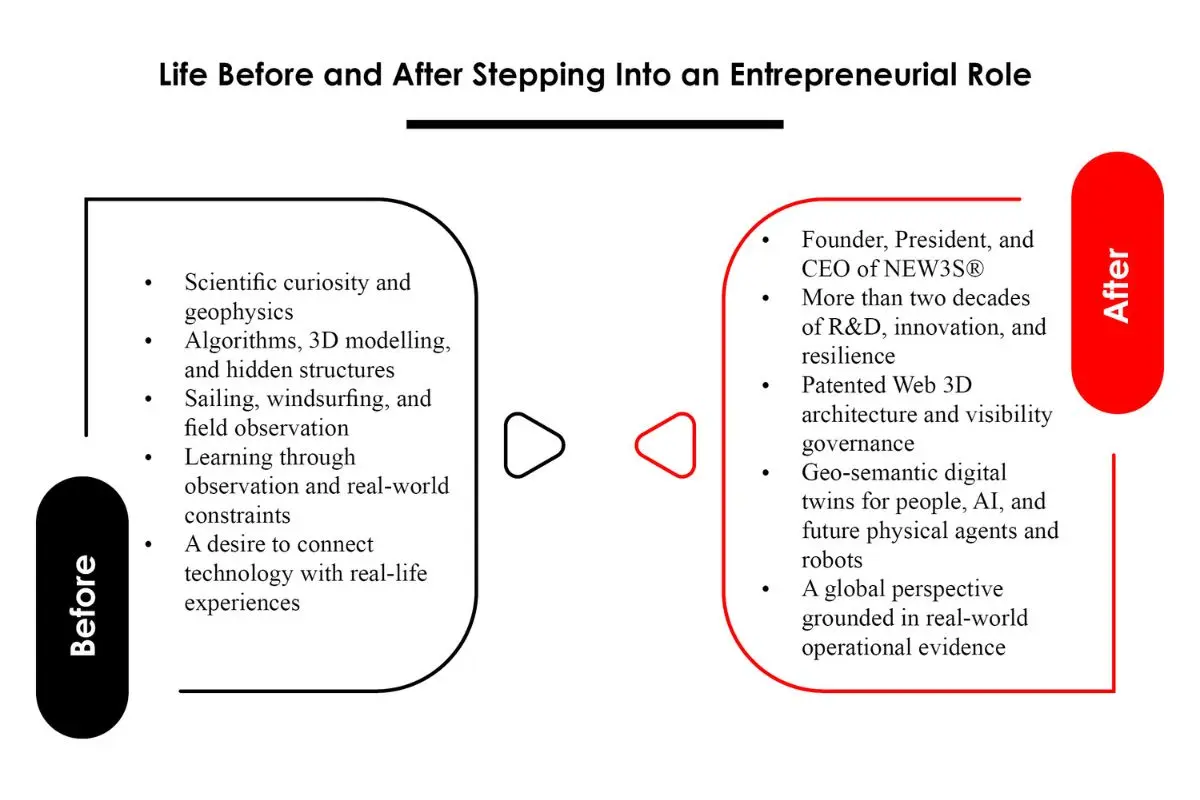
After
- Founder, President, and CEO of NEW3S®
- More than two decades of R&D, innovation, and resilience
- Patented Web 3D architecture and visibility governance
- Geo-semantic digital twins for people, AI, and future physical agents and robots
- A global perspective grounded in real-world operational evidence
Snapshot of daily routine
“I do not have a routine in the conventional sense. There are things I love to do, and there are things that are simply necessary—even when they are less enjoyable. Leadership means not confusing desire with responsibility.
I organise my days so that the unexpected can enrich them without compromising what must be achieved. The unplanned is often where a weak signal, a useful encounter or a new idea appears. But freedom only works when it is supported by discipline.”
An open letter to the future innovators
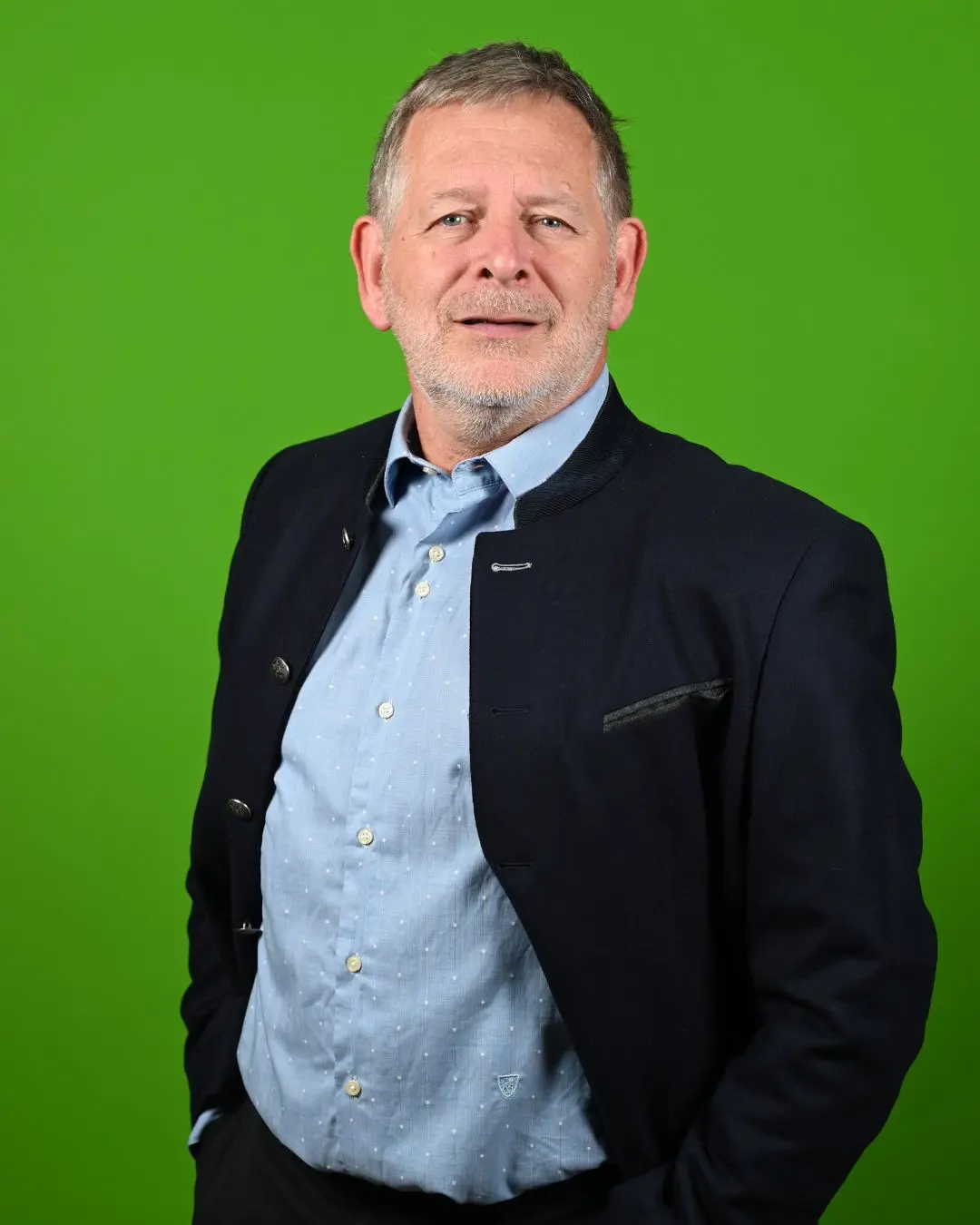
To business leaders, technology professionals, and the next generation of innovators:
I believe we must not confuse technological acceleration with progress. Immersive, geo-semantic, and 3D technologies should not create more digital noise or replace reality with simulation. They should make reality more understandable, accessible, trustworthy, and actionable.
The next technological frontier is not simply AI, 3D, or robotics, but the quality of the world these systems are able to understand. Machines can process images, vectors, coordinates, and sensor data, but they need spatial, temporal, semantic, ethical, and operational context to understand what truly matters.
That is why geo-semantics matters. It connects what exists to where it exists, its meaning, relationships, evolution, and what must be protected. We must build digital twins that make reality understandable without making it vulnerable, while protecting privacy, intellectual property, security, and human responsibility.
The future will belong to those who create trustworthy environments where people, AI, and robots can learn, cooperate, and act with discernment.
Hervé Heully,
Founder, President, and CEO of NEW3S®
Quick takes
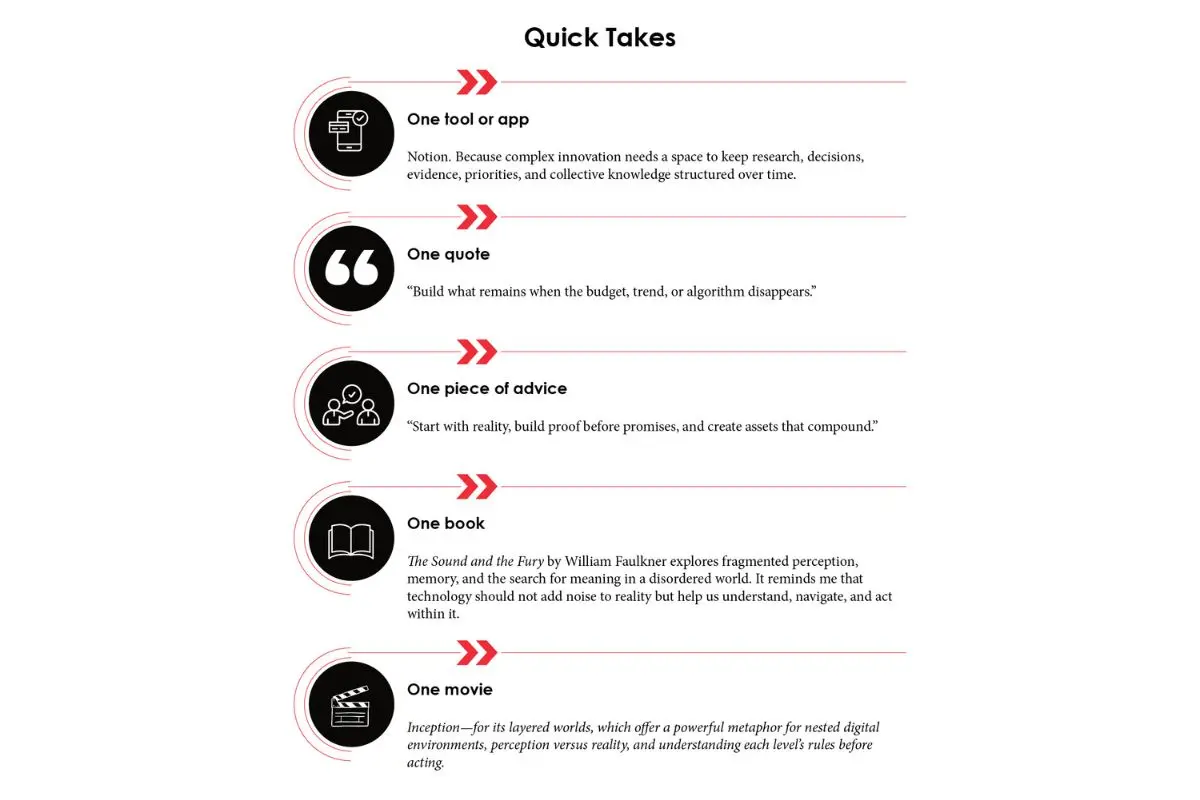
| One tool or app you would recommend | Notion. Because complex innovation needs a space to keep research, decisions, evidence, priorities, and collective knowledge structured over time. |
| One quote that motivates you | “Build what remains when the budget, trend, or algorithm disappears.” |
| One piece of advice | “Start with reality, build proof before promises, and create assets that compound.” |
| One book you recommend | The Sound and the Fury by William Faulkner explores fragmented perception, memory, and the search for meaning in a disordered world. It reminds me that technology should not add noise to reality but help us understand, navigate, and act within it. |
| One movie you recommend | Inception—for its layered worlds, which offer a powerful metaphor for nested digital environments, perception versus reality, and understanding each level’s rules before acting. |
Five principles behind Hervé Heully’s approach
- Start with reality and evidence: Understand real environments, challenges, and context before creating solutions.
- Build proof before promises: Test ideas in real situations and let results demonstrate their value.
- Connect information into useful knowledge: Bring together location, context, relationships, time, and evidence to make information clearer and more useful.
- Make technology useful and trustworthy: Improve access and understanding while protecting privacy, intellectual property, and sensitive information.
- Build value that lasts beyond trends: Focus on lasting systems and assets that remain valuable as technology, budgets, and markets change.