



At Kurukshetra, Arjuna reaches a point where he can no longer decide what to do. He is expected to fight, but the thought of going against his own family and teachers leaves him questioning his duty. Rather than act on impulse, he turns to Lord Krishna for counsel.
Arjuna’s dilemma raises a question that still matters to business leaders. How should a leader respond when the right course of action is unclear? A failing strategy, a conflict of interest, or a decision affecting hundreds of employees can test a leader’s judgment and ability to remain composed under pressure.
The Bhagavad Gita addresses many of these challenges through its teachings on clear thinking, self-discipline, and ethical conduct. The following verses offer lessons that leaders can draw on when facing difficult choices.
Bhagavad Gita Quotes To Help Business Leaders Handle Tough Times
1. Bhagavad Gita 2.47 – Focus on Your Actions, Not the Reward
Sanskrit
कर्मण्येवाधिकारस्ते मा फलेषु कदाचन।
मा कर्मफलहेतुर्भूर्मा ते सङ्गोऽस्त्वकर्मणि।।
Transliteration
Karmaṇy evādhikāras te mā phaleṣu kadācana;
mā karma-phala-hetur bhūr mā te saṅgo ‘stv akarmaṇi.
Meaning
You have a right to perform your actions, but not to control their results. Do not make the expected reward your only reason for acting, and do not become attached to inaction.
Application for Leaders
Losing a major contract after months of negotiation can put pressure on a sales team, especially when the next deal becomes critical. In that situation, resist the urge to push employees into making promises they cannot keep just to win another client.
Start by reviewing where the negotiation fell short. Was the proposal unclear? Did the team miss the client’s priorities? Use those findings to improve the next pitch and strengthen the team’s preparation. You cannot control every client’s decision, but you can set standards for how your team prepares, communicates, and handles each opportunity.
2. Bhagavad Gita 2.48 – Stay Balanced Through Success and Failure
Sanskrit
योगस्थः कुरु कर्माणि सङ्गं त्यक्त्वा धनञ्जय।
सिद्ध्यसिद्ध्योः समो भूत्वा समत्वं योग उच्यते।।
Transliteration
Yogasthaḥ kuru karmāṇi saṅgaṃ tyaktvā dhanañjaya;
siddhy-asiddhyoḥ samo bhūtvā samatvaṃ yoga ucyate.
Meaning
Perform your actions with steadiness and without attachment. Treat success and failure with an even mind. This balance is described as yoga.
Application for Leaders
A strong quarter can make expansion seem like the obvious next move. But before committing to new locations or a larger workforce, look closely at what drove the revenue increase. Did repeat customers contribute to it? Was it the result of a temporary market opportunity or a one-time contract? These details will help you judge whether the business can sustain further growth.
Apply the same discipline when results fall short. Review what went wrong before cutting costs or changing direction. The goal is to avoid letting either success or disappointment dictate your next move. Make decisions based on what the business needs, not on the emotions of the moment.
3. Bhagavad Gita 2.14 – Do Not Mistake a Difficult Phase for a Permanent Situation
Sanskrit
मात्रास्पर्शास्तु कौन्तेय शीतोष्णसुखदुःखदाः।
आगमापायिनोऽनित्यास्तांस्तितिक्षस्व भारत।।
Transliteration
Mātrā-sparśās tu kaunteya śītoṣṇa-sukha-duḥkha-dāḥ;
āgamāpāyino ‘nityās tāṃs titikṣasva bhārata.
Meaning
Experiences of pleasure and pain, like heat and cold, come and go. They are temporary, so learn to endure them.
Application for Leaders
Losing a major supplier just as demand picks up can disrupt production and put customer relationships at risk. If you are dealing with this situation, avoid rushing into an agreement with the first available supplier just to get operations moving again.
Start by assessing your alternatives, checking their ability to meet your quality and delivery requirements, and keeping customers informed about revised timelines. Once the immediate disruption is under control, review how much your business depends on a single supplier and build backup arrangements. Patience, in this context, means staying composed long enough to make sound decisions while taking practical steps to limit the damage.
4. Bhagavad Gita 2.41 – Do Not Chase Every Opportunity
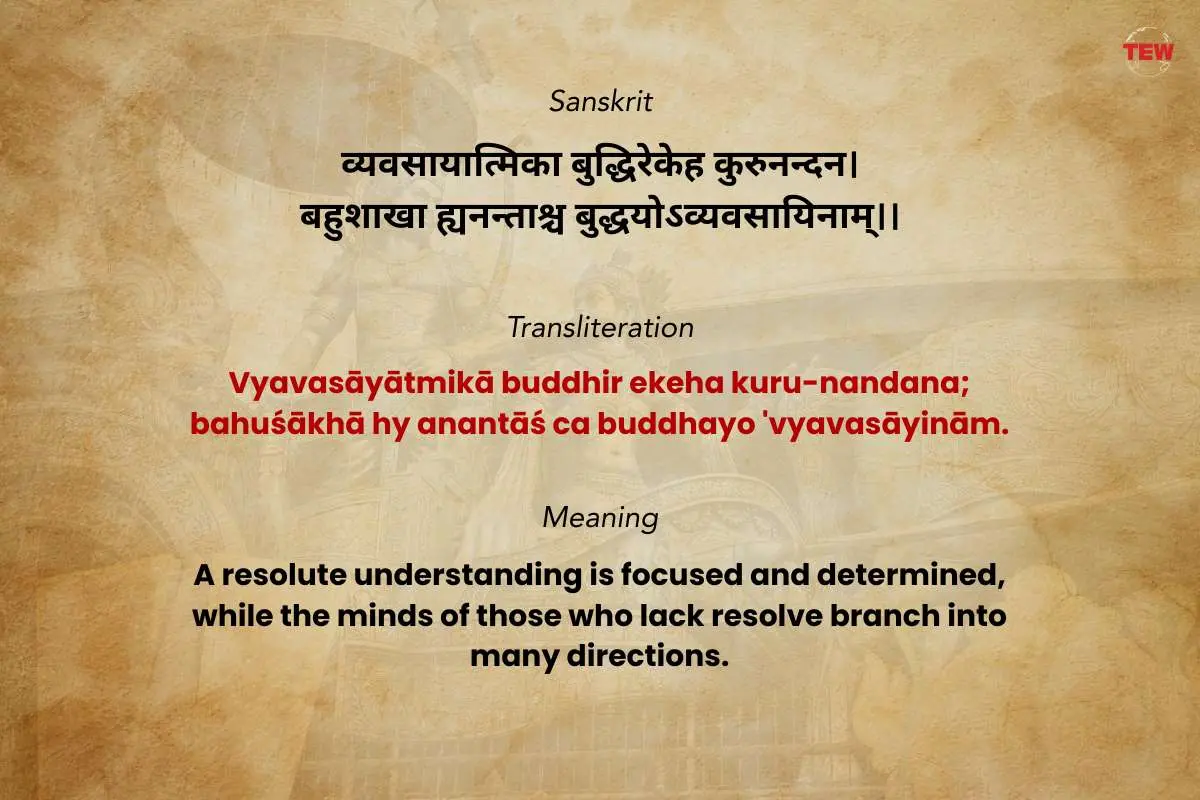
Sanskrit
व्यवसायात्मिका बुद्धिरेकेह कुरुनन्दन।
बहुशाखा ह्यनन्ताश्च बुद्धयोऽव्यवसायिनाम्।।
Transliteration
Vyavasāyātmikā buddhir ekeha kuru-nandana;
bahuśākhā hy anantāś ca buddhayo ‘vyavasāyinām.
Meaning
A resolute understanding is focused and determined, while the minds of those who lack resolve branch into many directions.
Application for Business Leaders
When your startup is pursuing several opportunities at once, it becomes difficult to give each one the attention it needs. You may have new product ideas, a partnership offer, plans to enter another market, and requests from a different customer segment. But if your team is already stretched, pursuing all of them can slow down the work that matters most.
Start by identifying the company’s main business goal. Then assess each opportunity against it. Which one serves your current customers? Which has a realistic chance of moving the business forward? Which can wait? You may need to postpone a promising partnership or set aside a product idea that does not fit your priorities. Your role is to give the team a clear direction, not keep adding to its list of competing priorities.
5. Bhagavad Gita 2.50 – Do Not Confuse Activity With Good Work
Sanskrit
बुद्धियुक्तो जहातीह उभे सुकृतदुष्कृते।
तस्माद्योगाय युज्यस्व योगः कर्मसु कौशलम्।।
Transliteration
Buddhi-yukto jahātīha ubhe sukṛta-duṣkṛte;
tasmād yogāya yujyasva yogaḥ karmasu kauśalam.
Meaning
A person guided by wisdom rises above the effects of good and bad actions. The verse describes yoga as skill in action.
Application for Leaders
When customer complaints increase, your first response might be to set a higher daily ticket-closure target. But if employees rush through cases to meet that number, customers may return with the same problems.
Look beyond the volume of tickets your team closes. Check whether employees are identifying the actual cause of complaints, giving accurate answers, and resolving issues properly. Adjust performance measures to reward effective resolutions, not just speed. A smaller number of properly resolved complaints can create more value than a high closure rate that leaves customers dissatisfied.
6. Bhagavad Gita 2.63 – Never Make an Important Decision in Anger
Sanskrit
क्रोधाद्भवति संमोहः संमोहात्स्मृतिविभ्रमः।
स्मृतिभ्रंशाद् बुद्धिनाशो बुद्धिनाशात्प्रणश्यति।।
Transliteration
Krodhād bhavati sammohaḥ sammohāt smṛti-vibhramaḥ;
smṛti-bhraṃśād buddhi-nāśo buddhi-nāśāt praṇaśyati.
Meaning
Anger gives rise to delusion. Delusion leads to confusion of memory, which damages judgment and can ultimately lead to a person’s downfall.
Application for Leaders
When a senior executive challenges your decision in a board meeting, it can be difficult to separate the criticism from the way it is delivered. You may feel tempted to remove that person from the project or dismiss their concerns immediately.
Pause before taking action. Examine whether the executive has found a genuine risk in your plan to enter a new market. If the concern has merit, address it before moving ahead. You can deal with disrespectful behaviour separately and in private. This way, you protect the quality of the decision instead of allowing anger to determine the outcome.
7. Bhagavad Gita 3.11 – Build Relationships Through Mutual Support
Sanskrit
देवान्भावयतानेन ते देवा भावयन्तु वः।
परस्परं भावयन्तः श्रेयः परमवाप्स्यथ।।
Transliteration
Devān bhāvayatānena te devā bhāvayantu vaḥ;
parasparaṃ bhāvayantaḥ śreyaḥ param avāpsyatha.
Meaning
Nourish the divine forces through your actions, and may those forces nourish you in return. By supporting and sustaining one another, you can attain the highest good.
Application for Leaders
If your business depends on suppliers, you cannot expect the relationship to work when only your company benefits. Asking suppliers to increase deliveries, lower prices, and accept longer payment periods may help your immediate costs, but it can put their operations under strain.
Build terms that allow both sides to operate reliably. Share demand forecasts early, pay invoices on time, communicate production changes, and negotiate prices that suppliers can sustain. When they have the stability to plan and invest in capacity, your business benefits too.
8. Bhagavad Gita 3.21 – Set the Standard You Expect Others to Follow
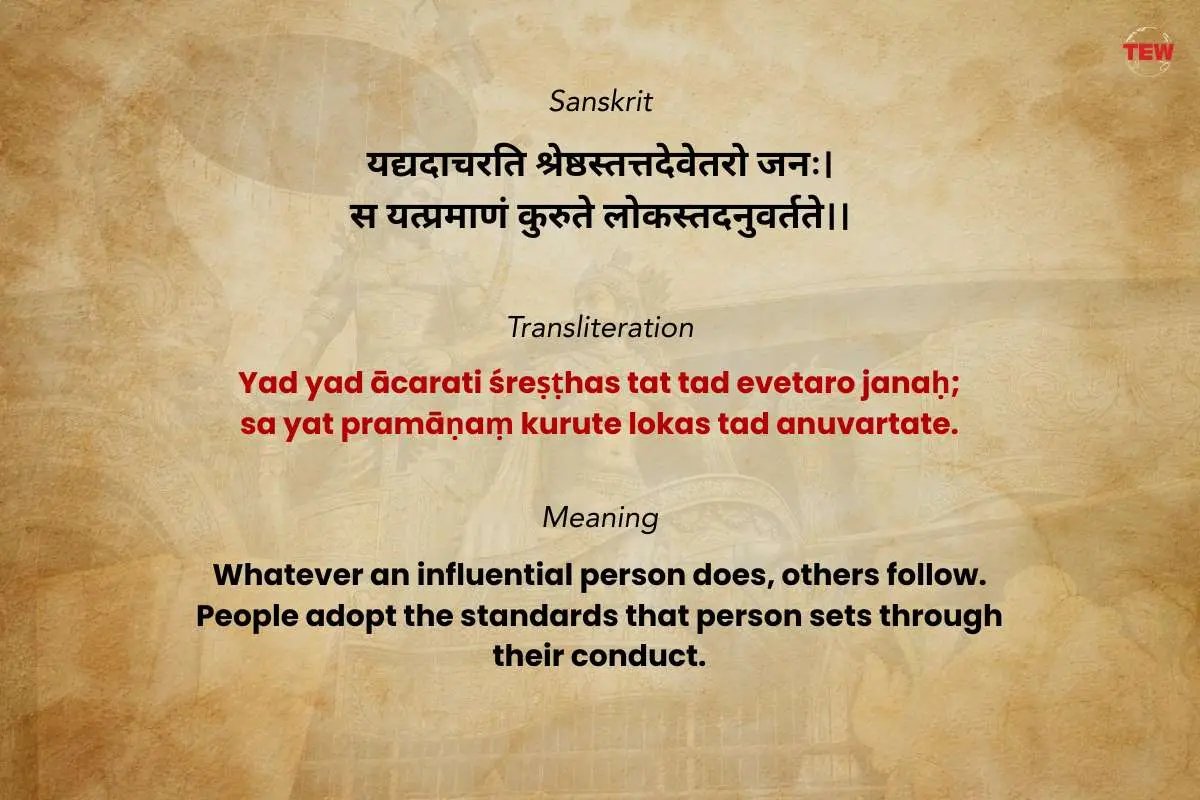
Sanskrit
यद्यदाचरति श्रेष्ठस्तत्तदेवेतरो जनः।
स यत्प्रमाणं कुरुते लोकस्तदनुवर्तते।।
Transliteration
Yad yad ācarati śreṣṭhas tat tad evetaro janaḥ;
sa yat pramāṇaṃ kurute lokas tad anuvartate.
Meaning
Whatever an influential person does, others follow. People adopt the standards that person sets through their conduct.
Application for Leaders
If you expect employees to respond to customer complaints within 24 hours, follow the same standard yourself. When managers ignore client messages, arrive late to meetings, or avoid accountability, employees notice the gap between what leaders say and what they do.
Start with the standards you set for your team. Respond to important requests on time, follow the same procedures, and acknowledge your own mistakes. Your conduct gives employees a clearer indication of what the organisation expects than a policy document or a reminder ever can.
9. Bhagavad Gita 3.26 – Guide People Without Creating Confusion
Sanskrit
न बुद्धिभेदं जनयेदज्ञानां कर्मसङ्गिनाम्।
जोषयेत्सर्वकर्माणि विद्वान् युक्तः समाचरन्।।
Transliteration
Na buddhi-bhedaṃ janayed ajñānāṃ karma-saṅginām;
joṣayet sarva-karmāṇi vidvān yuktaḥ samācaran.
Meaning
A wise person should not unsettle those who are attached to their work. Instead, by performing their own actions with discipline, they should encourage others to do the same.
Application for Leaders
When introducing a new system or process, do not assume that announcing the change is enough to get employees on board. If your sales team is unfamiliar with new software, an instruction to start using it immediately may lead to incomplete records, inconsistent use, and frustration.
Give employees a clear reason for the change and show them how to use the system in their daily work. Arrange practical training, invite questions, and address difficulties as they arise. Your own willingness to learn and use the new process will also set an example. People are more likely to adapt when they receive direction and support rather than pressure alone.
10. Bhagavad Gita 6.5 – Correct Your Own Shortcomings Before Blaming Others
Sanskrit
उद्धरेदात्मनाऽऽत्मानं नात्मानमवसादयेत्।
आत्मैव ह्यात्मनो बन्धुरात्मैव रिपुरात्मनः।।
Transliteration
Uddhared ātmanātmānaṃ nātmānam avasādayet;
ātmaiva hy ātmano bandhur ātmaiva ripur ātmanaḥ.
Meaning
One should raise oneself through one’s own efforts and not allow oneself to fall. The self can be one’s own friend or one’s own enemy.
Application for Leaders
If your management team rarely takes initiative, examine how much room you give people to make decisions. When every proposal needs your approval, instructions keep changing, and employees are criticised for reasonable mistakes, they may stop taking ownership of their work.
Start by reviewing your own management habits. Give team members clear areas of responsibility, explain the reasoning behind important decisions, and allow them to offer alternatives. You can still set boundaries and hold people accountable. But before blaming your team for a lack of initiative, make sure your leadership style gives them the confidence and freedom to act.
11. Bhagavad Gita 6.26 – Bring Your Attention Back to the Decision in Front of You
Sanskrit
यतो यतो निश्चरति मनश्चञ्चलमस्थिरम्।
ततस्ततो नियम्यैतदात्मन्येव वशं नयेत्।।
Transliteration
Yato yato niścarati manaś cañcalam asthiram;
tatas tato niyamyaitad ātmany eva vaśaṃ nayet.
Meaning
Whenever the restless and unsteady mind wanders, bring it back and place it under control.
Application for Leaders
When reviewing a major acquisition, give the decision your full attention. Messages about falling share prices, employee resignations, or production delays may demand attention, but allowing every update to interrupt the discussion can leave important details unchecked.
Set aside a specific time for the acquisition review and ask your team to focus on its financial, operational, and legal risks. Record unrelated issues for follow-up rather than allowing them to derail the discussion. Once the review is complete, return to those matters. Bringing your attention back to the task at hand helps you examine decisions more carefully.
Read More: The Wisdom of Bhagavad Gita for Work-Life Balance
12. Bhagavad Gita 6.35 – Develop Mental Discipline Through Practice
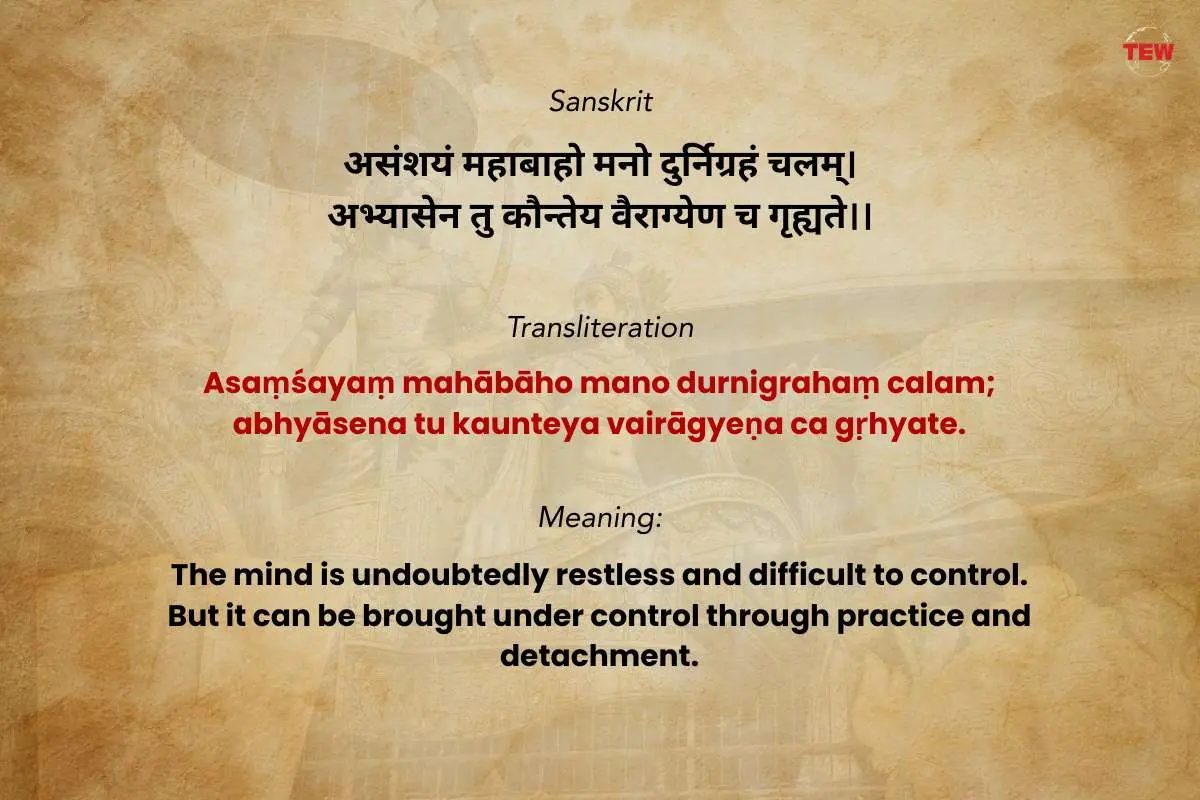
Sanskrit
असंशयं महाबाहो मनो दुर्निग्रहं चलम्।
अभ्यासेन तु कौन्तेय वैराग्येण च गृह्यते।।
Transliteration
Asaṃśayaṃ mahābāho mano durnigrahaṃ calam;
abhyāsena tu kaunteya vairāgyeṇa ca gṛhyate.
Meaning
The mind is undoubtedly restless and difficult to control. But it can be brought under control through practice and detachment.
Application for Leaders
If you become defensive whenever an employee questions your decision, working on that reaction takes more than a promise to stay calm. You need to practise responding differently, especially in situations where you feel challenged.
Before important meetings, prepare for questions that may test your position. During the discussion, let others finish speaking and consider their arguments before responding. Afterward, review how you handled the exchange and where you could have reacted better. Repeating these habits can help you develop greater composure over time. It is a quality built through practice, not one that comes automatically with a leadership role.
13. Bhagavad Gita 6.32 – Consider the People Affected by Your Decisions
Sanskrit
आत्मौपम्येन सर्वत्र समं पश्यति योऽर्जुन।
सुखं वा यदि वा दुःखं सः योगी परमो मतः।।
Transliteration
Ātmaupamyena sarvatra samaṃ paśyati yo ‘rjuna;
sukhaṃ vā yadi vā duḥkhaṃ sa yogī paramo mataḥ.
Meaning
A person who sees the happiness and suffering of others in relation to their own is considered highly developed in yoga.
Application for Leaders
A decision to move customer support operations to another city may reduce costs, but it can also force employees to relocate or leave their jobs. Before approving the proposal, look beyond the projected savings and assess what the change will mean for the people affected.
Ask whether relocation assistance is possible, whether some roles can remain remote, or whether the savings can be achieved through another arrangement. Involve the relevant teams before finalising the plan. The financial case matters, but so does the impact on employees who will have to live with the decision.
14. Bhagavad Gita 12.13 – Correct Mistakes Without Humiliating People
Sanskrit
अद्वेष्टा सर्वभूतानां मैत्रः करुण एव च।
निर्ममो निरहङ्कारः समदुःखसुखः क्षमी।।
Transliteration
Adveṣṭā sarva-bhūtānāṃ maitraḥ karuṇa eva ca;
nirmamo nirahaṅkāraḥ sama-duḥkha-sukhaḥ kṣamī.
Meaning
A person dear to the Divine is free from hatred, friendly and compassionate, without possessiveness or ego, balanced in happiness and sorrow, and forgiving.
Application for Leaders
When an employee makes a costly mistake, address the problem without turning the conversation into a personal attack. If an error in a client proposal puts an account at risk, establish what went wrong and what needs to be corrected before assigning blame.
Speak to the employee privately, explain the consequences, and agree on steps to prevent a repeat. This may involve additional training, a stronger review process, or a formal warning if the situation calls for it. You can maintain high performance standards without humiliating people. Treating employees with dignity does not mean overlooking their mistakes; it means correcting them fairly.
15. Bhagavad Gita 16.3 – Stand Firm Without Letting Pride Dictate Your Response
Sanskrit
तेजः क्षमा धृतिः शौचमद्रोहो नातिमानिता।
भवन्ति सम्पदं दैवीमभिजातस्य भारत।।
Transliteration
Tejaḥ kṣamā dhṛtiḥ śaucam adroho nātimānitā;
bhavanti sampadaṃ daivīm abhijātasya bhārata.
Meaning
Vigour, forgiveness, fortitude, purity, freedom from malice, and the absence of excessive pride are qualities associated with a divine nature.
Application for Leaders
When a competitor threatens your market share, pressure to respond quickly can lead your team towards aggressive tactics. If a proposed advertising campaign includes claims about a competitor that your company cannot verify, do not approve it simply because it promises attention.
Ask your team to build the response around evidence. Highlight product strengths, customer service, and performance that your company can demonstrate. You may need to challenge an approach that others support, but protecting your company’s credibility is more valuable than winning a short-term publicity battle.
16. Bhagavad Gita 16.21 – Do Not Allow Greed to Justify Unethical Decisions
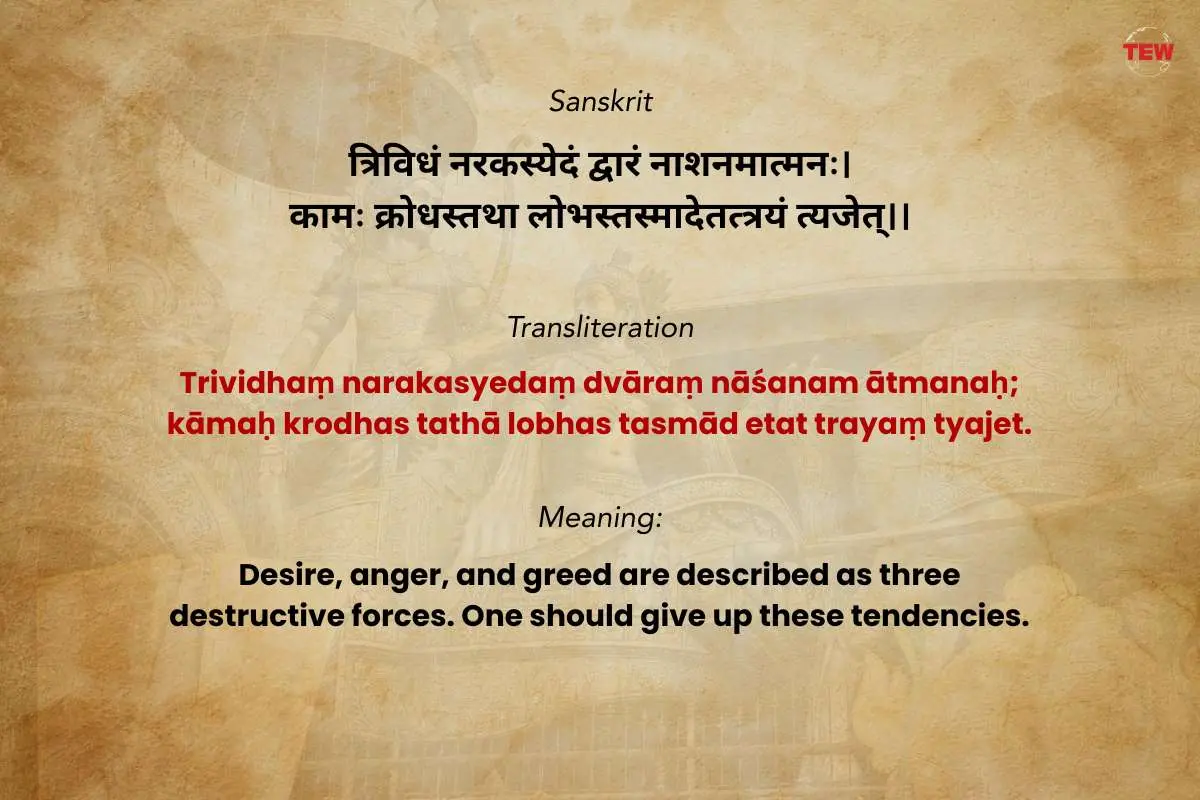
Sanskrit
त्रिविधं नरकस्येदं द्वारं नाशनमात्मनः।
कामः क्रोधस्तथा लोभस्तस्मादेतत्त्रयं त्यजेत्।।
Transliteration
Trividhaṃ narakasyedaṃ dvāraṃ nāśanam ātmanaḥ;
kāmaḥ krodhas tathā lobhas tasmād etat trayaṃ tyajet.
Meaning
Desire, anger, and greed are described as three destructive forces. One should give up these tendencies.
Application for Leaders
If a supplier offers you an expensive personal gift while competing for a long-term contract, treat it as a potential conflict of interest, even if their bid appears competitive. Accepting the gift could influence your judgment or make the selection look unfair to other bidders.
Refuse the offer, disclose it through the appropriate company process, and ensure that every supplier is assessed against the same criteria. Keep the decision focused on price, quality, reliability, and the company’s actual requirements. A profitable contract should never depend on a personal benefit to the person approving it.
17. Bhagavad Gita 17.15 – Tell People What They Need to Hear With Respect
Sanskrit
अनुद्वेगकरं वाक्यं सत्यं प्रियहितं च यत्।
स्वाध्यायाभ्यसनं चैव वाङ्मयं तप उच्यते।।
Transliteration
Anudvega-karaṃ vākyaṃ satyaṃ priya-hitaṃ ca yat;
svādhyāyābhyasanaṃ caiva vāṅ-mayaṃ tapa ucyate.
Meaning
Speech that does not cause unnecessary distress, is truthful, pleasant, and beneficial, along with regular study, is described as discipline of speech.
Application for Leaders
When your company has to announce an office closure, employees deserve a clear explanation rather than vague assurances. Prepare the communication around what has been decided, why the closure is happening, who will be affected, and what support will be available.
Be honest about what you know and what is still being worked out. Give employees a chance to ask questions, and avoid making promises that management cannot guarantee. You may not be able to make difficult news easier to hear, but you can communicate it without adding uncertainty or disrespect.
18. Bhagavad Gita 18.14 – Examine All the Factors Behind a Result
Sanskrit
अधिष्ठानं तथा कर्ता करणं च पृथग्विधम्।
विविधाश्च पृथक्चेष्टा दैवं चैवात्र पञ्चमम्।।
Transliteration
Adhiṣṭhānaṃ tathā kartā karaṇaṃ ca pṛthag-vidham;
vividhāś ca pṛthak ceṣṭā daivaṃ caivātra pañcamam.
Meaning
The Gita identifies five factors involved in the accomplishment of an action: the basis or setting, the agent, the instruments, the various efforts, and the divine factor.
Application for Leaders
When a product launch is delayed, resist the urge to hold one person responsible before reviewing the entire process. The project manager may have missed a deadline, but late design approvals, component shortages, changing requirements, or delayed testing may also have contributed.
Map the events that led to the delay. Find which decisions were within each person’s control, where teams lacked the resources they needed, and which processes caused avoidable setbacks. Hold people accountable for their part, but do not let individual blame distract you from fixing wider problems.
19. Bhagavad Gita 18.26 – Give Credit to the Work, Not Your Own Ego
Sanskrit
मुक्तसङ्गोऽनहंवादी धृत्युत्साहसमन्वितः।
सिद्ध्यसिद्ध्योर्निर्विकारः कर्ता सात्त्विक उच्यते।।
Transliteration
Mukta-saṅgo ‘nahaṃ-vādī dhṛty-utsāha-samanvitaḥ;
siddhy-asiddhyor nirvikāraḥ kartā sāttvika ucyate.
Meaning
A person who acts without attachment or ego, has firmness and enthusiasm, and remains steady in success and failure is described as a sattvic agent.
Application for Leaders
When your company receives an industry award or completes a successful product launch, make sure the recognition reaches the people behind the result. Acknowledge the engineers who developed the product, the designers who refined it, and the sales and support teams who helped bring it to customers.
Give specific credit rather than making a general statement about teamwork. Also, recognise the effort involved when a project does not succeed. A leader who remains steady through both outcomes and does not make every achievement about personal credit creates a healthier standard for the organisation.
20. Bhagavad Gita 18.30 – Know When Refusing an Opportunity Is the Right Decision
Sanskrit
प्रवृत्तिं च निवृत्तिं च कार्याकार्ये भयाभये।
बन्धं मोक्षं च या वेत्ति बुद्धिः सा पार्थ सात्त्विकी।।
Transliteration
Pravṛttiṃ ca nivṛttiṃ ca kāryākārye bhayābhaye;
bandhaṃ mokṣaṃ ca yā vetti buddhiḥ sā pārthā sāttvikī.
Meaning
The intellect that understands when to act and when to refrain, what ought to be done and what ought not to be done, and what leads towards bondage or freedom is considered sattvic.
Application for Leaders
An opportunity to enter a new market can look attractive when it promises quick revenue, but the choice of business partner matters just as much. If a potential partner has a poor record of labour practices, examine the risks before committing your company to the deal.
Review the partner’s conduct, check the legal and reputational implications, and establish whether the concerns can be addressed. Do not let the fear of losing the opportunity rush the decision. If the partnership conflicts with your company’s standards and there is no credible way to resolve the issues, be prepared to walk away. Sound judgment includes knowing when not to act.
A Note to Readers: Sanskrit transliterations use a simplified IAST format for readability. English meanings are concise interpretations of the original verses.
Read More: Feeling Divided? 45 Inspirational Unity Quotes That Will Bring Us Together
Conclusion
When you face a difficult business decision, the Gita asks you to examine your motives, fulfil your responsibilities, and keep fear, anger, or personal gain from clouding your judgment.
Before making a difficult decision, pause and examine your responsibilities. When emotions run high, give yourself time to respond thoughtfully. When a setback occurs, focus on what you can learn and improve rather than dwelling on the outcome.
You can also revisit these verses during team discussions or use them to reflect on your own leadership choices. Choose one lesson that speaks to your current challenge and put it into practice. Consistent action is what turns these teachings into better leadership.
Frequently Asked Questions
1. What does the Bhagavad Gita say about work-life balance?
The Gita encourages people to perform their duties with discipline while maintaining control over their thoughts and desires. This can help individuals approach professional and personal responsibilities with greater balance.
2. Which Bhagavad Gita verse teaches the importance of hard work?
Bhagavad Gita 2.47 teaches that people have control over their actions, but not over the results. It encourages consistent effort without becoming attached to the outcome.
3. What are the qualities of a good leader according to the Bhagavad Gita?
The Gita highlights qualities such as wisdom, humility, compassion, self-control, and consistency in action.
4. Can the Bhagavad Gita be applied to modern management?
Yes. Its teachings can guide managers in handling conflict, leading teams, managing pressure, and making ethical decisions.
Sources:
- Heritage IIT Kanpur, Śrīmad Bhagavad Gītā: Sanskrit text, transliterations, translations, and traditional commentaries.
- Center for Creative Leadership, Crisis Leadership Guidebook: Practical guidance on communication and leadership during a crisis.
- Harvard Business Review, Hold On to Your Authenticity Under Pressure — Advice on leading through uncertainty and competing expectations.
- B. Mahadevan, Leadership Lessons from Bhagavad Gita (2012), Indian Institute of Management Bangalore.
- Usha Jaiswal and Karanam N. Rao, Leadership Lessons from Bhagavad Gita (2014), Dev Sanskriti Interdisciplinary International Journal.