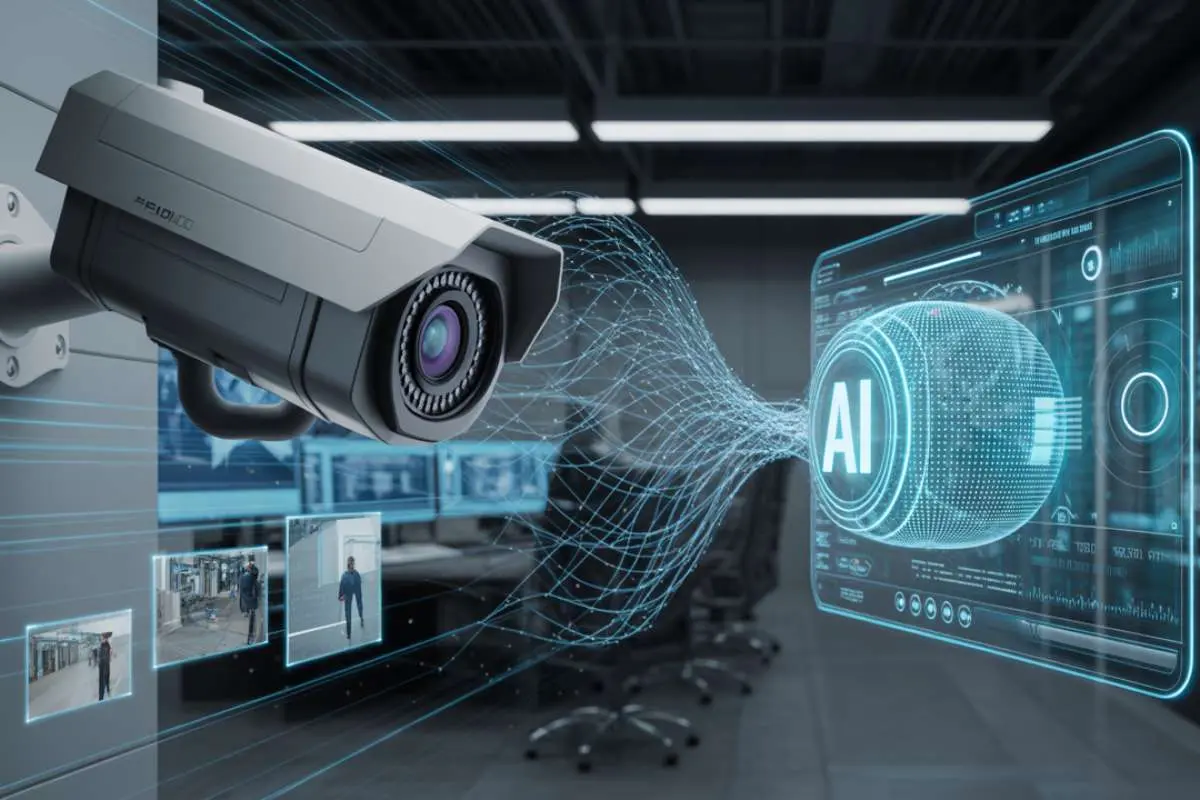
In an epoch defined by technological acceleration and societal complexity, the notion of safety, particularly within educational institutions—demands not merely incremental refinement but a paradigmatic re-imagination. Campuses, those crucibles of intellectual ferment, are increasingly confronted with a disquieting paradox: while they nurture minds, they are not impermeable to threats that imperil the physical and psychological well-being of their occupants. For women and children especially, vulnerability is neither conjectural nor geographically circumscribed: it is a global, persistent reality.
Against this backdrop, AI-powered surveillance: augmented by smart CCTV and integrated emergency response systems, emerges as a judicious synthesis of technological sophistication and humanitarian intent, transforming campuses into intelligent, responsive ecosystems capable of anticipating and mitigating risk
A Global Consensus: Safety as a Foundational Right
The urgency of safe educational ecosystems continues to be reinforced by global institutions. The World Health Organization (WHO) on violence prevention reiterates that violence against children remains a global public health crisis, with schools and campuses requiring structured safety interventions.
UNICEF’s “Global Outlook for Children”, highlights that unsafe environments—both physical and digital—continue to impede learning outcomes and disproportionately affect girls’ education and well- being. Further, UN Women (2024), “Safe Cities and Public Spaces Programme”, emphasizes the growing role of AI-enabled surveillance and smart infrastructure in reducing harassment and improving women’s safety in public and institutional environments. Additionally, UNESCO (2023), “Technology in Education: A Tool on Whose Terms?”, underscores the importance of deploying technology responsibly to create inclusive and secure learning ecosystems.The consensus is unmistakable: future-ready campuses must embed intelligence into safety infrastructure.
India’s Reality: A Landscape of Urgency

India continues to witness evolving safety challenges within educational ecosystems. The National Crime Records Bureau (NCRB, 2023) report indicates sustained concerns regarding crimes against women, including incidents linked to institutional and semi-public environments. The University Grants Commission (UGC, 2024 advisories) has further strengthened its directives, urging higher education institutions to adopt AI-enabled surveillance, biometric access, and real-time monitoring systems to enhance campus safety. Mental health concerns remain equally pressing. The All India Survey on Higher Education (AISHE, 2022–23) and Ministry of Education (2024) highlight increasing stress levels among students and the continued need for proactive intervention systems.
AI-enabled CCTV, in such contexts, can detect behavioural anomalies—such as prolonged isolation, unusual movement patterns, or presence in high-risk zones—and trigger alerts, enabling timely intervention.
Developed Nations: Intelligent Surveillance in Practice
Across developed nations, AI-powered surveillance has transitioned from experimentation to implementation.The U.S. Department of Education (2024 School Safety Initiative) emphasizes integrating AI-based threat detection systems across campuses, including behavioural analytics and emergency response integration. In the United Kingdom, the Home Office (2023–2025 Safer Streets Programme) continues to expand smart surveillance deployments in university towns and public institutions. Singapore’s Smart Nation 2025 Vision exemplifies the seamless integration of AI surveillance with urban infrastructure, including educational campuses capable of detecting anomalies such as falls, suspicious activity, and crowd irregularities in real time.
These developments signal a decisive shift toward predictive and responsive safety ecosystem.
Smart CCTV: From Observation to Intervention
Traditional CCTV systems are retrospective. AI-powered smart CCTV systems, however, operate with real-time analytical intelligence. Their capabilities include:
- Detection of loitering in sensitive zones
- Identification of stalking or suspicious following behavior
- Monitoring unauthorized access to restricted areas
- Recognition of distress signals and abnormal inactivity
- Effective performance in low-light and complex environments
Such systems transform surveillance into a proactive and preventive mechanism, rather than a passive evidentiary tool.
University Campus Scenarios: Safety in Action
- Women’s Hostel Security: AI systems detect unauthorized presence near hostel premises and trigger immediate alerts, significantly reducing intrusion risks.
- Late-Night Academic Mobility: Smart surveillance ensures safe movement across campus pathways, particularly during late hours.
- Suicide Prevention: AI identifies repeated visits to high-risk locations and unusual behavioral patterns, enabling intervention by campus authorities.
- Anti-Ragging Monitoring: AI detects aggressive group behaviour in concealed areas, supporting enforcement of anti-ragging regulations.
- Medical Emergencies: Real-time detection of falls or collapses ensures rapid medical response.
Emergency Response Systems: Intelligence Beyond Surveillance
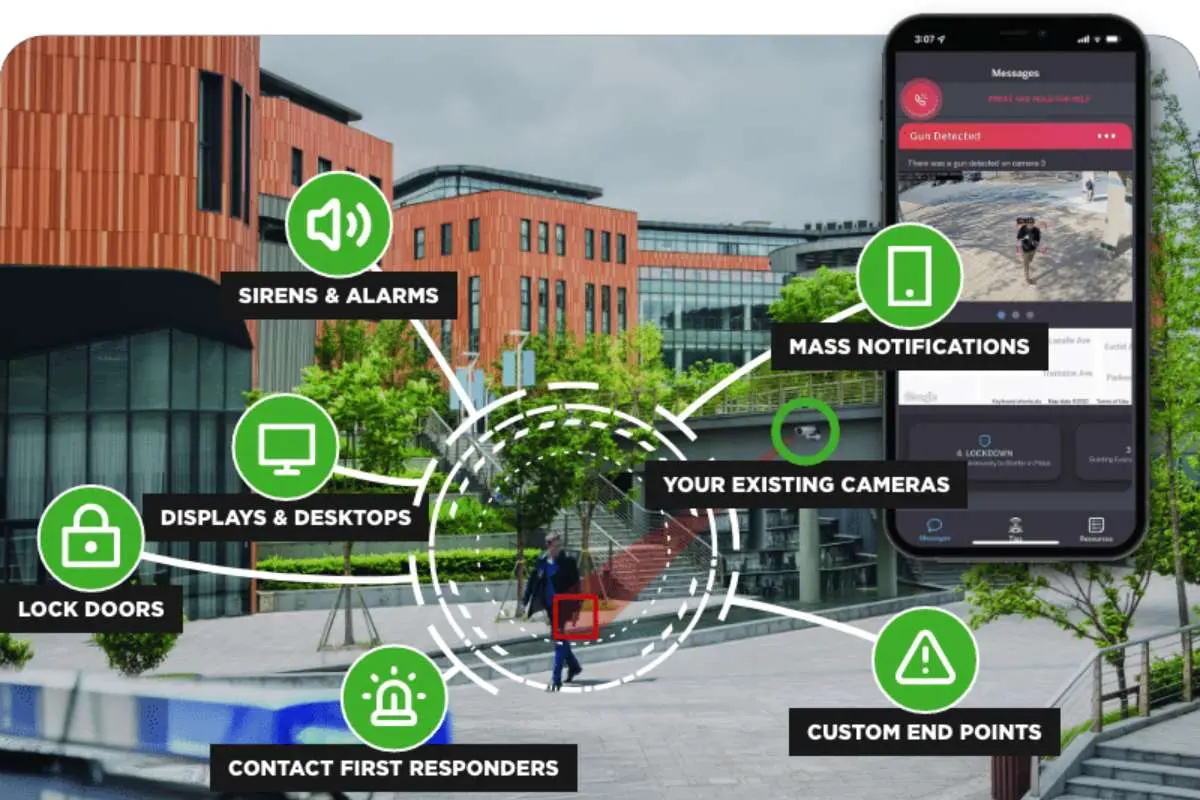
The true potential of AI-powered surveillance is realized when integrated with comprehensive emergency response systems, enabling campuses to respond to crises with speed, precision, and coordination.
- Fire Detection: As per the guidelines of the National Disaster Management Authority (NDMA, reinforced in 2023), AI systems can detect smoke at its inception, activate alarms, and coordinate evacuation procedures with remarkable efficiency.
- Gas Leakages: In alignment with the standards of the National Fire Protection Association (NFPA, 2023, United States), AI-integrated sensors can identify abnormal gas concentrations, automatically shut off supply lines, and alert authorities instantly.
- Earthquake Response: Based on Japan Cabinet Office Disaster Management updates (2023), AI systems can initiate automated safety protocols such as unlocking exits and halting elevators.
- Infrastructure Failures: AI systems can proactively detect electrical faults, water leakages, and structural risks, enabling preventive maintenance.
Technology Enablers: Building the Smart Campus
The shift toward intelligent, safety-focused campuses is being driven by leading technology providers offering complementary solutions. Buildtrack combines IoT automation with AI- powered surveillance, enabling real-time video analytics, anomaly detection, and integrated emergency responses through a unified system.
Schneider Electric’s EcoStruxure platform connects energy management, automation, and security, using AI to optimize building performance and ensure coordinated safety operations. Honeywell specializes in AI-driven safety systems, delivering early hazard detection and rapid automated responses—critical for high-density environments. Meanwhile, ABB strengthens campus infrastructure with advanced electrification and automation, ensuring reliability and effective emergency handling.
Together, these technologies create a cohesive, AI-enabled ecosystem where surveillance, automation, and safety systems work seamlessly—transforming campuses into proactive, resilient, and secure environments centered on human well-being.
Empowering Women: From Safety to Participation

The impact of enhanced campus safety extends directly into gender inclusion. The World Bank (2024), Women, Business and the Law, highlights that safety concerns remain a major constraint on women’s education and workforce participation. UN Women (2023–2024) further emphasize that safe infrastructure significantly improves women’s mobility, retention, and participation.
AI-enabled campuses can:
- Increase female enrolment and retention
- Enable participation in residential and research programs
- Support safe late-hour academic engagement
- Strengthen trust among families
Safety thus becomes an enabler of opportunity.
From Campus Safety to Workforce Parity
The International Labour Organization (2024) reports that gender disparities in workforce participation persist globally, with safety being a key determinant. AI-powered surveillance contributes to bridging this gap by ensuring secure educational pathways, thereby enabling more women to transition confidently into the workforce. Recent McKinsey (2023) analyses reaffirm that advancing gender equality could contribute trillions to global GDP—underscoring the economic significance of safety-led inclusion.
Ethics and Responsibility: A Necessary Equilibrium

The deployment of AI surveillance must remain anchored in ethical governance. Frameworks such as the General Data Protection Regulation (GDPR) and India’s Digital Personal Data Protection Act (2023) emphasize transparency, accountability, and data security.
Institutions must ensure:
- Transparent and purpose-driven deployment
- Strict adherence to privacy regulations
- Secure data management systems
- Robust oversight mechanisms
The objective remains responsible protection, not intrusive surveillance.
Conclusion: Toward Intelligent and Inclusive Campuses
AI-powered surveillance, integrated with smart CCTV and emergency response systems, represents a transformative leap in campus safety. It redefines security from a reactive necessity to a proactive, intelligent framework.
From safeguarding women and children to preventing crises and enabling workforce participation, its impact is both immediate and far-reaching. Ultimately, a truly smart campus is one where safety is seamless, intelligence is embedded, and opportunity is universal. For in that assurance lies the foundation of equality and the promise of a world where individuals can learn, grow, and work in environments defined not by fear, but by dignity and trust.
About the Author

Dr. Rini is a distinguished academician and business strategist with a PhD in Marketing Management from the University Business School (UBS), Panjab University (PU). A Gold Medallist in her MBA with a specialization in IT & Telecom from Panjab University, she brings strong academic grounding and analytical rigor. She has an established academic profile with numerous international publications and paper presentations at reputed global conferences. Complementing her academic achievements, Dr. Rini has extensive industry experience, having worked with leading telecom organizations such as Vodafone, Reliance Communications, and TATA Teleservices. This unique blend of academia and industry has strengthened her expertise in emerging technologies, particularly Artificial Intelligence (AI) and the Internet of Things (IoT). She has authored insightful articles in prominent hospitality and industry publications, including The Academic Insights, HRANI Hospitality, Hotels and Restaurants Network, Hotel-Talk, and Hotel Business Review, focusing on AI and IoT applications in the hospitality sector. Currently, she serves as an academician at Panjab University, and as a Business Strategy Consultant to AI- and IoT-based startups. A staunch supporter of sustainable living, she advocates responsible, technology-driven growth.