Key Takeaway:
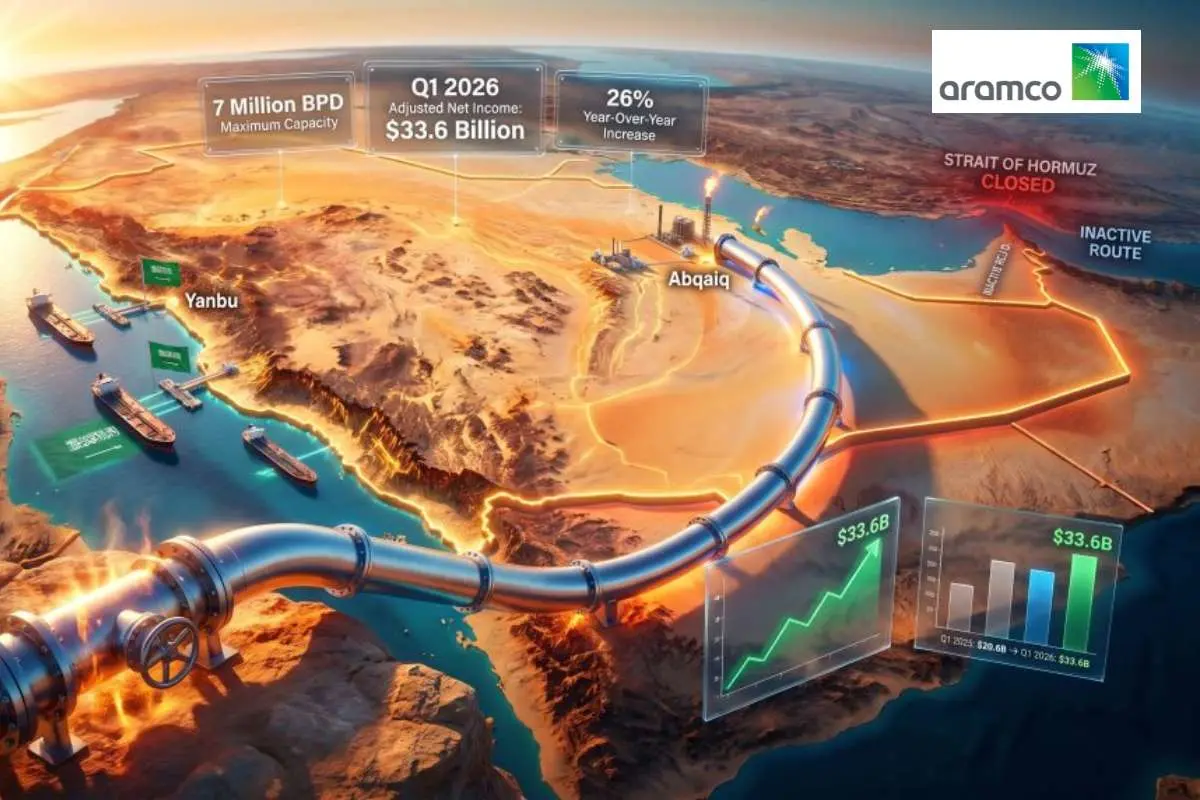
- Net income rose to $33.6 billion, driven by surging Brent crude prices hitting $118/barrel.
- The East-West Pipeline reached its 7M bpd limit, rerouting exports to the Red Sea port of Yanbu.
- Aramco maintained a $21.9 billion dividend, crucial for Saudi Arabia’s “Vision 2030” state spending.
Saudi Aramco reported a 26% rise in first-quarter profit to $33.6 billion as its aramco east-west pipeline maintained exports during conflict-related disruptions in the Strait of Hormuz, despite attacks on regional energy infrastructure.
Pipeline Keeps Oil Flowing Amid Gulf Conflict
The world’s largest oil producer said revenue increased nearly 7% year over year to $115.5 billion during the first three months of 2026. The gains came as fighting linked to the ongoing U.S.-Iran conflict disrupted shipping routes through the Strait of Hormuz, a critical passage for global energy supplies.
Aramco said its east-west pipeline reached full capacity of 7 million barrels per day, allowing oil shipments from the kingdom’s eastern oil fields to the Red Sea port of Yanbu. The aramco east-west pipeline enabled exports to continue even as Gulf ports faced interruptions.
“Our east-west pipeline has proven itself to be a critical supply artery,” Aramco President and Chief Executive Amin Nasser said in a company statement. He said the pipeline helped reduce the effects of shipping constraints in the Strait of Hormuz and maintained supplies for customers worldwide.
The Strait of Hormuz normally handles about one-fifth of global oil and gas shipments. Trade through the waterway has been severely limited since late February following the escalation of military tensions between the United States and Iran.
Energy Prices Climb as Market Faces Uncertainty
The disruption in Gulf shipping has pushed global oil prices sharply higher. Brent crude, the international oil benchmark, is trading near $100 per barrel, roughly 40% above levels seen before the conflict began.
Nasser warned that oil markets could take months to stabilize even if shipping resumes immediately through the strait.
“If trade flows resume immediately or today through the Strait of Hormuz, it will take a few months for the oil market to rebalance,” Nasser said in comments emailed to Bloomberg.
He added that if restrictions continue beyond several weeks, supply disruptions may persist into 2027. Analysts have warned that prolonged instability in the Gulf could increase inflationary pressure on energy-importing economies and tighten global fuel supplies. The continued operation of the aramco east-west pipeline could therefore remain critical for global energy markets.
The comments came as the United States awaited Iran’s response to proposals for an interim agreement to ease the conflict. Recent military activity has continued near the strait following President Donald Trump’s announcement and temporary suspension of a naval operation intended to reopen the shipping corridor.
Dividend Supports Saudi Government Spending
Aramco said it would maintain its quarterly dividend at $21.9 billion after raising the payout by 3.5% late last year. Saudi Arabia depends heavily on Aramco’s earnings and dividends to support state spending and economic development projects.
The Saudi government directly owns more than 80% of Aramco, while the kingdom’s sovereign wealth vehicle, the Public Investment Fund, holds an additional 16% stake. The continued strength of the aramco east-west pipeline remains important to Saudi Arabia’s broader energy and economic strategy.
Headquartered in Dhahran, Aramco employs more than 76,000 people worldwide and remains one of the largest oil producers and most valuable energy companies globally.