


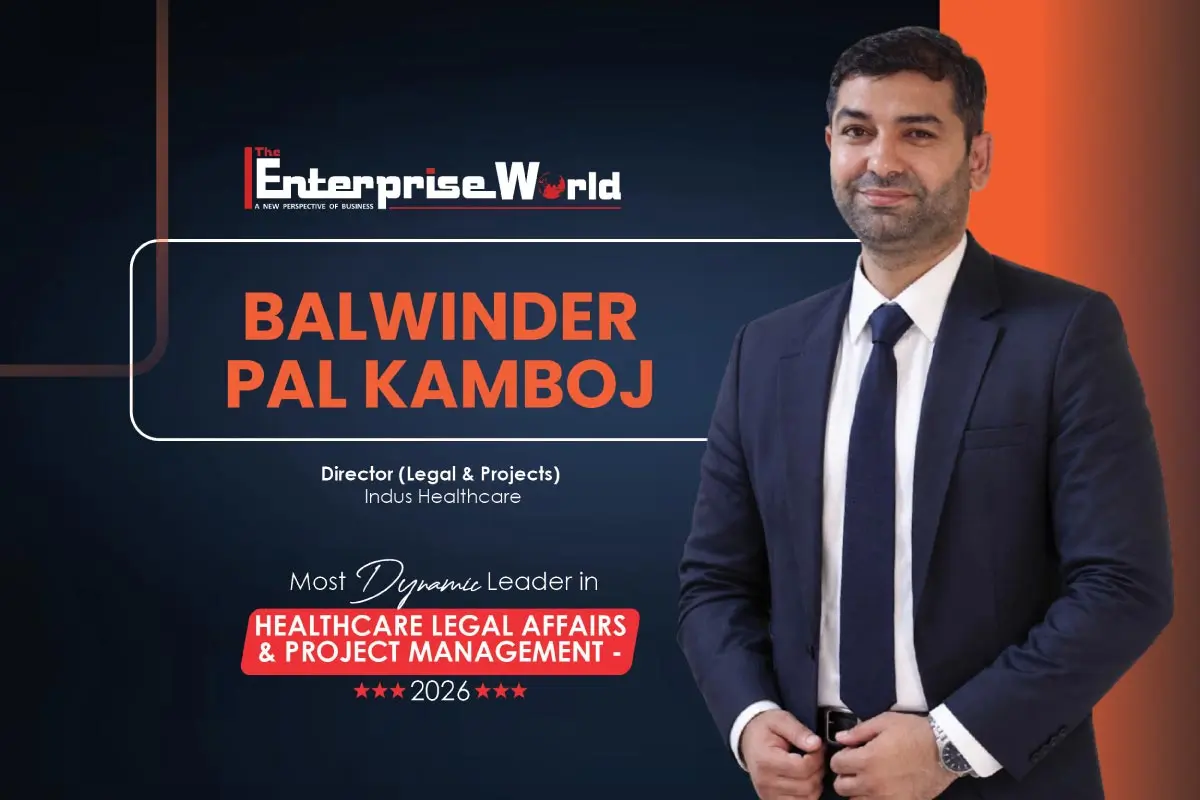
The healthcare industry stands at a critical crossroads, where rapid technological advancement, evolving regulatory frameworks, and rising patient expectations are fundamentally reshaping how care is delivered. Amidst this transformation, the need to balance responsible innovation with trust, compliance, and ethical governance has never been more urgent. It is within this complex landscape that Balwinder Pal Kamboj, Director (Legal & Projects) at Indus Healthcare, has emerged as a leader of rare clarity and conviction.
His journey from the hospital reception desk to the boardroom is a testament to continuous learning, cross-functional expertise, and unwavering integrity. With over two decades of experience spanning legal affairs, project management, mergers and acquisitions, and regulatory compliance, Kamboj has been an important contributor to Indus Healthcare’s journey from a modest 20-bed facility into a trusted network of eight hospitals with more than 700 beds, working alongside the organization’s leadership and multidisciplinary teams. Honoured as one of the Top 10 Chief Legal Officers of India in 2024 by Business Prizm, his leadership philosophy challenges the conventional view of legal and governance functions as obstacles to progress. Instead, he champions them as enablers of sustainable growth, responsible decision-making, and organisational resilience.
What truly sets him apart is his humanised approach to leadership, one rooted in listening before speaking, building trust before negotiating, and creating alignment before making decisions. In a field where every choice ultimately impacts a human life, Kamboj stands as a compelling example of how ethical governance, strategic vision, and compassionate leadership can together shape the future of healthcare.
The foundation, learning beyond a single discipline
Balwinder Pal Kamboj’s professional journey has never been about pursuing a designation but about understanding how great healthcare institutions are built. His career began not in a boardroom but at the hospital reception, where he witnessed firsthand the profound trust patients and their families place in healthcare providers during their most vulnerable moments. This foundational experience shaped his perspective long before he entered leadership, teaching him that every decision made within a hospital, whether clinical, operational, financial, or legal, ultimately impacts a patient.
Rather than confining himself to a single discipline, he consciously chose to learn every aspect of hospital management, working across operations, finance, business development, revenue cycle management, legal affairs, regulatory compliance, project development, mergers and acquisitions, and strategic planning. This deliberate cross-functional journey gave him a comprehensive understanding of how hospitals operate and reinforced his belief that sustainable growth is achieved only when every department works towards a common purpose. His story is not one of sudden leaps, but of continuous, intentional learning.
The leadership philosophy, connecting people and purpose
A significant milestone in this journey was joining Indus Healthcare in 2005, when it was a modest 20-bed hospital driven by a bold vision to make quality healthcare accessible and affordable. He has been privileged to grow alongside the organisation as it evolved into a trusted network of eight hospitals with more than 700 beds. Along the way, he has contributed to hospital expansion, strategic acquisitions, complex regulatory matters, infrastructure development, and long-term organisational planning. Each of these milestones strengthened not only the organisation but also his understanding of what true leadership requires.
One principle has consistently guided his career: leadership is not about becoming an expert in one function, but about connecting people, ideas, and disciplines to achieve a common objective. The best solutions, he has learned, emerge when legal, finance, operations, clinical teams, and project management work in alignment rather than in isolation. Today, as Director (Legal & Projects), his responsibility extends far beyond legal compliance. He views his role as enabling growth while protecting the organisation’s long-term interests, balancing innovation with governance, and transforming complex challenges into strategic opportunities.
Looking back, he does not see his career as a journey from the reception desk to the boardroom. Instead, he sees it as a journey of continuous learning. Every role taught him something valuable, every challenge strengthened his perspective, and every success reinforced his belief that organisations are built not by individuals, but by capable teams, strong systems, and a shared vision. If there is one lesson his journey has taught him, it is this: titles may define responsibility, but leadership is ultimately measured by the trust you build, the people you develop, and the institution you leave stronger than you found it.
The acquisition that redefined leadership
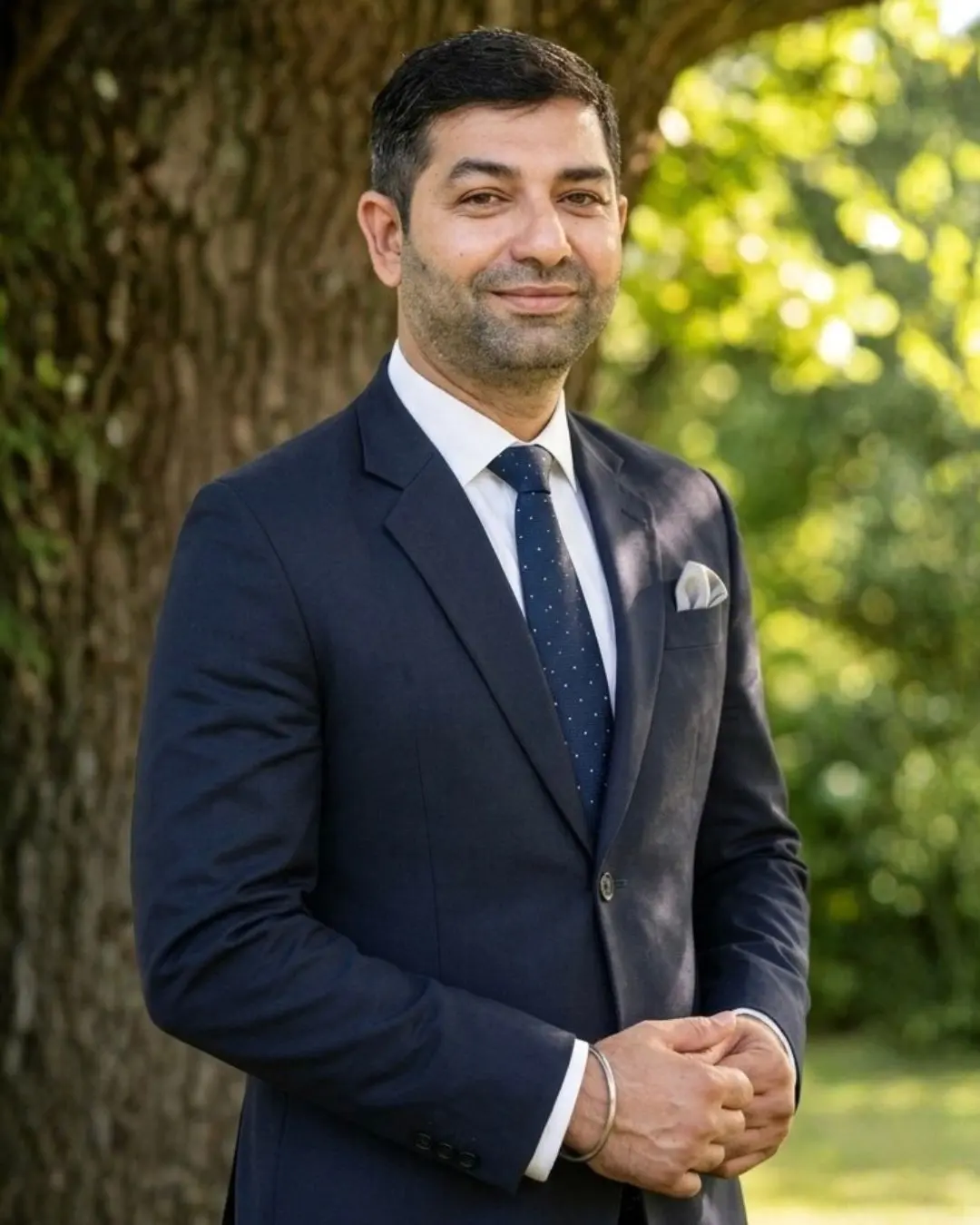
Leading the acquisition of My Hospital stands as the most defining challenge of Balwinder Pal Kamboj’s career. What appeared to be a routine acquisition had actually remained unsold for nearly three years because ownership was divided equally among eight shareholders, each holding a 12.5% stake with different expectations, priorities, and perspectives. Several prospective buyers had attempted the acquisition, but every negotiation failed because consensus could never be achieved. It quickly became clear that this was not a legal or financial challenge but a leadership challenge where success depended less on negotiating terms and more on understanding people.
Rather than bringing all shareholders together initially, the senior leadership team adopted a structured and collaborative approach, engaging with the shareholders individually to understand their concerns, expectations and motivations. Through transparent communication, consistent engagement and a focus on building trust, the team gradually brought different perspectives into constructive dialogue. Working collectively with the CEO, Medical Director and other senior team members, Balwinder Pal Kamboj played an active role in facilitating discussions and addressing key concerns, helping all eight shareholders move towards a common objective. This collaborative approach ultimately enabled the acquisition to be completed at a commercially viable valuation. The experience demonstrated that shifting the focus from positions to relationships can help turn seemingly difficult transactions into successful outcomes.
That experience reshaped his understanding of leadership, showing him that complex challenges require more than technical expertise; they require listening before speaking, building trust before negotiating, and creating alignment before deciding. He believes sustainable outcomes emerge when people feel heard, respected, and united by a shared purpose. Leadership, for him, means creating consensus, inspiring confidence, and ensuring stakeholders feel part of the solution. The lasting lesson is that great leaders transform conflicting interests into collective progress, a philosophy that continues to guide every major decision he makes today.
The 5A leadership framework
Balwinder Pal Kamboj believes successful healthcare organisations integrate legal, finance, operations, and governance as one system. Every decision should protect the organisation while enabling growth, a balance he achieves through his 5A Leadership Framework.
- Assess: Before any major decision, he evaluates the legal, regulatory, financial, and operational implications. Understanding the complete picture is more important than reacting to individual issues.
- Align: Sustainable decisions are only possible when the interests of management, doctors, investors, regulators, and operational teams are aligned behind a common objective. Alignment reduces conflict and accelerates execution.
- Anticipate: In healthcare, risk cannot be eliminated but can be anticipated by identifying challenges early and building mitigation strategies across regulatory approvals, infrastructure, financing, and acquisitions.
- Act: Once the right course is identified, execution must be timely, transparent, and accountable. Good governance is not about delaying decisions; it is about making confident decisions supported by strong processes and clear accountability.
- Advance: Every project should leave the organisation stronger by strengthening systems, improving operational efficiency, and creating long-term value for patients, employees, and stakeholders.
This framework has helped him balance compliance with business objectives across acquisitions, infrastructure projects, and regulatory matters. Balwinder Pal Kamboj firmly believes legal and governance functions should enable innovation and sustainable growth, not act as barriers.
A leadership journey through complexity
Among the many milestones in his career, Balwinder Pal Kamboj considers the development of Indus International Hospital, Dera Bassi, as one of the most defining reflections of his leadership. The vision of establishing a world-class tertiary care hospital to expand access to quality healthcare in the region required overcoming significant regulatory and infrastructure challenges. Through a detailed understanding of regulations and continuous engagement with authorities, he secured clarity on the Forest Department No Objection Certificate, while working with the Punjab State Power Corporation Limited and other government agencies to secure an exclusive electricity feeder, ensuring reliable power and patient safety.
The project became more complex as the transmission line required statutory approvals for underground cable crossings beneath the railway track and permissions to cross the National Highway. Its successful execution depended on meticulous planning, effective coordination, and persistent stakeholder engagement, reinforcing his belief that large healthcare projects succeed when stakeholders, technical experts, regulators, and project teams work with clarity and accountability towards a common objective. Today, Indus International Hospital stands as a testament to disciplined execution, collaborative leadership, and unwavering commitment, strengthening his belief that leadership means turning complexity into opportunity while keeping the organisation’s vision firmly in focus.
The Indus Healthcare difference: trust, governance, and patient-first innovation
What sets Indus Healthcare apart, according to Balwinder Pal Kamboj, is an unwavering commitment to placing the patient at the centre of every decision. Preventive healthcare begins with trust, as people choose a provider for confidence in receiving safe, ethical, and compassionate care. That trust is sustained through strong clinical governance, transparent processes, and a culture of accountability. At Indus Healthcare, legal, compliance, and governance are integrated into every major initiative from the planning stage, enabling the organisation to innovate responsibly, manage risk proactively, and maintain the highest standards of quality and patient safety.
The project management approach focuses not only on timely completion but on building systems that enhance patient experience, operational efficiency, and long-term sustainability. Through health awareness, early screening, technology-enabled care, and continuous quality improvement, Indus Healthcare is advancing a proactive rather than reactive healthcare model. While infrastructure and technology remain important, its strongest differentiator is the patient trust built through ethical governance, regulatory discipline, clinical excellence, and a patient-first culture, which continues to guide every decision.
The future of healthcare: innovation with responsibility
Healthcare is shifting from reactive treatment to predictive, preventive, and data-driven care. Balwinder Pal Kamboj believes technology will enhance care delivery, but not replace healthcare professionals.
He identifies key trends shaping the industry and how Indus Healthcare is preparing to stay ahead:
- Artificial Intelligence and Digital Integration: AI will play an increasingly important role in clinical decision support, predictive analytics, and operational efficiency. At Indus Healthcare, the digital ecosystem is being strengthened through enhanced HIS and EMR platforms and AI-driven streamlining of operations. However, technology should complement clinical expertise, not replace it, as human judgment and ethics remain central to healthcare.
- Value-Based Care: Success will no longer be measured by patient numbers alone but by clinical outcomes, patient experience, and long-term health improvement, making preventive care and digital health monitoring central.
- Data Privacy and Cybersecurity: With healthcare becoming increasingly digital, data privacy and cybersecurity are critical. The DPDP Act, 2023 has elevated the need for responsible data governance, and Indus Healthcare continues strengthening access controls, audits, and compliance frameworks to protect patient trust.
Future healthcare leaders will balance innovation with responsibility. Indus Healthcare is building an ecosystem where AI, digital health, preventive medicine, strong governance, and compassionate patient care work together to improve lives.
Beyond the organisation, mentoring, recognition, and lifelong learning
Balwinder Pal Kamboj believes leadership extends beyond one’s organisation and involves contributing to the broader healthcare and legal ecosystem through knowledge-sharing, ethical practices, and supporting future leaders.
- Mentoring Young Professionals: He mentors young professionals in legal, compliance, and healthcare management, encouraging multidisciplinary capabilities across law, business strategy, governance, finance, technology, and patient care.
- Thought Leadership and Continuous Learning: He believes healthcare legal frameworks should enable innovation, transparency, and sustainable growth, while actively staying updated on healthcare regulation, corporate governance, data privacy, and healthcare policy through continuous professional development.
- Professional Recognition: He was honoured by Business Prizm as one of the Top 10 Chief Legal Officers of India – 2024. He views this not as a personal achievement but as an acknowledgement of the value legal leadership brings to organisational growth, strategic decision-making, and institution building.
- Commitment to Lifelong Learning: Balwinder Pal Kamboj believes the best leaders are lifelong students. Every project, negotiation, and challenge presents an opportunity to improve. In an industry evolving as rapidly as healthcare, continuous learning is not a choice but a professional responsibility.
Ultimately, he hopes his contribution is measured not by projects delivered or positions held, but by the people mentored, the institutions strengthened, and the positive impact made on the healthcare profession.
Building teams that thrive: trust, accountability, and the power of listening

Balwinder Pal Kamboj believes the strongest organisations are built on trust, accountability, and continuous learning. He defines leadership as creating an environment where people can share ideas, challenge assumptions, and take ownership of solutions, with listening remaining a key leadership tool shaped by his interactions with doctors, nurses, administrators, government authorities, business partners, and the guidance of Chairman Dr Sant Parkash Singh and CEO Dr Ramandeep Singh at Indus Healthcare. He believes effective leadership requires openness to different perspectives, asking the right questions, and making informed decisions, with the best outcomes achieved when diverse viewpoints are heard, understood, and aligned towards a common objective.
During the implementation of digital workflows across hospitals, feedback from doctors, nurses, and operational teams revealed practical challenges in the original design. Rather than imposing the system, their input was used to simplify processes and redesign workflows around patient care, leading to smoother implementation, stronger user acceptance, and improved efficiency. The experience reinforced his belief that sustainable change must be created with the people responsible for its success. As a leader, he promotes empowerment, shared success, learning, and improvement, enabling people to perform at their best while making decisions that strengthen both the organisation and its people.













