


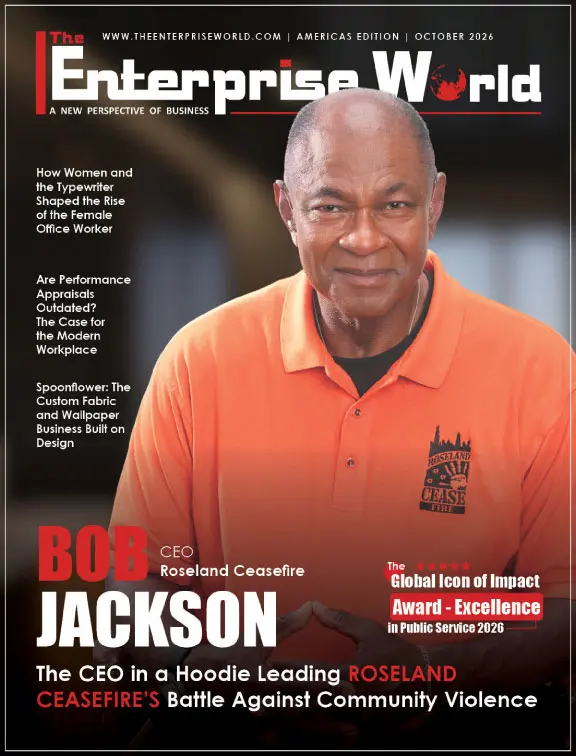
In the field of community safety and violence prevention, where the work is often unseen, underfunded, and deeply personal, Bob Jackson stands as a beacon of hope and dedication. As CEO of Roseland Ceasefire, he has spent over two decades stopping the violence and stopping the killing in his community, a journey that began not as a mission but as a simple membership initiative that needed someone to head up the team. What sets him apart is not just his longevity, but his hands-on approach: he is not the type of CEO who sits behind a desk and gives orders. He is out in the streets with his team, in his jeans and hoodie, marching, walking, and knocking on doors with them every day, leading by example and planning for tomorrow by bringing in younger staff who share his consistent values. His credibility is built on being true to his word, managing taxpayer dollars with seriousness, and turning a bad situation into something better. He has been recognized with the Nonprofit of the Year award, induction into the Who’s Who 2026 class, and a Global Award to be presented in Dubai a testament to the impact he and his team are making, not just locally but globally. At the heart of it all is a simple belief: commitment, consistency, and believing the community can change.
A journey that began with a simple ask
Bob’s commitment to public service and community impact did not start as a mission or with any intention of staying in this position for long. It began as a membership initiative that needed someone to head up the team and the community, someone to take over the reins for this violence prevention effort and the membership initiative money.
Instead, he ended up spending the last 20 years of his life dedicated to the process of stopping the violence and stopping the killing in his community, which he described as a worthwhile journey. He also shared that he is currently very excited about the upcoming global award he is about to receive, and about sharing that honor with the community, reflecting on how they not only helped him, but how he has been helping them throughout these years to progress and to get the violence down in their community.
A mother’s question that redefined his path
A moment about two years after the program started became the turning point that ultimately led Bob Jackson to his role as CEO of Roseland Ceasefire. It was the time he was supposed to be getting out and turning it over to someone else, which they hadn’t found. It was June of that year, 2008, and a mother came into his office after they had closed their doors due to lack of funding, which had stopped from June 3rd to the 30th of 2008. She asked him, “Mr. Jackson, are you here for the community or are you here for the money?” He told her, “For the community.” She then said, “Then why did you close your doors? My son would not be killed today.” That hit him hard, and he vowed from that day forward that he would do everything he could to not close the doors and to keep staff working to help those who need it most in the communities the organization serves.
However, Bob did not start out as the CEO; the first CEO, and it was not called Roseland Ceasefire at the time, was under Reverend Tyrone Crider. It was after his church, and when he started off, the Roseland Ceasefire name had not grown or been identified at that time, so they started off under another name with different leadership. Pastor Crider got ill with cancer and died some years later, so he turned the reins over to Bob Jackson, and he has been carrying the ball ever since. They changed the name and got it incorporated under the Roseland Ceasefire Project.
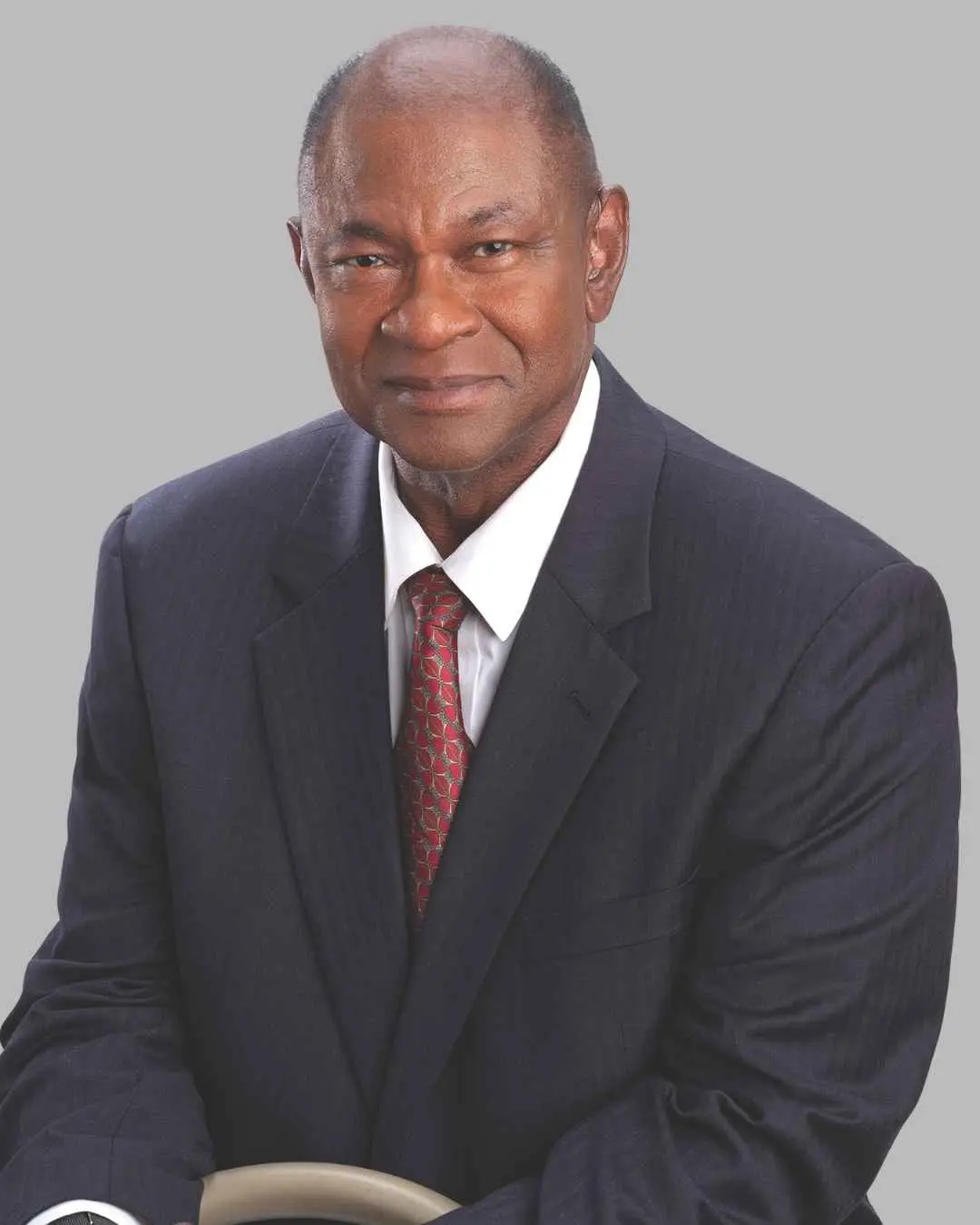
Budgets, burnout, and the true test of leadership
The biggest challenges Bob Jackson has faced over the years while building and leading this work, particularly when dealing with complex community or social issues, have been staying committed, ensuring the staff remains committed to the community and serves them properly, and being committed to their needs and understanding them. That, he said, is his biggest challenge: commitment from others who work for us.
One situation that tested Bob’s leadership was the budget. His biggest learning was keeping funds coming in year after year to retain staff, something business school never taught him. He quickly figured out how to meet payroll, increase it for economic needs, and provide benefits like health insurance, retirement funds, and loan access so staff could keep boots on the ground and a roof over their heads. From that, he learned to network, knock on political doors for funding, maintain a budget without being too frugal, show compassion for those in need, and save finances so the company could grow and serve the community.
The collapse of gang leadership and the new challenge of violence
Bob Jackson believes the core problem Roseland Ceasefire addresses took shape in early 2011, ‘12, and ‘13, when the federal government took all the gang leaders out of operation. That move shattered the community’s leadership structure, leaving thousands of young people with no one to follow, just like when a father leaves the home and the kids run wild. What emerged were cliques with no structure. Previously, Bob Jackson could approach a gang, raise a problem, or bring two leaders together to settle a dispute and reach a compromise; now he can’t, because there is no stable leadership. The leaders are constantly changing, and they don’t understand negotiation, putting their guns down, or why they should.
They don’t grasp that you can’t make money if you’re shooting up the area, and they have no structure to learn how to make their money from the streets. This has made the last 10 to 12 years of his operation difficult, teaching young people how to compromise among themselves and their inner groups so they can put the guns down, save the community, and stop the violence within their district. What makes their approach different is that they work directly on negotiation and compromise from the ground up, rather than relying on the traditional structures that no longer exist.
Stopping retaliation before it starts
One initiative that best demonstrates the impact of the work, Bob Jackson shared, is what happens when they respond to shootings at hospitals and then take that shooting and apply it to the streets to stop a potential retaliation that, he said, is the best way to describe it.
Being there on the scene in the hospital when the family is there and upset, they calm them down so they can go back to the community and calm the community down about the loss of a loved one or the maiming of a loved one, to say, “Hey, look, let the police do their job. These guys out here working with us, they’re gonna bring the perpetrator to justice, and let them do their job. Let everybody do their job.”

A milestone intervention: standing between two gangs
A powerful example of stopping violence, Bob Jackson shared, involved two prominent gang leaders’ children, Jeff Fort and Harry Hoover, who were working for them and had become part of the program. Their fathers were major figures in the street gang world, and the two young men would come to work every day as interns, showing up with 10, 20 people walking with them on both sides.
One day, something happened in another area that affected both gangs, so Bob Jackson and his team had to literally stand between them, stop the fighting, and tell them to calm down. These young men were able to do that, and they worked it out so it wouldn’t escalate to bigger forces getting involved, because the two gang leaders, although locked up, would have sent older gentlemen to reinforce the kids. So they stopped it, and it was one of the big milestones of their major intervention out there.
Consistency and keeping your word, the foundation of trust
The way to work with community members, local organizations, public institutions, volunteers, or other stakeholders, given that public service organizations depend heavily on trust and collaboration, is by being consistent in their face and being true to his word, Bob explained. If he says he’s gonna do something, they do it; if they say they’re gonna be there, they do it; and if they say they’re gonna help a family, they help them.
A lot of times they get calls from prominent people in the community, an alderman, a minister, a county commissioner, who ask them, “Can we assist a particular family?” Whether it’s in their area or not, they assist them. This brings them credibility that they’re doing what they say they’re doing, and they’re committed to the process of saving lives one block at a time with boots on the ground.
Taxpayer dollars taken seriously
Being a good manager of the finances given by their grantors and to the community is how Bob Jackson ensures the work remains ethical, transparent, accountable, and responsive to the people they serve. This is taxpayer dollars, and he takes that very seriously, because it is the tax dollars of the people Roseland Ceasefire is serving that help fund them and he wants to make sure they do a good job in representing them and their financial support.
That financial support comes through paying their taxes: real estate taxes, street taxes. Meaning when you go to the grocery store and all these corner stores, those taxes on that money eventually come back to them, and they eventually turn around and serve the community with it.
Awards and recognition that validate the impact
Bob has received several honors that demonstrate his credibility and the impact of his work. These include:
- 20th Anniversary: A significant recognition moment; some of the young people the organization has helped showed up at the 20th anniversary gala, and others sent donations.
- 2026 – A Positive Year: A very positive year, with several major honors.
- Nonprofit of the Year Award: Presented in 2026 at Calumet Park for being the Nonprofit of the Year.
- Who’s Who Induction: Inducted into the Who’s Who 2026 class.
- Global Award in Dubai: A global award, not a local one, to be given out in Dubai a big honor requiring travel out of the country. This means they are making an impact and others are looking at what they’re doing.
Leading by example, not from behind a desk
Bob Jackson contributes to the wider conversation about public service, community safety, leadership, and social impact by leading by example. He is not the type of CEO who sits behind the office desk and gives orders; he is out there in the street with his team, walking alongside them, and knocking on doors alongside them. Dressed in his jeans and hoodie, he is out there every day, and he would not ask them to do something he wouldn’t do.
He is also planning for tomorrow with the future in mind. Some of the anti-violence organization’s young employees are formerly incarcerated individuals, young women and men who just graduated from college and believe in the mission, and people with advanced degrees who work for them. He has a collaborative of people, and together this is what makes Roseland Ceasefire strong: working as one unit to save the community.
Mentorship through the court mandate program
A court mandate program is one of the mentoring and thought leadership activities Bob Jackson has undertaken. Through it, he speaks to young men assigned to them from Sixth Municipal District Judge Carl Boyd first-time gun offenders and talks to them about putting the guns down and why it’s important to not go to jail and mess up your future. They do not understand the impact of being incarcerated and becoming a felon until it hits them later in life, when they can’t get some of the basic needs they want. In some states, they don’t have the right to vote; their privileges are taken away.
In some states, they can’t apply for public aid. Although, Illinois is a state where they can. There’s also the long-range impact and stereotype on family “Oh, my dad’s a felon, my mom’s a felon” and how it affects kids and future generations. So mentorship is very important: Bob Jackson leads by example and lets them know that even though they may get that on their back, how to turn it out, turn it around, and erase it off their back, and show the public the person they were isn’t who they are now, and how to make good out of everything to turn lemons into lemonade. That’s what he’s learned.
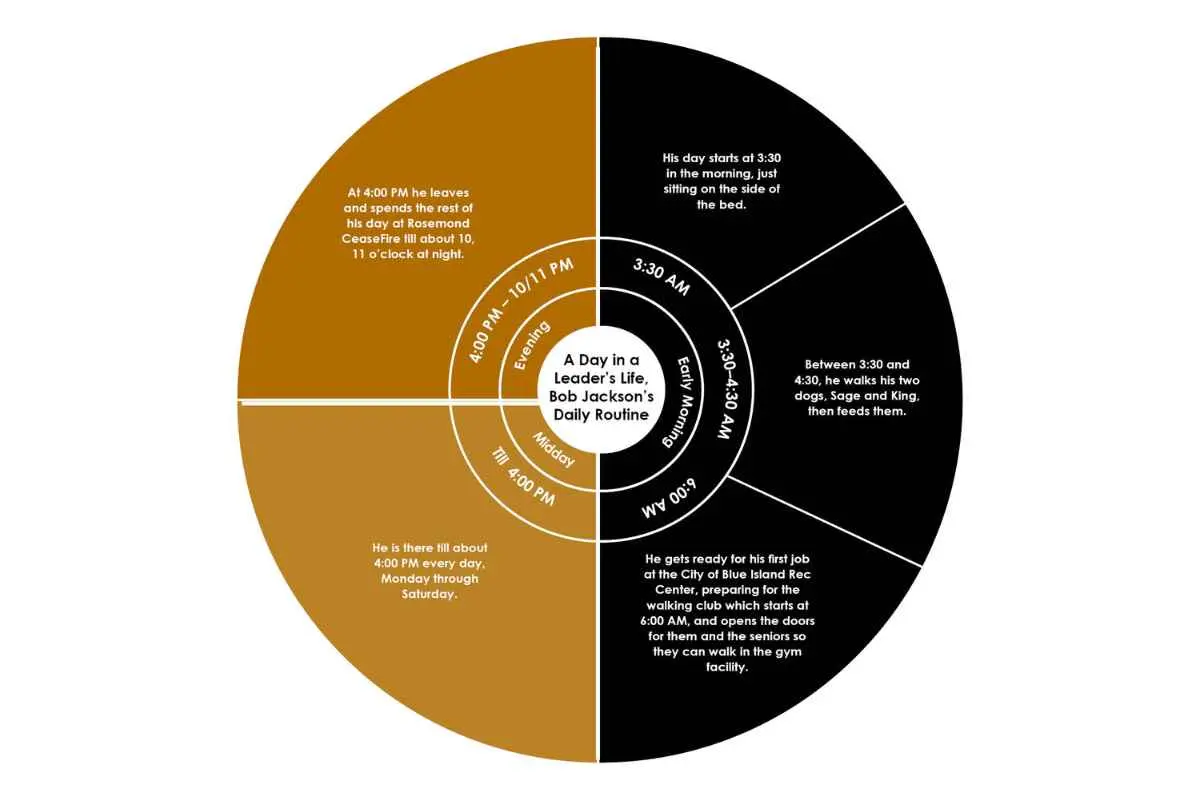
A day in a leader’s life, Bob Jackson’s daily routine
- 3:30 AM – His day starts at 3:30 in the morning, just sitting on the side of the bed.
- 3:30–4:30 AM – Between 3:30 and 4:30, he walks his two dogs, Sage and King, then feeds them.
- 6:00 AM – He gets ready for his first job at the City of Blue Island Rec Center, preparing for the walking club which starts at 6:00 AM, and opens the doors for them and the seniors so they can walk in the gym facility.
- Till 4:00 PM – He is there till about 4:00 PM every day, Monday through Saturday.
- 4:00 PM – 10/11 PM – At 4:00 PM he leaves and spends the rest of his day at Rosemond CeaseFire till about 10, 11 o’clock at night.
Work Commitment and Future Plans
- 16 Years: Consistently maintaining a demanding daily work schedule.
- First Four Years: Focused on building Rosemond CeaseFire.
- Second Job: Driven by growing older and the need for health insurance.
- Personal Experience: Gained an understanding of the meaning and responsibilities of holding a second job.
- Current Commitment: Continues balancing two jobs and his responsibilities at Rosemond CeaseFire.
- Future Plans: Intends to work for another five or six years before retiring from the Rec Center and returning to Rosemond CeaseFire full-time.
Real funding and real recognition, a changing landscape
A significant shift has been observed in how people view non-violence work and nonprofit anti-violence fighters. When Bob first started, people thought it was a joke, but now they take it seriously and view the nonprofit anti-violence fighters as real and needed in the community. They now see that real funding is needed to help the community achieve.
He has also seen attitude changes within the police department, and they now work together. He has seen politicians change, where they actually put real money into funding year-round events and a year-round structure, so that nonprofit fighters can stay on the ground and fight the battle with them.
Planning for tomorrow while keeping the community at the center
The biggest change, Bob said, is that this community has watched him get older, and he is bringing younger staff in for future replacement, because life is not permanent. He has to plan for tomorrow and think about what Ceasefire will look like with him not being here every day. He must make sure he has the right young people who are going to be committed to the community, because that’s what it’s used for. Once again, consistency and they have to have the same consistent values that he has.
Looking back at his journey, the most important lesson public service has taught him personally is commitment and believing in himself and believing the community can change. In his own words, the advice he would give to other leaders who want to create meaningful and measurable change in their community is: be prepared to be committed, be prepared to give your personal life up sometimes, be prepared to stay in the fight, and be prepared and be patient with yourself and others. That’s what he’s learned.
Key takeaways from Bob Jackson’s perspective:
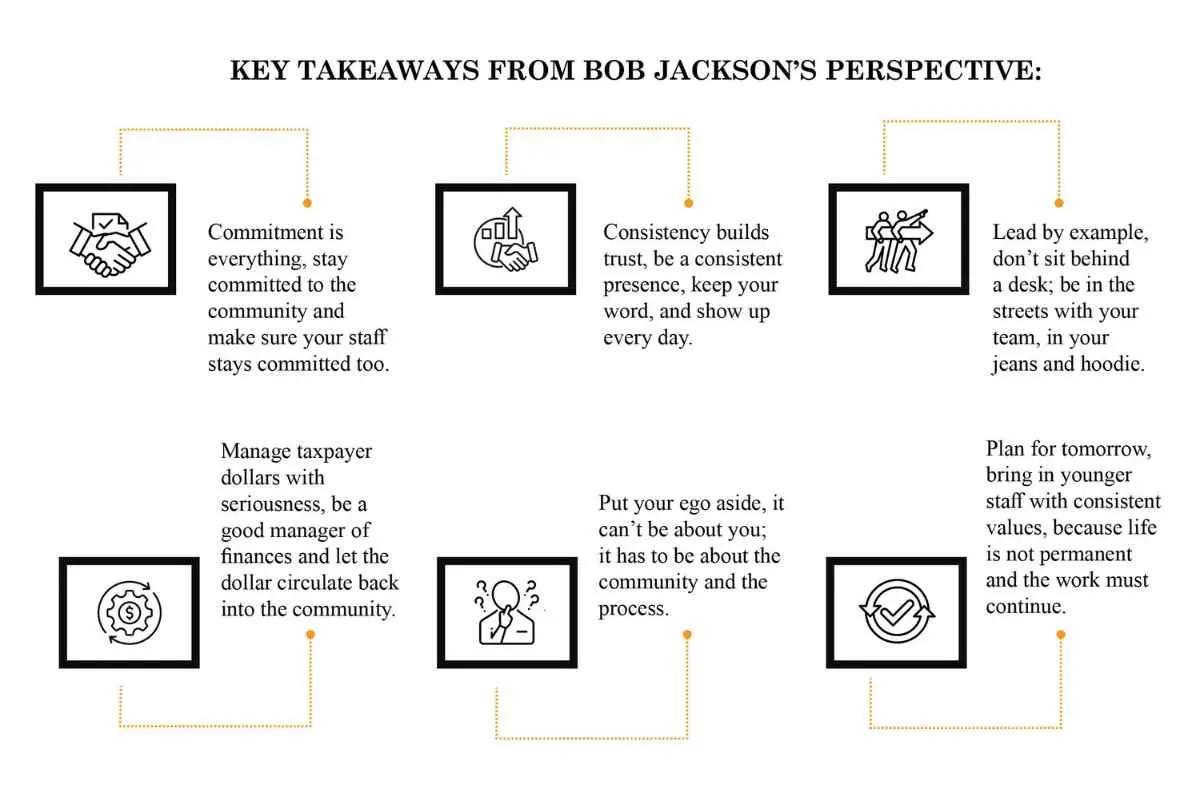
1. Commitment is everything, stay committed to the community and make sure your staff stays committed too.
2. Consistency builds trust, be a consistent presence, keep your word, and show up every day.
3. Lead by example, don’t sit behind a desk; be in the streets with your team, in your jeans and hoodie.
4. Manage taxpayer dollars with seriousness, be a good manager of finances and let the dollar circulate back into the community.
5. Put your ego aside, it can’t be about you; it has to be about the community and the process.
6. Plan for tomorrow, bring in younger staff with consistent values, because life is not permanent and the work must continue.













