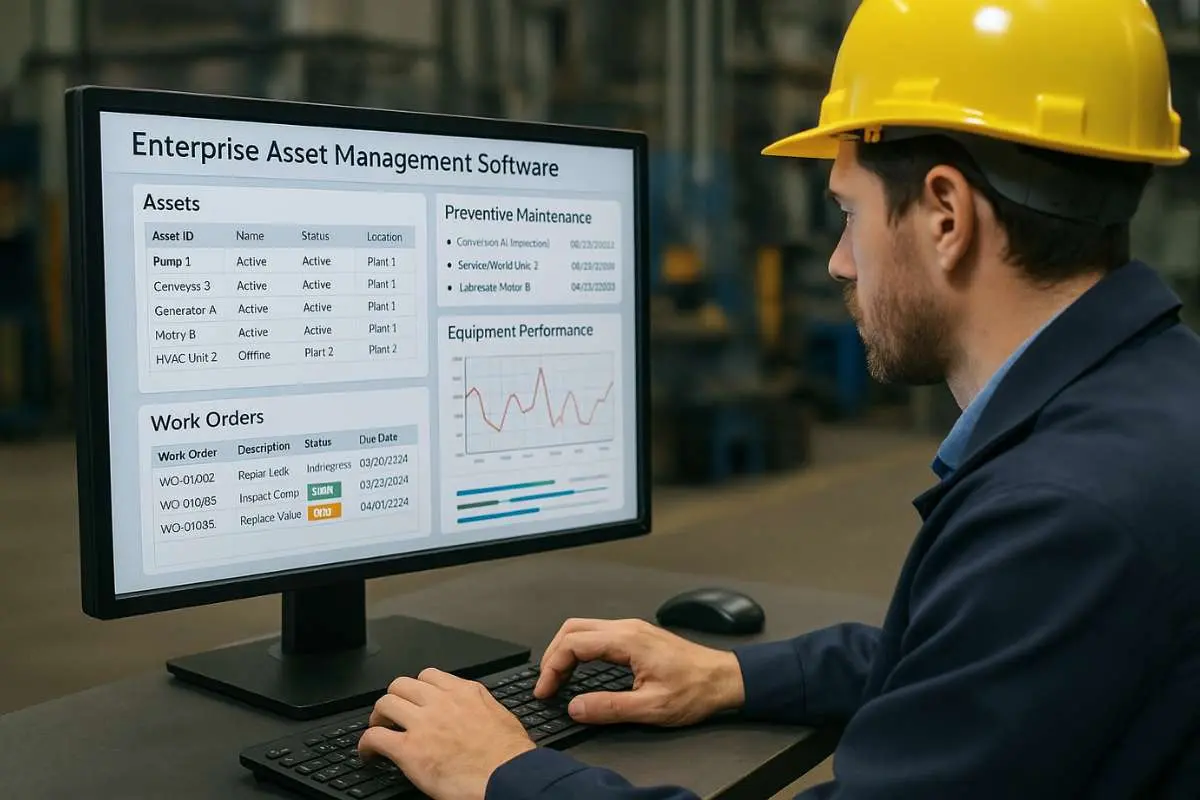
Decisions regarding EAM software implementation often start after frustration with scattered work orders, incomplete asset history, and too much maintenance knowledge living in one person’s head. Some teams turn to professional solutions like EAM asset management by UpKeep, after realizing their current setup is too thin for the scale of their operations. That is usually a healthy moment. It means the business is ready to stop patching the process and start building one.
Other teams arrive at the same point from a different direction. The maintenance side may be manageable, but spare parts are a mess, purchasing cannot see what is really needed, and asset decisions are based on guesswork. In that case, the search may start with something narrower, like parts inventory management software, then expand once people see how connected the whole operation really is. Either way, the better choice usually comes from understanding your problem clearly before you start scoring vendors.
Start With the Problems You Need to Fix
A surprising number of EAM projects go wrong before the demos even begin. The team builds a wish list full of features, reports, dashboards, and AI promises, but never agrees on the business problem that needs to be solved first. That is how companies end up buying impressive software that changes very little.
Start with pain, not marketing language. Are you losing time because work orders are inconsistent? Are asset records unreliable? Are preventive tasks getting missed? Are maintenance costs rising without a clear reason? Is downtime harder to explain than it should be? Those questions are much more useful than a broad request for “better visibility.”
This is also where different departments need to be honest with each other. Operations, maintenance, reliability, stores, and finance will not all describe the problem the same way. That is fine. What matters is deciding which failures hurt the business most and which ones the software should improve first.
Know the Difference Between EAM and Everything Around It

Some software buying problems are really category problems. A company might say it needs EAM software, but the real gaps are often a weak CMMS, poor inventory control, or missing reporting within the ERP. If you do not sort that out early, the project becomes confused fast.
EAM is broader than a basic maintenance tool. It usually covers asset lifecycle information, work management, preventive maintenance, failure history, cost visibility, and in many cases, procurement, inventory, or compliance-related data tied to the asset base. A CMMS may handle the maintenance side well enough for smaller operations. An ERP may own purchasing and finance well enough for another part of the business. The question is not which acronym sounds stronger. The question is where your process is actually breaking.
That matters because some businesses buy EAM when they really need a cleaner maintenance workflow and a better mobile system. Others try to stretch a simple CMMS long past the point where they need deeper asset records, stronger planning, and better lifecycle reporting. A good buying process is clear about that distinction.
Check the Workflows Before You Fall for the Demo
Most enterprise asset management demos are polished. The screens look clean, the dashboards look smart, and the presenter moves through everything as if your process is already perfect. Real operations are not like that. Work requests come in half-complete. Technicians skip fields. Parts are issued late. Asset hierarchies are messy. Failure codes are used inconsistently. That is why workflow fit matters more than demo polish.
Ask vendors to demonstrate how your actual work would be done in the system. Not a generic work order. Your work order. Show how a request enters, how it is approved, how labor is assigned, how parts are reserved, how the job closes, and how history is captured afterward. If the path looks awkward in that exercise, it will not get better after go-live.
Mobile use deserves the same level of attention. If technicians, operators, or field teams are expected to use the system every day, the software should feel workable under the conditions they actually face. A tool that looks great in a conference room and slows people down on the plant floor is still a bad fit.
Data Migration and Setup Will Make or Break the Result

A lot of software disappointment has less to do with the product and more to do with the setup of your EAM software. If your asset list is inconsistent, your spare parts are duplicated, your PM schedules are outdated, and your location structure is a mess, the new system will quickly expose those problems. It may even make them more visible than before, which can feel like failure if people expected the software to clean everything up on its own.
The better approach is to treat data work as part of the selection process, not a chore for later. Ask how the vendor handles migration, cleanup, testing, and validation. Ask what the system needs from you to work well. Ask which setup shortcuts tend to cause trouble a year later. Honest vendors usually answer those questions more directly than weak ones.
This is also the stage where implementation support matters. A cheap license can become expensive if the rollout is poorly guided and the business has to rebuild the structure later. Strong software with a weak setup often performs worse than simpler software with disciplined implementation.
Buy for Adoption, Not Only for Capability
Many EAM platforms can do impressive things on paper. Fewer get used well by the people who matter most. That is why adoption should be part of the buying decision from the start. The software does not need to satisfy only leadership. It needs to work for planners, technicians, supervisors, storeroom staff, and anyone else who regularly handles it.
A platform that does everything but gets avoided in daily work is not a strong purchase. People will return to spreadsheets, text messages, whiteboards, and memory if the system feels slower than the old chaos. That is not resistance for the sake of resistance. Sometimes it is a fair verdict on a poor fit.
Ask practical questions. How many clicks does it take to close a common work order? How easy is it to issue a part? Can a supervisor review the backlog without building custom reports every time? Can users learn the system without formal pain? Adoption lives in those details.
Measure the Software by What Changes After Go-Live

A good EAM software decision should change operations in visible ways. Work should be easier to track, PM compliance should be clearer, asset history should improve, and parts usage should make more sense. Downtime conversations should get less vague. If none of that changes, the project may still look successful in a steering committee deck, but the operation will know better.
That is why success metrics need to be set early. Backlog quality, wrench time, PM completion, stock accuracy, mean time to repair, repeat failures, contractor control, or maintenance cost by asset class are all more useful than vague promises about digital transformation.
The smartest buyers also accept that software is not magic. EAM can improve discipline, visibility, and decision-making. It cannot rescue weak leadership, nonexistent standards, or teams that do not trust the process. Buy it for the improvements it can support, then hold the business accountable for using it well.