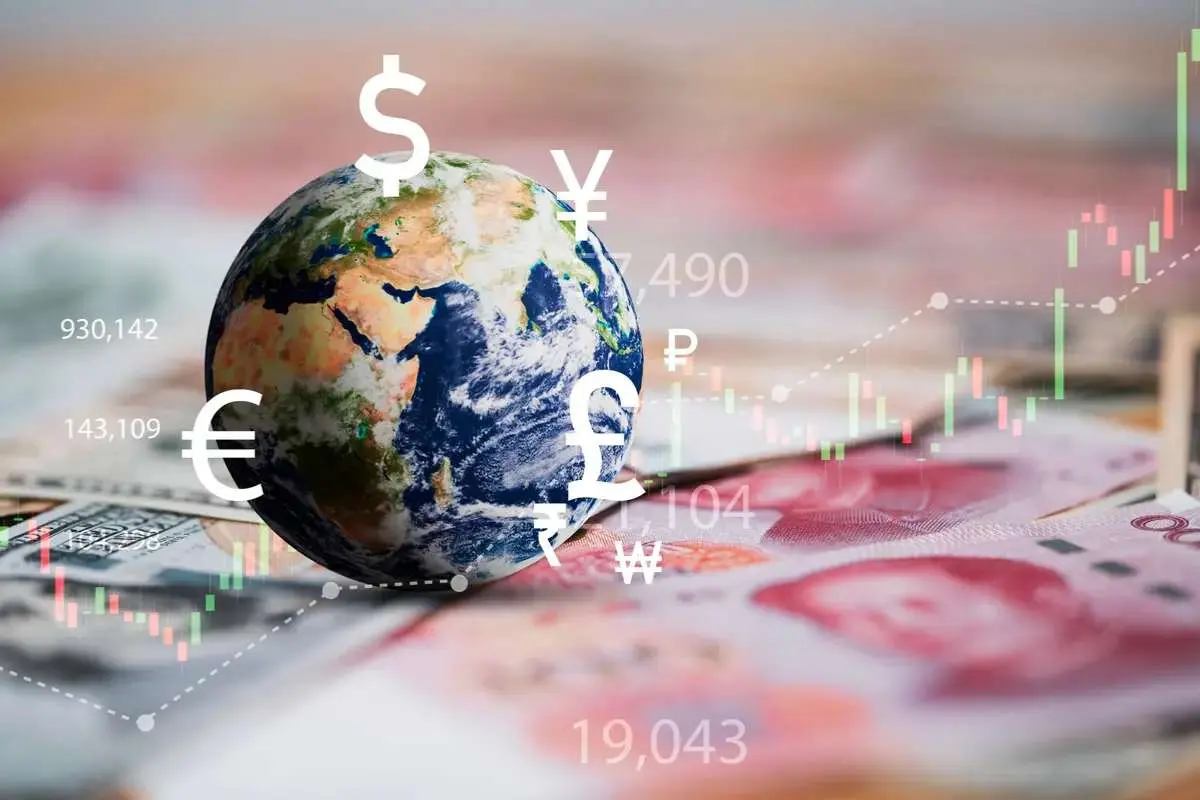
The Euro bounced back near the $1.20 against the U.S. dollar, raising questions about how much geopolitical turbulence in the Middle East is driving the move, and what role the dollar still plays globally within the context of growing de-dollarization Debates.
Recent trading shows that the market moves in bursts, implying that currencies are shifting between phases of easing and re-composition based upon what is reported regarding the war front and oil flows through the Strait of Hormuz. The dollar index has been hovering around 98.00, and EUR/USD pulled back towards 1.1700 – 1.1800.
The open-ended ceasefire agreement between the U.S. and Iran resulted in a negative impact on the dollar. This is due to previous episodes in which, each time a truce appeared to gain momentum, the dollar lost value as its safe-haven appeal weakened. For example, on April 17th, when Tehran indicated that the Strait of Hormuz was available for commercial shipping, the dollar fell. However, the dollar’s decline was short-lived; when concerns regarding the truce’s sustainability were renewed and trade through the Strait of Hormuz became an issue once again, the dollar recovered and returned to prior levels.

Within this framework, EUR/USD at 1.20 stands out as both a technical and psychological threshold. Reuters has described the level as a “line in the sand,” adding that the exchange rate is also approaching its 200-month moving average, located around 1.1912. A convincing break above 1.20 would mean far more than simply clearing a resistance level: it would lend credibility to the view that the market is beginning to price in a less de-dollarization debate, one less able to automatically absorb every global shock.
It should be noted that caution is warranted on both sides of the Atlantic. As stated previously in their March meeting and further emphasized in their April meeting minutes, the ECB recognized that the war in the Middle East presents upward inflationary pressures and downward pressures to euro area growth. Therefore, even though the euro is strengthening as a direct result of a weakened dollar, this does not necessarily translate into an economically strengthened eurozone. To date, most of the euro’s strength comes from a weakened dollar, not from the resolution of its own growth issues.
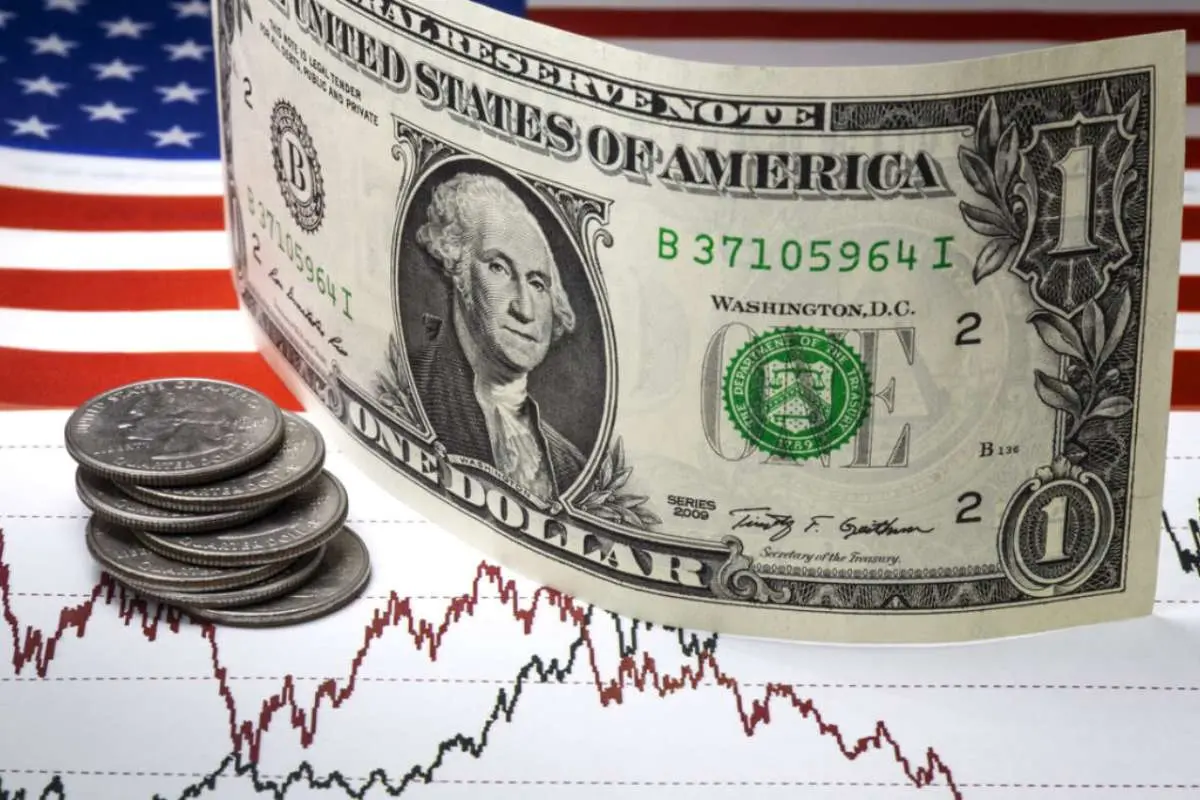
Prior to the onset of hostilities in the Middle East, discussions regarding economic policy focused on de-dollarization debates. Although it is true that the dollar’s share of global foreign-exchange reserves has diminished over time, according to IMF data released in 2019, at year-end 2025, the U.S. dollar accounted for 56.77 percent of total official global reserves; whereas, the Euro represented only 20.25 percent and RMB (renminbi) – 1.95 percent.
In essence, while the de-dollarization debates are a topic worthy of discussion, it is developing at a pace significantly slower than many market participants believe or report. Moreover, during times of actual distress, the global monetary system returns to the U.S. dollar as both a reserve currency and as a medium for providing liquidity, financing, and portfolio protection. This is exactly what the current episode demonstrates: although the dollar may depreciate strategically in the FX market, when geopolitical tensions create uncertainty regarding energy supplies, inflationary pressures, and/or financial stability, its functional centrality reemerges very quickly.
Gold, despite theoretically remaining a political hedge, has experienced declines in recent weeks, specifically during several escalation phases; it had previously lost virtually all of its March gains under a combination of factors, including an appreciating U.S. dollar, increasing yields, and inflation fears stemming from an energy supply disruption. It could be argued that the dollar’s dominance may ultimately erode over longer-term horizons; however, during acute episodes of geopolitical turmoil, markets continue to prefer dollars over alternative safe havens, particularly when there exists a strong correlation between core risk factors related to growth and energy security versus pure abstract risk aversion.
As long as the U.S. maintains superior growth rates compared to other countries, its central bank holds a conservative stance on rate cuts, and the dollar’s safe-haven appeal reemerges during periods of market stress, it is challenging to argue that the dollar has lost its central role in the global economy.