
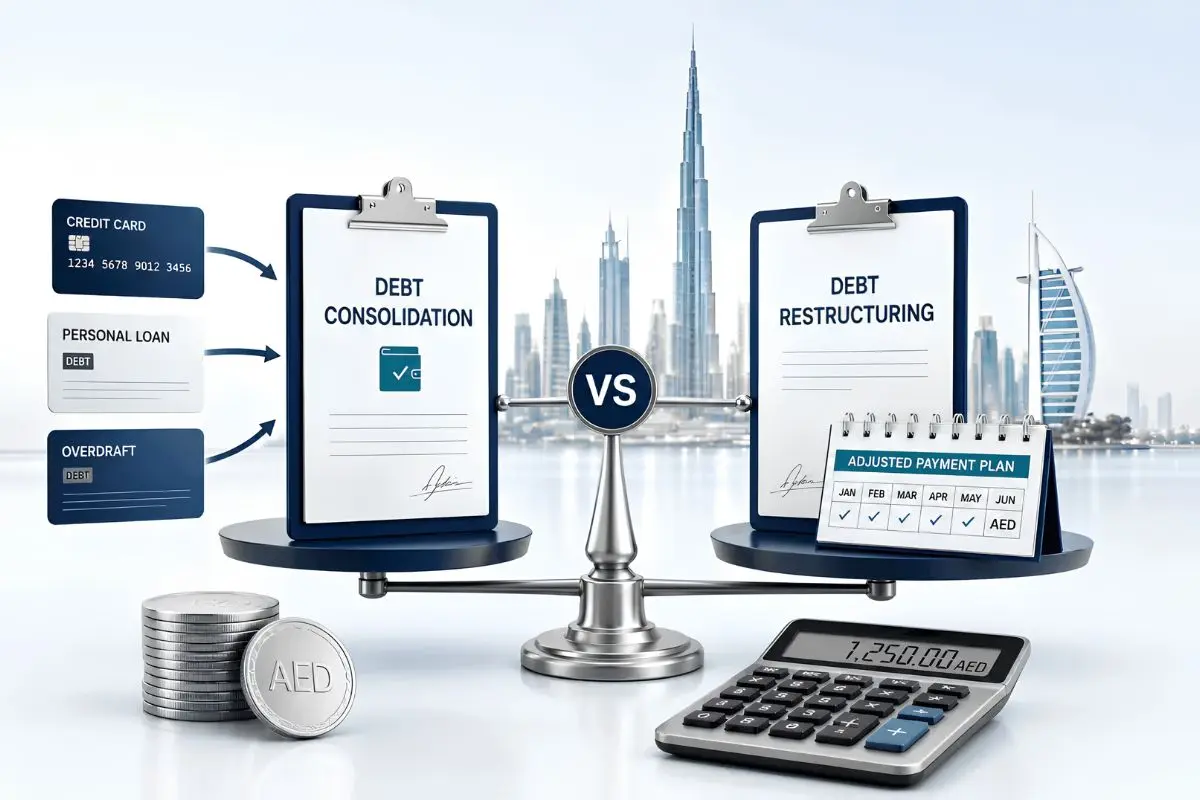
Managing multiple debts is stressful. If you’re comparing debt consolidation vs debt restructuring, understanding how each works makes the choice easier. Debt consolidation combines your loans into one new loan, while debt restructuring changes the terms of your existing loans.
These two are fundamentally different financial strategies with the same end goal. But which one is the right choice for you is highly subjective. Malaysian interest rates (credit card EMIs and personal loans) generally hover between 15% and 18%. Larger loans often come with a lower interest rate, so debt consolidation or restructuring may be a better financial option. A personal loan consultant in Malaysia can help you choose between the two options to reduce your financial burden.
What is debt consolidation?
Debt consolidation is when you take a loan, usually a larger one, to pay off your existing smaller loans. The smaller loans mostly include credit card debt and personal loans.
After you pay the smaller loans, you have only one EMI to manage. The new loan’s interest rate is usually lower than the combined interest rates of your old loans.
One important thing to keep in mind is that debt consolidation can simplify managing your finances. But it is not for people already struggling to pay their existing loans.
What is debt restructuring?
The end goal of debt restructuring is the same as debt consolidation. The financial tool makes managing your EMIs simple. But restructuring works through a completely different mechanism.
In this process, no new lender is involved. Your existing lender agrees to change the loan terms to reduce your financial burden. This means they could temporarily pause your EMI payments for a defined period or extend the loan tenure to reduce your monthly EMI.
Which one is right for you?
When comparing debt consolidation vs debt restructuring, it’s natural to get confused about which option is right for you, since both have the same end goal. We will find the answer to the question below:
When is debt consolidation a good idea?
There are three situations when debt consolidation is right:
- The consolidated loan that you have taken to pay off the older loans should have a lower annual percentage rate. This way, you can save a lot of money on total interest paid by the end of the loan tenure.
- If your credit score has improved after you have taken the older loans, you may want to consider consolidating them. A good credit score qualifies you for a low APR, which translates to lower payments.
- If you are juggling multiple payments at the same time and sometimes miss due dates, consolidation may be for you. With a simple, predictable monthly payment, you are less likely to miss it.
When is debt restructuring a good idea?
Here are a few situations where debt restructuring is the best choice:
- You are going through a big financial hardship. For example, you lost your job or are dealing with a medical emergency and can’t keep up with even the minimum payments.
- If you chose a variable interest rate that has been consistently high, switching to a fixed or lower rate is a better option.
- If you have missed payments before and face a high risk of default, restructuring may be right for you.
Short-Term Vs. Long-Term Solution
Debt restructuring is generally a long-term solution, while debt consolidation is a short-term solution. The former requires strong financial discipline and management to avoid taking on more debt. The latter addresses immediate challenges and doesn’t require major changes to a person’s spending.
Debt restructuring helps during a financial crisis when you can’t cope with the current situation. Debt consolidation makes managing your EMIs and payments easier.
Making the decision
Debt consolidation and restructuring are important tools for people facing different financial challenges. These options make managing multiple debts easier, and you may even qualify for a better APR if your financial performance has improved over the years.
Both solutions are very subjective and depend on a person’s current situation. So, to know which tool will help you, you first need to understand where you currently stand financially. In most cases, speaking with a personal loan consultant can also help you.