The early literacy landscape is evolving, with educators and innovators championing fresh solutions that truly prepare children for academic success, and at the forefront of this movement stands Elizabeth Alexander, Owner/Founder of Reading In PreSchool and The Alexander Reading Method. While the industry often relies on memorization and conventional instruction, Alexander has pioneered a phonics-based, play-driven approach designed for children under eight that ensures 98% of her students enter kindergarten, first, and second grade ahead of benchmarks.
Her credibility speaks volumes: 40 teachers across 4 states, five Manhattan Awards for Best in Pre Primary and Primary Education, and countless families whose children have found confidence through reading. What sets Alexander apart is her unwavering belief that human connection, not technology, holds the key to early literacy and that every child deserves the joy and confidence that comes from learning to read. This is her story.

A Defining Moment, The Personal Story Behind a Literacy Revolution
Every meaningful educational movement begins with a personal story, and for Alexander, that story took root long before she founded Reading In PreSchool. After years of teaching phonics outside the U.S., she moved to New York City, where she assessed 2nd and 3rd graders from prestigious schools and found them behind grade levels not from lack of intelligence, but because the U.S. literacy system itself was fundamentally flawed.
The more Alexander observed, the more evidence stacked up before her:
- Unrealistic expectations without preparation: Children were expected to absorb grade levels of information in first grade, read chapter books by 2nd grade, and write essays by 3rd grade, yet there was no preparation in Kindergarten and nothing being taught in PreSchool.
- Memorization over decoding: Most curriculums focused on memorization rather than decoding and sounding words out, which she believes is the most important part of learning to read.
- Confusing letter sounds: Children were taught multiple letters for the same sounds. Alexander believed children should learn only the hard sounds first, and only after grasping CVC words, blends, and digraphs should they be shown additional sounds, otherwise they get confused and struggle later.
- Overwhelming books: The books children learned from were not systematic but memorization-based, overwhelming them with too much information at once.
- Unmet desire in younger children: Many 3 to 4-year-olds showed their parents they wanted to learn to read, but parents were frustrated by the lack of options.
Witnessing these realities in real children and families, Alexander realized waiting for the system to change was not an option, so she began investing her time in preschool and kindergarten children to prepare them for first grade and beyond. The results were impressive, with previously stressed parents overjoyed to see their children confident and reading ahead of benchmarks. For Alexander, this was never just about academics; if you cannot read early, you cannot read your math or history work either, and not being behind means confidence not only academically but in all areas of life, a belief that became the driving force behind everything she would build next.
Overcoming Skepticism, The Challenges That Shaped a Method
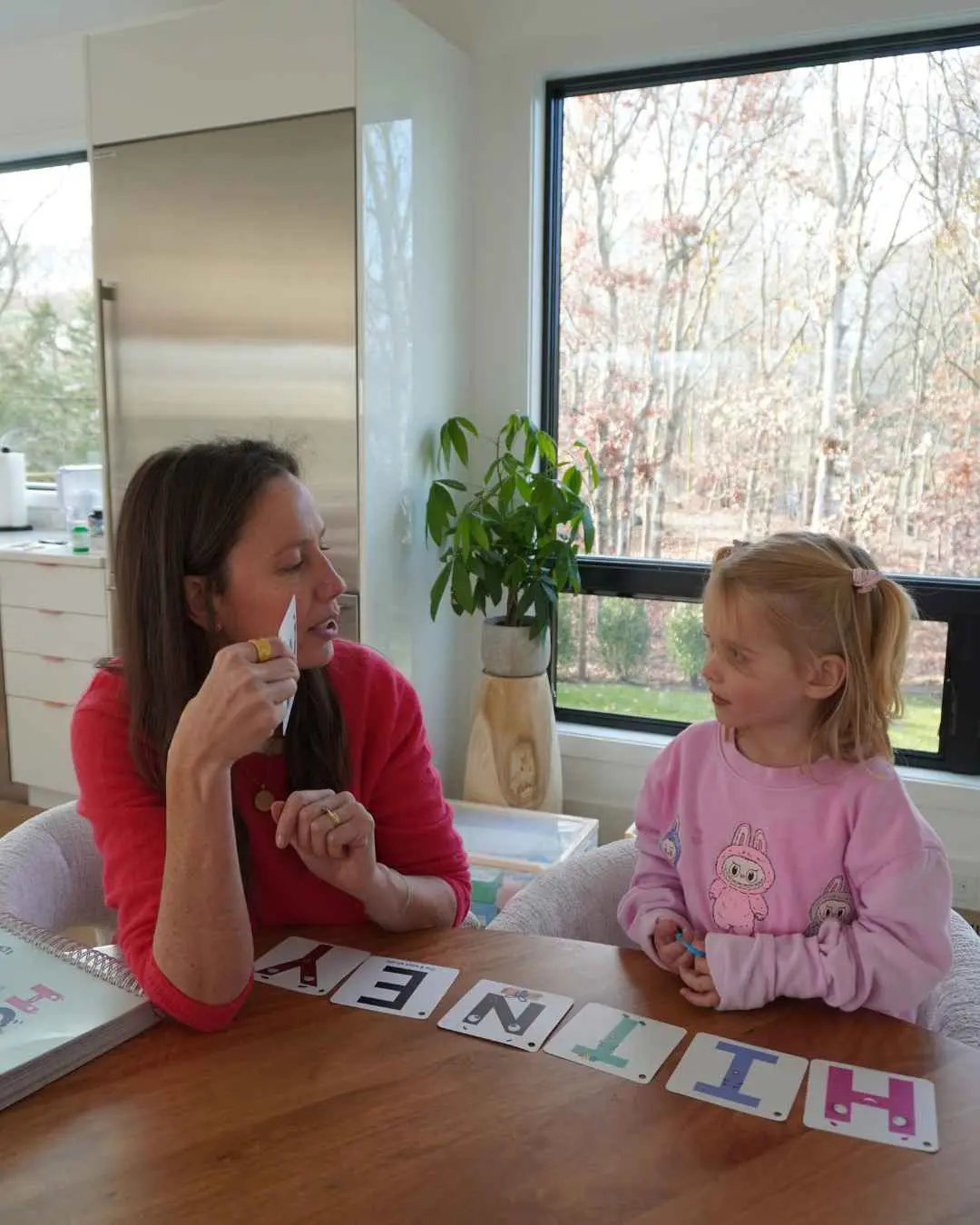
Building a new educational methodology often comes with skepticism and obstacles, and Alexander’s journey with The Alexander Reading Method was no exception. Born from changing only what was not working, the method helps children learn to read young through a multi-sensory, play-based approach suited to all learners, ensuring every child moves into 1st and 2nd grade ahead.
But even a method that works does not escape resistance. Alexander faced significant challenges:
- Rejection from prestigious schools: When she showed schools their pupils’ success with her after failing in their classrooms, she offered to help, but these prestigious schools refused to embrace the change, even if they saw it worked. Fortunately, families were not deterred; they could not deny the results.
- Doubt from professionals about scalability: Professionals doubted other teachers could deliver, arguing the business would not grow since she was the method’s developer and best teacher. Yet growth proved them wrong now with 40 teachers across 4 states, they have shown others can teach it and get results, because the method really works.
Alexander believes good teachers are always key, making her formula simple: a great method plus great teachers teaching something unique equals success. The obstacles taught her that resistance often comes from those protecting their own methods and business rather than from a lack of evidence, that results speak louder than rejection, and most importantly, that a truly effective method can be taught, shared, and scaled as long as the right teachers are there to bring it to life.

The Philosophy Behind The Alexander Reading Method
Having navigated the skepticism and obstacles that come with introducing something new, Alexander’s focus remained steadfast on the problem she set out to solve. The Alexander Reading Method is recognized for its distinctive approach to early literacy. With 40% of American children behind in literacy with 4th grade testing, the problem was clear. The mission for every child, and one Alexander wishes to share with change makers who can help turn things around for the better if they had connections to get this method into all schools, is simple: to give every child a proper reading foundation using a phonics-based and also play-based method.
If children begin to learn to read with this method during the ages suggested for starting, 98% of children will go into the most important grades for learning to read ahead. By going in ahead, children are prepared for what they are going to be taught in schools. By being prepared, they are able to continue to advance every year since they don’t have to play catch up.
When Alexander says 98%, she says this because 2% of their students are neurodivergent. They need daily instruction to achieve the same results that children achieve within half the amount of time.
Success Stories and Insights, How Young Children Truly Learn to Read
The growth of The Alexander Reading Method tells a powerful story of success. Prior to covid, Alexander’s organization only had a few teachers, and only in NYC, but when covid hit, their NY families spread the word of their success to friends abroad who were desperate for their children not to fall behind, leading to hundreds of requests from multiple states and eventually 40 teachers in 4 different states, with requests still coming.
Over the years, Alexander’s biggest insights into how young children learn to read center on a key understanding: children under the age of 7 are still in a theta brain wave state, meaning their minds are wildly imaginative and they love to learn through play, so teaching with play and a multi-sensory approach is key for children not only to fall in love with learning but to learn to read. The program taps into that fun and playfulness by referring to letters as mommies and babies and using tricks to explain hard words, like calling a silent e a “secret silent ninja,” or noting how funny letters like P can turn R or V into Y or W.
Alexander also addresses misconceptions about early literacy, noting that many schools still hold the old mindset that teaching children too young can have a negative effect, when in truth teaching through play and without pressure to meet test results can inspire a love of learning early on and reap amazing benefits for years to come.
Advancing Literacy Through Hands-On Development and Mentorship
Beyond developing her reading methodology, Alexander’s contributions to advancing literacy education have been deeply practical and hands-on. Developing her tutoring business, Reading in PreSchool, constantly expanding on her method, developing new educational products to help both teachers teach easier and children enjoy learning, and mentoring and training her teachers takes up 100% of her time.
While there are a number of articles out about her work, she has not done any other research or speaking engagements up until this point. Her contribution has been measured not in publications or conference appearances, but in the steady growth of a method that works, the teachers she has trained to carry it forward, and the children who have learned to read because of it.
The Future of Early Literacy, Human Connection Over Technology
Having built a method that thrives on hands-on mentorship and the daily work of training teachers, Alexander brings that same philosophy to her view of where early literacy is headed. As education continues to evolve, she holds a clear and grounded perspective on what emerging trends, technologies, or innovations will shape the future of early literacy. Personally, since their work is done with little children under the age of 8 years old, she believes human connections and in-person teachers are key.
While AI will absolutely be helpful with testing and tracking results, for what they want to accomplish, she does not yet see the need for it. It is a reason they never moved to a lot of online teaching. They only have a few online teachers to help with families who don’t have an in-person tutor as an option for their children, who desperately want access to their method. Other than that, they truly believe human connection is key when it comes to teaching under the age of 8.
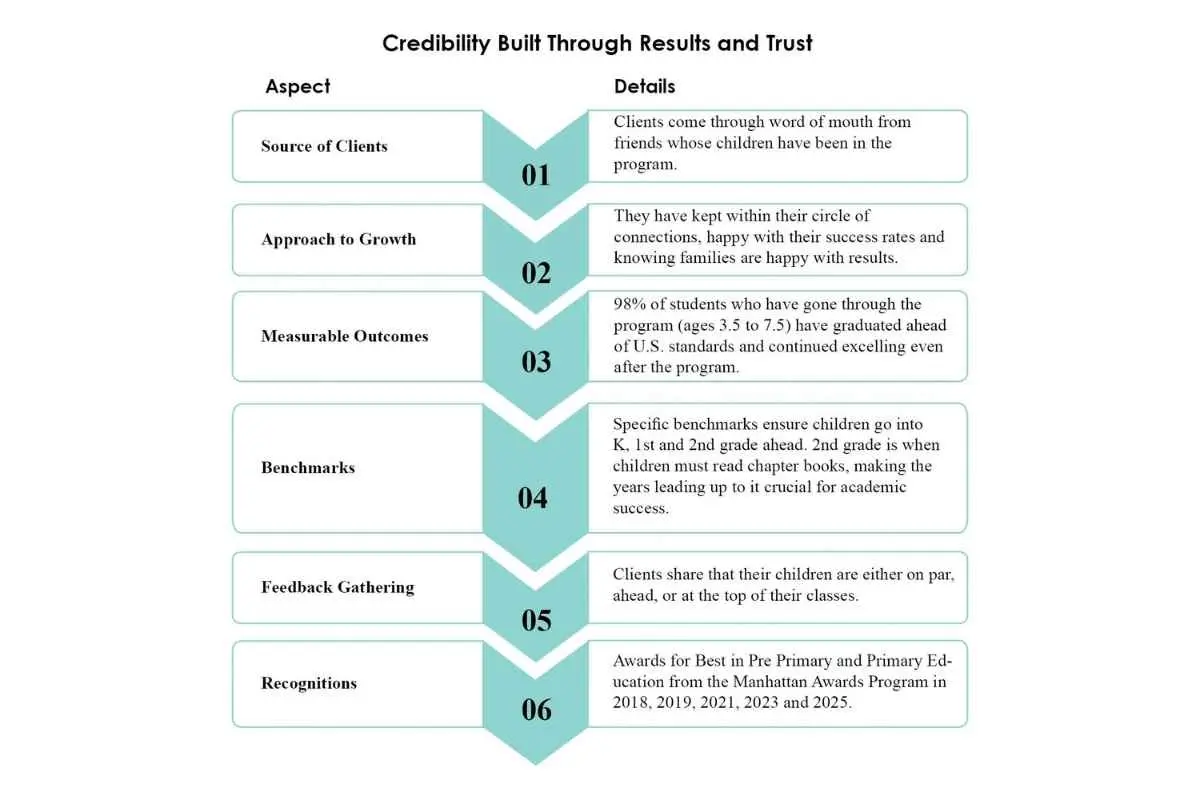
Credibility Built Through Results and Trust
| Aspect | Details |
| Source of Clients | Clients come through word of mouth from friends whose children have been in the program. |
| Approach to Growth | They have kept within their circle of connections, happy with their success rates and knowing families are happy with results. |
| Measurable Outcomes | 98% of students who have gone through the program (ages 3.5 to 7.5) have graduated ahead of U.S. standards and continued excelling even after the program. |
| Benchmarks | Specific benchmarks ensure children go into K, 1st and 2nd grade ahead. 2nd grade is when children must read chapter books, making the years leading up to it crucial for academic success. |
| Feedback Gathering | Clients share that their children are either on par, ahead, or at the top of their classes. |
| Recognitions | Awards for Best in Pre Primary and Primary Education from the Manhattan Awards Program in 2018, 2019, 2021, 2023 and 2025. |
The Long-Term Impact of The Alexander Reading Method
Looking ahead, Alexander’s long-term vision for Reading In PreSchool and The Alexander Reading Method is clear and heartfelt, as she loves this question because it speaks to the very core of why she does what she does, and her vision is to take what they have started and make it possible for every child to have access. She would love an introduction to a change maker or change makers who have the connections to get this method in every PreSchool, Kindergarten and 1st grade classroom so more children could feel the confidence in themselves like their students do.
She acknowledges that they are a small business at the moment and would need a team to make something like this possible, but the dream is unwavering: a world where every young child has the foundation to read, to learn, and to believe in themselves.
Before and After Leadership: The Journey of Elizabeth Alexander
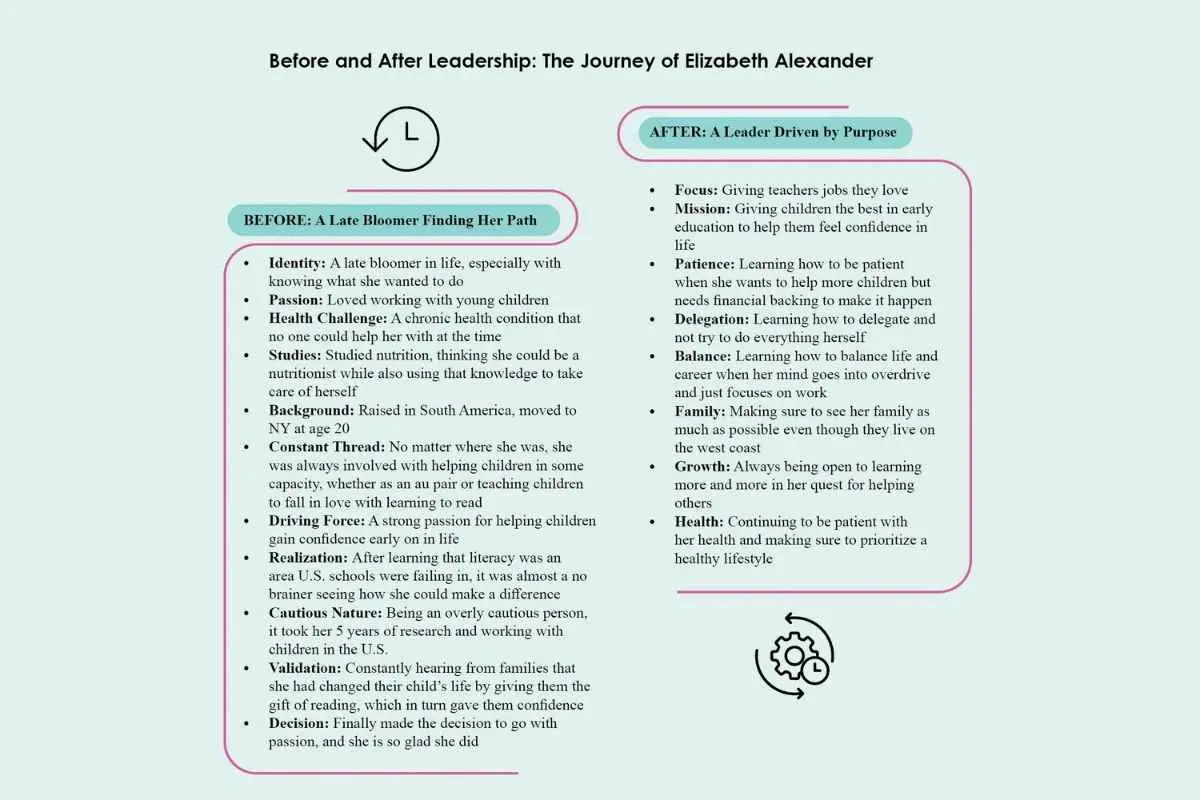
BEFORE: A Late Bloomer Finding Her Path
- Identity: A late bloomer in life, especially with knowing what she wanted to do
- Passion: Loved working with young children
- Health Challenge: A chronic health condition that no one could help her with at the time
- Studies: Studied nutrition, thinking she could be a nutritionist while also using that knowledge to take care of herself
- Background: Raised in South America, moved to NY at age 20
- Constant Thread: No matter where she was, she was always involved with helping children in some capacity, whether as an au pair or teaching children to fall in love with learning to read
- Driving Force: A strong passion for helping children gain confidence early on in life
- Realization: After learning that literacy was an area U.S. schools were failing in, it was almost a no brainer seeing how she could make a difference
- Cautious Nature: Being an overly cautious person, it took her 5 years of research and working with children in the U.S.
- Validation: Constantly hearing from families that she had changed their child’s life by giving them the gift of reading, which in turn gave them confidence
- Decision: Finally made the decision to go with passion, and she is so glad she did
AFTER: A Leader Driven by Purpose
- Focus: Giving teachers jobs they love
- Mission: Giving children the best in early education to help them feel confidence in life
- Patience: Learning how to be patient when she wants to help more children but needs financial backing to make it happen
- Delegation: Learning how to delegate and not try to do everything herself
- Balance: Learning how to balance life and career when her mind goes into overdrive and just focuses on work
- Family: Making sure to see her family as much as possible even though they live on the west coast
- Growth: Always being open to learning more and more in her quest for helping others
- Health: Continuing to be patient with her health and making sure to prioritize a healthy lifestyle

The Greatest Lesson, Investing Time Where It Matters Most
Alexander’s greatest lesson is both practical and deeply personal: invest your time where you are wanted. When doing something new, there will be doubters, but you must follow your passion, trust your gut when results speak for themselves, and find mentors who support you emotionally and mentally. She recalls how schools said no to her offer to help their students get ahead, simply because they were protecting their method and business. If she had been discouraged by them, she never would have gotten to where they are today.
She encourages creators to focus on original thoughts, mix them with what already works, and invest time only when they have seen their creation truly make a difference. Don’t worry about funding growing slowly, be patient, and if your work truly matters, the money will come. She admits she teaches this to herself every day, having never sought outside support and lacking money in the beginning to create the educational products she now has.
She also had to find teachers who were paid a regular tutoring rate in the beginning, but every year they were given raises and now they are paid top dollar. There are only a few good tutoring companies that share most of the profits with their staff. Her journey is a testament to patience, passion, and the courage to keep going even when the answer is no.
A Day in a Leader’s Life: Elizabeth Alexander’s Daily Routine

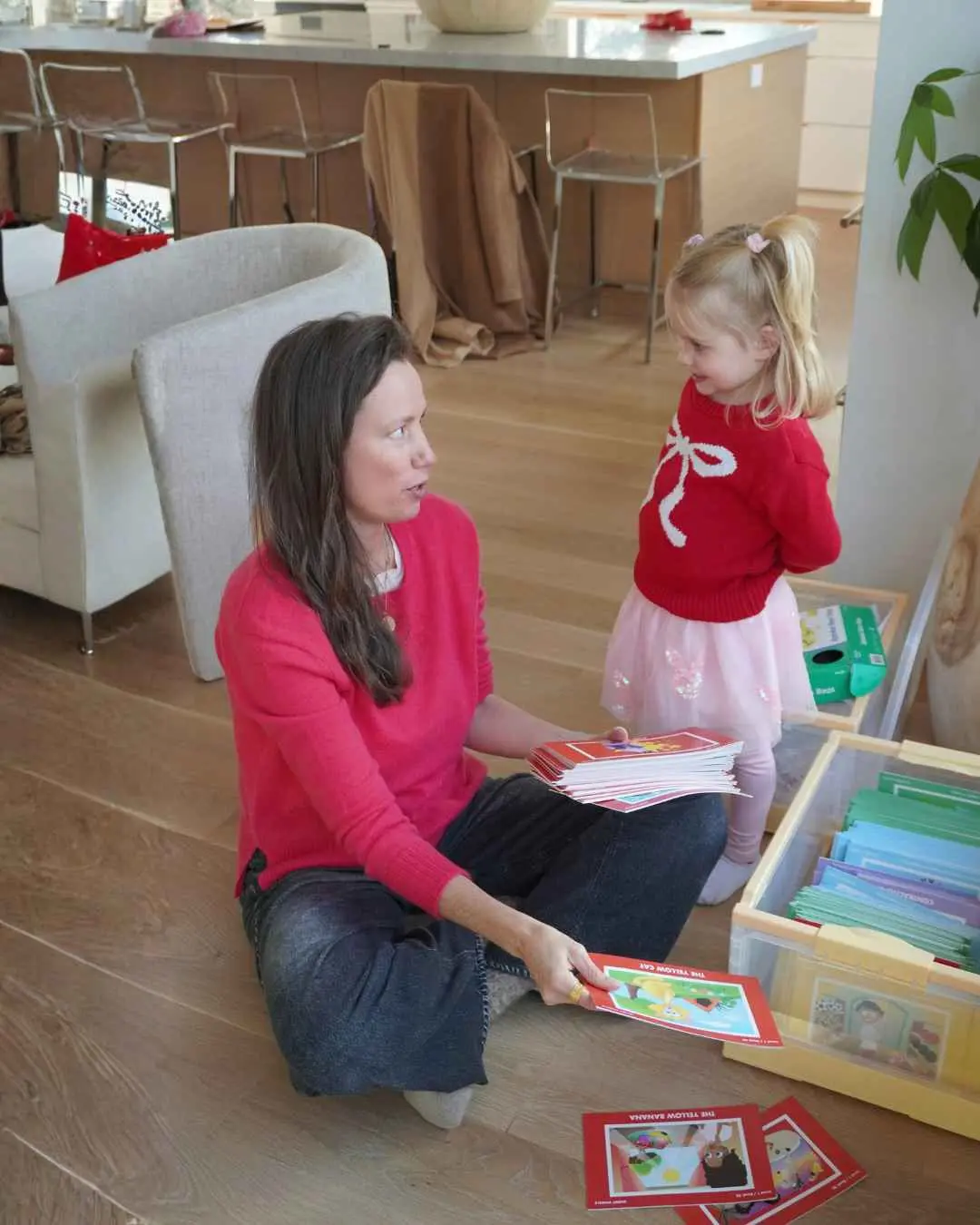
- Early Morning: Alexander starts her day with 20 minutes of Transcendental Meditation, a 10-minute smoothie and supplements, then 60 minutes answering important emails from her team or clients.
- Start of Workday: She dedicates 20 minutes to lymphatic exercises, followed by 30 minutes watering plants or working on house projects.
- Key Work Priorities: Alexander works on projects for the business for 4 hours, focusing on developing new educational products, expanding on her method, and handling strategic tasks.
- Midday: She drives to various health clinics for procedures that help her health, which takes 2 hours, and answers phone calls from the team or clients in between.
- Evening: She goes for a walk around her neighborhood, does weight training, or practices yoga for 60 minutes, followed by dinner with her husband or friends for 30 minutes.
- Night / Wind-down: She completes any unfinished work projects for the day for 60 minutes, watches a show for 60 minutes, and reads a few chapters from a book she is working through for 30 minutes.
- Last Thing: She practices Transcendental Meditation while falling asleep for 10 minutes.
Key Takeaways from Elizabeth Alexander’s Leadership Journey
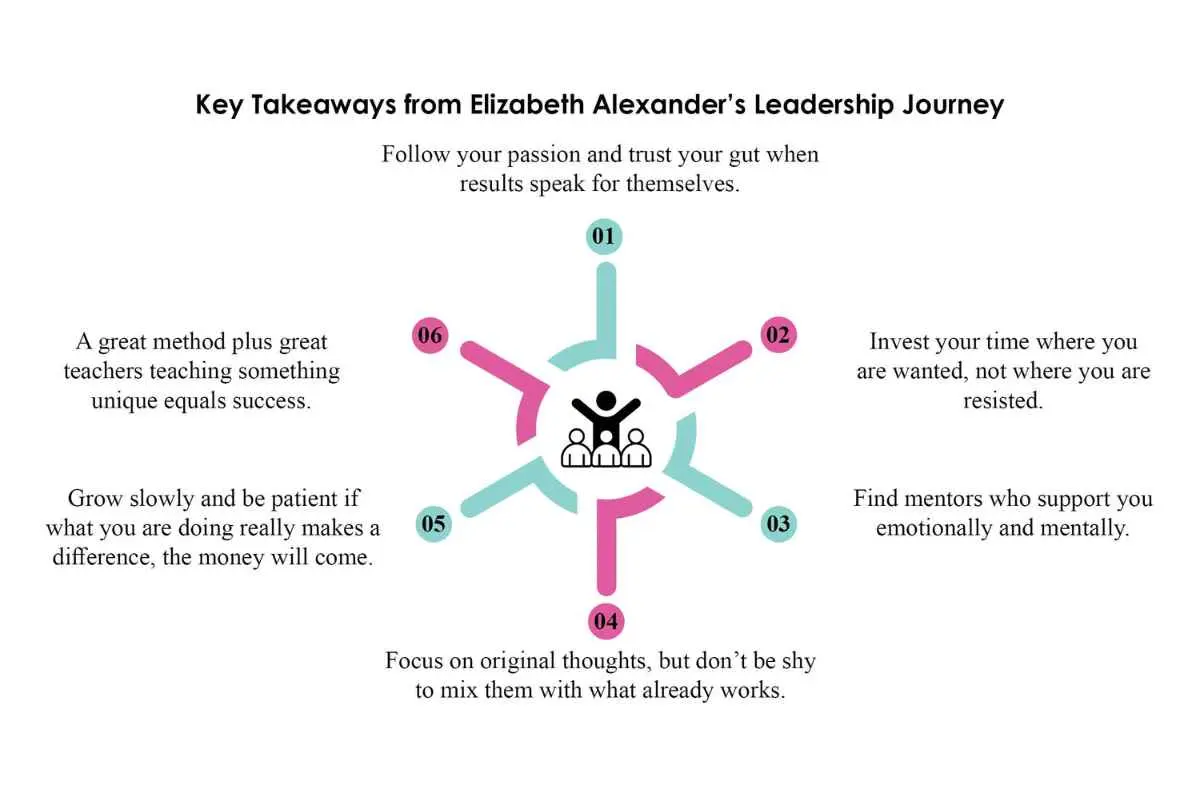
- Invest your time where you are wanted, not where you are resisted.
- Follow your passion and trust your gut when results speak for themselves.
- Find mentors who support you emotionally and mentally.
- Focus on original thoughts, but don’t be shy to mix them with what already works.
- Grow slowly and be patient if what you are doing really makes a difference, the money will come.
- A great method plus great teachers teaching something unique equals success.