
Flexibility has become a top priority for job seekers, but offering hybrid work without a fair system to govern it often leads to a two-tiered corporate culture. Remote employees end up feeling sidelined during key decisions, while office workers carry the burden of spontaneous, unrecorded meetings.
Adopting equitable hybrid engagement provides the structural fix for this disconnect. This management style centers on creating transparent systems where feedback, mentorship, and career growth are delivered equally to all team members, no matter where they log in.
Moving away from proximity-based management builds a healthy, inclusive environment where trust thrives. Unifying your distributed workforce starts with managing everyone on the same clear terms.
How does equitable hybrid engagement differ from normal engagement?
Normal employee engagement often assumes that teams work in the same place. Hybrid teams work in different ways. Equitable hybrid engagement makes sure both groups get a fair chance to join, speak, and connect. It does not mean treating everyone in the same way. It means removing barriers that can leave some employees out.
In-office workers may get more chances to join quick talks or team events. Remote workers can miss these moments. They may also have fewer chances to speak with managers.
Equitable hybrid engagement closes these gaps. Teams can share updates online and include remote staff in key talks. Managers can also check whether both groups feel heard and supported.
The main difference is simple. Normal engagement focuses on connection. Equitable hybrid engagement focuses on fair connection.
What are some strategies for equitable hybrid management?
Managing a hybrid team requires more than offering remote work. Leaders must build work practices that give every employee a fair chance to contribute. Small changes in meetings, communication, and performance reviews can reduce gaps between locations.
1. Run meetings “remote first”
Treat every meeting as if everyone joined remotely. Ask all employees to use the same online meeting tools, even when they sit together. Share the same information with everyone before the meeting and give remote workers equal chances to speak. This prevents office workers from taking over discussions through side conversations or quick exchanges.
Tips to implement:
- Ask everyone to join through the same meeting link.
- Share the agenda and materials before each meeting.
- Give remote employees space to speak during discussions.
2. Standardize access to leadership
Do not rely on quick office chats to support employees. Schedule regular one-to-one meetings so remote and office workers get similar access to managers. This also gives employees a clear space to raise concerns and ask for support.
Tips to implement:
- Schedule regular one-to-one meetings with each employee.
- Use the same meeting schedule for remote and office staff.
- Give employees a clear way to request extra time with managers.
3. Base evaluations on documented outcomes
Managers should judge work by results, not by who they see most often. An equitable hybrid engagement strategy should involve clear goals and written updates to make performance easier to assess across different work locations. This approach also supports fairer performance reviews.
Tips to implement:
- Set clear goals for each employee.
- Record key results throughout the review period.
- Use the same performance standards across locations.
4. Create consistent communication norms across locations
32% of remote employees feel highly engaged. That number can be raised by setting clear rules for how teams share updates, make decisions, and respond to messages. Everyone should know where to find key information, regardless of where they work. Consistent communication reduces confusion and keeps remote employees in the loop. As Special Advisor Jeffrey Sanow puts it:
“The true challenge lies in knowing what must remain confidential while communicating openly enough to build genuine confidence among colleagues and decision-makers.”
Tips to implement:
- Choose one main channel for important team updates.
- Set clear response times for different messages.
- Record key decisions where the whole team can access them.
Fair hybrid management starts with everyday work practices. Remote and office employees need equal access to meetings, leaders, information, and growth opportunities. Clear rules and consistent practices can help managers create a stronger experience for the whole team.
What are the common ways hybrid teams become inequitable?
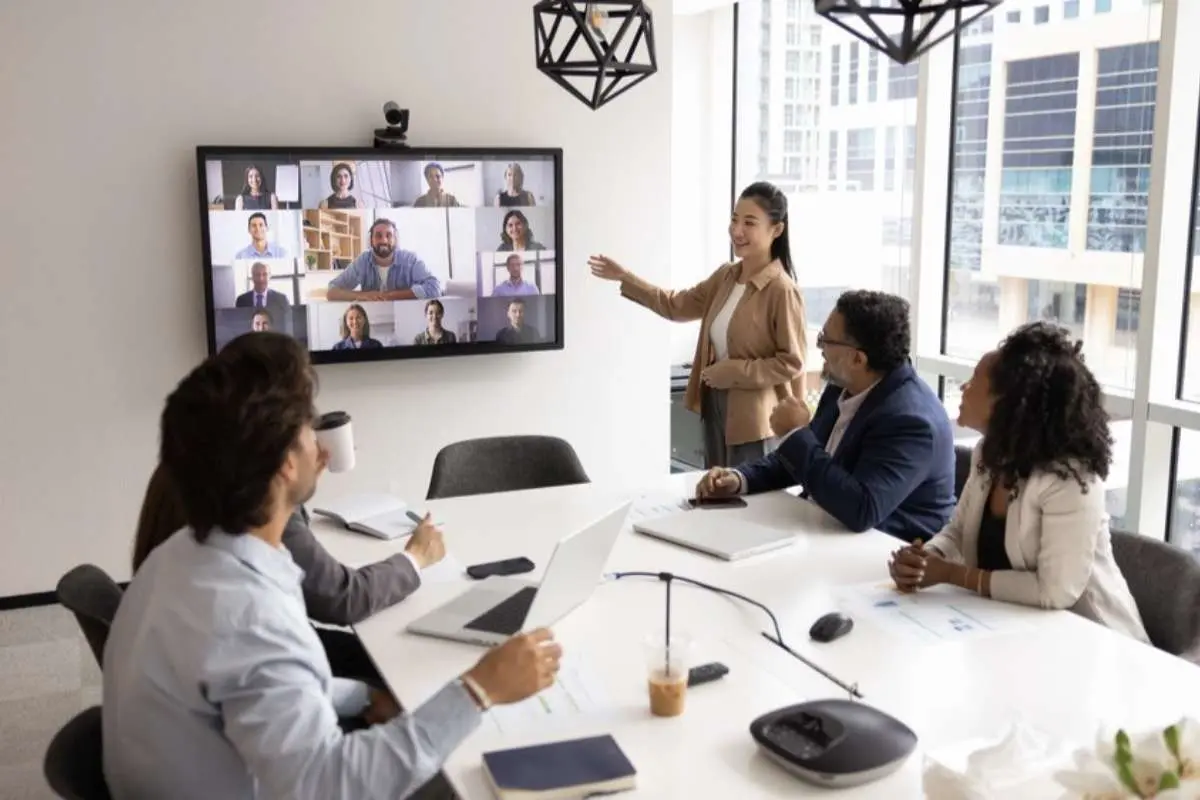
Hybrid teams can create gaps when work practices favor one location over another. These gaps may appear in meetings, leadership access, performance reviews, and daily communication. Over time, they can affect how employees work and grow.
1. Meeting design that favors in-room participants
Meetings can quickly become harder for remote employees to follow. Side conversations, unclear audio, and shared screens can leave them out of key discussions. When most decisions happen in the room, remote employees may have less input.
2. Informal access to leadership
Office workers often get more chances to speak with leaders informally. A quick hallway chat can lead to advice, feedback, or new ideas. Remote employees may miss these moments unless leaders create structured ways to connect.
3. Uneven visibility in performance reviews and promotions
Managers may notice employees they see often more easily. This can affect how they remember an employee’s work and effort. Without clear goals and records, remote workers may receive less recognition. They might even miss growth opportunities.
4. Mismatched communication norms between locations
Teams may use different habits across locations. Office workers might share updates in person, while remote workers rely on messages or calls. When important information stays in one channel, some employees can miss decisions, changes, or team updates.
Small differences in daily work can create larger gaps over time. Meeting habits, informal conversations, communication gaps, and performance reviews can all favor one location. Recognizing these issues early helps leaders build better ways of working.
How to measure equitable hybrid engagement?
Measuring fairness across a hybrid team requires more than checking overall engagement scores. Leaders need to compare employee experiences and outcomes across work locations. Here is how you can do it:
Step 1: Compare key employee outcomes
Start by comparing outcomes for remote and office employees. Look at promotions, project assignments, employee recognition programs, training access, and career opportunities. Large differences between groups may point to gaps in how employees receive support or opportunities.
Step 2: Review engagement scores by location
Break engagement survey results down by work location. Compare how remote and office employees rate communication, leadership access, teamwork, and support. An overall score can hide problems that affect one group more than another.
Step 3: Ask about inclusion and access
Use pulse surveys to ask direct questions about the hybrid experience. Ask whether employees receive the same information, join important discussions, and get enough time with managers. Keep responses separate by location so leaders can compare experiences.
Step 4: Look for patterns over time
One survey may not show the full picture. Track the same measures across several months or review periods. Repeated gaps can show where teams need to change their work practices.
Step 5: Act on the gaps
Use the findings to identify specific areas for change. Leaders may need to adjust meeting rules, improve communication, or create more equal access to managers. Measure the same areas again to see how to improve employee engagement.
Measuring employee engagement across locations helps leaders see gaps that overall scores can hide. Comparing employee experiences gives a clearer picture if your equitable hybrid engagement strategy is working. Leaders can then use these findings to improve practices, track progress, and create employee development programs.
What mistakes to avoid while managing hybrid teams?
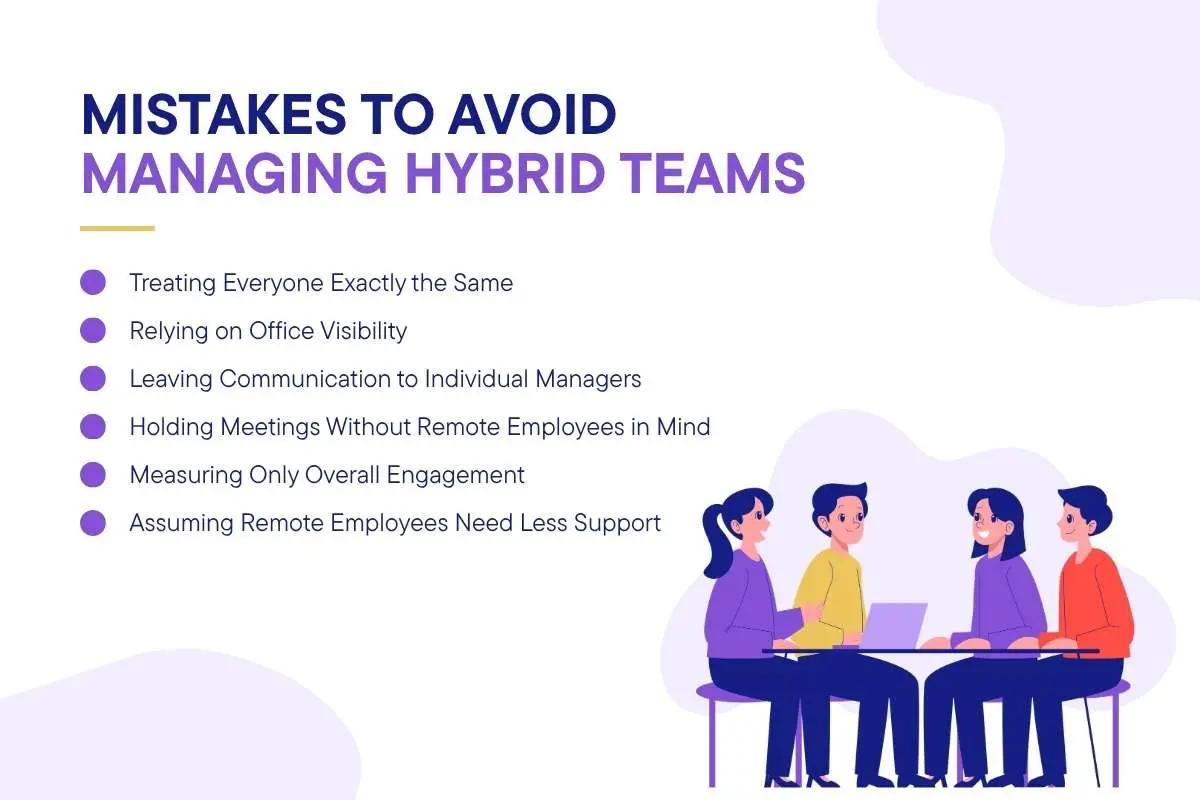
Building a fair hybrid team takes more than giving employees remote work options. Small management habits can still create gaps between office and remote workers. Avoid these common mistakes when managing a hybrid team.
1. Treating everyone exactly the same
Fairness does not always mean using the same approach for everyone. Remote employees may need different tools or ways to join team activities. Focus on giving everyone equal access to information, support, and opportunities.
2. Relying on office visibility
Employees who work in the office may seem more active simply because managers see them more often. Do not confuse visibility with performance or commitment. Use clear goals and results when reviewing employee performance.
3. Leaving communication to individual managers
Different managers may create different communication habits. This can leave some employees with more information than others. Set clear team rules for sharing updates, decisions, and important changes.
4. Holding meetings without remote employees in mind
A meeting can quickly become an office-only discussion. Side conversations and poor audio can leave remote workers behind. Use shared tools, clear agendas, and equal chances to speak.
5. Measuring only overall engagement
A strong team score can hide problems within one group. Compare survey results and employee outcomes by work location. This helps leaders find gaps that need attention.
6. Assuming remote employees need less support
Working from home does not remove the need for feedback, recognition, or career support. Remote employee engagement is needed to keep support consistent across locations.
Hybrid teams can become unfair without clear and consistent practices. Leaders should avoid relying on visibility, informal access, or overall employee engagement scores alone. A fair approach to equitable hybrid engagement gives every employee the support and opportunities needed to contribute and grow.
Conclusion:
52% of U.S. remote-capable employees work in a hybrid environment. This is why engagement should be limited to on-site workers and employees.
Giving employees the flexibility to work from anywhere only succeeds when everyone operates on a level playing field. Practicing equitable hybrid engagement transforms flexible work from a chaotic experiment into a sustainable, high-performing business strategy.
When organizations evaluate staff on real results rather than office presence, remote and in-person team members feel equally valued, supported, and motivated to grow. Eliminating location-based bias builds a culture of trust that keeps your entire workforce connected, productive, and committed for the long haul. As consultant Christine Riley VanDerVort says:
“Culture is not a statement on a wall. It is what people experience every day.”
FAQs
1. What is equitable hybrid engagement?
It is a leadership approach that ensures all employees have equal access to opportunities, promotions, resources, and support, regardless of whether they work in the office or remotely.
2. How do managers avoid proximity bias in a hybrid setup?
Managers avoid proximity bias by judging staff purely on measurable output, hosting virtual-first meetings, and documenting all key project decisions in shared digital spaces.
3. Why is fairness important in hybrid work environments?
Without intentional fairness, remote workers feel sidelined during promotion decisions, leading to resentment, lower engagement, and higher turnover among off-site talent.
4. What is the best way to keep remote employees included in team decisions?
Companies should adopt a “default digital” communication rule, ensuring that important discussions happen on public chat channels rather than inside conversations at an office desk.
5. How can leaders measure if their equitable hybrid engagement model is truly equitable?
Leaders can track equity by auditing promotion rates, raise distributions, and project assignments between remote and in-person staff to ensure both groups advance at equal rates