On June 23, 2026, the European Parliament Committee on Economic and Monetary Affairs (ECON) approved its stance on the digital euro regulation by 43 votes to 14, with one abstention, and authorized the immediate opening of “trilogue” talks with the Council and the Commission. In practice, this marks a significant step forward, but it is not the final stage of the legislative process.
Led by Aurore Lalucq and guided by rapporteur Fernando Navarrete (EPP, Spain), the vote finally ended a three-year standstill that began after the Commission first put the proposal on the table in June 2023.
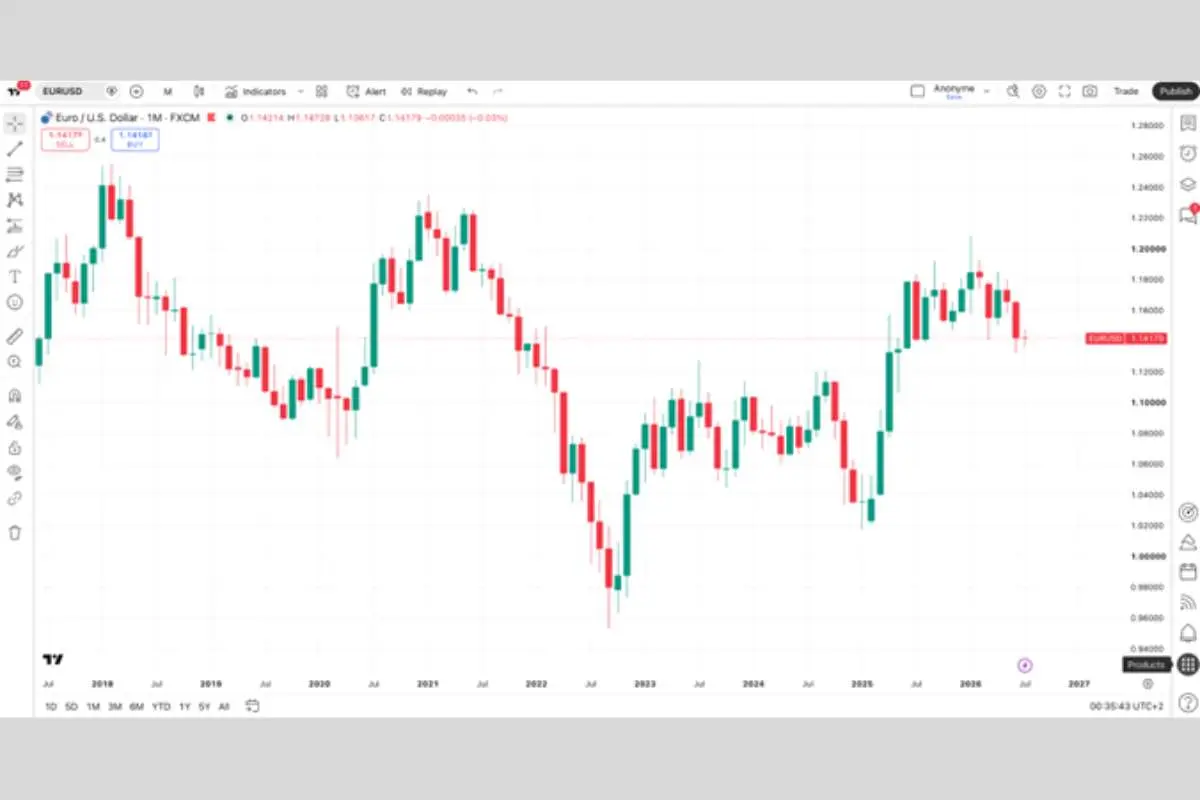
It is important to note that this does not create a digital euro. Instead, it establishes Parliament’s position before the three institutions start negotiating the final wording. Nevertheless, it is safe to say that the next chapter of the EUR/USD rivalry could increasingly extend into the realm of European Digital Currency.
The next step is a vote during the plenary session in Strasbourg in early July 2026, followed by trilogue negotiations aimed at reaching an agreement by the end of 2026. If the regulation gets adopted this year, a 12-month pilot program could start in the second half of 2027, with a first plausible issuance taking place roughly around 2029.
What could change

For payments. The stated goal is monetary sovereignty. According to ECB data cited by Euronews, Visa and Mastercard handle 61% of card payments in the euro area and nearly all cross-border card transactions. A central bank-backed payment system, accepted area-wide (with mandatory merchant acceptance), is designed to loosen that grip.
For stablecoins. This is the real competitive front, not Bitcoin. The ECB frames the project explicitly as a response to dollar-pegged stablecoins such as Tether’s USDT and Circle’s USDC. A risk-free, central-bank-backed European digital currency would compete most directly with euro stablecoins featured on the crypto heatmap, such as EURC and EURCV, for payments and settlement — precisely where those tokens were trying to establish themselves.
For banks. To keep deposits from fleeing into central-bank money, the regulation foresees a per-user holding cap. The ECB has said its analysis finds no financial stability risk up to €3,000 per person, though the final ceiling would be set within parameters agreed by the co-legislators. Regarding implementation costs, the ECB estimates expenses of €4–5.8 billion for the banking sector, below earlier industry estimates.
For privacy. The framework includes a secure offline mode allowing phone-to-phone transfers with cash-like confidentiality, so the ECB cannot see what citizens buy; reporting on the adopted text also points to zero-knowledge proofs built in by design.
What to expect in practice

Little in the short term, and possibly a private-sector alternative first. A consortium of major European banks, Qivalis (BNP Paribas, ING, UniCredit, CaixaBank and others), plans to launch a MiCA-compliant euro stablecoin in the second half of 2026.
That would bring the stablecoin to market years before the ECB’s 2029 target, potentially meaning that the practical euro payments race will be decided between EURC, a bank-issued stablecoin, and the digital euro, with the official European digital currency arriving last.
The June vote represents a meaningful milestone, but it is more about negotiation, not issuance. The variables worth tracking are the holding cap, the 2026 trilogue outcome, and whether Qivalis occupies the ground before the pilot program even begins.