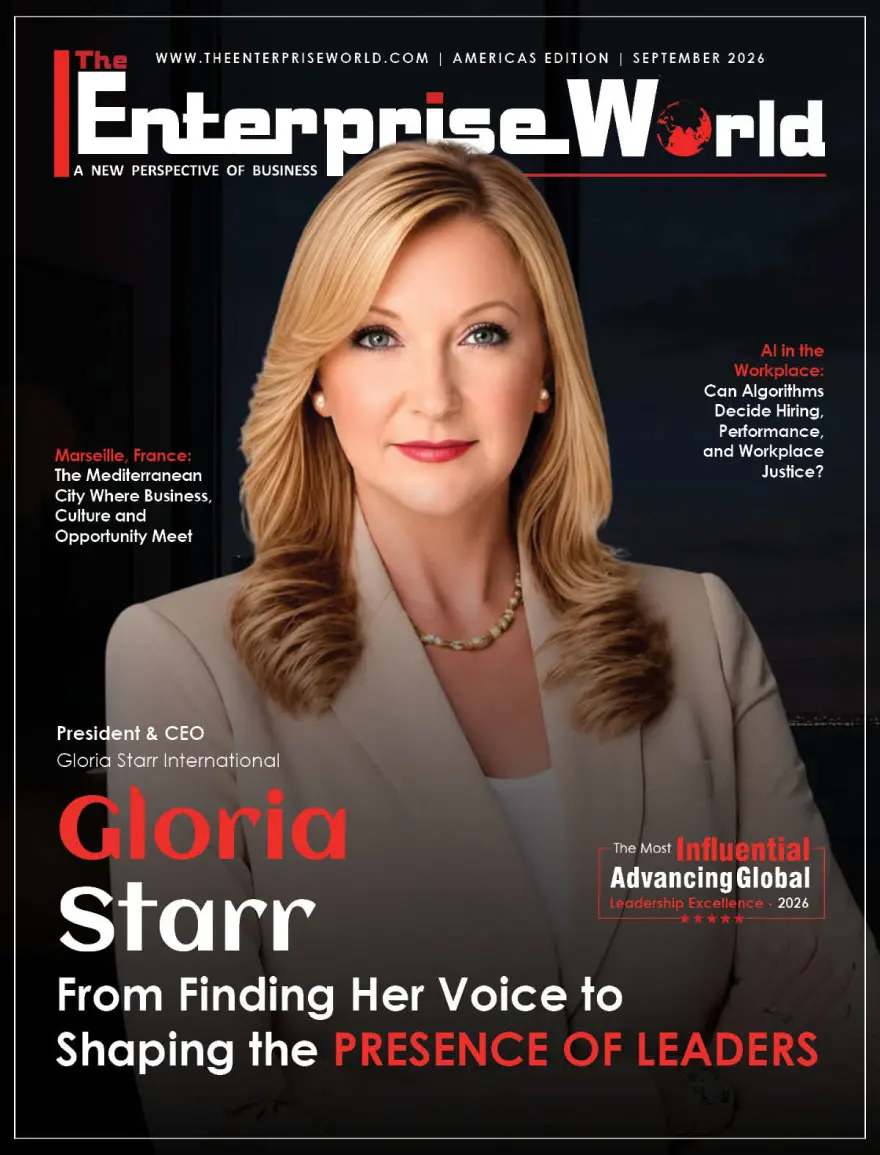
Leadership is judged not only by the decisions people make, but by how they communicate, build trust, navigate cultures, and carry themselves in moments that matter. In a professional world where credibility can influence relationships as much as expertise, executive presence and communication have evolved from personal attributes into strategic leadership capabilities. Few journeys illustrate this transformation as distinctly as one shaped by adversity, curiosity, continuous learning, and an unusual willingness to say “yes” to the next challenge.
That philosophy lies at the heart of Gloria Starr’s work as the President & CEO of Gloria Starr International, where decades of experience across executive presence, image, communication, etiquette, corporate training, and cross-cultural engagement have shaped a distinctive approach to developing leaders. From teaching adults at an age when many would still be finding their own professional footing to working across international cultures and professional environments, Gloria has built her influence around a simple conviction: lasting professional impact begins with trust.
Raised in Silence, Forced into Independence
Gloria Starr’s leadership journey did not begin in a boardroom, behind a corporate title, or with a carefully planned career path. It began at the age of 14, when she was put out of her family home and moved to a different city where she knew no one. Faced with circumstances that demanded independence far earlier than most, she found work at a flower shop. What could have been simply a means of survival became the beginning of an extraordinary professional journey built around learning, teaching, communication, and leadership.
She learned to design floral bouquets and quickly developed a genuine appreciation for the craft. But mastering one skill only made her curious about the next. Her instinct was never to stop at what she already knew. After becoming proficient in floral design, she began teaching floral design classes at a local college for adults. She then pursued photography, followed by Coaching and Leadership Development and Corporate Training.
Each new discipline added another dimension to her capabilities. Eventually, she focused on Executive Presence, Image, Communication, Etiquette, and Leadership Development areas that would become central to her professional identity. Her progression reveals a defining characteristic of Glorai’s leadership philosophy: learning is not a phase of a career; it is a lifelong practice.
“I love learning” is one of the simplest yet most revealing themes running through her responses. Whether attending conferences, reading business books, exploring the DiSC assessment, studying cultures, or accepting unfamiliar professional opportunities, she consistently approached development with curiosity. That mindset became especially important because she was often learning and teaching simultaneously.
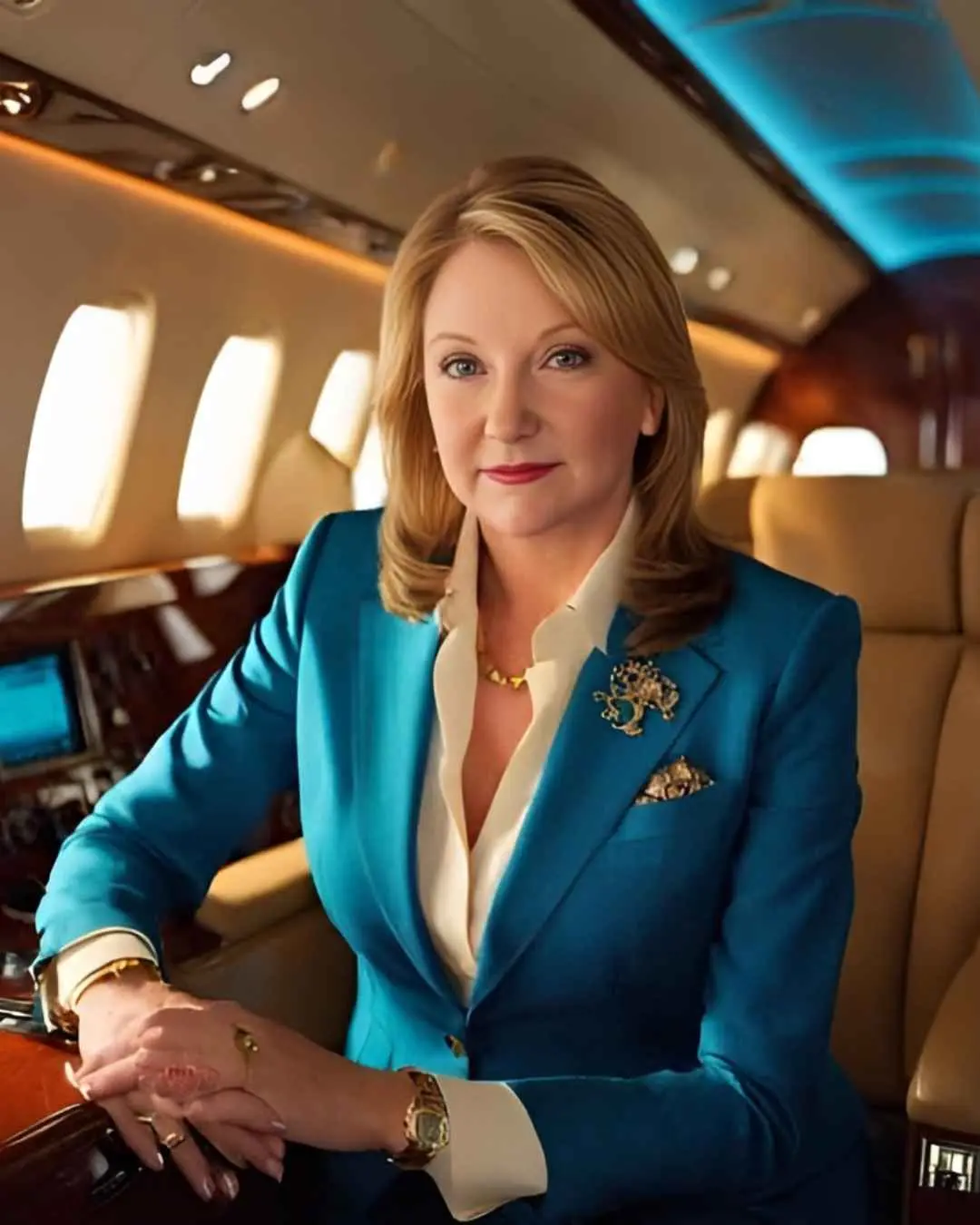
Teaching the Room She Was Too Young to Enter
One of Glorai’s earliest leadership challenges was also one of her most personal: her age.
At just 20, she was teaching men and women considerably older than herself. She still looked young, young enough that people could mistake her for a teenager while she was expected to stand confidently in front of mature professionals and guide them.
It was stressful.
Yet rather than allowing the age difference to undermine her authority, she responded by strengthening the depth of her knowledge. During the day, she read business books and continued building her expertise; in the evenings, she taught college classes. She understood that credibility could not depend solely on appearance or age. It had to be earned through preparation, competence, consistency, and the ability to create value for others.
Her journey also carried another, deeper challenge. Gloria Starr was raised “to be seen and not heard.” Finding the courage to speak out did not happen overnight. It took years for her to develop the confidence to use her voice fully.
That makes her later transition into professional speaking particularly significant. Speaking to companies and conferences meant deliberately stepping beyond her comfort zone. She acknowledges that she was “way out of” her comfort zone, but stopping was never an option.
The woman who had once struggled to find her voice eventually built a career around helping others communicate with greater confidence and presence.
Turning Manners into a Business Advantage
While already teaching evening classes at the local college, she saw an opportunity to expand beyond floral design and introduce Image, Etiquette, and Manners for adults. The response was immediate: the new classes filled with both men and women. But her approach was never about teaching etiquette simply as a collection of social rules. She connected manners and presence directly to professional relationships and business outcomes.
Her curriculum focused on practical elements of professional interaction: meeting and greeting, handshaking, voice and tone, gestures, posture, and the broader way individuals present themselves in business environments. At the heart of her philosophy was a fundamental commercial insight: making a sale is not simply about presenting an offering. Trust has to come first.
That principle became central to her work with executives and professionals. Presence, communication, and behavior were not superficial considerations; they influenced how people perceived credibility, confidence, approachability, and professionalism. Her work therefore occupied an important space between personal development and business performance. She helped professionals understand that how they communicate can influence how effectively they build relationships and earn trust.
Global Experiences That Changed the Classroom
Gloria’s professional development eventually moved far beyond the classroom. When opportunities arose to travel internationally, she said yes. Her international experiences took her to many countries, with Sudan being the last international destination she visited just before the war. These journeys were much more than professional assignments. They became an education in culture, communication, clothing, food, hospitality, and human behavior.
Her fascination with international cultures had personal roots. Her mother, M. Dezell, was a professional photographer associated with National Geographic, exposing her from an early age to the world beyond her immediate surroundings. That curiosity stayed with her throughout her career. She became fascinated by the garments she encountered in different countries and purchased clothing in many of the places she visited. Yet understanding those garments was also professionally important. When working with international clients, she had to understand what was appropriate within different cultural contexts and industries.
She learned to prepare before entering a country. She would read about its culture and learn as much as possible beforehand. When meeting clients, she would begin with an introduction and often compliment their traditional garments. Those simple gestures could open doors. Sometimes, clients would invite her to eat with them. She would sit and participate, recognizing that accepting hospitality could be an important part of building relationships, while remaining mindful of cultural expectations.
These experiences taught her that effective leadership cannot be separated from cultural awareness.
Trust Before Transformation

Working internationally also taught Gloria Starr that expertise alone does not automatically create influence. Some clients were initially surprised when she arrived because they had expected a man to lead the engagement. Others came from cultures and industries with practices very different from those she knew. The challenge was not simply to introduce new ideas. It was to earn enough trust for people to become willing to consider them.
Gloria Starr observed that senior professionals often rely on approaches they have used successfully for years. Asking them to change requires patience. They may initially resist, but once they trust the person guiding them and see the value of the proposed changes, they become more open. Her method was therefore not about imposing a single model of professional behavior. She preferred to show clients a variety of options and allow them to determine what aligned with their own personality, environment, and objectives.
That approach reflects an important aspect of her leadership style: transformation becomes more sustainable when people participate in it rather than simply being told what to do.
The Discipline Behind Long-Term Success
Professional longevity has been closely connected to an appetite for learning. She describes herself as someone who loves challenges and new experiences. She typically says yes when an opportunity presents a challenge, and that openness repeatedly expanded the boundaries of her career.
She also embraced tools that helped her better understand people and behavior, including DiSC. Conferences became another consistent part of her professional life. She attended them frequently because she viewed every gathering as another opportunity to learn. This commitment to continuous education also influenced how she taught.
Gloria Starr gave her best to clients and remained open to their questions. More importantly, she welcomed criticism. Rather than viewing criticism as a threat to her authority, she saw it as an opportunity to expand and improve her teaching methods. That willingness to remain teachable even while occupying the role of teacher is one of the strongest threads in her professional story.
It also explains why her career evolved so significantly. She did not build her expertise once and then simply deliver the same knowledge repeatedly. She kept learning, observing, adapting, and adding new dimensions to her work.
From Florist to Professional Speaker
Before professional speaking became a major part of Gloria’s career, there was the florist who loved designing flowers and teaching others how to create beautiful arrangements. That beginning might appear distant from executive presence, corporate training, or leadership development. In retrospect, however, it reveals the pattern that would define her entire career: master a skill, teach it, become curious about something more, and then move forward.
Floral design taught her precision and creativity. Photography expanded her visual awareness. Leadership development and corporate training gave her tools for understanding professional behavior. Image, etiquette, communication, and executive presence eventually brought these strands together. Professional speaking and mentoring then provided a larger platform through which she could share that knowledge.
Her career demonstrates that leadership expertise does not always emerge from a conventional corporate ladder. Sometimes, it is constructed through a series of unrelated experiences that gradually reveal a common purpose. That purpose became helping people strengthen how they show up, communicate, connect, and lead.

Saying Yes to the Next Challenge
A recurring word in her professional story is “YES.” She said yes to teaching adults when she was young. She said yes to learning new disciplines. She said yes to speaking engagements despite being outside her comfort zone. She said yes to international travel. She said yes to working across cultures and industries that required her to adapt.
That openness did not mean every experience was easy. Some were stressful. Some required her to overcome assumptions about her age or gender. Others demanded cultural sensitivity and preparation. But she treated difficulty as part of the learning process. Her career consequently became less about following a fixed blueprint and more about remaining receptive to the next opportunity to grow.
Leadership After the Career
After decades of global education, speaking, mentoring, and professional development, Gloria Starr is now enjoying a different rhythm of life.
She has always been a morning person, beginning her day early and working through the day before teaching evening college classes from 7 p.m. to 9 p.m. She openly describes herself as someone who loves work.
Today, however, she is also enjoying free time and gardening.
The transition does not diminish the significance of the career behind her. Instead, it offers a natural conclusion to a professional life defined by movement, curiosity, and contribution.
From being sent away from home at 14 to building expertise across multiple disciplines, from teaching older adults at 20 to speaking before professional audiences, and from navigating unfamiliar cultures to helping executives develop greater presence, Gloria’s journey has consistently required her to find the courage to take the next step.
Her story is ultimately not about a single profession. It is about the power of continual reinvention.
She learned early that circumstances can change without warning. Her response was to learn, work, adapt, and keep moving.
And perhaps that is the most enduring lesson in Gloria Starr’s leadership story: confidence is not something a leader simply possesses. It is something built—one challenge, one conversation, one lesson, and one courageous “yes” at a time.
The Confidence to Lead, The Presence to Influence
- Credibility Is Built Through Preparation
- Trust Comes Before Transformation
- Continuous Learning Fuels Reinvention
- Cultural Intelligence Expands Leadership Influence
- Saying Yes Creates New Leadership Possibilities