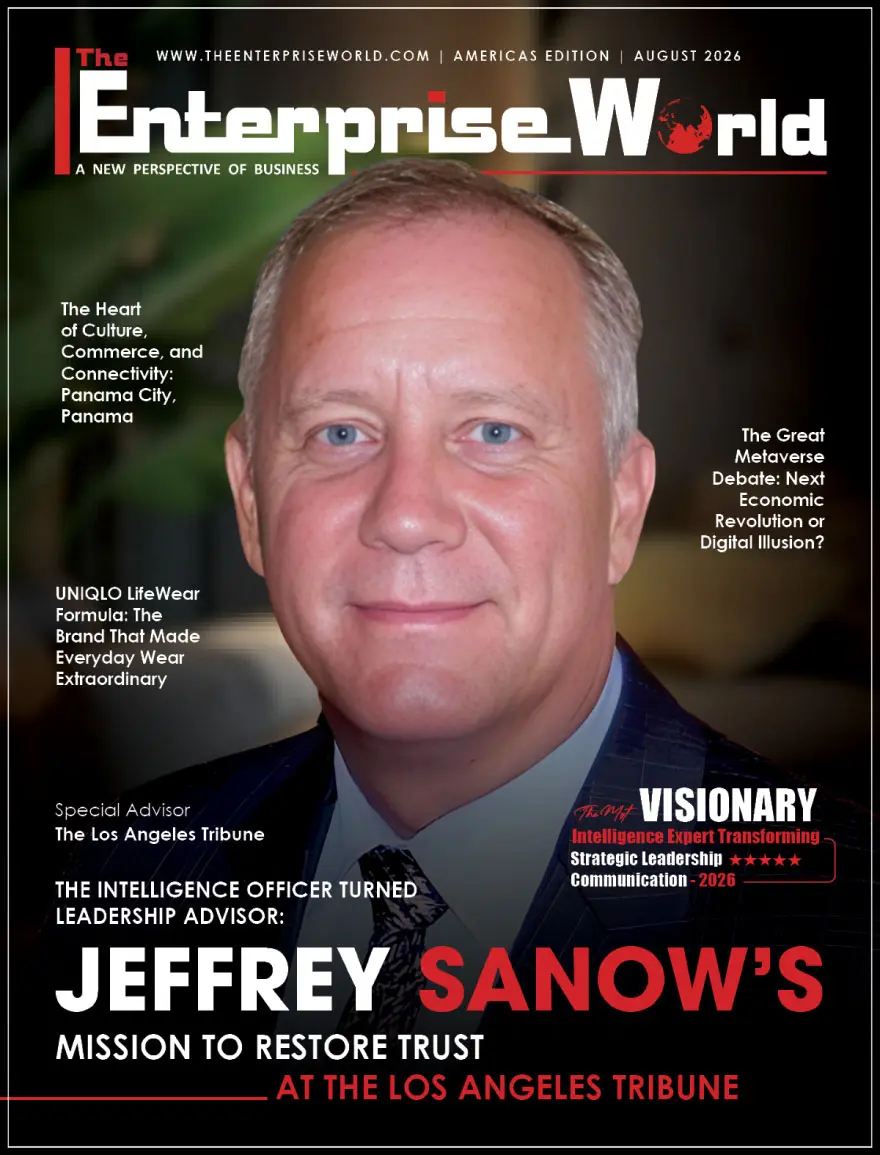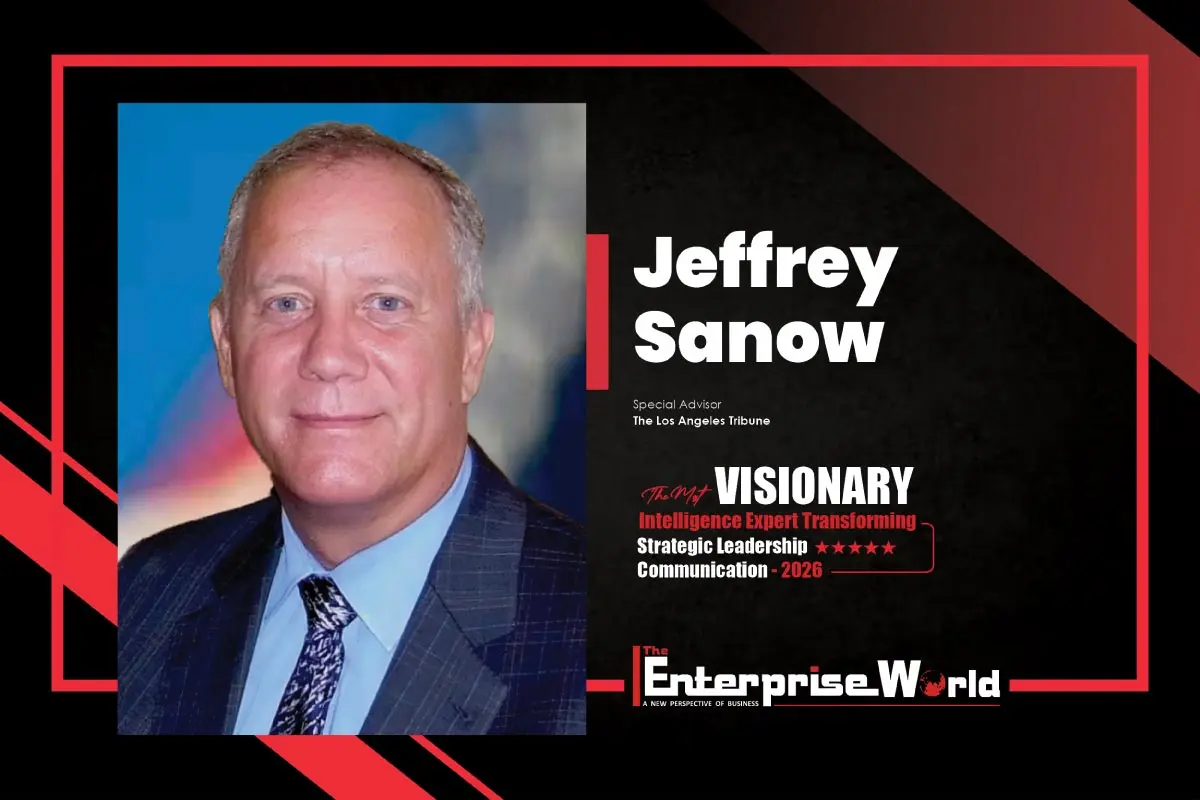
In a world overwhelmed by information yet desperate for insight, where technology accelerates choices but frays the human bonds that hold organizations together, strategic leadership communication faces a defining moment. Organizations now face a paradox: they possess more information than ever before, yet trust the very currency of influence has never been scarcer. Into this void steps Jeffrey Sanow, Special Advisor at The Los Angeles Tribune, a leader who refuses to let algorithms replace judgment or speed override integrity. What makes his approach radically different is its origin not in corporate boardrooms, but in the life-and-death stakes of intelligence operations, where persuading someone to act could mean their execution, and where credibility cannot be faked.
Jeffrey Sanow is bringing this operational wisdom into executive leadership, teaching that uncertainty is navigated not through prediction but through mastering details, managing ego, and understanding deeply before prescribing change. His Four Quadrants of Leadership Character, Competence, Communication, and Courage offer a deliberate counterweight to an era obsessed with technological solutions, reminding organizations that the fastest-evolving technology cannot replace the slow, consistent work of building trust. With decades of experience across Africa, Asia, the Middle East, and beyond, Sanow carries a credibility forged in the field, not in theory, and his mission is to ensure the next generation of leaders remembers that character will always be the ultimate competitive advantage.
The unlikely path of Jeffrey Sanow
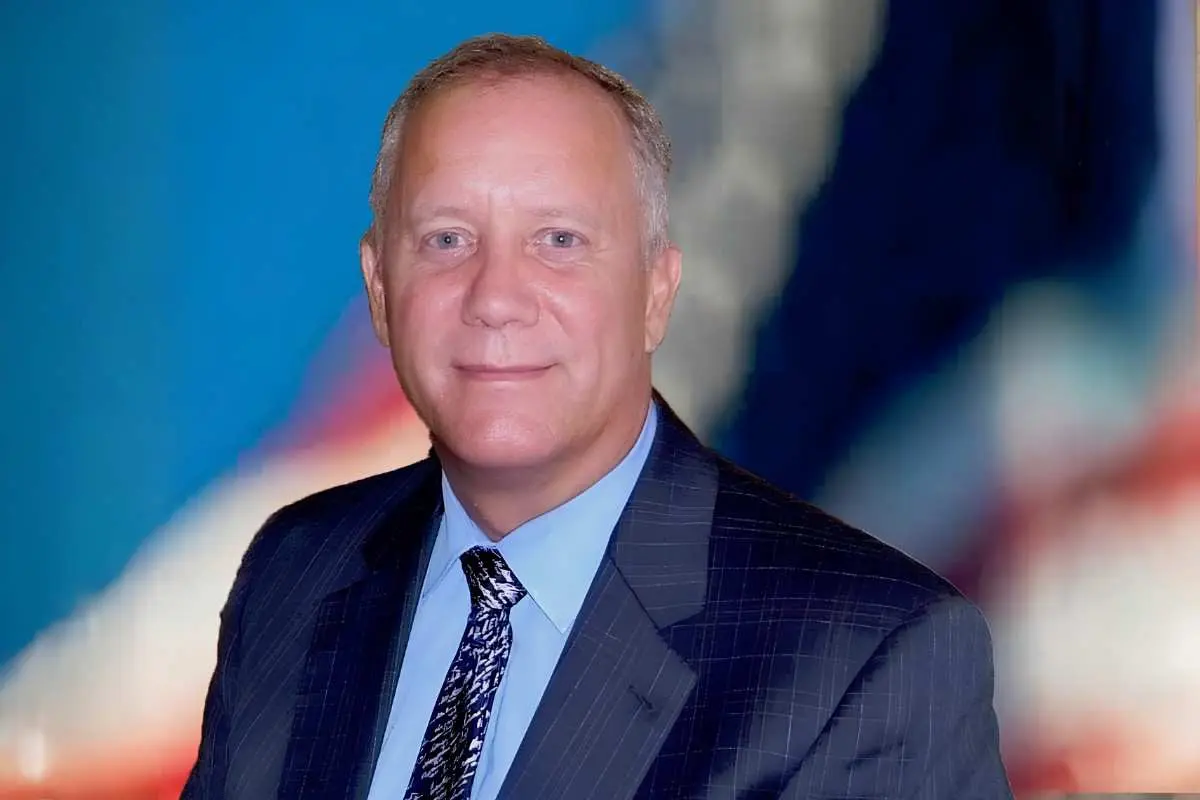
Jeffrey Sanow describes his entry into intelligence and strategic leadership communication as equal parts curse and blessing. The curse arrived at age eleven, when his parents informed him of their pending divorce. What followed were years of emotional displacement, remarriages that rearranged his life without consultation, step-siblings and step-parents who turned home into unfamiliar territory, and a childhood that felt less like being raised than being unmoored. By the time he reached Ohio State University as a struggling nineteen-year-old sophomore, he was searching for an escape.
That escape materialized in the most unremarkable of places: a bus stop flyer reading “Join the Peace Corps and see the world.” He skipped class, walked into the campus office, and met a representative who immediately recognized his value. Sanow was studying mechanized agriculture and had been fixing equipment and driving tractors since childhood. He submitted his application in November 1978, boarded a plane for Tunisia in June 1979, and never looked back.
The Peace Corps became his escape, a door swinging open to a world beyond fractured family ties and Ohio winters. Extending his service to Gabon thrilled his nurse mother, who instantly connected it to Albert Schweitzer’s hospital; Jeffrey Sanow, attempting intellectual poise, could only muster “Who?” The real turning point was that bus stop flyer and his decision to walk through an unfamiliar door, gaining languages, cultures, and lifelong friendships. His father later captured it perfectly: “How ya gonna keep ’em down on the farm, after they’ve seen Paree?” After completing his degrees in Texas, the international realm had become his permanent home.
A story of humility in the olive groves
Picture a twenty-year-old Jeffrey Sanow, fresh off the plane from Ohio, sitting cross-legged on the warm Tunisian earth beneath the shade of ancient olive trees as weathered farmers pass a communal pot of steaming couscous, the aroma of spices filling the afternoon air. They welcome him generously, treating this skinny white American boy with genuine warmth and hospitality, and the meals are unforgettable shared laughter, broken Arabic, and the quiet contentment of men who have worked the land for generations. Sanow feels accepted, even valued, but when the plates are cleared and the real work begins, everything shifts.
He climbed onto their combines with absolute confidence, knowing these machines inside and out. The American method was simple: cut just below the wheat head, harvest only the grain, and leave the stalks standing. So imagine his dismay when the farmers nodded politely at his expert advice, then returned to cutting at ground level, sending entire stalks through the machine day after day with quiet dismissal. His frustration simmered, his twenty-year-old ego bruised. Why wouldn’t they listen? Could they not see the superiority of his method?
The answer arrived without fanfare; nobody explained it; he had to observe, question, and piece together the truth. These farmers weren’t ignorant; they were harvesting grain and producing animal feed simultaneously. By cutting at ground level, stalks passed through the combine, becoming chopped straw for cattle, horses, goats, and mules, with leftover grain adding nutrition. They didn’t grow hay separately because they didn’t need to because their methodology wasn’t backward but brilliant, an elegant solution refined through generations of practical wisdom.
That moment taught Jeffrey Sanow that understanding why something exists must precede any attempt to change it. Every culture carries practices rooted in valid reasons, even when forgotten. Decades later as a CIA manager, he would dismiss anyone answering “We have always done it this way” phrases he saw as intellectual death, echoing the stubbornness of those Tunisian farmers. The frustration lingers, but so does the gratitude, for they taught him what no classroom could: expertise without humility is arrogance waiting to be exposed.
Navigating uncertainty ft. Four steps of high-stakes persuasion
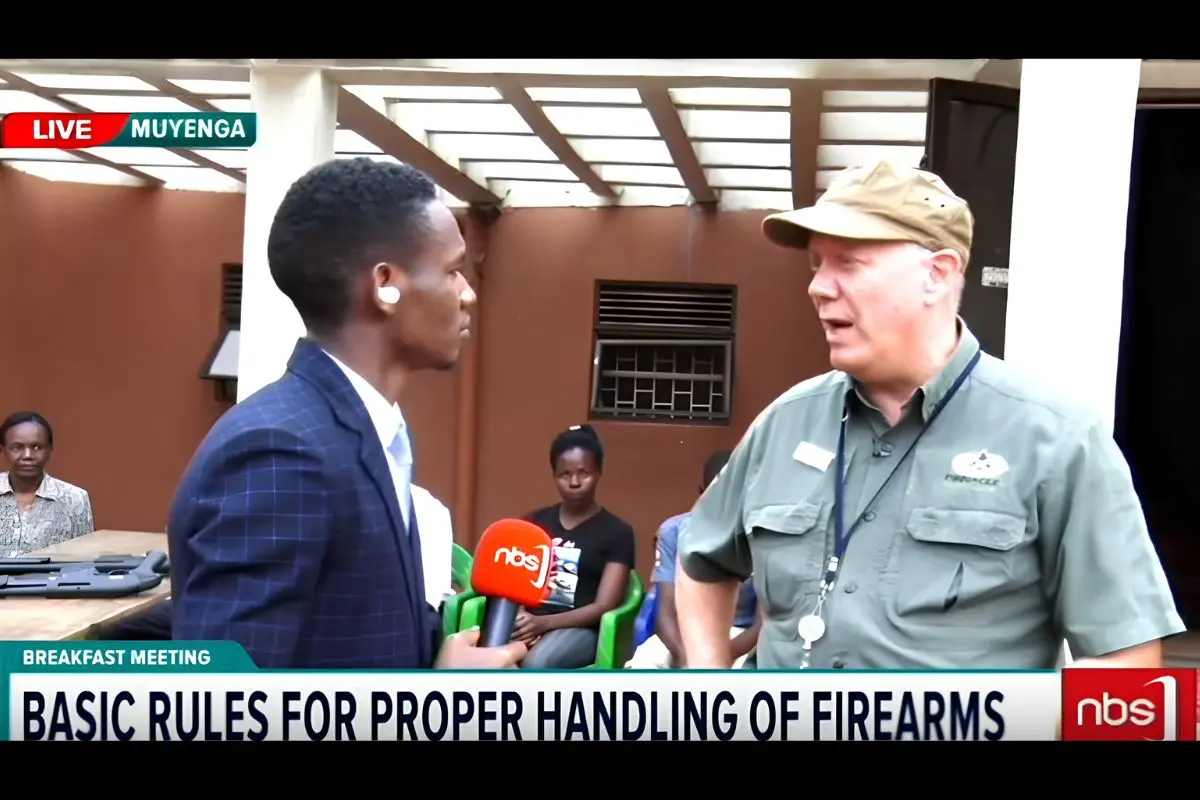
The approach to helping leaders navigate uncertainty draws from an unlikely classroom the high-stakes world of intelligence operations, where persuasion can mean the difference between life and death. As Jeffrey often notes, the objective of most operations officers is to persuade someone to perform an act that could lead to their arrest, execution, and the impoverishment of their entire family. If that is not the definition of persuasion in a high-risk environment, nothing is.
What differentiates his methodology at The Los Angeles Tribune is its foundation in mastering details and managing ego. Uncertainty is navigated not through prediction but through understanding, echoing Richard Mayne’s wisdom that “the devil is in the details.” Successful leaders check their own egos while growing the egos of their teams, creating environments where people feel valued enough to share critical information.
His framework rests on four steps: establishing credibility through expertise and relationships, though most managers overestimate their own; framing common ground by identifying shared benefits, which demands deep audience understanding; providing vivid proof through stories and metaphors that lend emotional weight to uncertain outcomes; and connecting emotionally by matching expression to the audience’s state without overwhelming. In leadership, presentation matters as much as position without trust, even the most brilliant strategy fails.
The four quadrants of leadership & a framework forged in uncertainty
From over thirty years in intelligence and leadership, Sanow learned that leadership is tested when information is incomplete, anxiety is high, and perfect options don’t exist. The strongest leaders build strength across four interconnected quadrants, weakness in any one eventually undermines the rest.
- Character: True character is measured by actions taken when no one watches and integrity costs dearly honesty, humility, and accountability earning trust through consistency. Where lives depend on integrity, brilliance without character becomes a liability, and admitting uncertainty strengthens credibility rather than weakening it.
- Competence: Good intentions mean nothing without the ability to execute. Leaders must gather evidence, evaluate competing possibilities, assess risks, and act while remaining adaptable to new information. Competent leaders remain perpetual students, knowing that yesterday’s expertise becomes tomorrow’s limitation the moment growth stops.
- Communication: Organizational failures rarely stem from bad strategy—they come from unclear expectations, withheld information, and unheard voices. Great leaders communicate with clarity and listen deeply. People tolerate uncertainty far better than silence, and explaining what is known, unknown, and underway builds confidence when it matters most.
- Courage: Frequently misunderstood as fearlessness, courage is refusing to let fear dictate decisions. It requires making unpopular choices, confronting uncomfortable truths, admitting mistakes, and resisting pressure that conflicts with ethical principles, while demonstrating the resilience to recover from setbacks without being defeated.
The quadrants reinforce each other’s character without competence yields empty intentions, courage without wisdom becomes recklessness. Organizations survive market downturns but collapse under poor leadership. Leaders cultivating all four leave behind more than success: they leave trust, stability, and confidence that outlast any crisis.
A lesson in clarity and courage
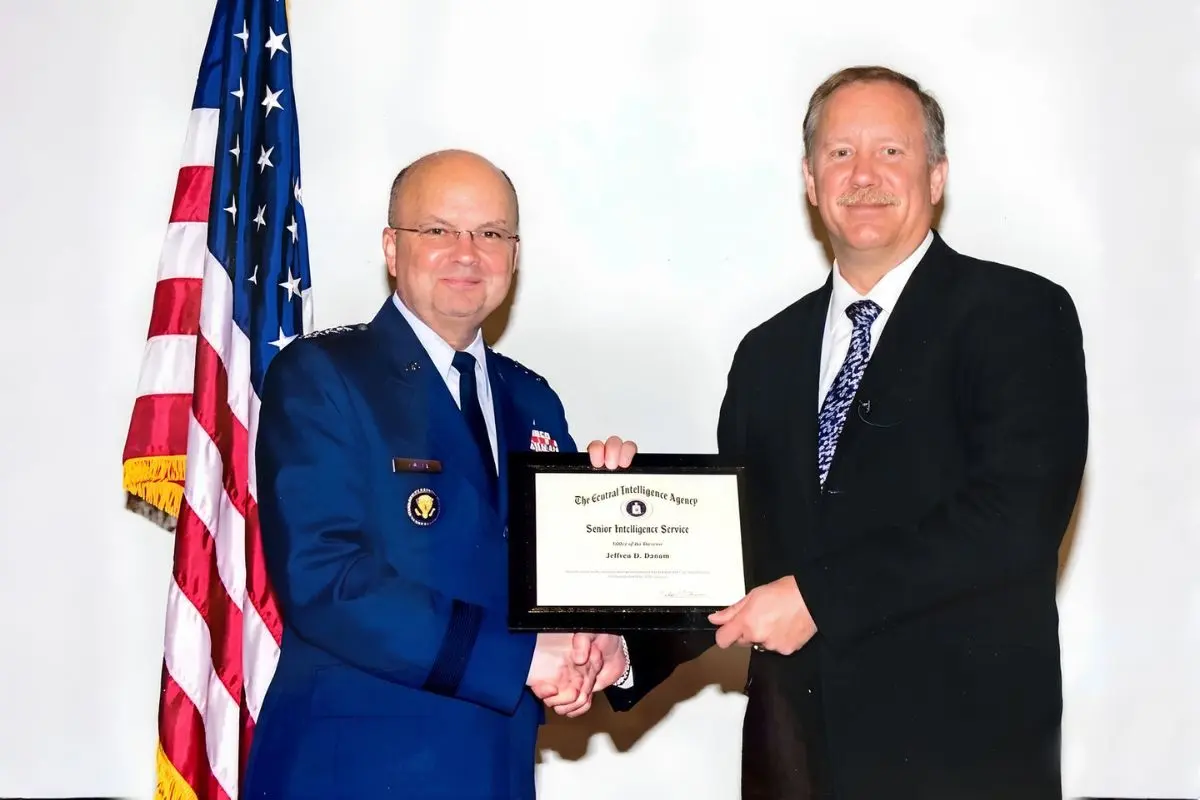
During an overseas assignment in international security, Sanow’s team faced a challenge that no sophisticated technology could solve. Multiple government agencies, private-sector organizations, and international partners each held pieces of an emerging security puzzle, but conflicting assessments, cultural differences, and communication barriers made the complete picture elusive. One source suggested an imminent threat while another viewed the same activity as routine had leadership accepted either report at face value, resources could have been dangerously misallocated.
The team’s critical realization was that information is merely data intelligence is information evaluated, verified, contextualized, and made actionable. Rather than rushing to recommend action, they built a common operating picture, deliberately seeking dissenting opinions because organizations become vulnerable when consensus forms too quickly. They compared independent sources, evaluated reliability, examined historical patterns, and identified confirming or contradicting indicators until a clearer pattern emerged what appeared unrelated was actually connected.
Equally vital was how conclusions were communicated. Instead of overwhelming senior leaders with hundreds of pages, the team explained what they knew, what they believed, their confidence level, remaining unknowns, and available options. They replaced phrases like “We’re certain” with honest confidence levels and substituted “Everything is under control” with transparent acknowledgment of monitored uncertainties. That honesty built genuine credibility.
The broader lesson extended far beyond government service. The best organizations are not those with the most information but those that ask the best questions, foster psychological safety so early warning signs surface, intentionally invite disagreement before confidence replaces curiosity, and remain willing to adjust decisions when new evidence emerges.
The trends reshaping leadership & technology as enabler, trust as currency
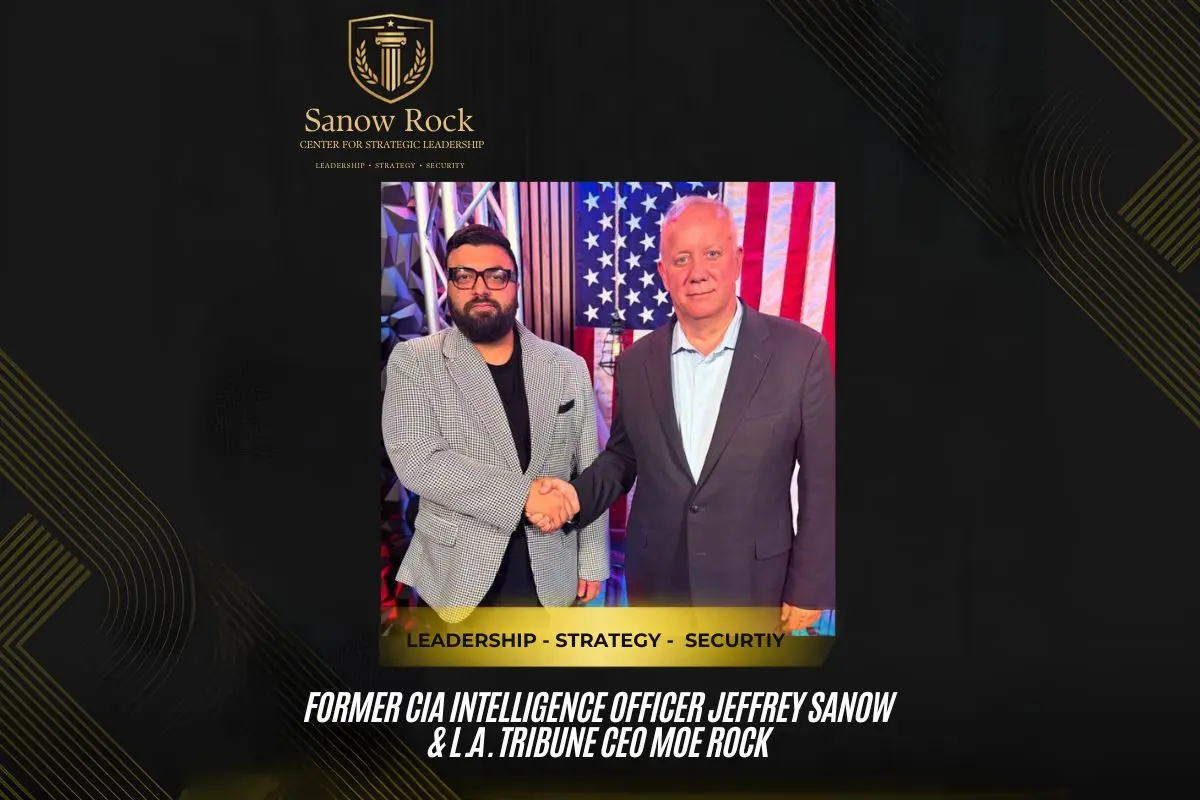
The fields of intelligence, leadership, and strategic communication are undergoing profound transformation, yet Sanow believes the most successful organizations will recognize that technology changes how we work, not why people succeed or fail. Organizations still rise or fall based on the quality of decisions and the trust people place in their leaders.
Artificial intelligence will become an intelligence amplifier rather than a replacement for human judgment. While AI can gather, organize, and analyze information at unprecedented speed, it cannot understand human motivation, cultural nuance, or recognize hesitation and deception across a table. Intelligence failures rarely stem from information scarcity but from misunderstanding the information possessed, and the best leaders will combine AI analysis with experienced human judgment.
Trust is becoming the world’s most valuable strategic asset in an era where deepfakes and disinformation make authenticity increasingly difficult to determine. Business leaders must adopt the intelligence mindset of verifying facts before reacting, evaluating source reliability, and recognizing that once credibility is lost, rebuilding becomes extraordinarily difficult. Companies becoming trusted sources of reliable information will hold enormous competitive advantage.
Human intelligence grows more vital as information becomes abundant. People still leave organizations not for salary but because they feel unheard and undervalued. Strategic communication must shift from information sharing to meaning-making, since people tolerate difficult news far better than confusing news. Cross-cultural leadership becomes essential as the same behavior signals confidence in one culture and arrogance in another, while adaptability trumps predictability when assumptions can change overnight. Ultimately, character becomes the ultimate competitive advantage the faster technology evolves, the more people value integrity, and no technology can replace trust built through consistent honesty and competence.
Thought leadership beyond the advisory role
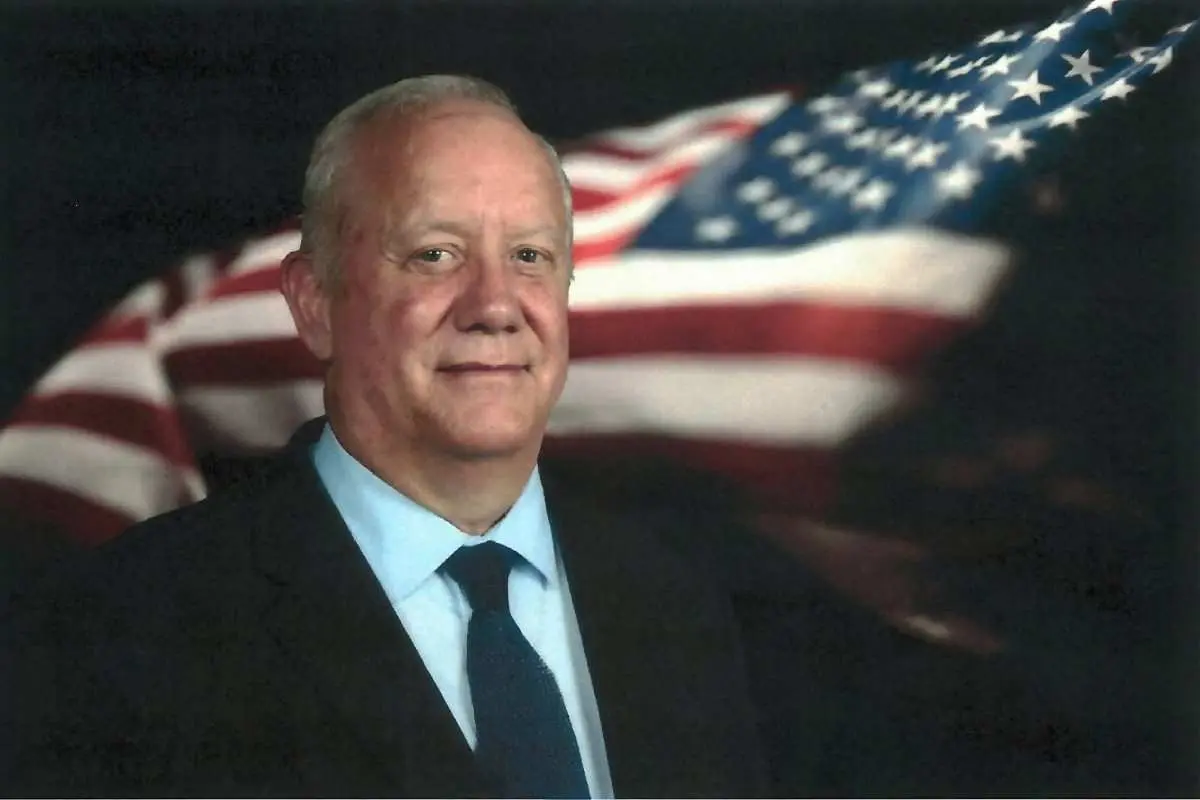
Sanow believes experience holds limited value if not passed forward, channeling this conviction through extensive public speaking to business leaders, security professionals, educators, and faith-based groups on topics ranging from human intelligence and strategic decision-making to Middle Eastern history and cross-cultural understanding. His goal is not simply to inform but to provide practical insights audiences can apply immediately, anchored in one consistent message: technology transforms our world, yet leadership remains rooted in trust, integrity, sound judgment, and understanding people.
Writing and publishing offer another avenue, with books like Humint for Humanity and Damascus: City of Shadows reflecting decades of firsthand experience blended with historical research and leadership lessons, while his role as contributing editor to the Israel Tribune extends his reach further. Mentoring has remained central throughout his career during his intelligence years, he trained younger officers in technical skills, sound judgment, ethical decision-making, and professional confidence, principles he believes apply equally to business, government, and nonprofit leadership. He continues urging emerging leaders to remain curious, sharpen their critical thinking, and never stop learning.
Media and podcast engagements let him discuss intelligence, national security, and geopolitical risk in accessible ways, always prioritizing thoughtful analysis over sensationalism. Building bridges across disciplines drawing on experience spanning Africa, Asia, Europe, the Middle East, and the United States reinforces his belief in collaboration, cultural intelligence, and respectful dialogue. For Sanow, thought leadership carries a deeper responsibility: encouraging critical thinking and humility, helping develop leaders who value truth, evidence, integrity, and human understanding in an era of rapid change.
Trust as leadership’s most valuable currency
Trust, Sanow believes, is the foundation of both intelligence and leadership; without it, intelligence becomes unreliable, leadership loses legitimacy, and organizations fracture from within. It is never established by position or authority but earned through integrity, competence, consistency, and respect. The true challenge lies in knowing what must remain confidential while communicating openly enough to build genuine confidence among colleagues and decision-makers.
Ethics must never be situational; the real test comes when pressure peaks and failure carries heavy consequences. Credibility demands resisting overstatement, as “We know for sure” is among intelligence’s most dangerous phrases. Sanow taught officers to communicate confidence levels honestly and tell leaders what they needed to hear, not what they wanted to hear, because analysis shaped by politics ceases to be intelligence and becomes advocacy.
He built environments where tough conversations thrived and assumptions were challenged openly. Viewing criticism as opportunity, he learned even unfair feedback sparks growth when it forces self-examination. Mentors taught him that decision-makers crave clarity, not volume so he distilled every assessment into five questions: what we know, what we think, our confidence level, what we don’t know, and what comes next. Years working across continents reinforced that communication is shaped by culture, and asking questions instead of making assumptions strengthens both relationships and understanding.
In today’s era of deepfakes and misinformation, trust must be earned repeatedly through transparency and consistency. Leaders must resist pressure to react faster than facts justify, having the courage to acknowledge what remains under investigation rather than pretending to possess certainty. Ultimately, trust is built not through speeches but through countless daily decisions demonstrating honesty, competence, fairness, humility, and accountability the currency no technology can replace.
Key takeaways:
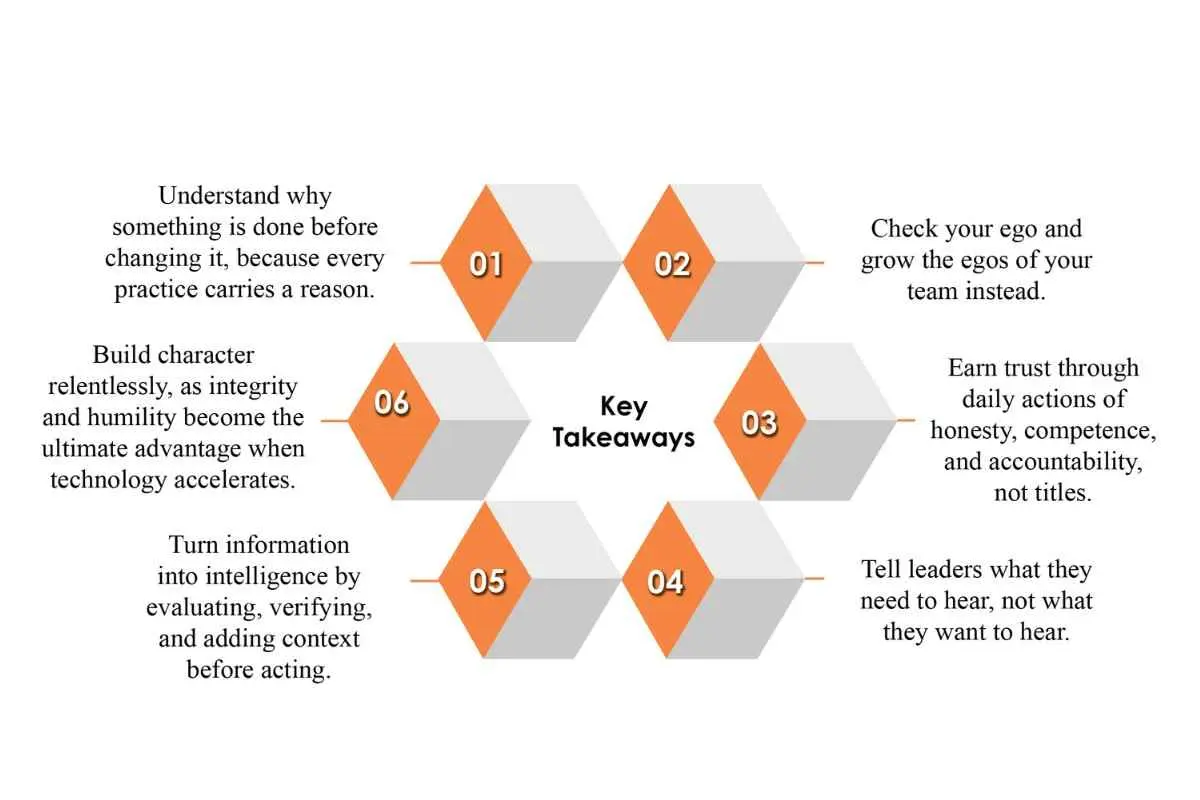
- Understand why something is done before changing it, because every practice carries a reason.
- Check your ego and grow the egos of your team instead.
- Earn trust through daily actions of honesty, competence, and accountability, not titles.
- Tell leaders what they need to hear, not what they want to hear.
- Turn information into intelligence by evaluating, verifying, and adding context before acting.
- Build character relentlessly, as integrity and humility become the ultimate advantage when technology accelerates.