Keyword:
- The Fed Is Reprioritizing Inflation Control Over Growth Support
- Policy Communication Is Becoming Less Predictable and More Data-Driven
- A Broader Institutional Reset Is Underway Inside the Fed
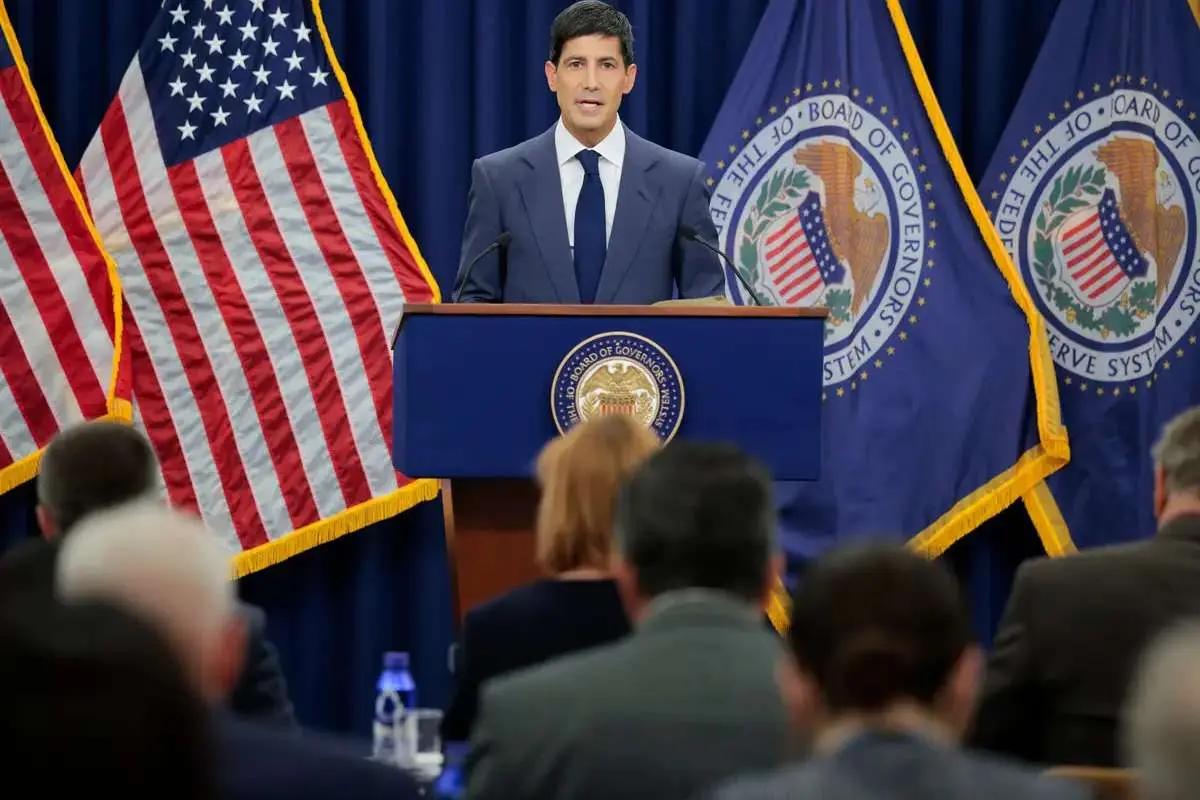
Federal Reserve Chair Kevin Warsh began his leadership with a closely watched Federal Open Market Committee meeting held on June 16–17, 2026, where policymakers unanimously voted to keep interest rates unchanged in the 3.5% to 3.75% range. While the decision itself aligned with market expectations, the broader message from the meeting pointed toward a more cautious and inflation-focused policy stance going forward.
Inflation remains above the Federal Reserve’s long-term target of 2%, with officials acknowledging that price pressures have proven more persistent than previously anticipated. Contributing factors include ongoing energy price volatility, global supply constraints, and uneven economic recovery across key sectors. Despite relatively stable labor market conditions, policymakers signaled concern that inflation could remain elevated for longer than expected.
A notable shift emerged in the Fed’s internal projections, where a growing number of officials now see the possibility of rate increases later in the year. This marks a clear reversal from earlier expectations that had leaned toward rate cuts in 2026. The revised outlook reflects growing uncertainty about how quickly inflation can be brought under control without significantly weakening economic growth.
Warsh, in his first public remarks as chair, reinforced that restoring price stability remains the central objective. He noted that monetary policy is already exerting a restrictive influence on parts of the economy, particularly housing and interest-sensitive credit markets. However, he also made it clear that the Federal Reserve would not hesitate to tighten further if inflation does not move sustainably toward its target.
Hawkish tone reshapes market expectations and investor sentiment
Beyond the rate decision, the tone of Kevin Warsh’s first press conference signaled a marked departure from the more predictable communication style of previous leadership. Instead of offering clear forward guidance, Warsh emphasized a data-dependent approach, avoiding commitments on the future direction of interest rates.
This shift in communication immediately influenced financial markets. Equities weakened, while Treasury yields rose as investors reassessed the likelihood of near-term rate cuts. Market expectations quickly adjusted, with pricing now reflecting the possibility of one or more rate hikes before the end of the year rather than policy easing.
The Fed’s updated economic projections added to the reassessment. Inflation forecasts for 2026 were revised upward, reinforcing concerns that price stability may take longer to achieve than previously expected. At the same time, growth projections remained relatively steady, suggesting that the economy continues to show resilience despite tighter financial conditions.
Market analysts interpreted the overall tone as a deliberate shift toward a more disciplined and traditional anti-inflation strategy. The absence of any indication of imminent rate cuts further strengthened expectations that monetary policy will remain restrictive for an extended period. While short-term volatility increased across equities and bonds, underlying fundamentals such as corporate earnings strength and steady consumer demand continued to provide some economic support.
The broader reaction highlights how dependent markets had become on expectations of policy easing. Kevin Warsh more restrained approach has effectively reset those assumptions, placing greater emphasis on economic data rather than central bank signaling.
Institutional overhaul and shift in federal reserve strategy
In addition to monetary policy decisions, the Federal Reserve under Warsh has initiated a broad internal review that signals the beginning of a structural transformation within the institution. The overhaul is designed to reassess how the central bank interprets economic data, develops policy, and communicates decisions to the public and financial markets.
As part of this effort, several specialized task forces have been established, focusing on inflation measurement, labor market analysis, productivity trends, communication strategy, and data interpretation. These groups are expected to examine whether existing frameworks remain effective in a rapidly changing global economy.
A key change underway is in the Fed’s communication approach. Kevin Warsh has moved away from traditional forward guidance, opting instead for a more restrained and less predictive style of messaging. This shift reduces explicit signals about future interest rate paths, aiming to prevent markets from becoming overly reliant on central bank projections.
At the same time, the Federal Reserve is reviewing its internal forecasting models and operational structure. Greater emphasis is being placed on real-time economic data rather than long-term projections, reflecting a broader push toward more adaptive policymaking. The central bank is also evaluating its balance sheet strategy and overall policy toolkit as part of the reform process.
Supporters of these changes argue that a more flexible and less transparent Fed could reduce market distortions and improve policy effectiveness. However, critics warn that reduced clarity may increase uncertainty and contribute to higher financial market volatility, particularly during periods of economic stress.
Overall, Kevin Warsh’s first Federal Reserve meeting has set a decisive tone for his tenure. The combination of a firm anti-inflation stance, a shift toward data-driven policymaking, and a sweeping institutional review suggests that the central bank is entering a new phase—one defined by tighter policy discipline and a fundamental rethink of how it communicates and operates in modern financial markets.