
“Leadership is a decision enacted before it is a designation granted.”
Jim Carlough
Most corporate training programs operate under the flawed assumption that teaching managers new management tactics automatically produces a motivated, high-performing team. Yet, executive coach Jim Carlough argues that the real breakdown in modern organizations is a gap in identity. True leadership development for engagement occurs only when rising executives stop viewing leadership as a series of behavioral tricks and begin stepping into the internal identity required to earn genuine trust.
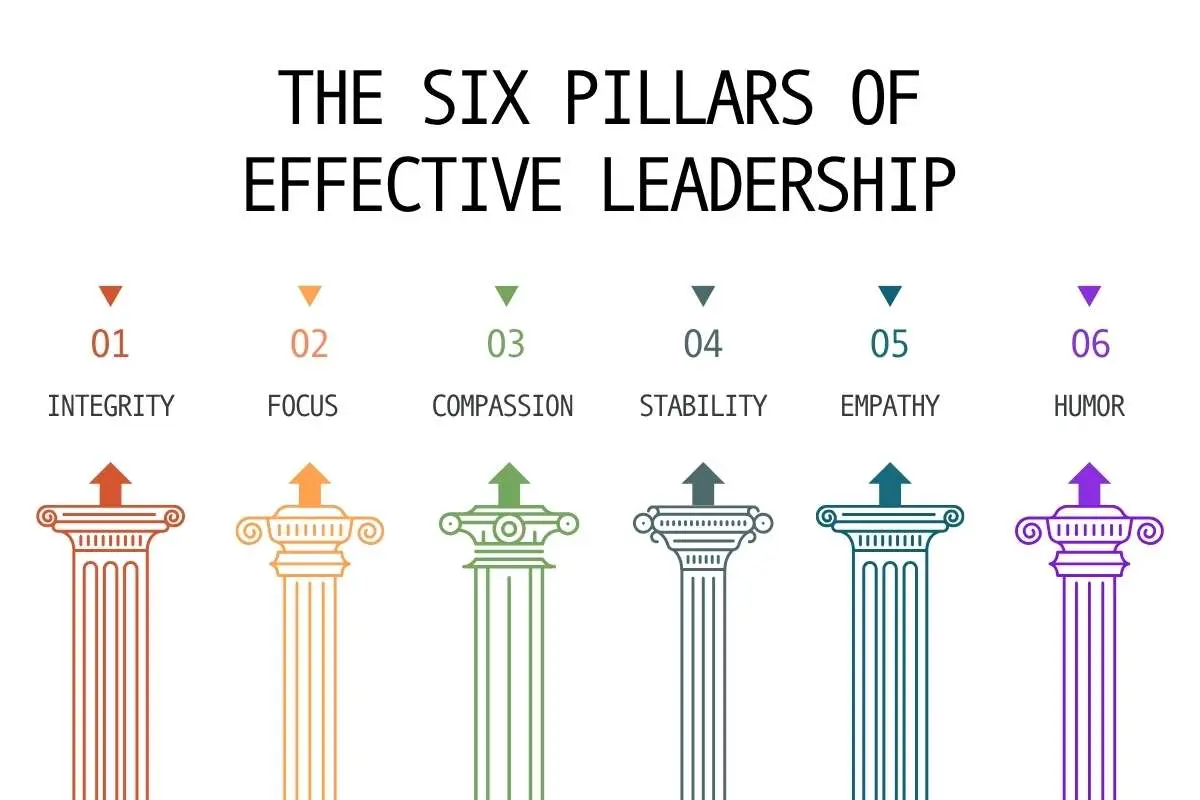
Bridging this identity gap requires grounding leaders in the Six Pillars of Effective Leadership. Shifting the development focus from external mechanics to these internal, human-centric pillars changes how managers show up on the floor.
So, in this article, we will take a look at the leadership pillars developed by Jim Carlough and see how they can be helpful in building a leadership unit that drives employee engagement.
Leadership development for engagement: the six pillars of effective leadership
Managers account for at least 70% of the variance in team engagement.
Great leaders need strong habits that guide their actions when work gets hard. Jim Carlough’s Six Pillars of Leadership focus on six such habits: integrity, focus, compassion, stability, empathy, and humor. These pillars shape how leaders impact employee engagement and earn trust, handle pressure, support employees, and make sound choices when teams face change or uncertainty.
1. Integrity
Integrity shows people that a leader can be trusted. It also gives leaders a clear guide when they face hard choices. Carlough sees integrity as a key part of strong leadership because people watch what leaders do when pressure rises. Leaders build trust when they keep their word, admit mistakes, and take responsibility for their choices. Their actions must match what they tell others.
How to build it:
- Keep promises, even when they become hard to keep.
- Admit mistakes instead of hiding them.
- Explain major decisions in a clear and honest way.
- Hold yourself to the same standards you set for others.
2. Focus
Leaders often deal with many demands at once. New requests, meetings, problems, and shifting goals can pull their attention in different directions. Focus helps leaders decide what needs their time first. Carlough links focus with disciplined action. A leader must know which work matters most and help the team stay with it. Clear priorities also reduce wasted effort and confusion.
How to build it:
- Set a few clear goals for the team.
- Remove tasks that add little value.
- Protect time for important work.
- Check progress against the main goals each week.
3. Compassion
Demanding work can affect people in many ways. Employees may deal with heavy workloads, personal concerns, or long periods of pressure. Compassion helps leaders respond to these needs without lowering work standards. Carlough places value on understanding people as part of good leadership. A leader who listens and offers support can build stronger trust and help employees stay committed during hard periods.
How to build it:
- Ask employees what is making their work harder.
- Listen before giving advice or solutions.
- Give people support when they face real challenges.
- Show care while still keeping clear work standards.
4. Stability
Change can make teams feel unsure about what comes next. Leaders can reduce that uncertainty by staying calm and giving clear direction. Stability does not mean avoiding change. It means helping people understand what has changed, what has stayed the same, and what they should do next. Carlough sees this steady approach as useful when leaders face pressure, setbacks, or major business changes.
How to build it:
- Share clear updates when plans change.
- Explain what the team can control.
- Keep your decisions and messages consistent.
- Avoid reacting too quickly when problems arise.
5. Empathy
Leaders do not see every workplace issue in the same way as their employees. A senior leader may focus on business results, while an employee may worry about workload, job security, or career growth. Empathy helps leaders understand these different views. It also gives employees more reason to speak openly. Stronger relationships can help leaders spot problems early and respond with better judgment.
How to build it:
- Listen to employees before making a judgment.
- Ask how a decision may affect their work.
- Give people space to explain their concerns.
- Consider different views before making major choices.
6. Humor
Long periods of pressure can drain a team. Humor can give people a short break and help reduce tension. Carlough includes humor among his leadership pillars because leaders do not need to act serious every minute of the day. Used with care, humor can make leaders more approachable and help teams stay connected during difficult periods. The goal is to ease pressure, not ignore it.
How to build it:
- Use light humor when the situation allows it.
- Avoid jokes that target an employee or sensitive issue.
- Read the room before making a joke.
- Never use humor to dismiss a real concern.
Together, these six pillars give leaders a stronger base for daily decisions and difficult moments. Integrity builds trust, while focus keeps work moving. Compassion and empathy help leaders understand their people. Stability gives teams direction during change, and humor can ease pressure. Carlough’s framework shows that strong leadership depends on how leaders behave, especially when work becomes difficult.
How to build your own approach to leadership development for engagement?

Leadership development for engagement works better when it builds both skills and confidence. A step-by-step approach can help leaders understand what they need, where they struggle, and how they want to lead.
Step 1: Identify the skills you need
Start by looking at the skills your role demands. These may include decision-making, communication, delegation, or conflict management. Find the areas where you need more practice.
Step 2: Build confidence through coaching
Training can teach useful skills, but confidence often needs more support. Work with a coach or mentor who can help you handle new duties, make decisions, and trust your judgment.
Step 3: Define your leadership identity
Think about the kind of leader you want to become. Identify your values, strengths, and beliefs. Use them to guide your choices and build leadership engagement strategies and a style that feels natural.
Step 4: Apply your learning at work
Put new skills into practice through real tasks. Take ownership of decisions, lead meetings, or manage a project. Real experience helps turn training into stronger empathetic leadership engagement habits.
Step 5: Ask for regular feedback
Ask managers, peers, and team members what you do well and where you can improve. Use their feedback to adjust your approach and keep building your confidence.
Step 6: Review your progress
Set a regular time to review your growth. Check which skills have improved, where you still feel unsure, and what support you need next. This keeps leadership development for engagement active rather than treating it as a one-time employee development program.
A strong leadership development for engagement approach grows with the leader. Skills training gives leaders the tools to do their jobs well. Coaching and self-reflection help them trust their own decisions. Regular practice and feedback then turn that learning into daily habits. This balanced approach can help new and experienced leaders lead with greater confidence and further enhance employee engagement.
Conclusion
True organizational commitment cannot be engineered through superficial productivity workshops or top-down directives. When executive coaching focuses on building internal belief, the resulting shift in management behavior fundamentally changes the employee experience. Long-term retention and team alignment stem directly from the character of the person leading the room. Investing in identity-first leadership development for engagement equips department heads with the human-centric groundedness needed to earn trust, resolve daily friction, and build an energized culture capable of sustained operational excellence.
FAQs
1. How does an identity-first approach differ from traditional skill-based leadership training?
Traditional training focuses on external tactics and management tricks, whereas identity-first development builds the internal self-belief needed to execute those tactics authentically.
2. What are Jim Carlough’s Six Pillars of Effective Leadership?
The Six Pillars are Integrity, Focus, Compassion, Stability, Empathy, and Humor. Together, these human competencies build organizational trust and team resilience.
3. Why does manager insecurity lead to lower employee engagement?
Insecure managers rely on rigid control rather than open collaboration, creating friction that drives employees into passive compliance.
4. How do soft skills like humor and stability drive measurable business outcomes?
Stability keeps teams grounded during volatility, while humor diffuses high-stakes pressure to prevent burnout and maintain momentum.
5. What is the first step in shifting a company’s framework of leadership development for engagement?
Organizations must evaluate rising leaders on foundational human capabilities like empathy and ethical clarity rather than technical mastery alone.