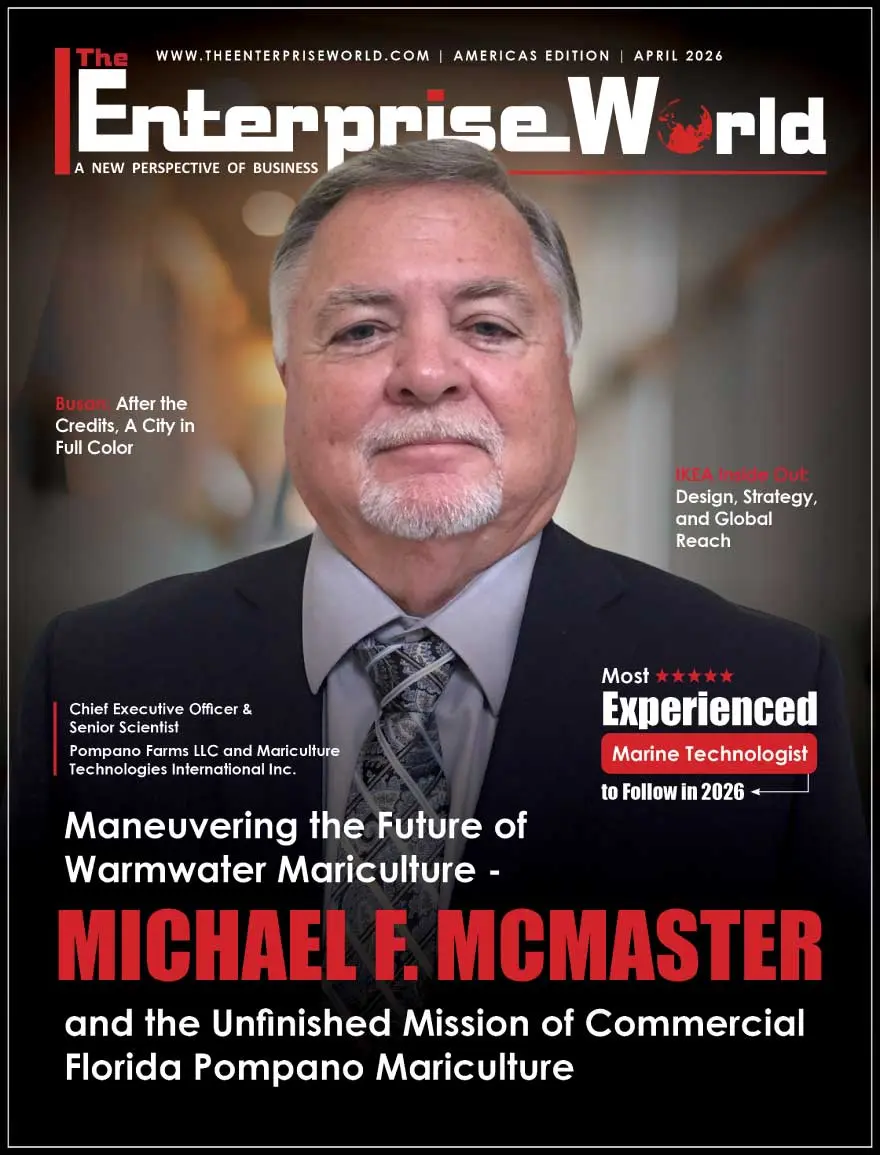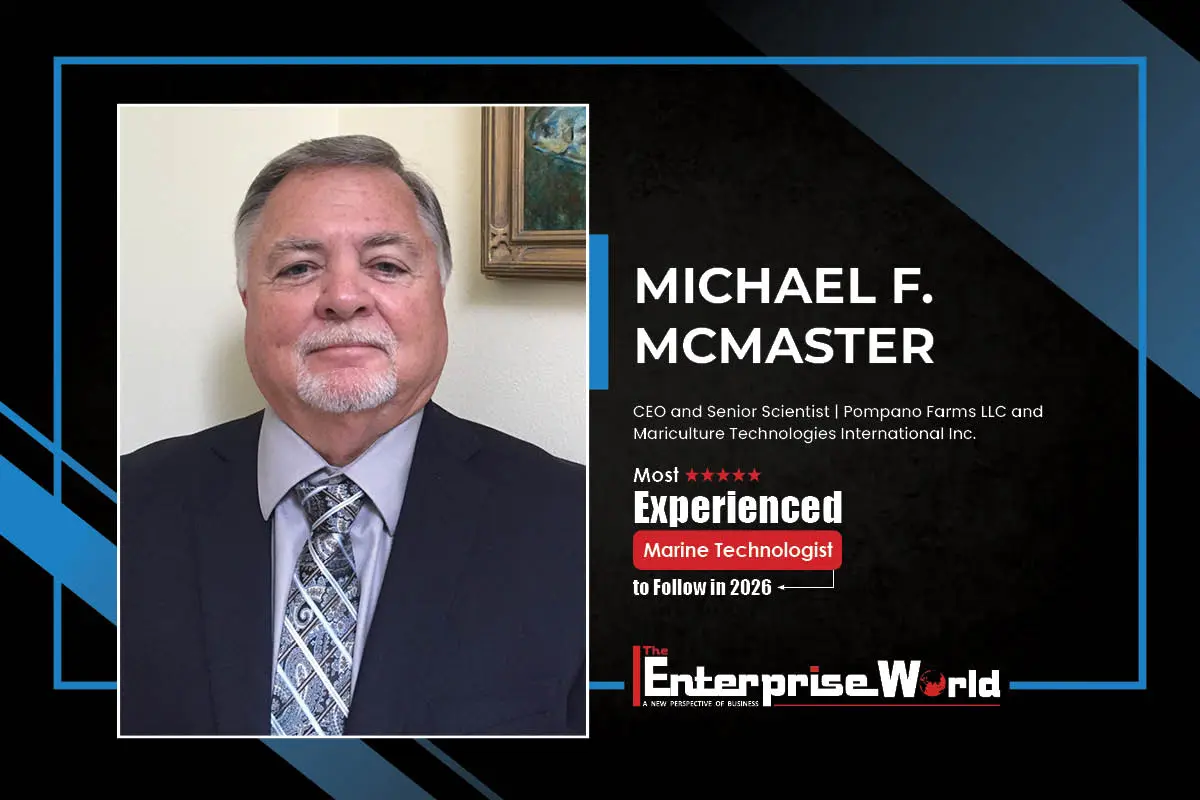
The global seafood economy has entered an era defined by constrained wild fisheries, escalating protein demand, and increasing scrutiny of production systems. Within this complex landscape, marine aquaculture has emerged as both an opportunity and a policy battleground. Few professionals have witnessed its scientific birth, commercial turbulence, and regulatory impasse as closely as Michael F. McMaster.
As Chief Executive Officer and Senior Scientist of Pompano Farms LLC and Mariculture Technologies International Inc., McMaster represents a rare fusion of field biologist, commercial diver, hatchery innovator, and agricultural entrepreneur. His career spans more than six decades, including foundational research that enabled the development of global marine fish hatcheries and a sustained effort to establish commercial farming protocols for the Florida Pompano, one of North America’s most highly valued marine species.
At eighty years of age, his objective remains unchanged: to see a commercially scaled, economically rational Florida Pompano industry built on disciplined science and agricultural practicality.
Midwestern Roots to Ocean Depths
Born in Des Moines, Iowa in 1945, McMaster was raised in a family of engineers, farmers, and physicians. Early exposure to agriculture created a durable imprint. At age twelve, his family relocated to rural San Diego, California, where chaparral ecosystems and coastal waters replaced Midwestern fields.
While academic performance during middle and high school reflected average metrics, his intellectual energy centered on wildlife biology and direct environmental observation. College wrestling shaped a competitive psychology anchored in persistence and discipline. Weekend agricultural labor financed his first vehicle, which expanded access to field exploration and marine environments.

At Southwestern College, he immersed himself in biology, chemistry, anatomy, and related sciences, earning an Associate of Science degree before transferring to Utah State University. Accelerating coursework through disciplined study, he graduated in 1969 with a Bachelor of Science in Wildlife Management and Fisheries.
Parallel to formal education, an equally formative experience unfolded underwater. In 1962, McMaster encountered one of the earliest recreational scuba enterprises in Chula Vista, California, founded by former Navy Underwater Demolition Team divers. Over the next several decades, he accumulated more than 8,000 commercial dives across the Pacific Ocean, South Florida, the Florida Keys, Central America, and Caribbean reef systems. This cumulative field immersion provided ecological literacy rarely achieved in laboratory settings.
Scripps, DDT, and the Rotifer Breakthrough
Following graduation, Michael F. McMaster secured a position at the Scripps Institution of Oceanography in La Jolla, California. Initially hired under the Federal Bureau of Commercial Fisheries laboratory, he later joined the laboratory of Dr. Rubin Lasker.
During the late 1960’s, one of marine science’s central concerns involved the bioaccumulation of DDT in pelagic food webs. Laboratory analysis required controlled dosing of fish and observation of reproductive impacts, particularly larval viability. A fundamental bottleneck obstructed progress: newly hatched marine larvae lacked a reliable, nutritionally adequate first food organism for laboratory culture.
McMaster identified and mass-cultured the marine rotifer Brachionus plicatilis, originally located in the Salton Sea. He demonstrated its viability as a first feed organism for anchovy larvae. In 1971, he co-authored the first peer-reviewed publication documenting this methodology.
Today, marine fish and shrimp hatcheries worldwide depend on rotifer culture systems. The technical architecture of global mariculture rests substantially on that initial breakthrough. Within professional circles, McMaster has often been described as a foundational contributor to practical larval nutrition science.
The Pompano Vision Takes Shape
Shortly after publication, Oceanography Mariculture Industries, Inc. (a public company), funded in part by Prudential Life Insurance Company, approached McMaster to lead research on farming the Florida Pompano. Accepting the role of Director of Research, he relocated to West Palm Beach, Florida.
Within six months, he developed protocols for artificial spawning induction and hatchery production of Florida Pompano fry. The company initiated construction of what was designed to be the world’s first large-scale commercial pompano farm in the Dominican Republic, targeting 1.2 million pounds annually.
Hatchery output expanded from a designed capacity of 10,000 fry per month to 60,000 fry per month within a year. The scientific framework proved operationally viable. In 1973 and 1974, the Arab oil embargo disrupted the diesel supply critical for seawater pumping. The farm closed despite biological success. Approximately 750,000 fish were diverted to fish meal production.
The closure marked the end of McMaster’s employment under external ownership. It also solidified a conviction that technical feasibility and agricultural discipline must align with economic realism.

Building Independent Mariculture Enterprises
Returning to the United States, Michael F. McMaster founded Ocean Farming Systems, Inc. in the Florida Keys, initiating a fifty-year trajectory of independent mariculture ventures. Subsequent enterprises culminated in the formation of Mariculture Technologies International Inc. and Pompano Farms LLC.
From 2000 through 2018, MTI and Pompano Farms operated a research and production facility in Oak Hill, Florida. The model emphasized shallow saltwater wells, reduced salinity earthen ponds, and percolation-based wastewater management. Over fifteen years, the facility achieved operational profitability sufficient to sustain expenses without additional borrowing.
The physical asset, initially capitalized at approximately $100,000, was sold at roughly ten times original investment value. Intellectual property relating to Florida Pompano hatchery and grow-out protocols remains retained by Pompano Farms, LLC.

| Career Milestones of Michael F. McMaster | ||
|---|---|---|
| Year | Milestone | Significance |
| 1969 | BS in Wildlife Management and Fisheries | Foundation in fisheries science |
| 1971 | First publication on Brachionus plicatilis | Enabled global marine hatchery systems |
| 1972 | Director of Research, OMI | Artificial pompano spawning protocols |
| 1973 | VP R&D, Dominican Republic farm | 60,000 fry per month production |
| 1976-1990 | Ocean Farming Systems, Inc. Development Period | Built the world’s first fully integrated pompano, artemia, and ornamental marine fish hatchery |
| 1991–2000 | Indoor Artemia RAS Venture, Allentown, PA | Established first fully RAS-based indoor artemia farm; successfully commercialized |
| 2000–2018 | Oak Hill research farm | Demonstrated profitable pond-based model |
| 2015 | UN FAO Honorarium | Recognized global expert in Florida Pompano farming |
Engineering a Vertically Integrated Model
A defining element of McMaster’s commercial philosophy is total vertical integration. Broodstock, hatchery, nursery, grow out, harvest logistics, and market alignment operate within a unified design. This approach reduces biological uncertainty, strengthens quality control, and compresses operational inefficiencies.
He also engineered principal components for a modified land-based Recirculating Aquaculture System adapted for pompano. Regulatory and cost barriers within the United States constrain widespread deployment. Globally, sea cage systems remain the dominant model for marine finfish production.

| Economic Profile of Florida Pompano | |
|---|---|
| Metric | Estimated Value |
| Retail Price | $25 per pound whole iced fish |
| Ex Farm Production Cost | Under $4 per pound |
| Historical Market Status | Highest valued North American marine fish since 1948 |
| Conservative Annual Demand | 50 million pounds |
| Global Commercial Farms | None currently dedicated to Florida Pompano |
Sustainability and Regulatory Realities
McMaster maintains a critical perspective on regulatory pathways within the United States for warmwater marine fish farming. Permitting structures largely favor inland RAS systems. In his assessment, large-scale commercial warmwater mariculture remains structurally constrained.
The Oak Hill project demonstrated that properly engineered pond systems can manage effluent responsibly while achieving profitability. Environmental compliance, water management, and operational biosecurity formed core pillars of that research farm’s design.
Internationally, warmwater sea cage production dominates, particularly across Southern Asia and Mediterranean regions. The United States imports farmed marine seafood from these geographies despite extensive coastal resources extending 200 nautical miles offshore.

Recognition and Professional Validation
In 1974, the American Fisheries Society certified Michael F. McMaster as a Fisheries Scientist. In 2015, the Food and Agriculture Organization of the United Nations awarded him honorarium status as a global expert on Florida Pompano mariculture. His historical review paper remains archived within FAO publications.
In 2024, Marquis Who’s Who profiled him as a leading mariculture expert. His body of work includes peer-reviewed publications and extensive technical manuals covering complete A to Z pompano production systems.

| Oak Hill Research Farm Performance Snapshot | |
|---|---|
| Category | Outcome |
| Operating Period | 18 years |
| Initial Asset Investment | $100,000 |
| Asset Sale Value | Approximately 10X initial |
| Debt Reliance | None for operating continuity |
| Core Innovation | Low salinity earthen pond pompano production |
The Unfinished Objective
The original Dominican Republic farm aimed to produce 1.2 million pounds annually. That benchmark remains symbolic. In McMaster’s view, the minimum contemporary demand for Florida Pompano exceeds 50 million pounds per year.
Retail pricing reflects scarcity. Production cost modeling indicates strong gross margin potential. Biological feasibility has been demonstrated repeatedly. The remaining barrier lies in coordinated regulatory and capital alignment.
At eighty, his motivation derives from an unresolved engineering challenge rather than financial ambition. Net worth in the low millions reflects decades of reinvestment and disciplined risk. Income followed execution of scientific and commercial goals.
The Five-Year Outlook
Warmwater marine aquaculture across Mexico and Central America presents strategic potential. Sea cage systems for Florida Pompano offer low agricultural risk when paired with established hatchery science. Feed innovation and disease management will remain priority research domains.
The global seafood deficit will intensify. Commercial marine fish farming will expand in regions that align regulations with agricultural economics. Whether North America participates remains an open question.
An Open Letter to Future Marine Technologists
To emerging marine scientists and entrepreneurs:
Relocate to jurisdictions that value mariculture as legitimate agriculture. Develop practical skill sets alongside academic credentials. Acquire business literacy equal to biological competence. Learn to write professional business plans. Attend international trade exhibitions to remain connected with evolving technologies.
Do not assume opportunity exists merely because it is described in promotional literature. Evaluate regulatory pathways before committing capital or time.
Above all, cultivate persistence. Innovation originates from hands-on experiences and operational trials rather than theoretical discussions.
Michael F. McMaster
CEO and Senior Scientist
Pompano Farms LLC
Mariculture Technologies International Inc.

KEY TAKEAWAYS
- Foundational Science: Discovery and publication of rotifer first feed protocols enabled global marine hatchery systems.
- Commercial Proof: Artificial spawning and hatchery control for Florida Pompano demonstrated scalable feasibility.
- Integrated Design: Vertical integration reduces biological and operational risk.
- Economic Viability: Production cost under $4 per pound against retail pricing near $25 per pound indicates strong market fundamentals.
- Enduring Mission: The objective of building a large-scale commercial Florida Pompano farm remains active after five decades.