Key Takeaways
- Moderna shares plunged 17.6% after falling 26% intraday.
- Cancer vaccine cut recurrence or death risk by 42% with Keytruda.
- Investor expectations fueled the sell-off despite promising trial results.
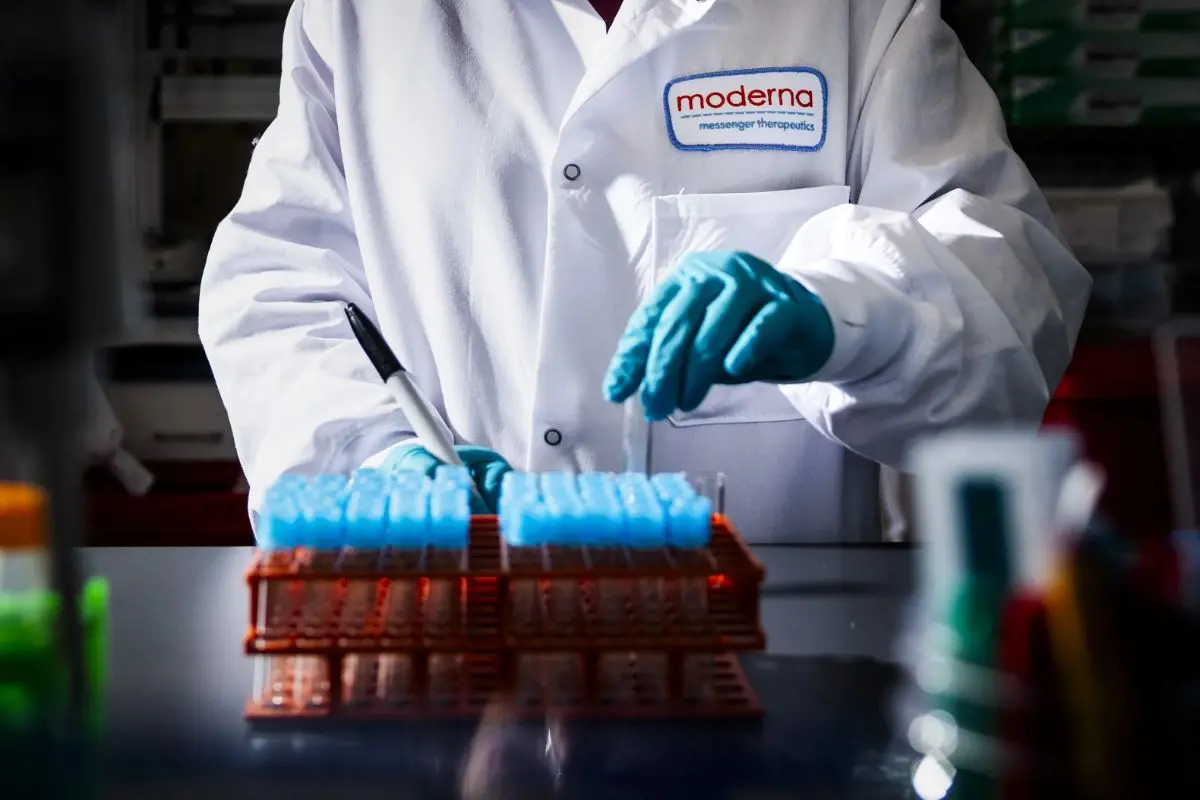
Moderna Stock plunged 17.6% Thursday after prematurely released melanoma vaccine trial results disappointed investors, triggering a sharp sell-off despite promising findings from its late-stage study with Merck.
Leaked trial results trigger sharp market sell-off
Moderna stock fell as much as 26% during Thursday’s trading session before closing down more than 17%, marking its worst daily performance since Aug. 20. The decline followed an extraordinary rally that had pushed the biotechnology company’s shares sharply higher after earlier trial results.
More than $17 billion in market value disappeared as details of the experimental cancer treatment circulated ahead of its scheduled presentation at the European Society for Medical Oncology Congress in Madrid.
The findings appeared on Oncology Central, a medical news website, before the scheduled release. The early publication prompted concerns about the treatment’s effectiveness and commercial prospects, contributing to investor uncertainty.
Merck, Moderna’s development partner, confirmed that the results had been released prematurely. The companies subsequently made the detailed findings public earlier than planned.
Vaccine shows promise despite investor concerns
The Phase 3 trial found that intismeran autogene, Moderna’s personalized messenger RNA (mRNA) cancer vaccine, combined with Merck’s Keytruda immunotherapy, reduced the risk of melanoma recurrence or death by 42% compared with Keytruda alone.
The study involved 1,137 patients with high-risk melanoma. After two years, 82.2% of patients receiving the combination remained alive and cancer-free, compared with 70% of those receiving Keytruda alone.
The combination also reduced the risk of cancer spreading to distant parts of the body or death by 38%, according to the reported results.
The findings remain encouraging for researchers developing personalized cancer treatments. The vaccine uses mutations specific to a patient’s tumor to train the immune system to recognize cancer cells, while Keytruda helps immune cells attack them.
Jedd Wolchok, a melanoma expert and director of the Meyer Cancer Center at Weill Cornell Medicine, described the findings as a major scientific development.
The results “will be received very positively for the significant scientific and therapeutic advance that they are,” Wolchok said, according to Moneycontrol’s report on Bloomberg’s coverage.
High expectations weigh on Moderna and Merck
The market reaction reflected heightened expectations following Moderna’s August announcement that the vaccine trial had met its primary goals. The earlier announcement sparked a major rally, with investors anticipating a potential breakthrough for the company’s oncology business.
An earlier, smaller study reported a 49% reduction in recurrence or death risk. However, differences in patient populations mean the findings cannot be directly compared with the larger trial.
BMO Capital Markets analyst Evan Seigerman said investors expected stronger evidence of the vaccine’s potential beyond melanoma.
“These results are not enough to drive confidence amidst elevated expectations,” Seigerman wrote in a note cited by Moneycontrol.
Merck shares also declined, falling nearly 4% at their lowest point before recovering some losses. The treatment represents a potential growth opportunity for Moderna, while Merck’s broader business remains supported by its established cancer drug portfolio.
Meanwhile, Eli Lilly added more than $33 billion in market value, while Johnson & Johnson and Pfizer shares advanced. Biotechnology exchange-traded funds recorded comparatively modest declines.
Moderna and Merck are pursuing regulatory approval for the experimental treatment. The companies are also investigating its potential against other cancers, although broader effectiveness and commercial demand remain uncertain.