Money talks. Art whispers. Together, they scream history.
When people hear about the most expensive painting in the world, the first reaction is often surprise. Some people smile. Some shake their heads. A few even laugh. A simple question follows right after. How can painting on a canvas cost more than a skyscraper, a private jet, or an island?
The answer is not simple, but it is fascinating.
These paintings are not just colors on cloth. They hold power. They carry legacy. They represent moments that shaped culture, belief, and human thinking. Many of them were created hundreds of years ago. The artist is long gone, yet the work still speaks. That silence holds value.
Rarity plays a big role. Most legendary artists created only a few masterpieces. Some works were lost. Some were destroyed. When only one survives, its worth grows beyond money. Ownership history matters too. When kings, emperors, or global leaders once owned the most expensive painting in the world, its story becomes richer.
These artworks also act as symbols. For billionaires, owning such a piece shows influence. For nations, it reflects cultural strength. For museums, it is a dream achievement. These paintings are trophies, not decorations.
This article explains why these prices exist. It tells the stories behind them, with just the real meaning that helps art prices finally make sense.
Top 15 Most Expensive Paintings in the World in 2026

1. Salvator Mundi – Leonardo da Vinci

- Year of Making: c. 1500
- Price Paid: $450.3 million
- Seller: Dmitry Rybolovlev (via Christie’s)
- Buyer: Saudi Crown Prince Mohammed bin Salman (via intermediary)
- Year Sold: 2017
This painting holds the crown as the most expensive painting in the world, and its journey feels almost unreal.
Leonardo painted Jesus Christ holding a crystal orb while blessing the viewer. The face feels calm, yet alive. The eyes seem to follow you. That lifelike effect came from Leonardo’s deep study of anatomy, light, and human emotion.
What truly makes this artwork legendary is its disappearance. It vanished for nearly 500 years. At one point, it sold for a very small price because no one knew its true identity. After careful restoration and expert study, scholars confirmed Leonardo’s hand behind it.
That confirmation changed everything. Faith, power, mystery, and history collided on one canvas. Buyers did not see the decoration. They saw a once-in-history opportunity. That is why no other artwork has crossed this price level.
2. Interchange – Willem de Kooning

- Year of Making: 1955
- Price Paid: $300 million
- Seller: David Geffen
- Buyer: Kenneth C. Griffin
- Year Sold: 2015
This painting proved that modern art can stand beside classical masters.
At first glance, Interchange feels chaotic. Colors clash. Shapes dissolve. There is no clear subject. That confusion is intentional. De Kooning wanted movement, tension, and emotion rather than realism.
This work came from a major shift in his career. He was moving away from figures toward abstraction. That moment of change makes the painting rare and historically important.
Collectors value this piece because it feels alive. Each brushstroke carries urgency and control at the same time. This sale reshaped how the world values abstract art and pushed modern paintings closer to the most expensive painting in the world tier.
3. The Card Players – Paul Cézanne

- Year of Making: 1892-1893
- Price Paid: $250 million
- Seller: George Embiricos Collection
- Buyer: Qatar Royal Family
- Year Sold: 2011
This painting looks quiet, but strength hides inside it.
Cézanne painted men playing cards in silence. No drama. No movement. Just focus. Every object feels solid. Each shape feels planned. Cézanne used careful brushwork to build structure, not decoration.
Art historians see this painting as a bridge. It connects the old classical balance with a modern form. That balance changed art forever.
Only a few versions of The Card Players exist. Museums wanted it badly. Private collectors wanted it more. When the Qatar Royal Family bought it, they secured a key piece of art history that sits close to the most expensive painting in the world category.
4. Nafea Faa Ipoipo – Paul Gauguin

- Year of Making: 1892
- Price Paid: $300 million
- Seller: Rudolf Staechelin Family Collection
- Buyer: Qatar Museums
- Year Sold: 2015
This painting tells a story without words.
Gauguin painted two Tahitian women sitting together. They do not smile. They do not pose. They simply exist. Their silence speaks loudly. The colors feel warm, deep, and emotional.
Gauguin created this work during his time in Tahiti, where he searched for a simpler life away from Europe. His isolation shaped his style. He used color to express feeling, not reality.
Collectors value this painting because it represents escape, cultural shift, and personal struggle. Buyers paid for the meaning behind the scenes, not just its beauty.
5. Number 17A – Jackson Pollock

- Year of Making: 1948
- Price Paid: $200 million
- Seller: David Geffen
- Buyer: Kenneth C. Griffin
- Year Sold: 2015
This painting broke every rule people knew.
Pollock placed the canvas on the floor. He poured, splashed, and dripped paint from above. He moved around it. His body became part of the process. What looks random actually follows rhythm and control.
Number 17A captures that energy. Lines overlap. Paint flows freely. Yet nothing feels accidental. Pollock trusted instinct over planning.
That fearless approach made his work iconic. Collectors saw rebellion, freedom, and raw emotion on canvas. That spirit placed Pollock among artists connected closely to the most expensive painting in the world in terms of value.
6. No. 6 Violet Green and Red – Mark Rothko

- Year of Making: 1951
- Price Paid: $186 million
- Seller: Yves Bouvier
- Buyer: Dmitry Rybolovlev
- Year Sold: 2014
This painting does not show people, objects, or scenes.
That choice was intentional.
Mark Rothko believed color alone could speak to the human mind. He used large blocks of violet, green, and red to create a quiet emotional space. When viewers stand in front of this work, many feel calm, sadness, hope, or deep reflection.
Rothko wanted people to feel something personal. Not admire skill. Not decode meaning. Just feel. That emotional connection makes the painting powerful. Buyers are not paying for technique alone. They are paying for an experience that stays with them long after they walk away.
That lasting emotional impact gives this painting its long-term value.
7. Shot Sage Blue Marilyn – Andy Warhol

- Year of Making: 1964
- Price Paid: $195 million
- Seller: Thomas Ammann Foundation
- Buyer: Larry Gagosian (via auction representation)
- Year Sold: 2022
This painting shows Marilyn Monroe, but not as a movie star.
It shows her as an icon.
Andy Warhol took a famous photograph of Marilyn and transformed it using bold colors and sharp contrast. The bright background and flat style remove realism. What remains is fame itself.
The title includes the word “Shot” because another artist once fired a gun at a stack of Warhol’s Marilyn paintings. That real-life moment added shock and story to the artwork.
This most expensive painting in the world represents celebrity culture, mass media, and obsession. Buyers see it as a mirror of modern society. That is why it proved that pop culture deserves a place among elite art sales.
8. Les Femmes d’Alger Version O – Pablo Picasso

- Year of Making: 1955
- Price Paid: $179.4 million
- Seller: Victor and Sally Ganz Collection
- Buyer: Hamad bin Jassim bin Jaber Al Thani
- Year Sold: 2015
This painting is loud, layered, and full of movement.
Nothing feels still.
Pablo Picasso created this work as a tribute to earlier classical paintings, but he rebuilt the scene using his own bold style. Faces appear from multiple angles. Bodies twist. Colors clash and blend.
The painting feels energetic and intense because Picasso wanted to break the traditional perspective. He wanted viewers to see more than one moment at once.
Collectors view this artwork as a turning point in art history. It captures Picasso’s mature style and creative freedom. That is why many see it as history painted on canvas.
9. Nu Couché – Amedeo Modigliani
- Year of Making: 1917-1918
- Price Paid: $170.4 million
- Seller: Private European Collection
- Buyer: Liu Yiqian
- Year Sold: 2015
When this painting was first shown, people were offended.
Galleries faced criticism.
Amedeo Modigliani painted the female nude in a direct and confident pose. There was no myth, no story, and no disguise. The subject looked real, relaxed, and aware.
Over time, society changed. What once shocked viewers now feels elegant and honest. The long neck, soft curves, and calm expression became Modigliani’s signature style.
As public taste evolved, appreciation grew. That shift in judgment pushed the painting’s value higher with each decade.
10. Masterpiece – Roy Lichtenstein
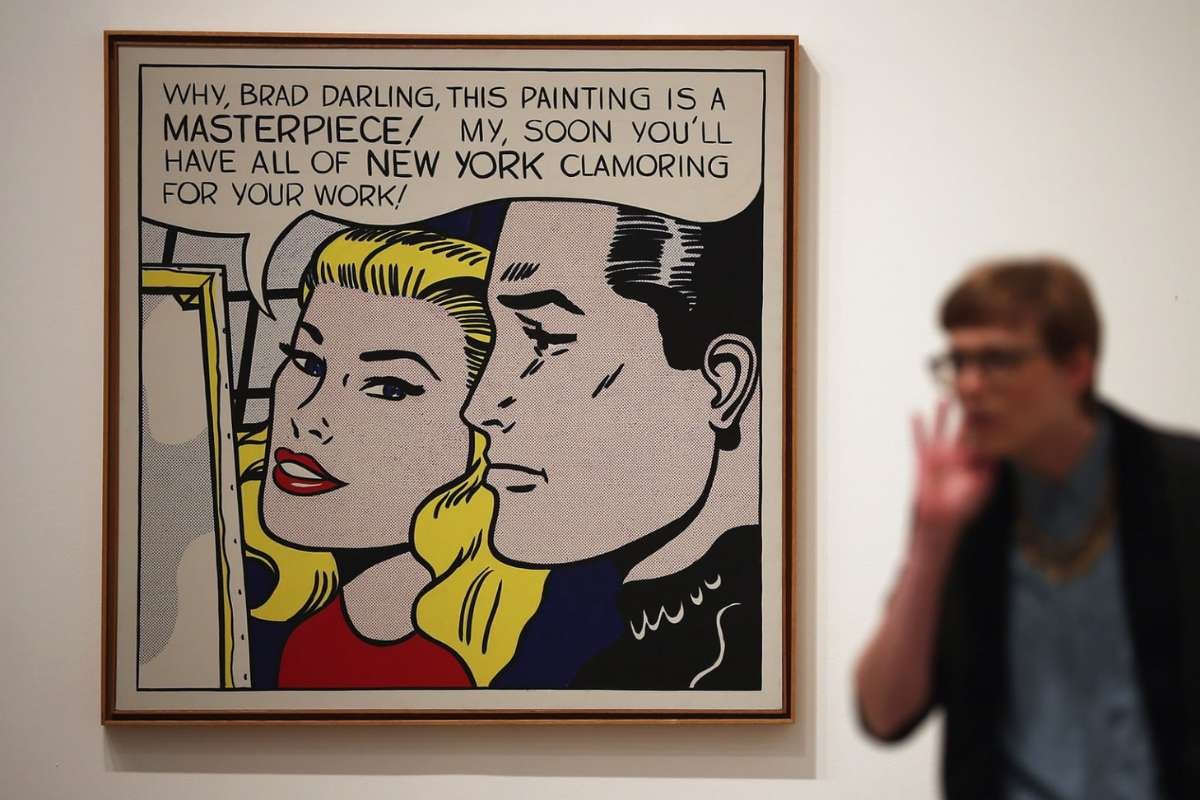
- Year of Making: 1962
- Price Paid: $165 million
- Seller: Agnes Gund
- Buyer: Steve Cohen
- Year Sold: 2017
This painting looks like a comic panel.
That is the point.
Roy Lichtenstein borrowed the visual language of comic books and placed it inside the fine art world. Bold outlines. Flat colors. Printed dots.
This most expensive painting in the world shows a woman admiring a painting called “Masterpiece.” The joke is subtle but sharp. It praises art while questioning how society decides what is valuable.
Collectors love this irony. The artwork honors art culture and quietly mocks it at the same time. That clever balance turned humor into high value.
11. Portrait of Adele Bloch-Bauer I – Gustav Klimt

- Year of Making: 1907
- Price Paid: $135 million
- Seller: Maria Altmann (restitution heir)
- Buyer: Ronald Lauder
- Year Sold: 2006
This painting is not just art. It is survival on canvas.
Painted by Gustav Klimt, the portrait shows Adele Bloch-Bauer wrapped in gold. Real gold leaf covers much of the painting. That shine gives it a royal look. Adele appears calm, graceful, and distant, as if she knows her place in history.
The real weight of this painting comes from its past. During World War II, the Nazis stole it from Adele’s Jewish family. It disappeared for years. After a long legal battle, it returned to the rightful heirs.
That journey through war, loss, and justice adds deep emotional value. Buyers do not just purchase beauty here. They buy memory, pain, and triumph.
12. Dora Maar au Chat – Pablo Picasso

- Year of Making: 1941
- Price Paid: $95.2 million
- Seller: Gidwitz Family Collection
- Buyer: Anonymous
- Year Sold: 2006
This painting holds a relationship frozen in time.
Created by Pablo Picasso, it shows Dora Maar sitting confidently with a small cat on her shoulder. Dora was not just a model. She was Picasso’s lover, muse, and emotional mirror during a turbulent phase of his life.
Her sharp pose and bold colors reflect tension and intensity. You can feel strength and vulnerability in the same frame. Collectors value this most expensive painting in the world because it captures a real bond between artist and subject. Faces with stories last longer in memory. That personal link pushes the price far beyond paint and canvas.
13. Eight Elvises – Andy Warhol

- Year of Making: 1963
- Price Paid: $100 million
- Seller: Annibel Holding AG
- Buyer: Anonymous
- Year Sold: 2008
This painting turns fame into repetition.
Made by Andy Warhol, it shows Elvis Presley printed eight times in the same frame. Each image looks similar, yet each feels slightly different. That repetition creates rhythm and power.
Warhol understood celebrity better than most artists. He knew that the more people see a face, the more valuable it becomes. Elvis stands as a symbol of mass culture, music, and fame.
By repeating him, Warhol multiplied his impact. Collectors pay for that sharp social insight. This work proves that pop culture can become timeless art.
14. Water Serpents II – Gustav Klimt

- Year of Making: 1904-1907
- Price Paid: $183.8 million
- Seller: Private European Collector
- Buyer: Anonymous
- Year Sold: 2013
This painting feels soft, deep, and hypnotic.
Another masterpiece by Gustav Klimt, it shows flowing female forms surrounded by water. The figures blend into each other, creating movement without chaos. Gold tones and rich colors give the scene a dreamlike feel.
The symbolism runs deep. Water represents desire, freedom, and mystery. Klimt painted intimacy without fear. That bold approach was rare for its time. Collectors chase this most expensive painting in the world because few works balance sensual beauty and artistic control so perfectly.
Rarity and emotional pull raise its value year after year.
15. Woman III – Willem de Kooning

- Year of Making: 1953
- Price Paid: $137.5 million
- Seller: David Geffen
- Buyer: Steven A. Cohen
- Year Sold: 2006
This painting refuses to behave.
Painted by Willem de Kooning, it shows a female figure formed with harsh strokes and rough texture. The face feels intense. The body looks unfinished. That tension is the point.
When it first appeared, critics felt confused. Some felt uncomfortable. Over time, the art world understood its power. This work broke away from traditional beauty and pushed abstract art into elite circles. Collectors value it because it changed direction, not style. It stands as proof that bold risks can rewrite art history.
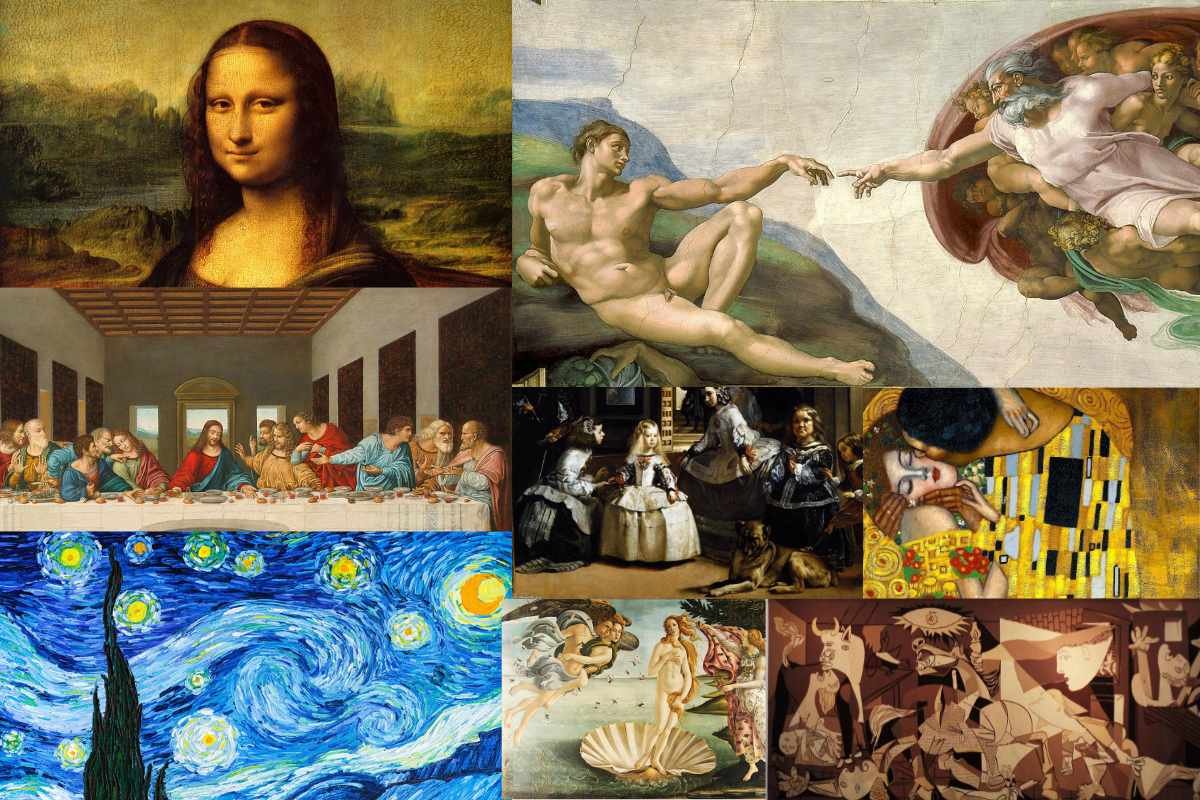
Why These Paintings Reach Extreme Prices?
The title of the most expensive painting in the world never depends on beauty alone.
Beauty matters, but it does not decide the final price. Many beautiful paintings exist. Only a few reach extreme values.
These paintings become priceless because many powerful factors work together. Each factor adds weight. When all combine, prices rise beyond imagination.
Let us break this down in very simple words.
1. Artist Reputation:
Famous artists create trust. When a painting comes from a master, buyers feel safe spending huge amounts of money. Artists like Leonardo da Vinci or Picasso changed how the world sees art. Their names carry history, skill, and influence.
A strong reputation means:
- Proven talent
- Global recognition
- Limited works
- Permanent demand
Collectors do not buy just paint. They buy the artist’s lifetime legacy.
2. Scarcity
Rare things cost more. Art follows the same rule.
Many legendary artists created very few paintings. Some works disappeared. Some got damaged. Others remain locked in museums forever.
When only one or two pieces remain in private hands, competition rises fast. Wealthy buyers know they may never get another chance.
Scarcity creates urgency. Urgency pushes prices higher.
3. Cultural Impact
Some paintings change culture.
They shape fashion, design, politics, or public thinking. These artworks reflect their time. They speak about society, power, faith, or rebellion.
The most expensive painting in the world, with cultural impact become symbols. People recognize them even without knowing art deeply. That recognition turns them into global icons.
Icons always carry premium value.
4. Historical Survival
Survival adds power.
Paintings that lived through wars, thefts, fires, or centuries of neglect gain respect. Time becomes proof of importance.
When an artwork survives history, it carries a story no modern creation can copy. Buyers value that endurance. It feels like owning a piece of time itself.
History does not repeat. That makes survival priceless.
5. Ownership History
Who owned the painting before matters a lot.
If kings, queens, famous collectors, or royal families owned a piece, its value increases. This past ownership creates prestige.
Collectors love strong ownership stories because:
- They add trust
- They add status
- They prove authenticity
A great painting with a powerful ownership trail becomes more desirable.
6. Emotional Response
Art works on emotion first.
Some paintings create silence. Some cause discomfort. Others spark wonder. When people feel something strong, they remember it.
Buyers pay more for art that connects deeply. Emotional impact cannot be measured, but it drives decisions.
When emotion meets rarity and history, price stops making sense.
Conclusion
Art reflects how far human ambition can reach. It shows our desire to create, preserve, and leave something meaningful behind. The most expensive painting in the world clearly proves that real value does not sit only in paint, canvas, or age. It lives in the story, the emotion, and the history attached to the artwork.
These paintings carry memories of their time. They hold the vision of the artist and the spirit of the era they came from. That is why billionaires chase them. Not to fill empty walls, but to own a piece of human history that can never be repeated.
Just like success in life, art rewards those who understand timing, rarity, and long-term vision.
These masterpieces remind us that creativity, when protected and respected, does not fade. Instead, it grows more valuable with time and becomes truly priceless.
FAQs
1. What is the most expensive painting ever sold?
A: The most expensive painting in the world remains Salvator Mundi by Leonardo da Vinci. It sold for $450.3 million in 2017. No artwork has crossed that number yet.
2. Who bought the most expensive painting?
A: The painting was purchased through intermediaries linked to Saudi Crown Prince Mohammed bin Salman. The artwork now sits under tight security and limited public access.
3. Which artist has the highest total sales?
A: Pablo Picasso holds the highest cumulative auction sales. His work appears frequently among top-priced lists due to volume and demand.