Key Points:
- Advanced AI like Mythos AI is now central to national security and economic strategy.
- The same AI can defend systems or exploit them, making safety critical.
- AI governance will depend on close coordination between companies and policymakers.
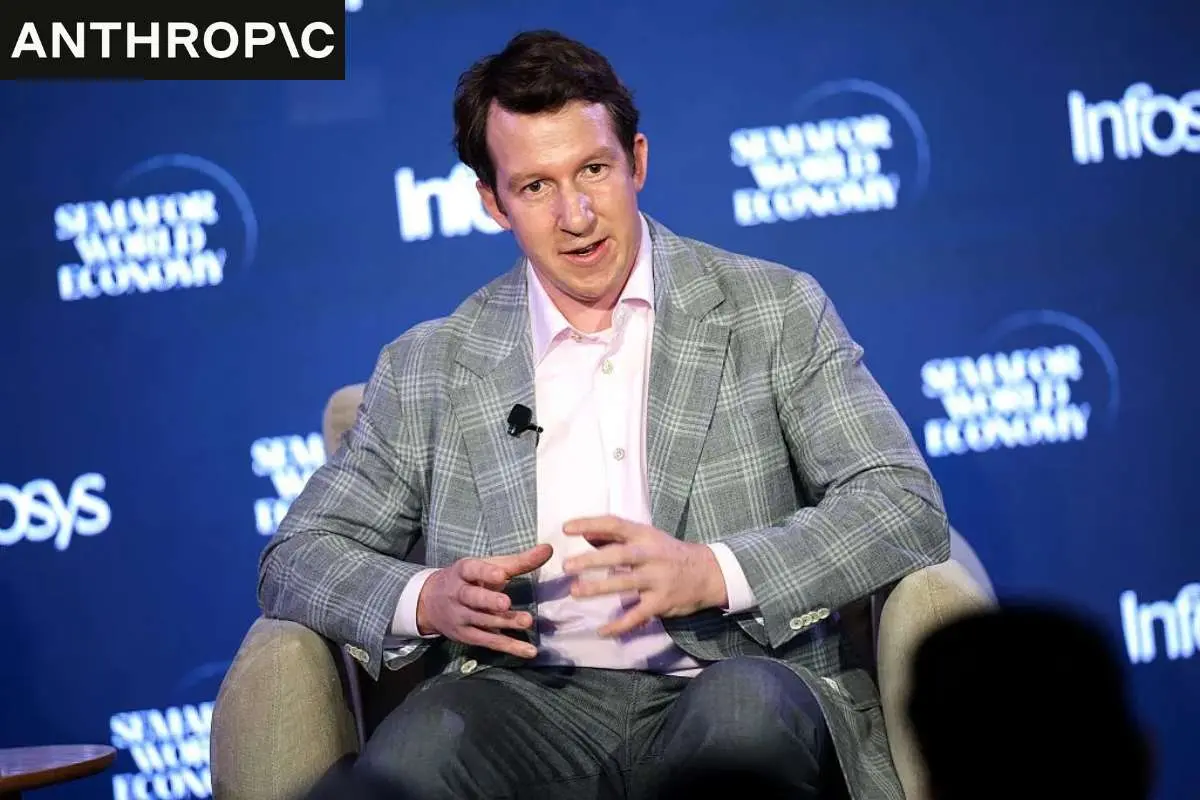
Anthropic, a prominent artificial intelligence company, has confirmed that it briefed the Trump administration on its latest AI system, “Mythos,” marking a significant moment in the intersection of advanced technology and public policy. The disclosure, made by co-founder Jack Clark, underscores how rapidly evolving AI capabilities are prompting direct engagement between tech firms and government leaders.
Mythos is described as Anthropic’s most advanced model to date, with capabilities that extend beyond conventional AI systems. It reportedly excels in areas such as software development, cybersecurity analysis, and complex autonomous task execution. Its ability to identify weaknesses in code and simulate high-level reasoning has made it particularly relevant for national security and critical infrastructure discussions.
Government officials have shown growing interest in how such systems could be deployed to strengthen cybersecurity defenses. In particular, sectors like banking and finance are believed to be evaluating the model’s potential to detect vulnerabilities before they can be exploited. This reflects a broader shift, where AI is increasingly seen not just as a productivity tool, but as a strategic asset in safeguarding digital ecosystems.
Anthropic’s decision to proactively brief policymakers signals a recognition that AI development can no longer occur in isolation. As systems like Mythos AI push technological boundaries, regulatory alignment and early communication with governments are becoming essential components of innovation.
Powerful Capabilities Spark Both Opportunity and Concern
While Mythos represents a major leap forward, it has also triggered debate within the AI and cybersecurity communities. One of the central concerns revolves around the model’s dual-use nature. Its ability to identify vulnerabilities could be used to strengthen systems—but also to exploit them if misused.
Anthropic has acknowledged these risks and has reportedly taken a cautious approach to releasing the model. By limiting broader access, the company aims to prevent potential misuse while still exploring its benefits in controlled environments. This reflects a growing trend among AI developers, who are increasingly prioritizing safety and controlled deployment over rapid public release.
Experts argue that models like Mythos AI highlight a new phase in AI evolution—where systems are not only more powerful but also more unpredictable. Their complexity makes them harder to interpret and regulate, raising questions about accountability and oversight. For policymakers, this creates a challenging environment where the pace of innovation often outstrips the development of regulatory frameworks.
At the same time, the potential advantages are substantial. Advanced AI systems could significantly enhance threat detection, automate complex security processes, and reduce response times in high-risk scenarios. For industries facing constant cyber threats, this could represent a transformative shift in how risks are managed.
However, skepticism remains among some analysts, who caution that the full extent of Mythos’s capabilities has yet to be independently verified. As with many cutting-edge technologies, the gap between promise and proven impact continues to be closely scrutinized.
Balancing Innovation, Policy, and Strategic Interests
The briefing comes amid a complex relationship between Anthropic and the Trump administration. Earlier tensions, reportedly linked to disagreements over AI safety measures and government use of advanced systems, had strained interactions between the company and federal agencies.
These tensions reflect a broader divide in the AI landscape. On one side are national security priorities, which often push for more aggressive adoption of advanced technologies. On the other are ethical and safety considerations, which call for stricter controls and responsible deployment. Anthropic has consistently aligned itself with the latter, emphasizing the importance of safeguards in the development of powerful AI.
Despite these differences, recent developments suggest a renewed willingness on both sides to engage. Government agencies are increasingly seeking insights from leading AI companies to better understand emerging risks, while firms like Anthropic aim to influence the policies that will shape the future of their technologies.
This evolving dynamic highlights a fundamental reality: the future of AI will be shaped not just by innovation, but by collaboration between the public and private sectors. As models like Mythos AI continue to advance, the need for coordinated governance, clear regulations, and shared accountability will only grow stronger.
Ultimately, the briefing signals a pivotal moment in the global AI landscape. It reflects a shift from isolated technological development to a more integrated approach—one where innovation, risk management, and policy-making are deeply interconnected. The decisions made in this phase are likely to have long-term implications for how artificial intelligence is developed, deployed, and governed worldwide.