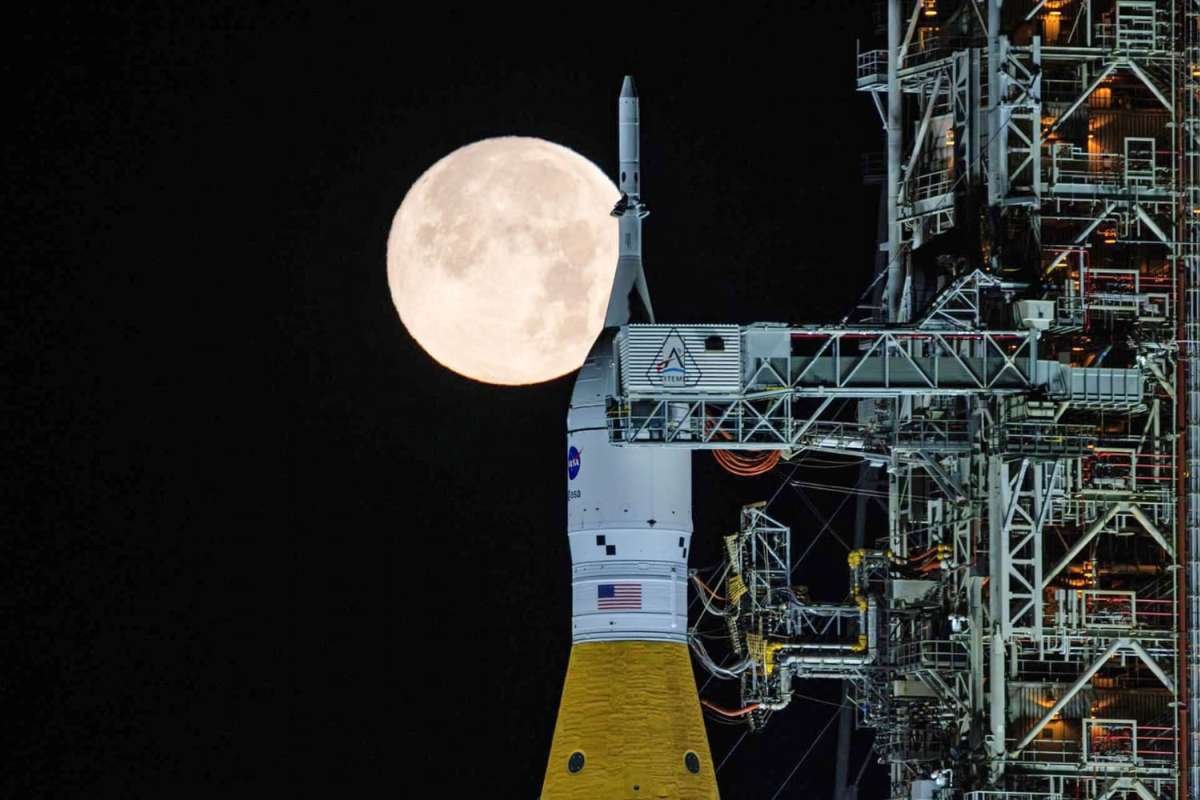
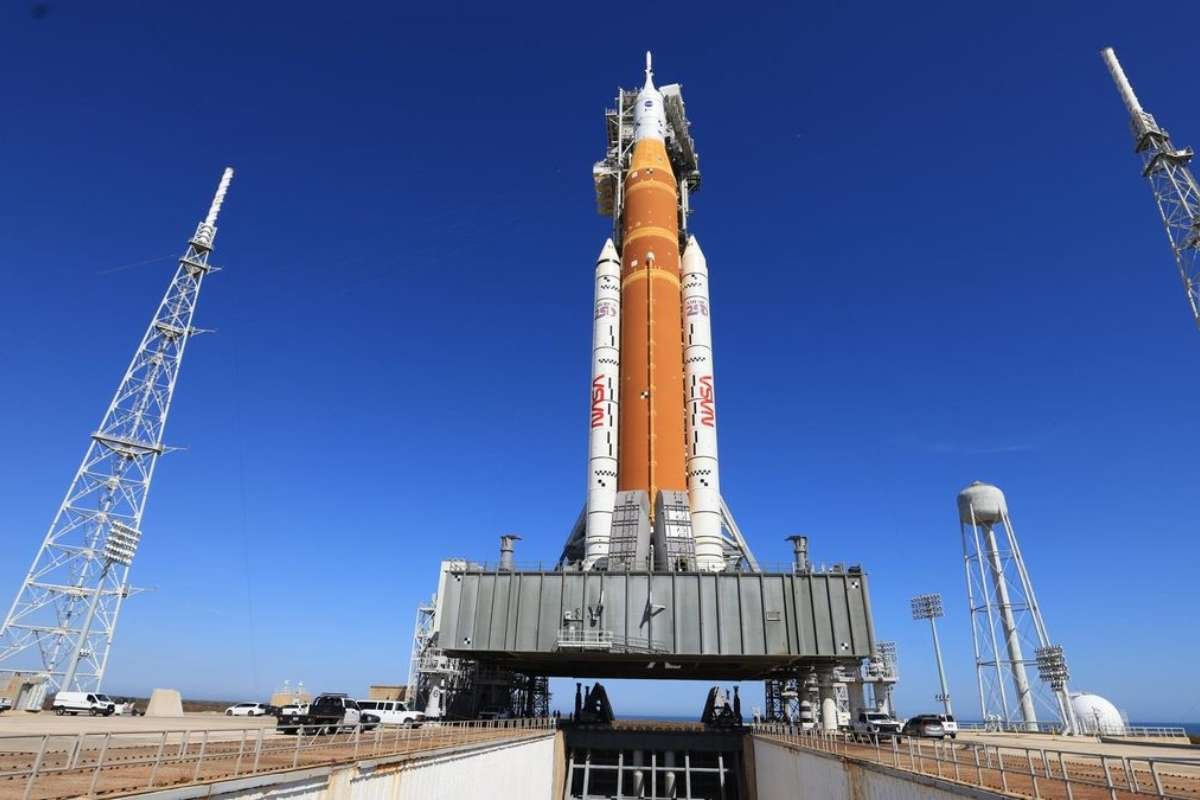
NASA is preparing to launch the Artemis II mission from Kennedy Space Center, aiming to send astronauts around the Moon for the first time since 1972 and advance deep space exploration.
Artemis II Marks Return To Crewed Lunar Missions
The upcoming mission represents a major step in NASA’s Artemis program, which focuses on expanding human presence beyond Earth. Artemis II will be the first crewed flight in the program, following the successful uncrewed Artemis I mission that tested the Orion spacecraft in 2022.
The Orion capsule, mounted on a 322 ft rocket, is scheduled to lift off from Kennedy Space Center. The spacecraft will carry four astronauts on a journey that includes orbiting Earth before traveling around the Moon and returning home. The mission is expected to last about ten days.
This flight will send humans farther from Earth than any previous mission. It is designed to test critical systems under real conditions, ensuring the spacecraft can support future missions that aim to land astronauts on the lunar surface again.
The Artemis II crew includes commander Reid Wiseman, pilot Victor Glover and mission specialist Christina Koch. Their journey will follow a figure eight path around the Moon, allowing engineers to gather data while also demonstrating the spacecraft’s capabilities in deep space.
Mission Builds Foundation For Future Lunar Expansion
The mission is a key step toward broader goals that include returning humans to the Moon and establishing a sustained presence. Future Artemis missions are expected to focus on landing astronauts and building infrastructure that supports long-term exploration.
NASA officials have emphasized the importance of this phase in validating both hardware and operational readiness. Testing during Artemis II will cover navigation, life support systems, and communication, all of which are essential for future missions.
Weather conditions remain an important factor for launch readiness. Officials have indicated a high probability of favorable conditions, though final decisions will depend on real-time assessments. Teams continue to monitor all systems closely to ensure mission safety and performance.
The Artemis program reflects a broader shift toward expanding opportunities in space exploration and technology development. It also opens pathways for collaboration with industry and international partners, creating new possibilities in research, engineering and innovation.
Artemis II highlights the growing role of space as a domain for investment and technological advancement. Developments in spacecraft systems, materials, and communication technologies often translate into applications beyond space, influencing industries on Earth.
The mission also carries symbolic importance. More than fifty years after Gene Cernan became the last person to walk on the Moon, Artemis II signals a renewed commitment to exploration. His final message about returning with hope for humanity continues to resonate as NASA prepares for this next chapter.
As countdown preparations continue, Artemis II stands as both a technical milestone and a strategic step forward. Its success will direct the direction of future missions and define how humanity approaches exploration beyond Earth in the coming decades.