

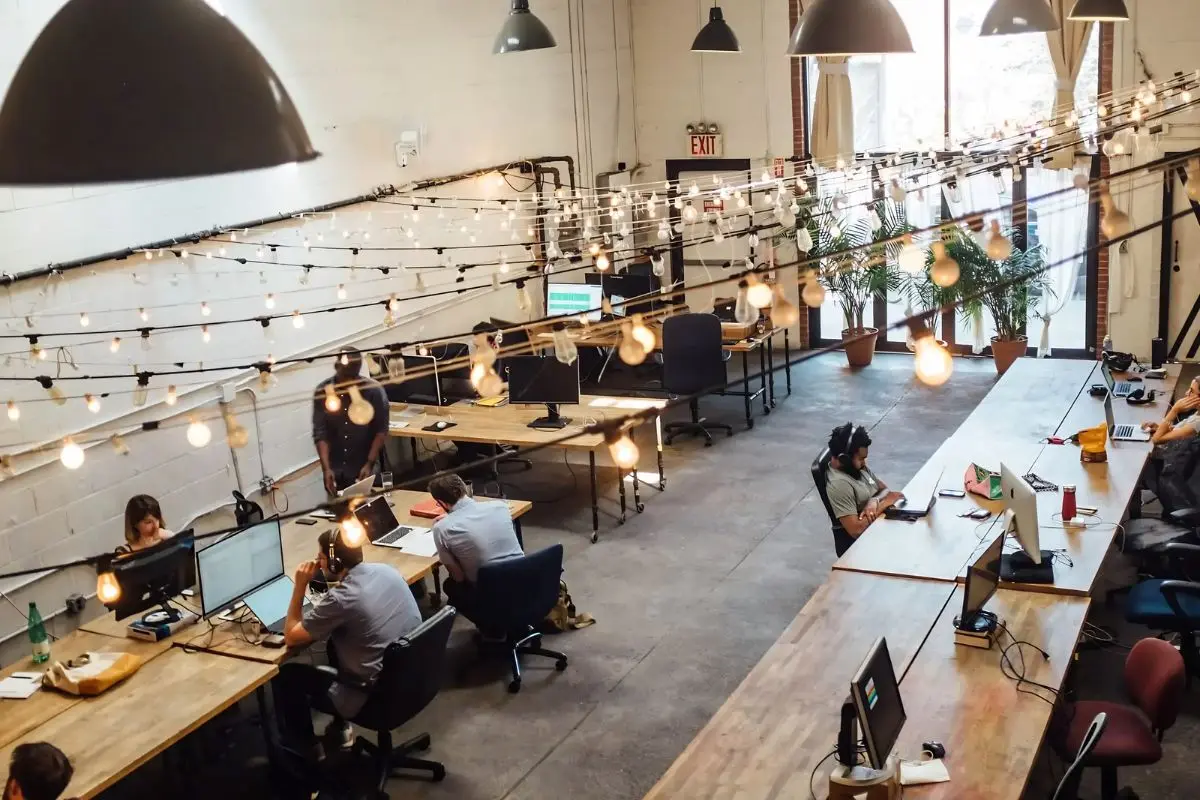
For a couple of years it looked as though the office might become optional. It has not, but its job has changed completely. With hybrid work now settled, the physical workplace arguably matters more than it did before, not less, because it has to earn its place. The businesses getting this right are rethinking what the office is actually for, and what Office Design for Hybrid Work should deliver. Here is what that looks like in practice.
The office has to be worth the trip
The old office competed with nothing. People came in because they had to. That is gone. If the work can be done from the kitchen table, the office has to offer something the kitchen table cannot: colleagues, energy, a change of setting, somewhere built for the parts of work that are better done together. A workplace that is just a room full of the same desks people already have at home gives them no reason to travel, and the attendance figures tend to say so.
This reframes the whole investment in Office Design for Hybrid Work. The question is no longer “how many people can we fit per square metre”, which was the logic of the old office, but “what does this space do that home cannot”. Answer that honestly and the brief changes. You end up spending less on raw desk capacity and more on the things that make a day in the office genuinely better than a day at the kitchen table.
Fewer desks, more places to meet and think
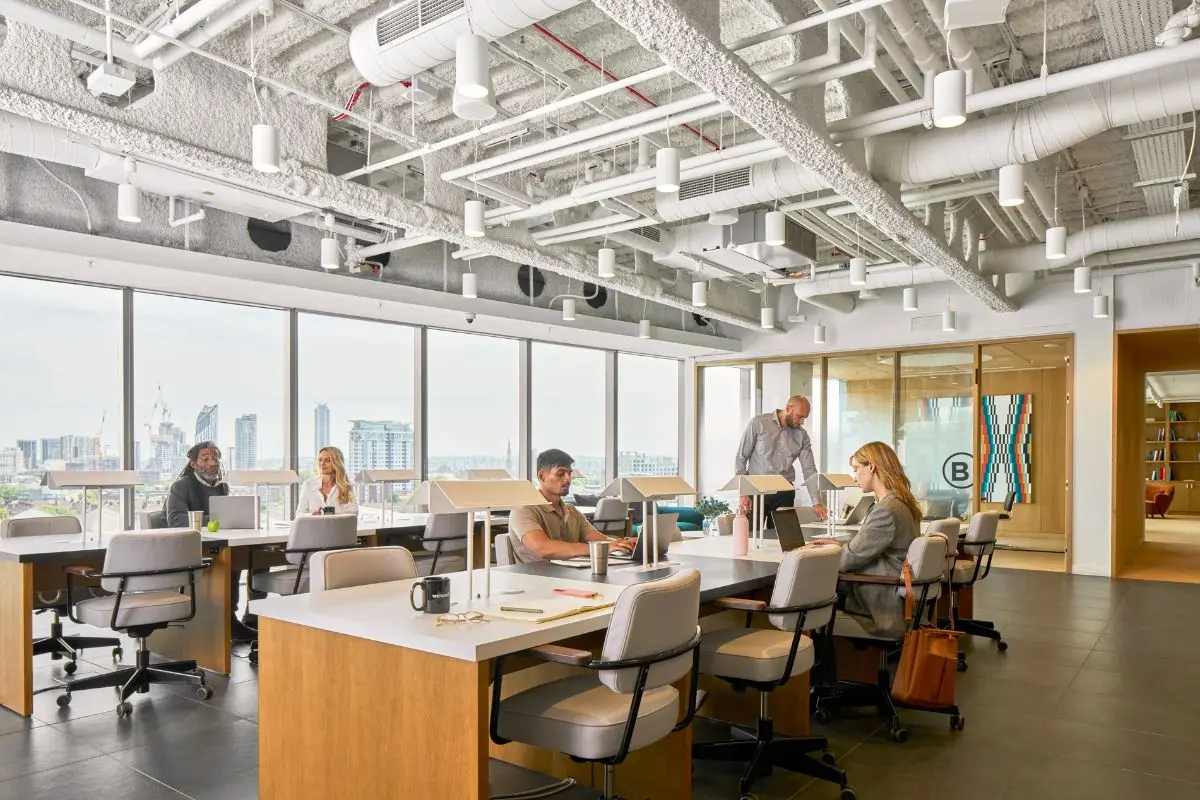
The most visible shift is away from rows of identical workstations. The office is becoming a set of settings rather than a single mode: quiet space to concentrate, comfortable areas to collaborate, informal spots for the conversations that never quite happen over video. Designing for how people genuinely use the office now, in bursts, for specific tasks, rather than nine to five at a fixed desk, is what separates a workplace people choose from one they avoid.
Watching how a team actually uses a space beats guessing at it. Where do people take calls? Which desks sit empty? Where do the useful conversations happen? The honest answers rarely match the floor plan drawn up in advance, and designing to the real pattern rather than the intended one is what turns an office from a place people tolerate into one that helps them work, which is the aim of Office Design for Hybrid Work.
Comfort is a retention and attendance tool
This is where design stops being cosmetic and becomes a lever leaders control. A workplace that is genuinely pleasant to be in, comfortable, well lit, human, draws people back more effectively than any mandate, and it plays into whether good people stay. Recruitment and retention are expensive, and the environment people spend their days in is one of the cheaper and more controllable parts of the answer. Comfort, in other words, is not a perk. It is a business tool.
It also quietly supports wellbeing, which sits on most leadership agendas now. A workplace with somewhere to focus, somewhere to step away, and reasonable comfort removes a layer of low-level friction that rarely shows up in a survey but is felt every day. You cannot design away every pressure of work, but you can stop the room itself being one of them.
It still signals the brand
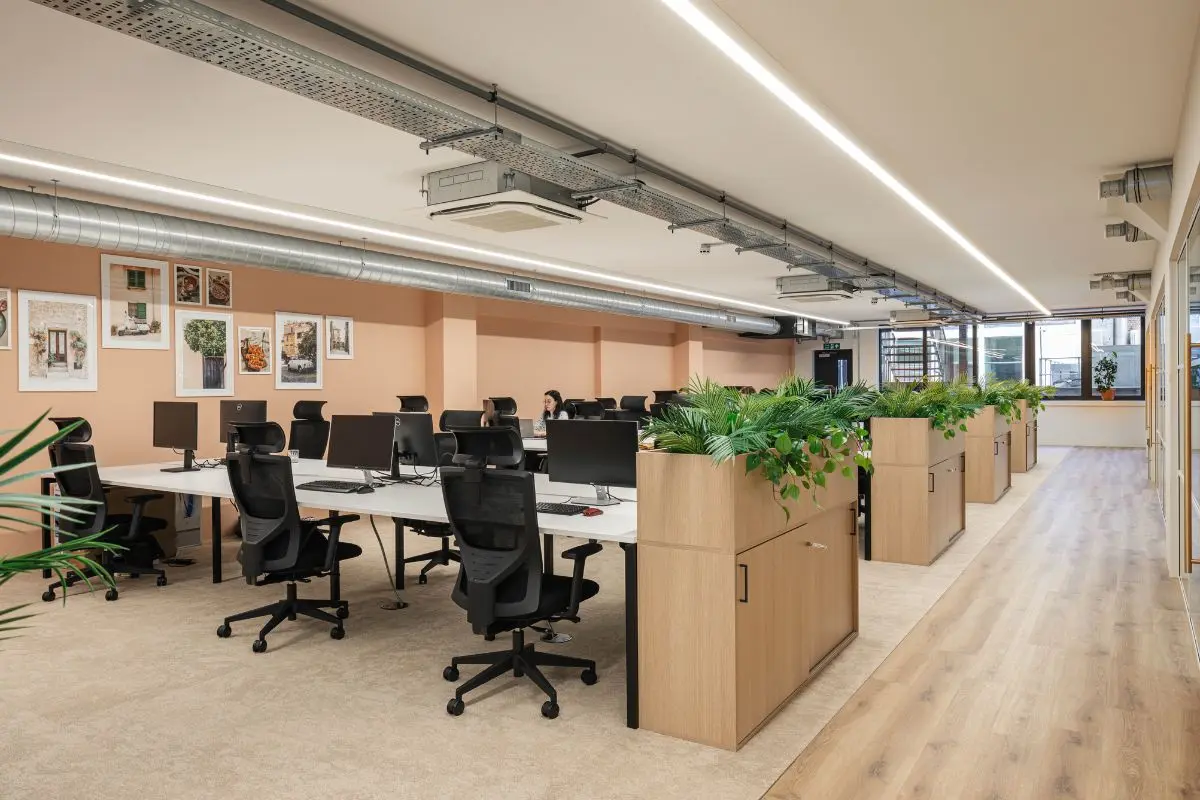
A workplace talks to everyone who enters it before anyone says a word. Clients, partners and candidates all read the space and form a view of the business behind it. A considered, well-kept environment lends quiet credibility; a tired, neglected one undercuts whatever is being said in the room. This has nothing to do with extravagance and everything to do with congruence: the space should match the business the leadership claims to run, a principle central to Office Design for Hybrid Work.
You don’t need a flagship budget
None of this requires a headquarters refit. It requires spending with intent: put the budget into the spaces people see and use, the entrance, the meeting areas, the comfortable spots people actually gravitate to, and keep the rest simple. A few considered pieces do more for how a workplace feels than a whole floor of forgettable furniture. Design classics are useful here because they are comfortable, durable and quietly signal care, and a specialist such as Mobelaris offers faithful reproductions of them at a fraction of the licensed price. For the softer, collaborative areas that make an office worth visiting, well-made modern lounge chairs do more for how a space feels than another bank of desks.
The office is not dead. It has simply been asked a harder question: why should anyone come in? The businesses with a good answer are designing workplaces people genuinely want to use, and in a hybrid world that is no longer a nice-to-have. It is close to the whole point of keeping an office at all.