Choosing office equipment for business is rarely a matter of picking the newest model or the cheapest supplier. The better question is: what will your team use every day, and what will make work easier instead of slower? A business can waste a surprising amount of time on awkward desks, unreliable printers, weak meeting room setups, and little compatibility problems that seem minor until they repeat five times a day.
That is why office purchasing should begin with a closer look at daily use. For example, before deciding on a bulk HDMI cable order, a business should know how many meeting rooms it actually has, which devices people use most often, and where cable failures or shortages are slowing things down. The same thinking applies across the office. Equipment works best when it is chosen for the job, not for the label on the box.
Start With the Work, Not the Wishlist
Most equipment mistakes begin before anyone places an order. A company buys by category instead of by workflow. It shops for desks, printers, and monitors in the abstract instead of asking how those things will be used from Monday to Friday.
A legal office, a design studio, a finance team, and a sales department may all need “monitors,” but they do not need the same monitors for the same reasons. One team may spend the day reviewing contracts and wants screen clarity and comfort over long hours. Another may need stronger color performance and more desk space. A company fitting out a client-facing boardroom may also assume a higher spec always makes sense, but buying an 8K HDMI cable only becomes sensible when the display hardware and video demands genuinely call for it.
The useful starting point is to watch the work itself. Notice where people lose time. Notice what gets shared, printed, scanned, connected, adjusted, or complained about more than once. Equipment should solve those repeat problems first. Once that is clear, the buying process gets much easier and usually much cheaper too.
Reliability Usually Beats Novelty

Selecting the right office equipment for business does not need to be exciting; it needs to keep working.
That sounds obvious, but businesses still get pulled toward the wrong things. A sleek printer with a touch screen can look impressive until it starts jamming on heavy-use days. A stylish desk may photograph well but feel unstable under dual monitors. A flashy meeting room camera may promise a lot and still produce awkward audio if the room acoustics were ignored.
I would take dependable equipment over clever equipment almost every time. In a real office, people remember what fails, not what looked advanced at purchase. A machine that works every day without fuss will always beat one that needs constant attention, even if the second one looked more ambitious on paper.
This is especially true for items that many people share. A personal monitor that underperforms affects one workstation. A weak scanner, a slow label printer, or a temperamental video setup can drag on the entire office.
Fit the Space Before You Fill the Space
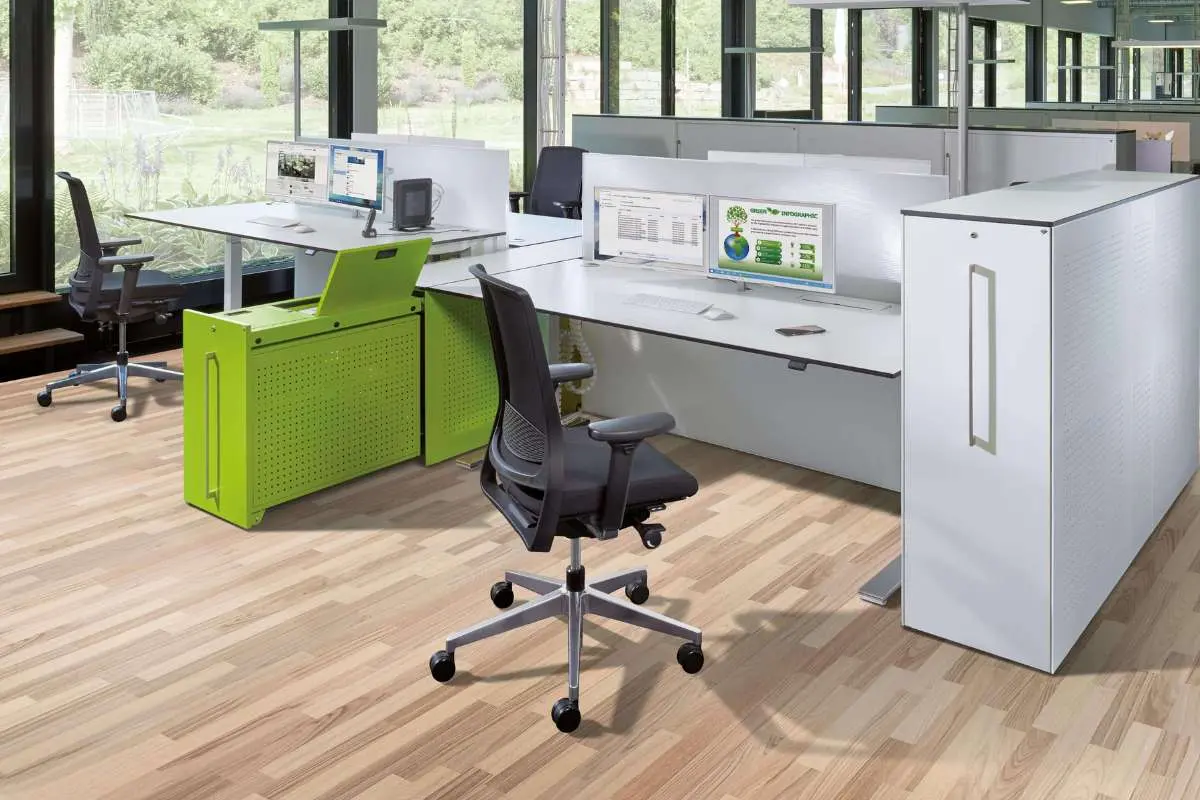
A lot of equipment problems are really layout problems in disguise. Businesses buy furniture and devices first, then try to make them fit the room after the fact. That is how walkways get cramped, desks feel oversized, and storage ends up in the wrong place.
Space planning does not need to be dramatic, but it does need a little honesty. Measure the room. Measure the desks. Measure the clearance around filing cabinets, print stations, and shared tables. Think about cable routing, power access, natural light, and the places where people pause for quick conversations. A workstation that is technically functional can still feel awkward if it is squeezed into the wrong corner or placed under harsh overhead glare.
Comfort matters here too. Good chairs, sensible monitor height, and enough surface area for actual work are not luxuries in a business setting. They shape how long people can focus without discomfort. Offices often spend too much energy choosing finishes and too little on the physical ease of getting through a normal day.
Standardize Where It Helps and Customize Where It Matters

An office does not need to look identical from one workstation to the next. It does benefit from some consistency.
When every desk uses a different docking system, every meeting room needs a different adapter, and every printer takes a different supply, maintaining your office equipment for business gets messy fast. The same goes for ordering replacements. A business that narrows its core choices usually saves time later, even if nobody notices that benefit on the day the equipment arrives.
Still, standardization has limits. A graphic designer may need a different monitor from an administrator. A receptionist’s desk may need a different layout from a project manager’s. A flexible policy works best here. Standardize the areas where consistency reduces confusion, then make thoughtful exceptions where the role truly demands it.
The mistake is going fully in either direction. Total uniformity can ignore real work needs. Too much customization turns the office into a patchwork that is difficult to maintain.
Price Matters, but So Does the Cost of Living With the Purchase
A cheap item can become expensive in slow motion. That is usually the problem.
The initial price matters, of course. No business should pretend budget does not exist. Still, the more useful question is what the equipment will cost over its working life. A printer with low upfront cost and expensive toner may not be a bargain. A chair that needs replacing in eighteen months is not a bargain. A conference room setup that wastes ten minutes at the start of every client call is not a bargain either.
This is one reason businesses do well when they separate “purchase price” from “business cost.” They are not the same thing. Equipment should be judged by how well it supports the work over time, how often it needs attention, and how easy it is to replace or maintain when something does go wrong.
Plan for the Office You Will Have in Two Years

A business that buys only for its current size often ends up repurchasing too soon. That does not mean every company should overbuy, but it does mean growth, change, and turnover should be part of the decision when selecting office equipment for business.
A team of eight may become twelve faster than expected. A company that now meets mostly in person may shift to more hybrid calls. A department that once printed occasionally may move to heavier document handling after a client or service change. Equipment choices do not need to predict the future perfectly, but they should leave some room for it.
This is where scalable choices tend to pay off. Extra ports in a meeting room. Desks that can be rearranged without drama. Storage that can expand. Devices and accessories that are easy to reorder because the office already knows what works. None of that feels glamorous, but it makes future adjustments much less irritating.
The best office equipment choices usually age well. They support the business now, and they do not become a problem the moment the office gets a little busier or a little larger.